
Real Just Got Expensive
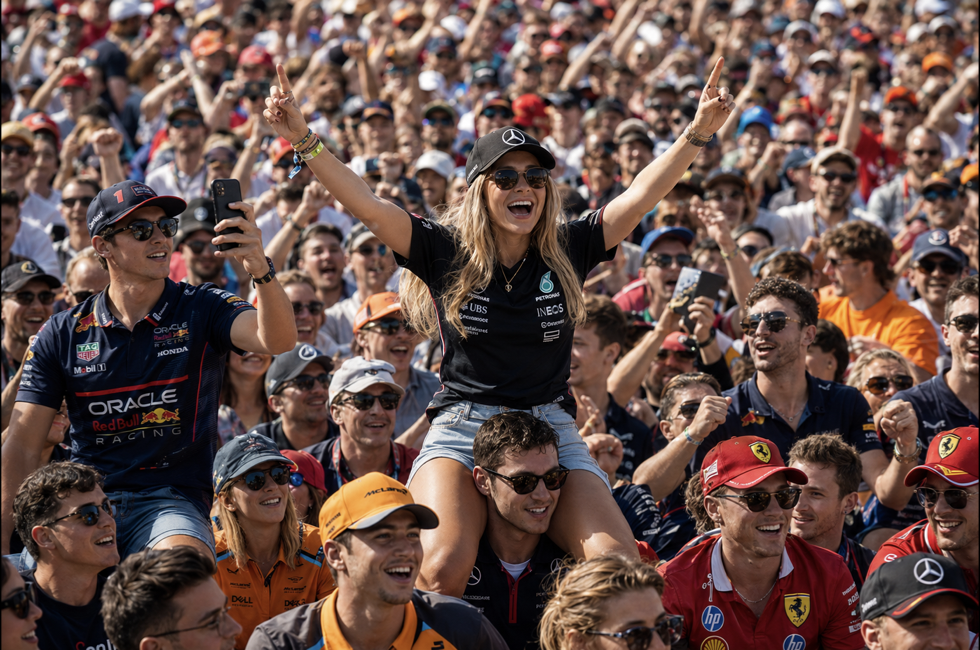
The audience owns the sport, and a moment like this is what no model can manufacture.
Paul Pfanner on why the flood of machine-made everything is quietly making the things no machine can fake worth more than ever.
In racing there is a kind of series they call spec, where every team is handed the identical car by rule, the same chassis and engine and tires, with nobody allowed to buy or build an advantage. The whole point of it is to take the bought advantage off the table, so that what decides a race comes down to the people, the driver most of all, and the crew who can wring more out of an identical car than the team in the next garage. I have come to think that is the best picture going for what AI is doing to the rest of us right now, and most people have it exactly upside down.
The flood isn't the story
The machines are doing to content what the rulebook does to a spec grid. A competent paragraph, a clean graphic, last night's news rewritten before lunch, all of it leveled down to where it costs next to nothing, because the moment a thing can be guessed out of what already exists its price falls through the floor. So everybody stands around asking what is going to survive the flood, and that is the wrong question, because the flood was never the part that mattered. What you want to watch is what it makes scarce, since scarce is where the money always ends up going.
Live can't be faked
Take live. This year S&P had global sports-rights spending up over $67 billion, near ten percent in a single year, while almost everything you can watch whenever you please keeps getting cheaper. The deal inside that number that ought to stop you is Formula 1 handing its U.S. television rights to Apple for something like $140 million a year, well up from the $85 million the last broadcaster paid. Look at who is writing that check. Apple, a company that built one of the great fortunes of our age by putting the whole world on a screen in your pocket, is paying a steep premium for the one thing a screen can never manufacture, a live race that nobody yet knows the ending to. You can simulate a Grand Prix to the last tenth and still not produce the one that runs this Sunday in front of millions watching it at the same minute with no idea how it finishes, which is the same reason anything a person has to be in the seat to feel holds its value, because the not-knowing and the being-there are exactly what the machine cannot hand you.
Proof becomes the product
Then there is the archive, where a lot of clever people are about to misread the prize. Picture a genuine historic race car sitting next to a flawless replica of it. The copy can be perfect down to the last rivet and still be worth a fraction of the real thing, because nobody is paying for the shape, they are paying for the life the thing has led, who drove it and what it won and a logbook nobody can fake. The same goes for film. More than half of what is online may already be fake and the forecasts have the web heading toward ninety percent machine-made, so once a perfect copy costs nothing, nobody pays for old footage as such, they pay for proof that it is real. But proof on its own just sits there. A verified old clip with no story around it is a file with a good alibi, and what gives it any value at all is a person telling you who was in the frame and what it meant and why it still lands now, because that telling, the meaning a human wraps around the proof, is the thing people will open a wallet for.
Brand is behavior
All of this is one idea wearing different jackets, that a brand was never the product, it stands for something past the product, a set of beliefs that lets a person feel right about wanting it, and you already know this from the people you trust. Look at Roger Penske, who turned a driving career out of the sixties into a transportation empire and then bought American open-wheel racing outright, the Indianapolis Motor Speedway, the IndyCar series, and the production company behind it, and last year brought Fox in as a one-third partner. He is the winningest team owner in the history of the Indianapolis 500. None of that is what people follow him for. They follow the Penske Way, the pressed white shirt and the standard that never slips and the line that effort equals results, held the same for sixty years, because brand is behavior, and there is no model anywhere that generates that. You cannot prompt your way into a reputation that took a whole lifetime to earn.
Audience Powers What’s Next
The audience owns the sport, always has, and what is new is that the athlete can now reach that audience with nobody standing in the middle, which turns the person into the brand. Emelia Hartford was RACER's first Creator of the Year, and she got there by building and racing cars and talking straight to an audience of her own until it ran into the millions, and this month Fox came and partnered with her on a show called Hot Laps. Notice the direction of that. The legacy company went to her, because she is the brand now, and she was doing the thing this whole piece is about before the rest of the business looked up. You can watch the same thing in every business there is, the person turning into something worth more than the platform they stand on.
The part that was always yours
None of this makes the machines the enemy. Let them have the dull weight of the work, the formatting and the rough first drafts, and welcome to it. What they cannot be is the person who was there, who carries the memory and the judgment and the taste that took a lifetime to build, and who can look at a thing and tell you what it means and why it still matters. That part was always the valuable part. We just never had to say it out loud until the machine made everything around it cheap. So here is the question worth your time. What have you got that the machine can't fake, and are you building more of it, or less?
Pfanner Advantage works with clients to turn change into advantage at the intersection of mobility, motorsport, media, technology, and marketing. Learn more or start a conversation: contact us today.
Paul Pfanner’s recent Shift Happens Insights:
Sunday Made the Case - the 110th Indy 500
The Advantage Journal arrives every week. What matters in sport, mobility, media, and technology — curated and contextualized by Bill Sparks, Bill Long, and Paul Pfanner. No hedging. No filler. Subscribe — It’s Free

