Who Owns The Audience Now?
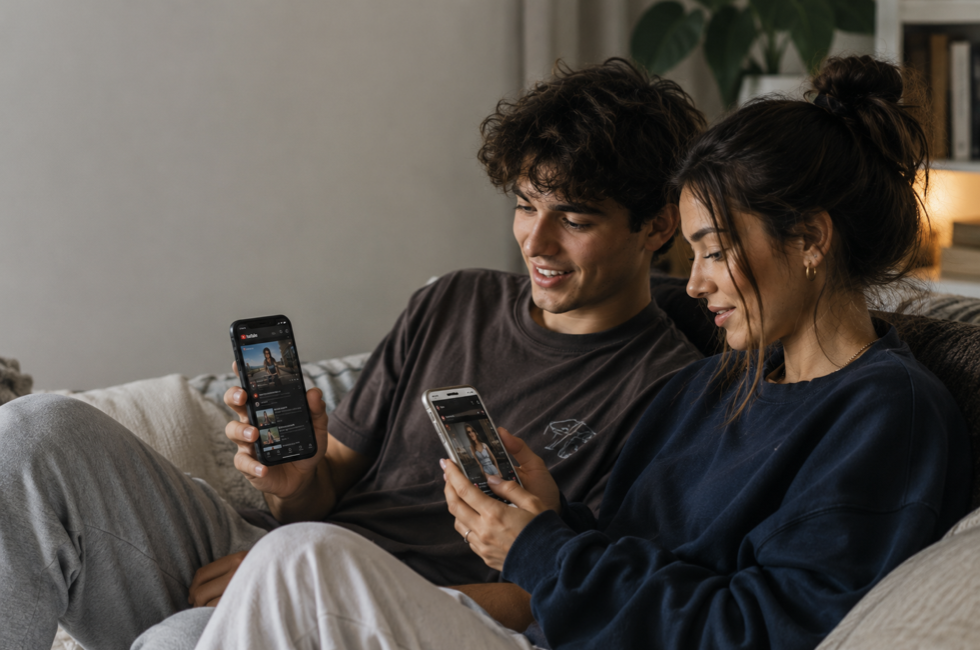
Two screens, two audiences of one. This is where the trust went.
Audiences have quit following channels and gone looking for people they trust. Pfanner Advantage founder Paul Pfanner follows the money and the trust to the question underneath the whole shift: who really owns the audience?
Last year, for the first time, more Americans got their news from social and video feeds than from a television set.The feed pulled 54 percent of people, a few points ahead of television at 50, while the news sites and apps the whole business bet on finished third at 48. Among Americans under 35 it isn't a contest. 54 percent of 18-to-24s and 50 percent of 25-to-34s now call social and video their main source of news. And 61 percent of Gen Z say they would rather watch something a regular person made than anything a network produced.
I spent my working life inside this business, so I can tell you plainly that those numbers undo a lot of what we built. The audience used to come to the institution because the institution owned the transmitter. Everybody has a transmitter now, and the audience has gone looking for a face it trusts instead.
They follow the person
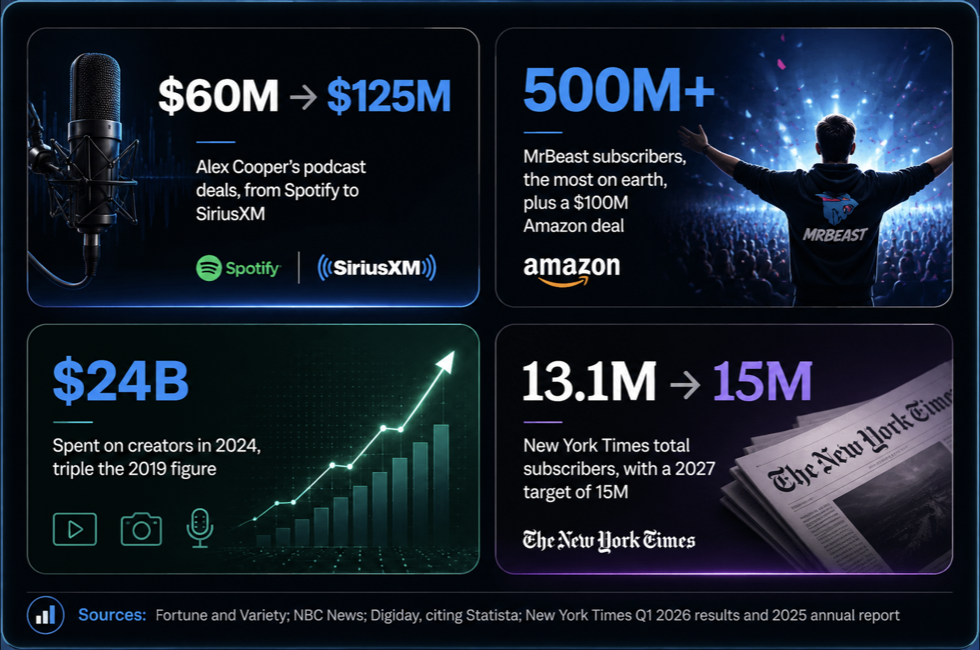
Watch how Alex Cooper moved. She built Call Her Daddy into the second-biggest podcast in the country behind Joe Rogan, signed a $60 million deal with Spotify, then walked across the street to SiriusXM for as much as $125 million, and her listeners walked with her. Her audience was loyal to her and not to whatever app she happened to be on, which is the whole reason she could pick up and move and take all of them along. She also fought to own her own intellectual property, the part the old hands keep missing, because she worked out that whoever owns the relationship owns the business.
YouTube became the television
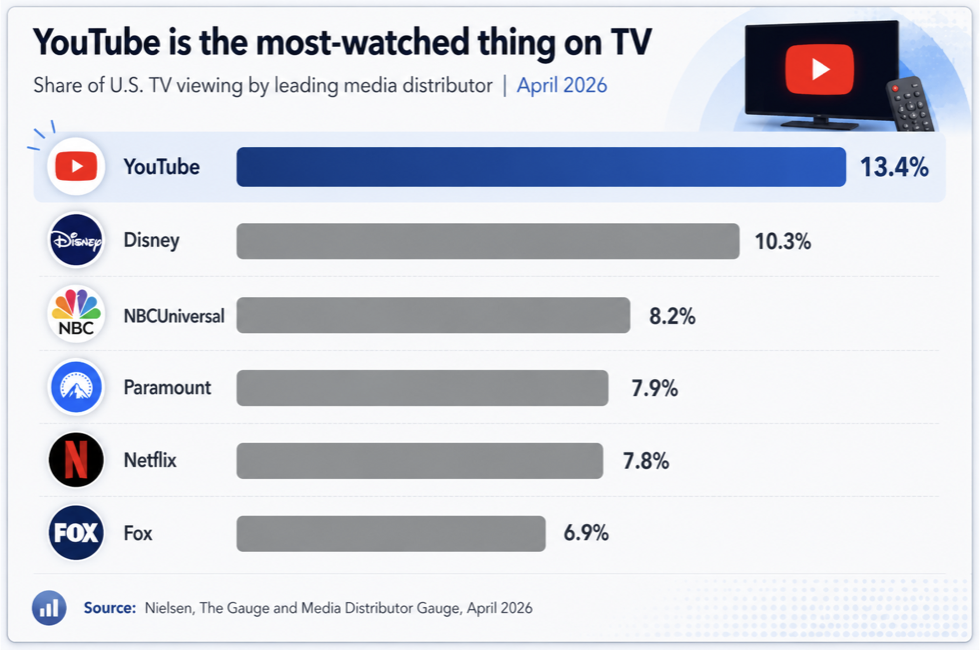
YouTube took the couch. It has been the most-watched thing on American television for the better part of a year, pulling 13.4 percent of all TV viewing this spring, well ahead of Netflix. People watch more than a billion hours of it a day on their TV sets. And the thing eating into late-night television now is the podcast. YouTube's own people call long-form creator conversations the new late-night TV, and viewers put better than 400 million hours of podcasts a month up on the living-room screen.
Podcasting became the press room
Here is where it stops being a novelty. In the closing weeks of the 2024 race, Donald Trump sat down with Joe Rogan while Kamala Harris went on Alex Cooper's Call Her Daddy. Rogan divides people, and plenty can't stand him, and it changes nothing, because the audience that trusts him dwarfs what most cable networks will ever gather again. The conversation that used to run through a newsroom now runs through a person with a microphone and a following, and the politicians worked that out before the press did.
The money already moved
Follow the dollars and you watch the whole floor tilt. MrBeast, who taught himself the algorithm as a teenager, has the most subscribers of any channel on earth, north of 500 million, and Amazon paid him a reported $100 million to build a game show. He didn't need a network or an ad budget to do any of it, because he brought the audience with him. Spending on these creators tripled in five years and ran past $24 billion. Calling them influencers undersells it. They run like studios now, with their own audiences and product lines, beholden to no platform to get their work in front of people.
The brands and the athletes saw it first
The companies that read this early were the ones already sitting on a crowd that wanted them. Liquid Death started behaving like a comedy outfit and is worth $1.4 billion selling canned water. Red Bull runs a film studio that reaches a billion people who rarely see the can. And the racing series this country ignored for forty years handed Netflix the keys to make a soap opera out of it, after which American fandom climbed from 21 percent of adults to 28 in two years. Drivers and ballplayers run their own channels now and don't wait for anyone's blessing to reach their own fans. None of it looks like the marketing I came up on, it is just these outfits behaving in public and letting the behavior do the selling.
The one old house that changed
The New York Times saw all of this coming and did the hard thing. It quit running like a newspaper and rebuilt itself as a bundle: news, games, cooking, Wirecutter, and a $550 million sports operation in The Athletic. It carries more than 13 million subscribers now, nearly all of them digital, and wants 15 million by the end of 2027. The pitch holding it together is that the work is made and checked by people in a world drowning in the machine-made kind. That's the lesson for everyone still hoping this blows over. The work matters as much as it ever did. What changed is that nobody hands authority to an institution anymore for the legacy of being one. You earn it in public, the slow way, or you run out of reasons to exist.
So, who owns the audience?
Nobody. That's the answer the question is hiding. You don't own an audience any more than you own the weather. The audience owns you, and it owns every brand and network that ever drew a breath, and it collects its rent in behavior. Brand is behavior. What you do while they're watching is the whole of what they're buying, and the morning the behavior turns phony they're gone, with the conversation in their pocket.
I don't have clean answers about where it goes from here, and I'd back away from anyone who claims they do. AI is about to make competent content free for everyone, which only raises the price of the one thing a machine can't fake, a real person showing up as themselves in real time. So if people follow people and not institutions, what becomes of the institutions, do they grow their own people or spend a decade explaining a chart that slides south? When every brand and every fourteen-year-old with a phone is a broadcaster, who does the sorting, and at two in the morning when a story breaks into nine thousand versions, who do you believe and why that one? The audience already chose people over logos. The only thing left to decide is whether you're someone they trust or something they scroll past.
SOURCES
Social and video overtook TV as Americans' top news source, and a majority of under-35s now name them as their main source. Reuters Institute Digital News Report 2025.
Gen Z preference for creator content; a billion-plus hours of YouTube watched daily. TechCrunch, reporting Nielsen and YouTube data.
Alex Cooper's $60 million Spotify deal and ownership of her IP. Fortune.
Cooper's SiriusXM deal worth up to $125 million. Variety.
YouTube the No. 1 media distributor at 13.4% of US TV viewing, April 2026. Nielsen, The Gauge.
A billion-plus hours of YouTube watched daily on TV sets. YouTube, CEO Neal Mohan's annual letter, via Deadline.
Podcasts as the "new late-night TV"; 400 million-plus hours a month on living-room devices. YouTube blog, via StreamTV Insider.
Trump on Joe Rogan and Harris on Call Her Daddy during the 2024 campaign. Newsweek.
MrBeast the most-subscribed channel on YouTube; $100 million Amazon deal for Beast Games. NBC News.
Creator spending tripled since 2019 to an estimated $24 billion in 2024. Digiday, citing Statista.
Liquid Death valued at $1.4 billion. Entrepreneur.
Red Bull Media House and the "media company that happens to sell energy drinks" model. Red Bull Media House.
US Formula 1 fandom rose from 21% to 28% of adults. Morning Consult.
The New York Times' evolution from newspaper to diversified bundle. NYT Company Q1 2026 results.
The Athletic acquired for $550 million. CNBC.
The NY Times' goal of 15 million total subscribers by 2027. New York Times Company 2025 annual report (Form 10-K).
NYT 12.52 million digital-only subscribers as of Q1 2026. NYT Company, SEC Form 8-K.
The Times' "human-made, trusted" positioning against AI content. The Drum.
Pfanner Advantage works with clients to turn change into advantage at the intersection of mobility, motorsport, media, technology, and marketing. Learn more or start a conversation: contact us today.
Paul Pfanner’s recent Shift Happens Insights:
Sunday Made the Case - the 110th Indy 500
The Advantage Journal arrives every week. What matters in sport, mobility, media, and technology — curated and contextualized by Bill Sparks, Bill Long, and Paul Pfanner. No hedging. No filler. Subscribe — It’s Free

