Who's Winning the World Cup Marketing Game?
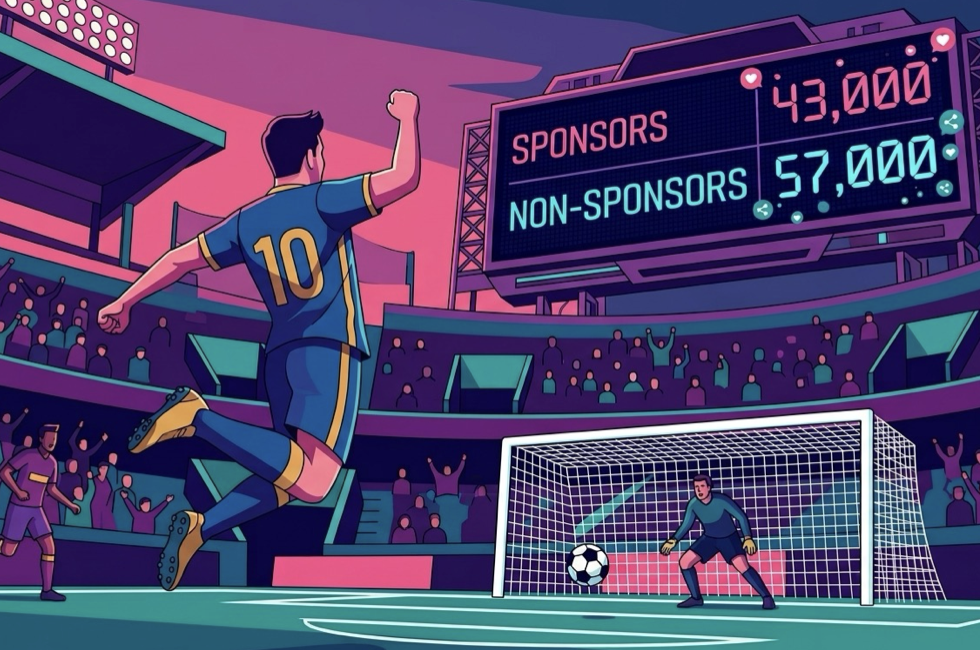
In the first five days, World Cup brands have racked up roughly 57,000 social mentions to the official sponsors' 43,000.
Although it's still early in the tournament, there are already lessons to be learned about how brands are generating buzz around the FIFA World Cup. What does a $60 to $100 million World Cup sponsorship buy? Bill Sparks looks at how — like the game itself — it all depends on execution.
Brands committed a record $2.8 billion in sponsorship rights for this World Cup cycle. So why do early metrics indicate the brands that paid nothing for the privilege generating more conversation than the ones that paid the most? Since the opening match, non-sponsor brands have racked up roughly 57,000 social mentions to the official sponsors' 43,000.
That gap is the story of the 2026 World Cup so far, and it should make any executive who signed a sponsorship check ask a harder question than "did we show up?" The question is whether showing up is the same as mattering. It is too early to talk about ROI; the final is still weeks away, and sales data lags the event. But reach, engagement, and share of voice are measurable now, and the early scoreboard is not the one the rights fees would predict.
Among the official partners, two brands are doing the work for everyone else.
McDonald's has been the engagement story of the opening days. Its campaign built around FIFA legends visiting the drive-thru, paired with a ticket giveaway timed precisely to kickoff, drove a twenty-fold increase in weekly mentions since May and captured 29% of all World Cup ad viewership. Social-listening firm Meltwater described its rise from "mid-table sponsor to the most talked-about official partner." The lesson is about timing, not budget: McDonald's concentrated its fire at the moment fan excitement peaked rather than spreading spend thinly across a season.
Adidas is winning a different way, on depth and consistency. Its five-minute "Backyard Legends" spot, starring Timothée Chalamet, Bad Bunny, and Lionel Messi, holds a 38% share of engagement and is the only top brand to have held or grown its share as the competition crowded in. Together, Adidas and Coca-Cola accounted for more than 80% of all sponsor engagement through May. The uncomfortable implication is that the official-sponsor banner is being carried by a handful of brands while the rest pay to stand behind them.
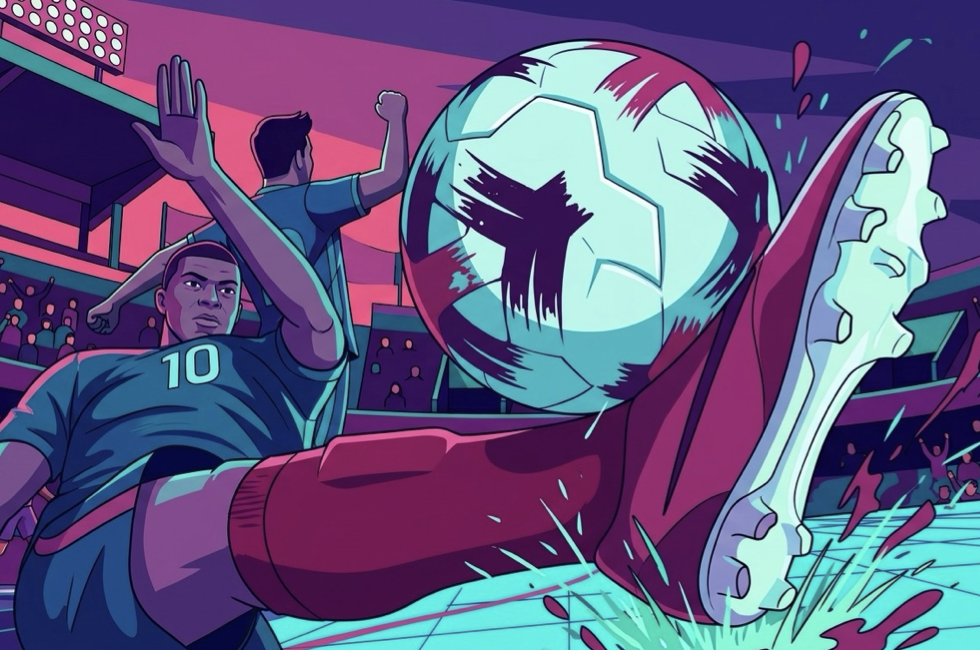
Meltwater declared Nike the winner of the non-sponsor conversation with its "Rip the Script" spot.
The non-sponsor conversation
Because the brands generating the most heat never bought a sponsorship at all.
Nike, conspicuously not a tournament sponsor, won what Meltwater called "the non-sponsor conversation" with "Rip the Script," a spot whose cross-cultural casting put Cristiano Ronaldo and Kylian Mbappé alongside Drake, Travis Scott, LeBron James, and BLACKPINK's Lisa. The point of that guest list was reach into communities a football-only ad never touches; a two-second Lisa cameo alone spawned K-pop fan breakdowns on YouTube. A single fan repost of the ad pulled 1.7 million engagements on TikTok, where Nike saw five times the engagement of the identical content on Instagram.
LEGO produced the tournament's clearest viral peak weeks before the event with "Everyone Wants a Piece," which drove twelve times more engagement per mention than the official sponsors' ads; Messi's post of the spot alone passed 180 million views in its first day. One repost from Ronaldo to his followers accounted for 5.5% of a full week's campaign engagement. And Levi's turned a problem into the cleverest stunt of the tournament: told to de-brand its namesake stadium, it covered its own logo and draped white sheets over storefronts from Paris to Hong Kong, lifting its mentions 44% and nearly quadrupling its engagement. None of these brands paid for the association. All of them are beating the brands that did.
Which brings us to who is losing, though "losing" needs a careful definition. The clearest misfire belongs to Coca-Cola, a top-tier partner whose "Uncanned Emotions" spot drew mostly negative reaction, with critics calling out production shortcuts and a concept that buried its own idea. Heavy spend bought attention; the attention was not flattering.
$60 to $100 million is table stakes for sponsors
The larger and quieter problem is everyone else. Meltwater's assessment of the official roster was blunt: most official partners remain largely invisible in the social conversation regardless of phase. That is the real risk hiding inside a sponsorship deal. A rights fee in the range of $60 to $100 million or more buys signage, category exclusivity, and the right to use the marks. It does not buy relevance, and relevance is the only currency that moves on social. Invisibility is not a scandal. It is something worse for a CMO to explain: a premium price paid just to be in the game.
Sponsorship still buys something buzz cannot, since most consumers say they trust official sponsors more than the brands crowding in around the edges. The honest question is whether that trust premium justifies what it now costs.
The most efficient performances came from brands nobody would have predicted. Powerade's strongest moment came not from its own channels but from a partnership with Spanish-language creator Jenifer Rosas, whose video drew engagement seventy-nine times higher than all other World Cup brand-collaboration content. Air Transat, a Canadian airline, earned a free viral moment simply by comparing its airfares to the punishing price of World Cup tickets, prompting a third-party account to call it "the smartest ad ever." The mechanism in both cases is the same, and it is worth naming because it generalizes: content where the brand earns its place rather than announces it.
So why does the scoreboard look like this? The first theory is the difference between earning and announcing. Creator-native, culturally embedded content consistently outperforms brand-fronted spots, because the badge signals presence while the content has to earn engagement on its own merits. The second is that cultural crossover beats category loyalty. Nike's multi-community casting worked because football is not the whole story, and the audiences worth reaching often live next door to the sport rather than inside it. The third is timing. Two playbooks work, and they sit at opposite ends of the calendar.
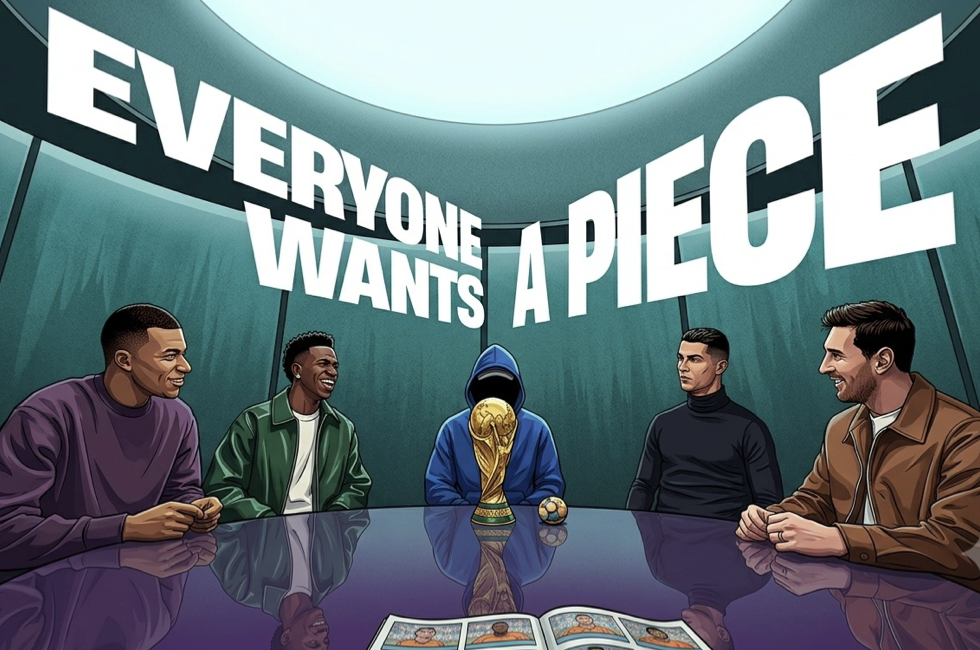
LEGO’s “Everyone Wants a Piece” spot generated tremendous engagement weeks before the tournament began.
Activation timing
Early activation captured cheap attention before the field crowded in, and LEGO took 13% of the tournament's top-50 engagements before the first match was even played. The kickoff burst, McDonald's model, concentrated everything at peak excitement. The losing move is the obvious one: activating in week one alongside every other sponsor, when attention is most expensive and least differentiated. The fourth theory complicates the whole non-sponsor narrative. Once matches actually began on June 11, official sponsors finally outperformed non-sponsors on engagement per mention, by roughly 60%.
Rights-backed activation does pay off, but only when the whistle blows. The optimal playbook is therefore both: creator and athlete content during the build-up, rights activation once the tournament is live. Platform choice rounds out the picture, with TikTok over-indexing on engagement, YouTube on volume, Meta on sponsor mentions, and Reddit running negative enough to monitor rather than activate.
For executives, the description matters less than the decisions it should prompt. Three questions are worth asking. Are we buying relevance or merely presence? Is our calendar built around the windows when attention is cheap, or are we paying peak prices to be one of fifty brands saying the same thing at the same time? And does our creative give distinct communities a reason to share it, or does it simply display a logo and hope?
One honest caveat belongs in any reading of these numbers. Non-sponsors look efficient in part because they skip the rights fees entirely, and engagement is not sales. The verdict that counts will not arrive until after July 19. But buzz is the leading indicator that sales tend to follow, and so far it favors brands the sponsorship money would never have picked.
Pfanner Advantage works with clients to turn change into advantage at the intersection of mobility, motorsport, media, technology, and marketing. Learn more or start a conversation: contact us today.
The Advantage Journal arrives every week. What matters in sport, mobility, media, and technology — curated and contextualized by Bill Sparks, Bill Long, and Paul Pfanner. No hedging. No filler. Subscribe — It’s Free