
The Best is Now
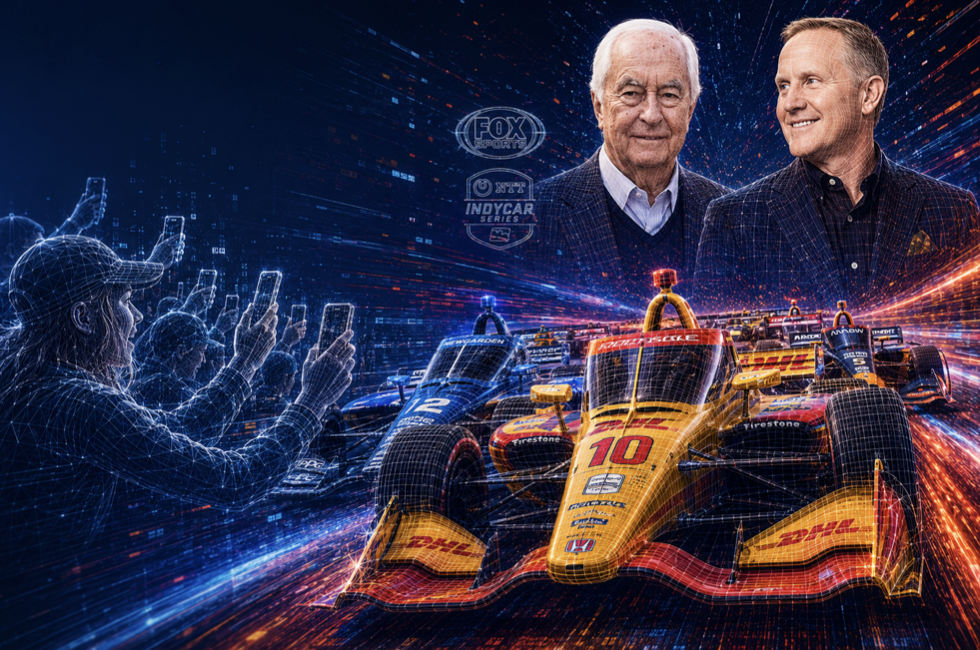
Stability behind it, reach beside it, a new generation holding up the lens: the best version of this sport is the one in motion.
Thirty years after the schism that divided American open-wheel racing, the question Paul Pfanner keeps being handed is: which side finally won? After "The Split at 30" and "Sunday Made the Case" drew the strongest response yet to anything published under the Pfanner Advantage banner, the replies kept circling the same scoreboard. In the essay below, he declines to settle it, and argues that the people still keeping score are the only ones missing what is right in front of them.
The week after the 110th Indianapolis 500, my inbox did something it had never done before. It argued with me.
"The Split at 30" had run its course, and "Sunday Made the Case" had traveled farther than anything I've put out under the Advantage banner. A Reddit thread I didn't start, and couldn't have engineered if I'd tried, carried it into corners of the sport I will never see firsthand. The reach came with a bill. People wanted a ruling. Penske owning the Speedway proves CART won, said one camp. The same fact proves the IRL won, said another. And then the weary verdict that has become its own kind of fandom: nobody won, the thing is broken, it will never be what it was.
I want to take that last line seriously, because it folds a small truth inside a large mistake.
The part they have right
The racing will never be what it was. That is true, and it was never going to be otherwise. The sport people remember was itself always moving. The version my father's generation loved had already become something else by the time I came up in it, and what I came up in is not what a teenager felt this May watching Felix Rosenqvist edge David Malukas by two hundredths of a second. Every era of this sport has been somebody's golden age and somebody else's letdown, and the one thing true of all of them is that none of it ever held still.
This is the whole of Now-ism, and it is not a slogan. Now is never what it was. I am not the same man who began this paragraph; I learned something in the writing of it. A sport is a living thing, and a living thing that stops changing has not been preserved. It has been embalmed. So when someone tells me the racing will never be what it was, I agree, and then I ask, as kindly as I can, why they would want it to be.
The people who don't care are the answer
More than half the drivers who started this year's Indianapolis 500 were born after the spring of 1996. They did not live through the division, and they feel nothing missing because of it. To them there has only ever been one series, one ladder to climb, one 500. That is not amnesia. It is healing, arriving exactly on time and doing what healing does.
The same holds in the rooms where the sport is sold. The people building its brands and running its business today were, for the most part, nowhere near the fight in the nineties. They are not relitigating a war they never joined. They are solving a real problem in a media and cultural environment that did not exist back then, one where a race reaches its audience on a phone as easily as on a television, and where the audience, as it always has, owns the sport outright. The old grudge is not useful to them. It is only weight.
Justifying is not competing
Now let me be plain, because honesty is the only thing that ever taught anyone anything. The split cost American open-wheel racing a generation of momentum. That is not in dispute, and I will not soften it. But the people still arguing over who was right are not protecting the sport. They are protecting a position. Defending a position you took thirty years ago is not a competitive act. It is the opposite of one.
I have spent my life around people who win, and the ones who win consistently share a habit. They look honestly at what went wrong and they apply the lesson before anyone else does. They do not spend their energy proving that the decision which already cost them was somehow correct, because there is nothing left to win in that argument. Racing is learning. Those who learn faster win. And no one has ever learned a thing while they were busy being right.
What now has that then never did
Here is the part the scorekeepers keep stepping over. This sport holds advantages today that it did not hold on its best afternoon during the divided years.
It has a single owner with capital and patience. Penske Entertainment and Penske Corporation did not buy the Speedway and the series to flip them. They bought a hundred-year institution and they are investing against a hundred-year horizon. During the split, that kind of stability was impossible, because both sides were spending their money and their attention fighting each other.
Its reach would have made the founders of either side envious. Every race on a broadcast network, the Indianapolis 500 and the Daytona 500 in the same hands for the first time, and in Eric Shanks a partner at Fox who understands that you grow a sport by putting it in front of people rather than rationing it. Put stability, investment, and reach in the same hands at the same moment, and you have an opportunity the best day of 1995 could not have produced, for the simple reason that the best day of 1995 was still a day spent at war.
And the audience is answering. Through the Detroit Grand Prix, the 2026 season is averaging more than 2.2 million viewers, up twelve percent on last year and IndyCar's strongest start since 2008 — the year the division ended.
Now is the story
So who won? No one, and I mean that as good news rather than the eulogy people keep trying to make of it. A final score from a contest that is already over tells you nothing about the one being run today. The grid is full of people who never knew the division existed. The brands are in the hands of people with newer problems and far better tools. And the sport sits in steadier hands, with a longer view, than it has had at any point in my working life.
Nothing will ever be what it was, because nothing ever is. That has never once been the tragedy of this sport. It has always been the engine in the race to next.
Updated: Viewership figures are current through the Detroit Grand Prix and reflect the season-to-date average across the first eight races.
Pfanner Advantage works with clients to turn change into advantage at the intersection of mobility, motorsport, media, technology, and marketing. Learn more or start a conversation: contact us today.
Paul Pfanner’s recent Shift Happens Insights:
The Wrong Question - F1 in 2026
Sunday Made the Case - the 110th Indy 500
The Split at 30 - On the eve of the Indy 500
The Advantage Journal arrives every week. What matters in sport, mobility, media, and technology — curated and contextualized by Bill Sparks, Bill Long, and Paul Pfanner. No hedging. No filler. Subscribe — It’s Free

