
Truth or Power?
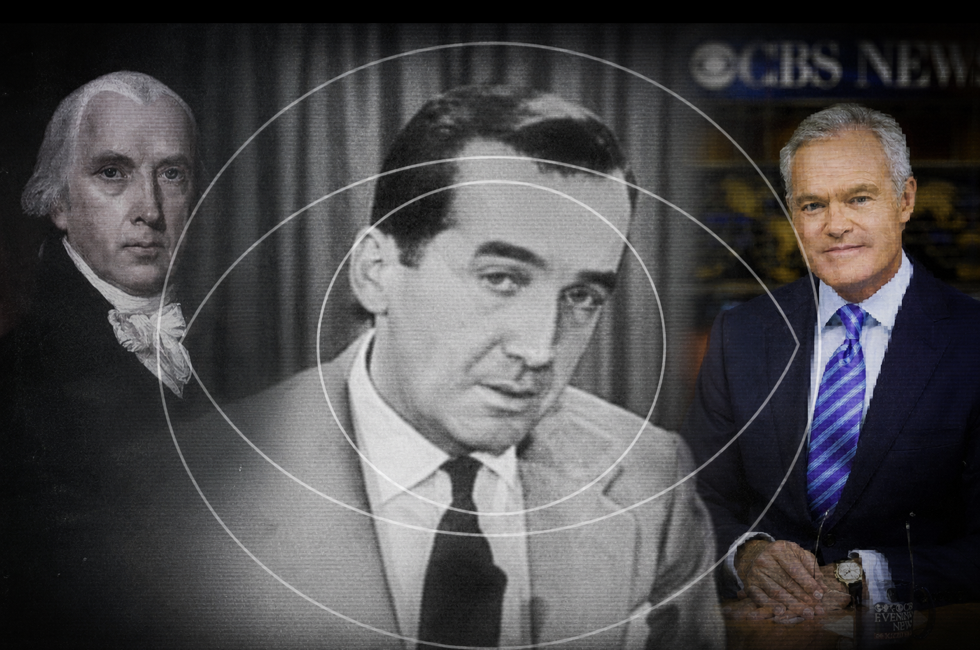
James Madison, Edward R. Murrow, and Scott Pelley. Three men, three centuries, one standard.
Paul Pfanner spent more than fifty years building media properties and backing the reporters who write for them. Here he takes the firing of a network's most familiar correspondent as the way into an older question: what a free press is actually for, and the single test that separates journalism that serves the public from journalism that serves power. He goes back to James Madison and to Edward R. Murrow, and refuses to let the argument belong to any one side.
This week a television network fired its most familiar correspondent after thirty-seven years. On his way out he said he had been told to put unverified claims into a politically sensitive story, and that he had refused. To most people it looked like something new.
It is the oldest fight we have.
Madison's answer
The man they fired had reached for the same idea himself. Accepting an award for the craft, he quoted James Madison. So I went and read the whole of what Madison said, because the line people repeat is a paraphrase, and the original is stronger.
Here is where it comes from. In 1798 the government passed the Sedition Act and made it a crime to criticize Congress or the president. Editors went to jail for doing their jobs. When it was over, Madison, who had written the First Amendment, was asked what he made of it. His answer still says it best. The right of people to examine those who govern them, and to speak freely about what they find, "has ever been justly deemed the only effectual guardian of every other right."
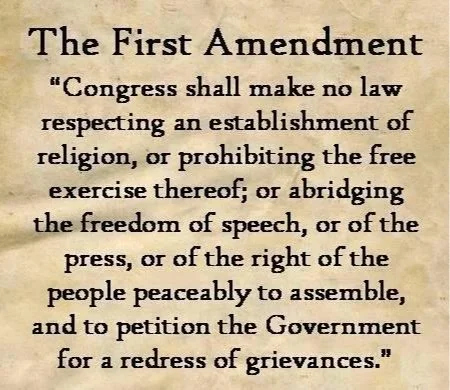
.James Madison drafted The First Amendment, it was ratified on December 15, 1791.
Madison was describing how it works. The free press is the one liberty that protects all the others. Take away the public's ability to examine power, and every other right becomes something power lets you keep until it decides otherwise.
Television's finest hour
The network in this story once showed the country exactly what that means. On March 9, 1954, Edward R. Murrow used a half hour of See It Now to take apart Senator Joseph McCarthy, who had built his power on accusation without proof. The strength of it was the method. Murrow let McCarthy convict himself, in his own words and on his own film, and added only a few lines at the end. We must not confuse dissent with disloyalty, he said. Before it aired, with his staff afraid of what it might cost them, he told them the fear was already in the room, and that no one man can frighten a nation unless the rest agree to help him.
Edward R. Murrow during the March 9, 1954 See It Now broadcast on Senator Joseph McCarthy. He let the man's own record do the work, and added only a few lines at the end.
The plain truth is better than the legend. Murrow was not the first to stand up to McCarthy, and he did not bring him down by himself. Others had paid for it before him, and the Senate finished the job later. What Murrow did was harder to copy than being first. He was trusted, he chose to meet the moment that counted, and he put the evidence in front of the country without looking away.
That standard lives at the same network in the news this week. When the new owner took over, the first thing he did was walk into that newsroom and praise Murrow by name. If you claim that history on your first day, you have agreed to be measured against it.
The test that takes no side
Here is the test, as plainly as I can put it. A journalist serves the truth or serves power. No one serves both. You do not learn which by watching them go after the people you already dislike. Anyone will do that and call it courage. It is easy to challenge the powerless. The job is to challenge the powerful — and the press has failed at that plenty, under presidents of both parties, across fifty years.
Hold it against what happened here. There is a difference between journalism and propaganda, and the difference is who it serves. Journalism checks a claim before it runs and reports what is true even when the powerful would rather it stayed buried. Propaganda runs what power wants believed and calls it news. The fired correspondent says he was ordered to put unverified claims into a story and refused, and that politicians were being allowed to choose who questioned them. The company has not answered those charges. What no one disputes is narrower, and still tells you something: a story was held back, then later aired with the government's own statements added that had not been in it. By itself that proves no one's intent. But a newsroom that parts with its most experienced journalists one after another, and then runs power's words in a story it had held, is moving in one direction and not the other. That is the failure, no matter who it benefits.
Strip away the names, and the pattern never changes. A lie has to be protected. The truth can take care of itself.
What 2026 added
What is new is that this is happening while the money that paid for honest reporting drains away, and while the news falls into fewer hands. The same owner who just took this network is trying to buy the company that owns CNN and HBO. Meanwhile the loudest new voices, online and machine-made, can capture a moment and do nothing to keep the true record. Capturing a moment and keeping the true record were never the same work.
Not all of this is decline. A great deal of what reaches people now is content built to serve a brand, and there is nothing wrong with that. I have spent much of my career in that work, and still do. Marketing done with skill and conviction can inform and even delight, and it earns its place, as long as it is honest about what it is. The line was never between selling and telling. It is between work that says plainly whose interest it serves and work that hides it. A brand making its case in the open is doing something clean. Hiding it is the only thing that isn't.
The view from the paddock
I watched this come for my own sports niche before it reached the evening news, in a smaller world where the stakes were lower and the shape was the same. I saw a champion throw a reporter out for a question he did not like. I saw the sport become its own guided press and hand its access to people who answer to it. I am out of that fight now. I don't run a media company, and I'm not the one backing reporters anymore. But I know what they are for, because I spent my working life beside them.
The unbuilt door
No one has built the thing that pays for honest witness and cannot be bought out from under it. This can still be built. For now, James Madison's guardian is still standing. The two questions this week put to the rest of us is whether we will pay what it costs to keep it standing, and whether we have the courage and the will to hold every side, our own POV included, to the one standard that has ever kept us free.
Paul Pfanner has spent fifty-three years in motorsport and automotive media. He recently received the Society of Professional Motorsports Journalists' Russo-Marvel Award for that career. He attended Richard M. Nixon's alma mater, Whittier High School, while Nixon was president — graduating two days before the Watergate break-in in June 1972.
Pfanner Advantage works with clients to turn change into advantage at the intersection of mobility, motorsport, media, technology, and marketing. Learn more or start a conversation: contact us today.
Paul Pfanner’s recent Shift Happens Insights:
Sunday Made the Case - the 110th Indy 500
The Split at 30 - On the eve of the Indy 500
The Advantage Journal arrives every week. What matters in sport, mobility, media, and technology — curated and contextualized by Bill Sparks, Bill Long, and Paul Pfanner. No hedging. No filler. Subscribe — It’s Free

