
Racing is Learning
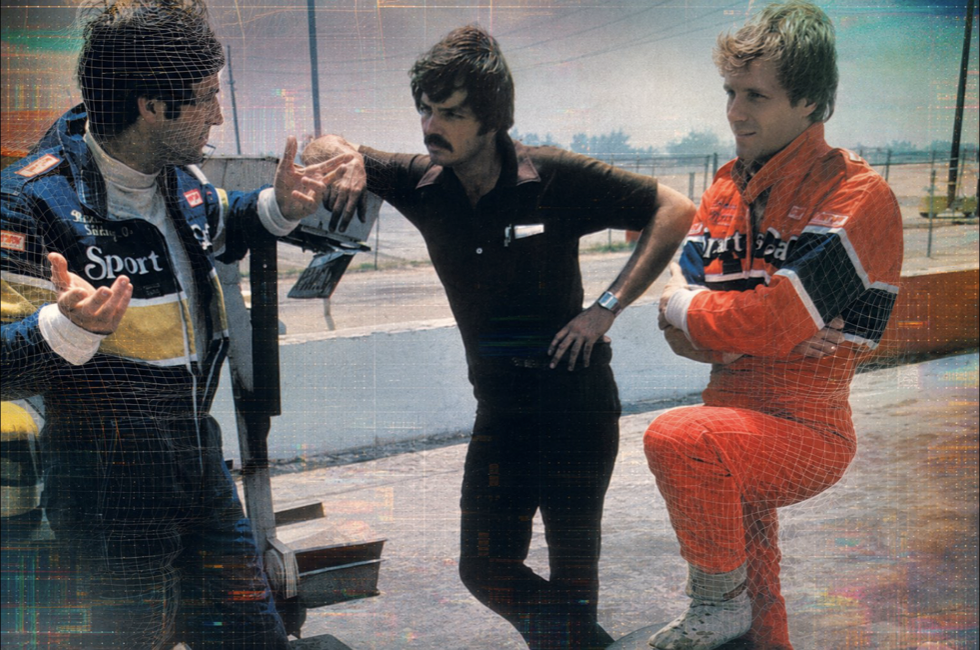
July 1979. Riverside International Raceway. "Racing is learning." The day Mike Hull (middle) told me (right) something I'd spend a lifetime proving true. Image by Jeff Zwart.
On Friday, May 22nd, 2026 at 10:30 AM Eastern, Paul Pfanner will receive the Society of Professional Motorsport Journalist Russo-Marvel Founders Award, presented in the Indianapolis Motor Speedway media center.
This is an honor I never expected and don't take lightly. It will also likely be my final formal connection to journalism. My focus has shifted to new media and marketing models that didn't exist when I started. I devoted more than 20,000 days of my life to building media entities that employed some of the sport's finest editors, reporters, writers, photographers, illustrators, and videographers. They shared their authentic passion for racing with millions of fans around the world. I owe every one of my teammates a debt of gratitude. I also owe them the truth—as I see it—about where journalism stands today.
Racing is learning.
Mike Hull told me that in 1979. He was already a team manager by then—a former driver who'd moved into building teams. I was still driving, still figuring things out. I complained about the car, blamed everything but myself. He just looked at me and said it. It stuck because it was true then and it's true now. It's true in a cockpit. It's true in a press room. It's true when you're trying to figure out what comes next.
Mike learned it racing. He's spent thirty-four years proving it works everywhere else. Ganassi hired him in 1992—the same year I started building RACER. Our paths have been parallel ever since. He understands velocity. He understands learning. And he keeps learning.
The condition is different now
The athlete controls the narrative. The league controls some distribution. The brand controls access. The team controls the message. And in the NTT IndyCar Series, Fox became a one-third owner of Penske Entertainment—a leading omnichannel media company now with financial skin in the game beyond broadcasting rights. That's the precursor for what's coming: media companies no longer just cover sports. They own them. They're invested in their growth.
Meanwhile, the distribution keeps fragmenting. Network TV, streaming apps, international platforms, social media clips. The cycle is year-round—not just race weekends, but driver development, team operations, sponsor content, athlete personal brands running 365 days a year.
Being first doesn't matter anymore when everyone has a camera. The journalist exists in a world where none of the old rules work anymore. Proximity is everywhere. Everyone has a platform. And the definition of who's actually covering the sport has become impossible to pin down.
So the question isn't whether journalism survives. It does, wherever truth matters and someone is willing to tell it. The real question is whether you do. Whether you're learning fast enough to stay relevant in a market that's already moved past where you're standing.
Who you work for changes everything
I built a RACER on one principle: we work for the audience, not for the sanctioning body, not for the team, not for the sponsor. That line held because I defended it. When you know who you actually work for, your job, your ethics, your relevance—it all becomes clear.
But that job has changed. It's not about access anymore. Access doesn't matter when the subject can reach the audience directly. It's not about being first. Being first doesn't matter when the story moves at algorithm speed. It's about understanding something true about why a moment matters. What it means. Why someone should care beyond the results of a qualifying session or a race.
That requires real proximity. Time. Genuine curiosity about things that don't have a corporate interest attached. And the willingness to say something true even when it costs you.
Those things are rarer now. Not because journalists got worse. The institutions that used to protect that work can't afford to anymore. The overhead built for another era doesn't scale in this one.
The people who moved are winning
The ones who stopped defending the model and started building what actually works. They're attracting the attention. They're the ones the audience follows. They understand something fundamental: the market's already changed. Your job is to learn faster than the change is moving.
And here's the thing—it's not complicated. The ones sitting in this press room in 2031 will have figured out something different about who they're serving and how. The cars will evolve. The world will evolve. Your job stays the same: learn faster than the competition.
That's racing. That's everything.
Racing is learning, and it always has been. It always will be.
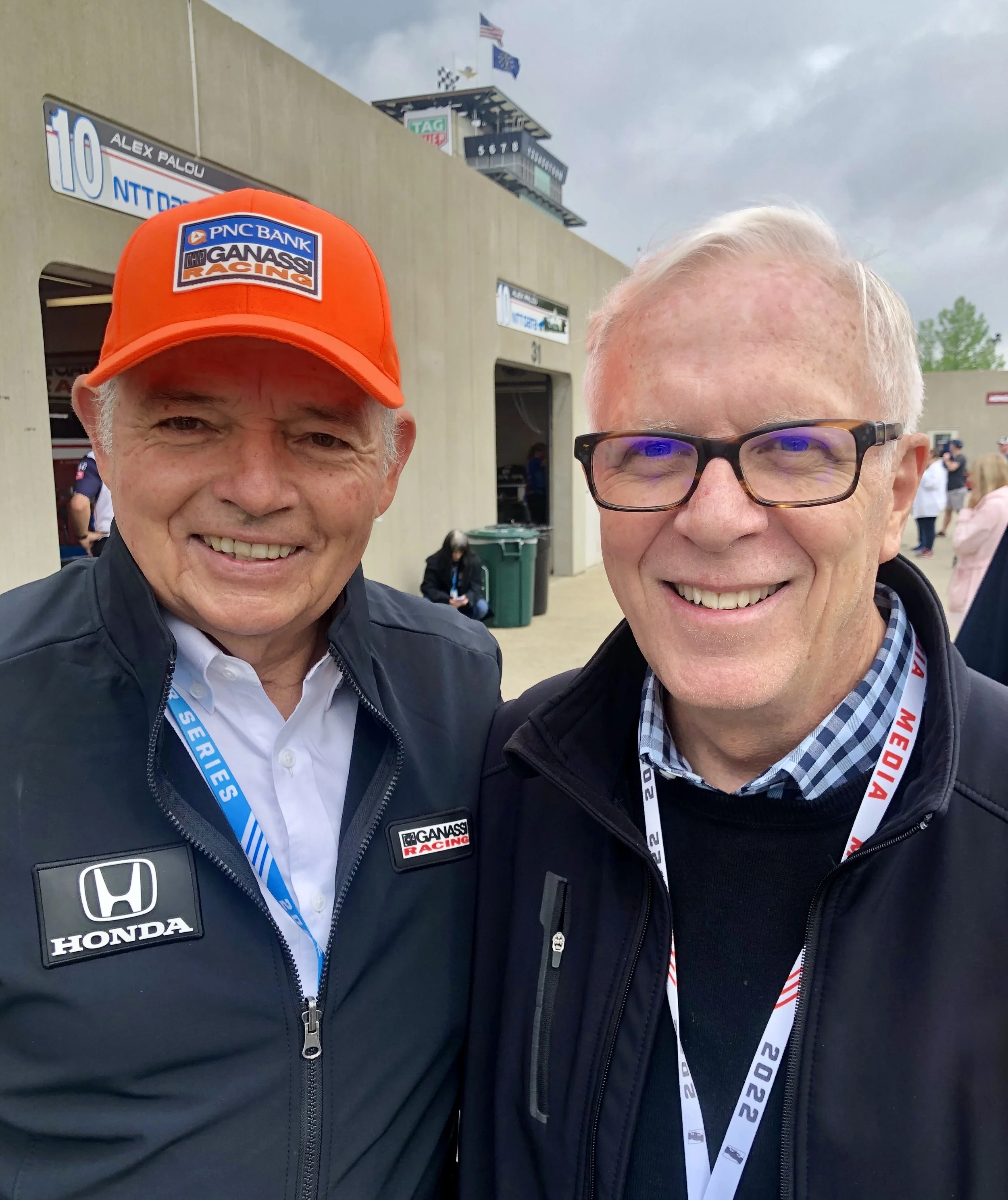
Mike Hull remains a close friend and confidant 53 -years after we first met alongside the Titan Mk-6 Formula Ford he was racing during a chilly SCCA weekend at Riverside international Raceway. Since 1992 Mike has led Chip Ganassi Racing Teams to 24 championships and more than 270 victories, including six wins in the Indianapolis 500, eight Rolex 24 At Daytona victories, wins in the 12 Hours of Sebring and the 24 Hours of Le Mans, and wins at the Daytona 500 and Brickyard 400. Mike’s friendship, faith and mentorship have had a profound impact on my journey to now.
Pfanner Advantage works with clients to turn change into advantage at the intersection of mobility, motorsport, media, technology, and marketing. Learn more or start a conversation: contact us today.
Paul Pfanner’s recent Shift Happens insights:
2031: Racing Isn’t the Business
The Medium Was Never the Message
The Advantage Journal arrives every week. What matters in sport, mobility, media, and technology — curated and contextualized by Bill Sparks, Bill Long, and Paul Pfanner. No hedging. No filler. Subscribe — It’s Free

