
Relevance is a Moving Target
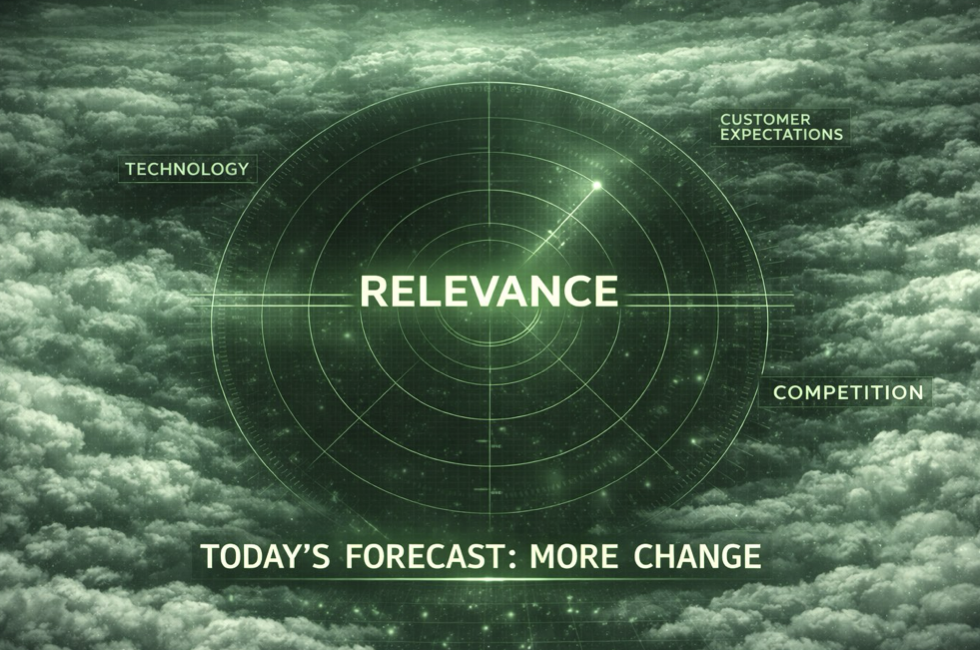
Stay ahead of the storm.
Innovation is accelerating, disruption is constant, and relevance has become a moving target. Our resident Pfanner Advantage Change Agent, former MEMA CEO, Bill Long, shares why organizations that combine clarity of purpose, foresight, and continuous learning are best positioned to turn change into competitive advantage.
Stability is a Warning Sign
Change itself is not new. But the speed, scale, and consequence of change are.
Over the past decade we have watched technologies mature in months, not years. Markets shift quickly. Competitive advantages erode faster than most organizations expect.
In this environment, the most dangerous assumption an organization can make is that tomorrow will resemble today.
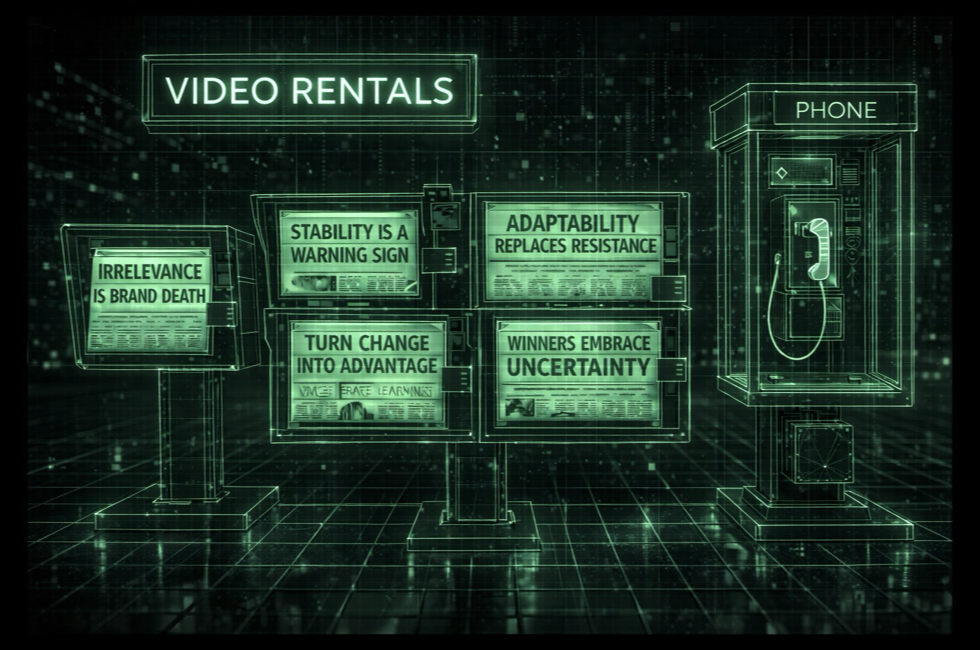
Embracing change is the key to relevance — and survival.
So what have we learned?
Stability Is No Longer Safety
There was a time when stability signaled strength. Today it can be a warning sign.
Scale, legacy, proven playbooks, and past victories once protected organizations. In periods of rapid change, those same advantages can quietly become constraints.
Relevance today is not preserved by consistency alone. It is earned through the willingness to adapt — even when the business still appears successful.
Learning Is Advantage
In motorsport there is a simple truth: Racing is learning. Every lap, every race, every season is a search for insight. Drivers, engineers, and teams work together to understand what happened, adjust, and gain an edge.
The teams that win are rarely the ones that avoid mistakes. They are the ones that turn mistakes into learning faster than everyone else.
The same principle applies in business.
Relevance Must Be Earned Again and Again
What differentiated you yesterday may be invisible tomorrow.
What feels innovative today can become table stakes before it delivers meaningful return.
Organizations that lose ground are rarely short on intelligence or capital. More often they are constrained by their own success — committed to what worked before and slow to accept when the context around them has fundamentally changed.
The Risk of Staying the Same
It has been said that without change there is no profit.
That is not philosophy. It is economics. Markets do not reward preservation. They reward momentum. Profit follows progress, and progress requires movement — away from past assumptions and toward new sources of value.
Standing still may feel prudent. In periods of acceleration, it is often the greatest risk.
Change Requires Clarity of Purpose
Change for its own sake is not leadership. It is distraction.
Constant motion without direction confuses customers, drains organizations, and erodes trust.
Effective change requires clarity of purpose.
Purpose is not branding. It is a decision-making discipline. It defines what matters, what does not, and where an organization is willing — or unwilling — to place its bets.
When purpose is clear, organizations can transform while maintaining coherence.
Purpose allows adaptation without losing identity.
In volatile environments, purpose is not a soft idea. It is a performance accelerator.
Seeing Around Corners
Equally important is the ability to anticipate what comes next.
In an era of exponential change, hindsight is a lagging indicator. By the time disruption appears in performance metrics, it is often too late to respond on favorable terms.
“Organizations that remain relevant build foresight into how they operate.”
They scan for weak signals. They challenge comfortable assumptions. They prepare for multiple plausible futures.
Seeing around corners does not require clairvoyance. It requires curiosity, humility, and the discipline of continuous learning.
Disruption rarely arrives with headlines. It begins quietly — in new behaviors, adjacent markets, and emerging use cases — before rewriting expectations entirely.
Turning Uncertainty into Advantage
When clarity of purpose and foresight work together, they become powerful catalysts.
Organizations gain the ability to keep pace with accelerating change while capitalizing on the opportunities it creates.
Innovation becomes systemic. Agility becomes operational.
Uncertainty stops being something to minimize. It becomes something to leverage. It creates space for new business models, new partnerships, and entirely new forms of value creation.
Organizations that embrace this reality are not only more resilient.
They are better positioned to convert volatility into advantage.
The Forecast: More Change
Change is inevitable. The real question is not whether change will come. It is who will be prepared to shape it.
Organizations that invest in tomorrow’s relevance — guided by purpose, sharpened by foresight, and willing to act before certainty arrives — will do more than adapt.
They will help define what comes next.
More Long View Insights on Relevant Change from Bill Long:
The Need For Speed — Choose Clarity Over Urgency
The Advantage Journal arrives every week. What matters in sport, mobility, media, and technology — curated and contextualized by Bill Sparks, Bill Long, and Paul Pfanner. No hedging. No filler. Subscribe — It’s Free