
Why Your CEO Isn’t a Robot (Yet)
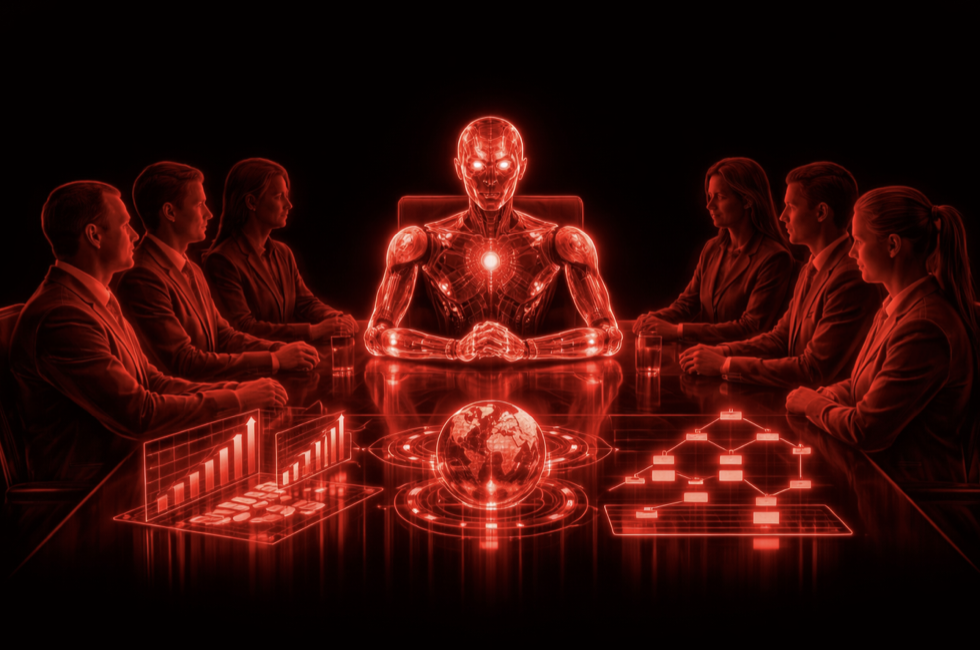
Will the phrase 'Who's the Boss?' need to be changed to 'What's the Boss?
In his latest Cold Read, RACER brand and Pfanner Advantage co-founder Bill Sparks examines one of the biggest questions emerging in the AI era: Could a machine ever run a company?
The idea of an AI CEO is no longer science fiction.
Companies have already begun experimenting with algorithmic leadership. NetDragon Websoft appointed an AI executive named Tang Yu. The rum brand Dictador introduced Mika, an AI-powered CEO avatar.
The headlines sound futuristic. The reality is more complicated.
Running a company isn’t just a data problem. It’s a human one.
Artificial intelligence is extraordinary at processing information, modeling scenarios, and optimizing decisions. But leadership requires something machines still struggle to replicate.
What I call the Human Moat.
Four traits that remain stubbornly human: morality, creativity, intuition, and emotional intelligence. These aren’t just nice-to-have leadership qualities. They’re the foundations of trust, accountability, and vision.
And they remain very difficult for machines to reproduce.
1. Morality: Rules vs. Responsibility
AI can follow rules. It can simulate ethical reasoning. It can even calculate which corporate action produces the most efficient outcome.
But it doesn’t carry the consequences.
Human morality is tied to responsibility — guilt, reputation, and accountability. When leaders make decisions that affect thousands of employees or billions in capital, they own those decisions.
An algorithm doesn’t.
It simply executes a reward function.
You cannot punish an algorithm. You cannot ask it to feel remorse.
AI can demonstrate functional morality — following rules.
But it lacks moral agency — the human capacity to bear the weight of decisions.
Leadership requires both.
2. Creativity: Remix vs. Meaning
AI excels at pattern synthesis.
Ask it to design a logo in the style of mid-century modernism or draft a strategic plan and it will generate impressive work in seconds. It recombines patterns across enormous datasets.
But leadership creativity is something different.
It’s about intent.
When Steve Jobs introduced the iPhone, the research suggested people wanted a better physical keyboard. Instead he eliminated the keyboard entirely and replaced it with glass.
When NVIDIA’s Jensen Huang pivoted the company toward AI infrastructure, he wasn’t just following demand signals from the market. He was anticipating a future others hadn’t fully seen yet.
AI can generate novelty. Humans create meaning.
Until machines develop lived experience — something to reflect on — their creativity will remain a powerful remix of human history.
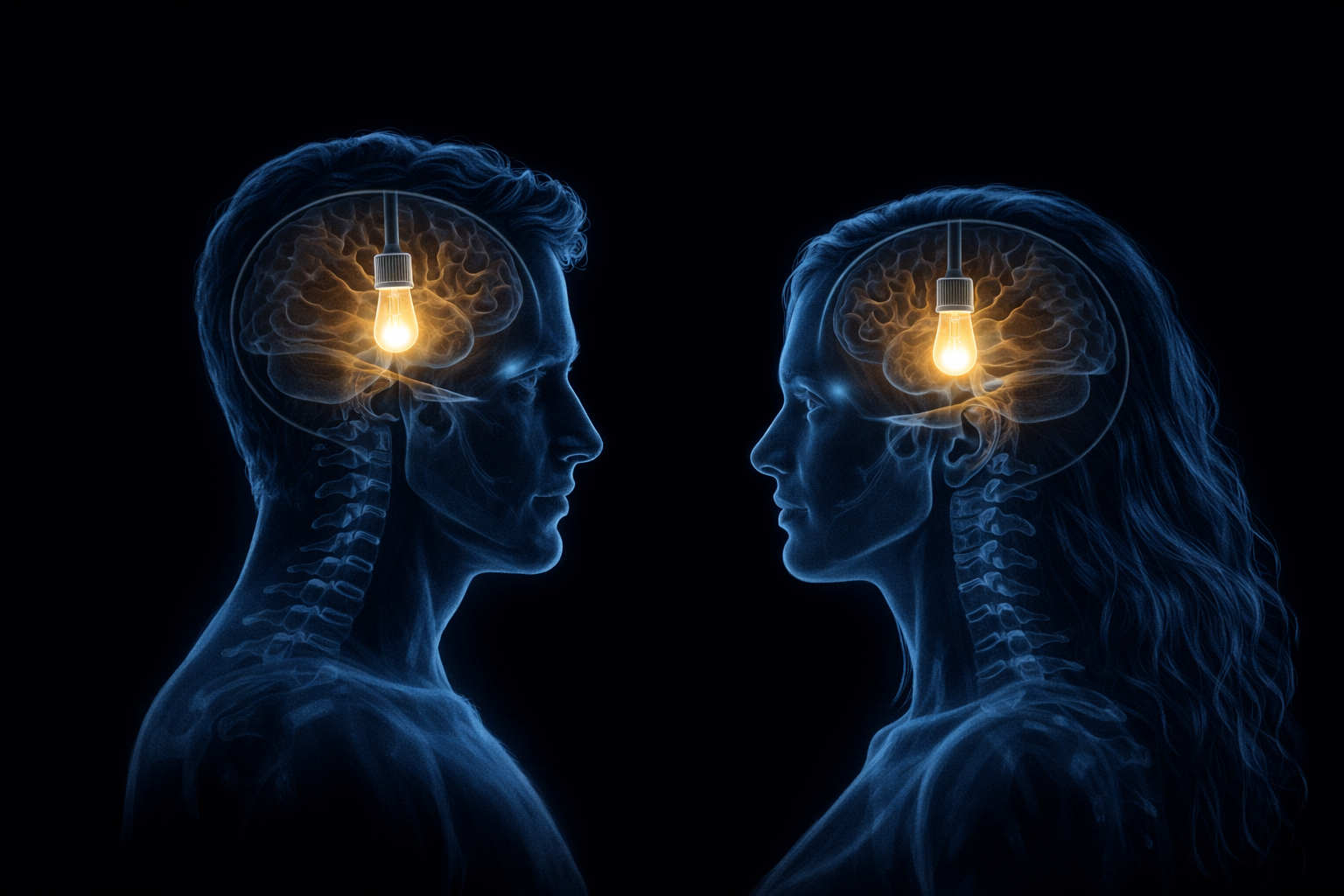
Is our human journey driven by a series of low-wattage leaps when data is absent?
3. Intuition: The 20-Watt Miracle
Intuition often gets described as a mystical gut feeling.
In reality, neuroscientists describe it as hyper-rapid pattern recognition.
In many ways, AI is already excellent at this — provided enough data exists. Algorithms can detect subtle correlations across enormous datasets that no human analyst could ever see.
But human intuition operates under very different constraints.
The human brain runs on about 20 watts of power — roughly the energy of a refrigerator light. Because our information and processing capacity are limited, we’re forced to make leaps.
We act when data is incomplete.
Sometimes those leaps are wrong. But sometimes they’re exactly what allow leaders to navigate uncertainty — the kind of uncertainty where historical data offers no guidance.
Call it Black Swan intuition.
It remains, at least for now, a carbon-based feature.
4. Emotional Intelligence: The Empathy Gap
AI can already simulate empathy.
It can detect vocal tone, facial expressions, and language patterns. It can respond with remarkable sensitivity and precision.
But there is a difference between understanding emotion and feeling it.
Psychologists call this distinction cognitive empathy versus affective empathy.
AI can understand why someone is upset.
What AI cannot do is feel the lump in the throat that comes with delivering bad news to employees, or the fear that accompanies a crisis decision.
Leadership is ultimately a social contract built on shared human experience.
In difficult moments, people don’t just want logic. They want to know their leader feels the weight of the situation with them.
That emotional bond is difficult to simulate.
And even harder to trust if it’s artificial.
2030 and Beyond: The Cyborg CEO
Artificial General Intelligence — systems capable of reasoning and learning across domains — may eventually arrive.
Some technologists predict breakthroughs by the end of the decade. Others believe it could take much longer and require entirely new architectures.
Regardless of the timeline, the question remains the same:
Could an AI ever replace a human CEO?
Interestingly, when I asked several AI models that exact question, the answer was consistently no.
Not because AI lacks intelligence, but because leadership requires more than intelligence alone. It requires accountability.
The more likely future is something closer to hybrid leadership — a human decision-maker augmented by powerful AI systems capable of analyzing massive datasets and modeling complex scenarios.
The machine does the math. The human makes the call.
Because when things go wrong — and eventually they always do — someone still has to stand in front of the board, the employees, the investors, and sometimes Congress, and say:
“That decision was mine.”
And for now, that responsibility still belongs to humans.