
What 1979 Tells Detroit About 2026
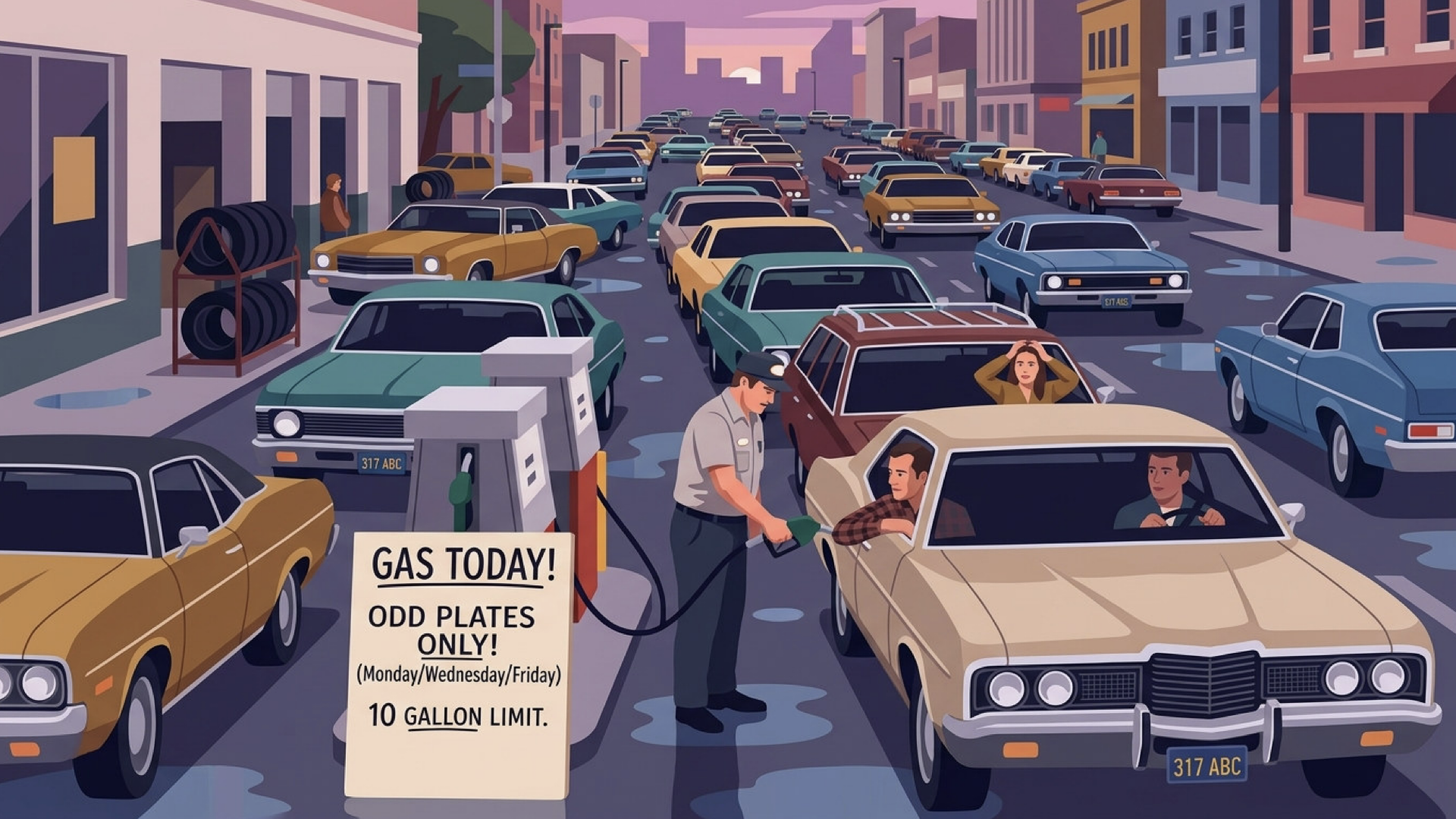
The 1979 gas crisis paused America's love affair with big cars long enough for Japanese manufacturers to gain a permanent foothold in the U.S. market.
Part 2 of Bill Sparks' series on how the current oil price crisis could impact the U.S. automotive industry. None of the tools used in the 1980s to protect America's auto industry from foreign competition were particularly effective. Things are different now, but the problems are even more complicated and difficult to navigate.
In 1979 a revolution in Iran choked off oil, and Americans spent the year in gas lines and under rationing schemes. Drivers began trading their big domestic sedans for small Japanese cars. The numbers that followed are worth reviewing.
Japanese cars held about 12% of the U.S. market in 1978. Two years later they sold 1.91 million vehicles for a 21.3% share, growing 9% in a year when overall U.S. demand fell 16%. United Press International called 1980 potentially the worst year in the industry's history. Car sales hit their lowest total since 1961, and Ford's fell 30%.
Ford lost $1.54 billion in 1980, at the time a U.S. corporate record. General Motors lost $763 million, its worst year ever. Chrysler lost about $1.7 billion and needed a $1.5 billion federal loan guarantee to survive. The United Auto Workers accused Japan of "exporting unemployment." Between 1979 and 1991, the Big Three cut between a third and two-fifths of their production jobs, and Michigan alone lost more than 200,000.
The oil shock did not create Japan's advantage. It exposed one that had been building for a decade. That distinction is the whole lesson for 2026.
The right car at the wrong moment for Detroit
Japan won because it had the right car on the lot when the price of gasoline changed the question buyers were asking. Its cars were small, efficient, cheap and, thanks to quality methods Detroit had ignored, increasingly reliable. Detroit had spent the decade prioritizing full-size cars. When the shock came, American buyers did not have to be persuaded to try something new. The alternative was already in the showroom down the street.
Sound familiar? As Part 1 showed, the 2026 shock found American dealers stocked with $56,000 electric SUVs while the affordable EVs sold out. This time the competitor with the right car cannot get it into the showroom. Not yet.
The cost gap is real, and it is not mainly about subsidies. Rhodium Group estimates BYD builds a car about $4,700 more cheaply than Tesla does at Tesla's own Chinese factory, roughly 15% of a Model 3's price. The biggest reason is vertical integration. BYD makes about 80% of its Tier 1 components in-house, against 37% for Tesla. Direct government support accounts for only about 5% of BYD's advantage. In Mexico, where Chinese brands sell alongside everyone else, Geely's Coolray Lite SUV starts at 329,990 pesos, about $19,400 at current exchange rates.
Ford CEO Jim Farley does not pretend otherwise, and he has made the 1980s comparison himself. "I think it's exactly the same thing, but it's on steroids," he told CBS News last October, warning that China has "enough capacity in China with existing factories to serve the entire North American market, put us all out of business." Farley told CBS he drives a Xiaomi SU7 himself. At the Aspen Ideas Festival in June 2025, he called China's EV progress "the most humbling thing I have ever seen." When the head of the company that invented the moving assembly line talks that way, it can be taken literally.
The quota that built a stronger competitor
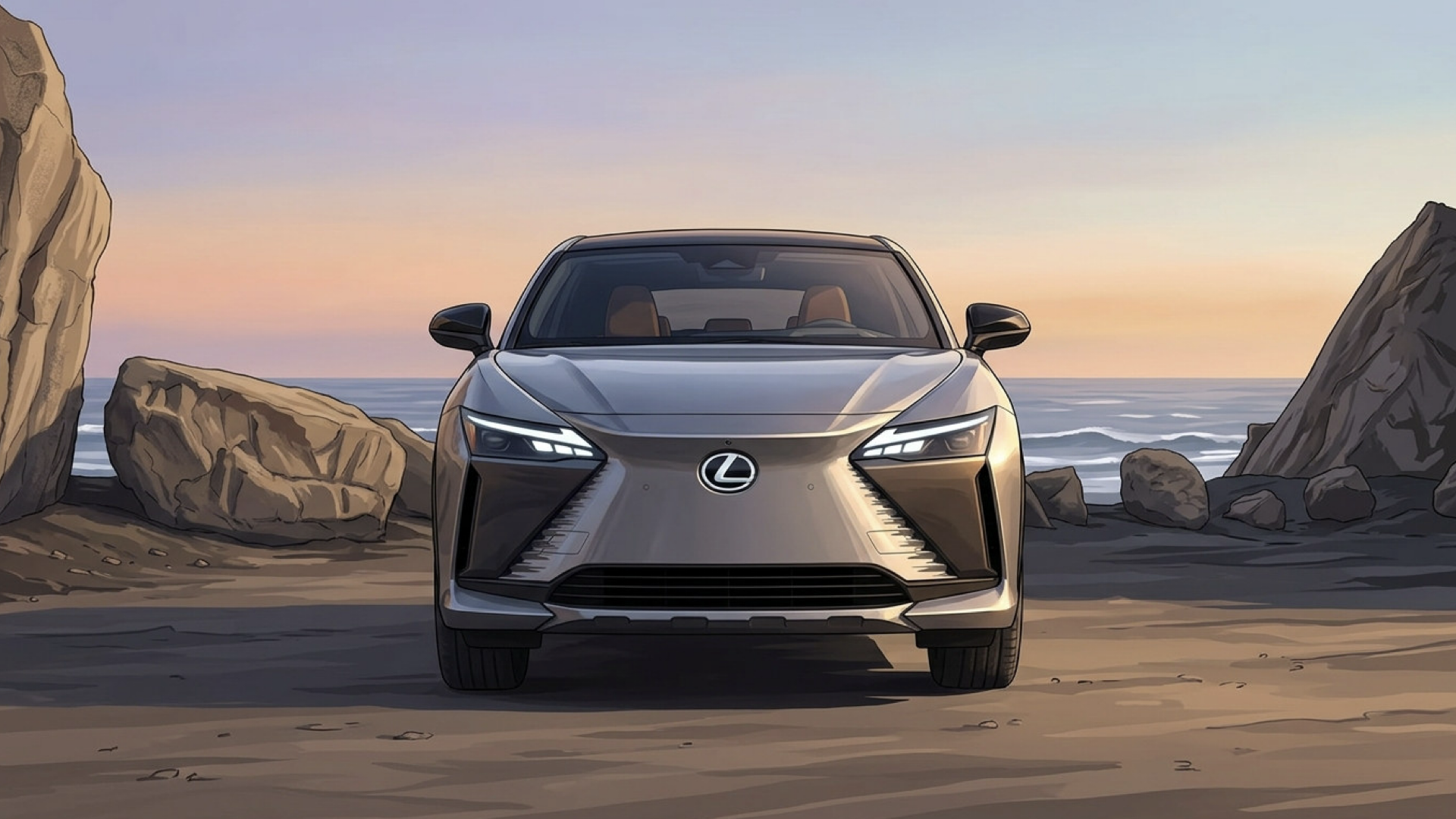
Quotas on Japanese imports in the 1980s did not protect market share. It led to more upmarket Japanese cars and American factories.
Washington's answer to Japan was a quota. In April 1981 the Reagan administration persuaded Japan to "voluntarily" cap car exports to the United States at 1.68 million a year, the 1979 level. It capped Japanese imports. It failed in every sense that mattered over the following decade.
Capped on volume, Japanese automakers did two things. They moved upmarket, because a quota measured in cars rewards selling more expensive ones. Toyota launched its Lexus division in the United States in September 1989 with the LS 400. And they built factories here. Honda started producing Accords in Marysville, Ohio, on November 1, 1982, the first Japanese automaker to build cars in America. Within a decade every major Japanese automaker had U.S. assembly plants, and the transplants had brought some 26,600 new auto-assembly jobs to the South and Midwest.
Protection did not stop the competitor. It turned the competitor into a better-capitalized, locally rooted, more premium version of itself.
Now look at 2026. The United States charges a 100% tariff on Chinese-built EVs, and the Commerce Department's connected-vehicle rule bars Chinese software from model year 2027 vehicles and hardware from 2030. That wall already has a door in it. In May the administration let Geely-owned Volvo keep selling connected cars in the United States. The President has gone further in words. "Let China come in, let Japan come in," he told the Detroit Economic Club in January. "If they want to come in and build a plant and hire you and hire your friends and your neighbors, that's great, I love that."
The signals are mixed. The May summit in Beijing produced no announcements on autos, and Transportation Secretary Sean Duffy has sent Farley a letter expressing "profound concern" about Ford's own Chinese ties, including its license for CATL battery technology and its China-built Lincoln Nautilus. Ford called the letter "a wrongheaded attempt to capture headlines." Still, the transplant model is plainly on the table, more than 40 years after Marysville.
Canada's quota, and a surprise
Canada has already opened a door. Since March 1, China-built EVs can enter at a 6.1% tariff instead of more than 100%, up to 49,000 vehicles a year. You would expect that quota to vanish on day one. It did not.
Over the first six months, importers used 15,603 of the 24,500 permits available. Tesla, bringing in Shanghai-built Model 3s, is believed to be by far the biggest user, with Lotus, Polestar and Ford's Lincoln Nautilus accounting for a few hundred vehicles. So far, the "Chinese invasion" of Canada has mostly been American brands importing from China.
The Chinese brands themselves are moving slower than the headlines suggested. Most retail launches have slipped toward 2027. BYD was still negotiating dealership sites in the Toronto area in late July. Canadian dealers have cooled over unresolved warranty, service and franchise terms. In the 1980s, Japan's constraint was the cap on volume. China's constraint in Canada, so far, is not the cap and not the product. It is dealers, service networks and trust, which take years to build.
Where the analogy breaks
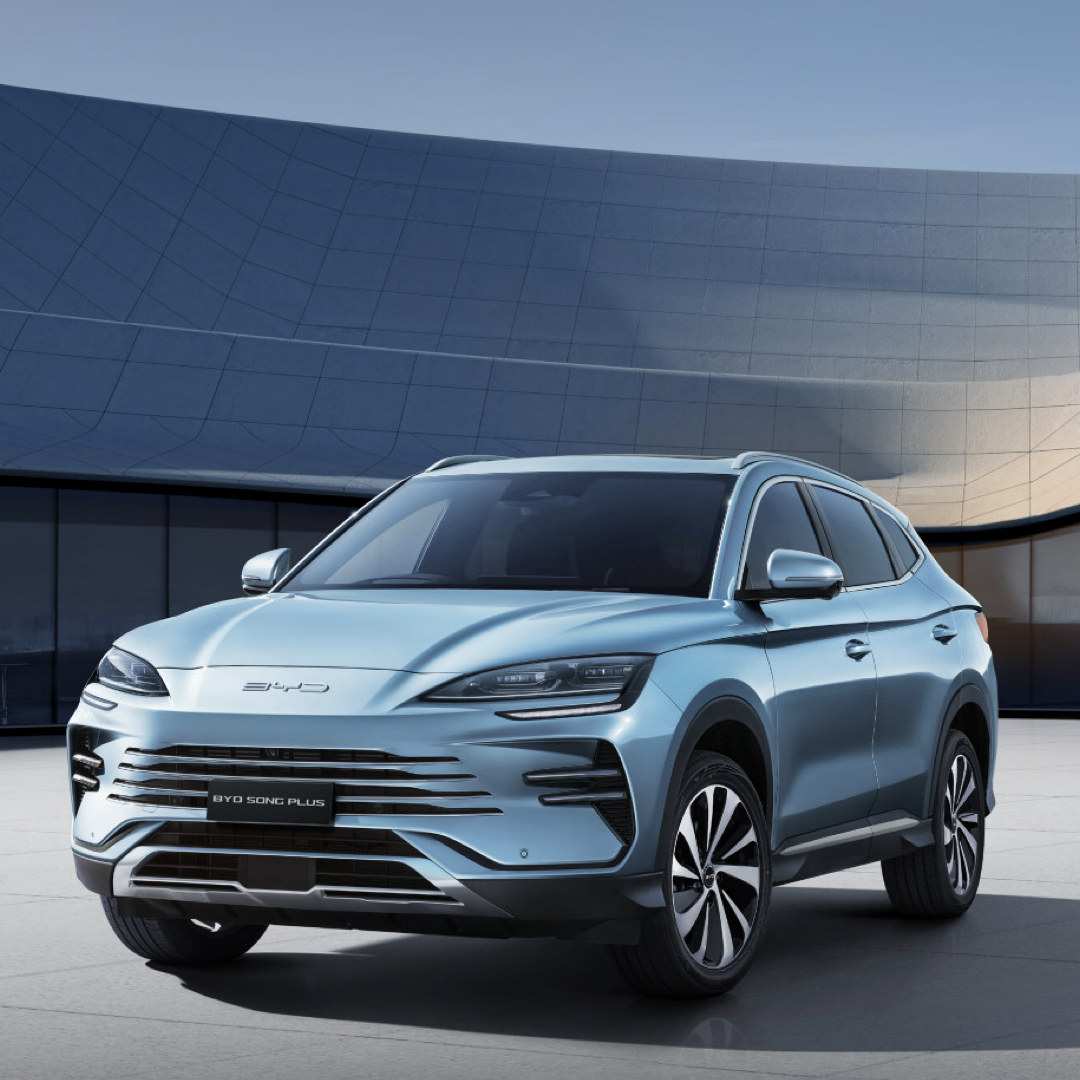
China is not Japan, so the events of 2026 will not play out exactly as they did in 1979. But the fact remains that American and European car makers don't have an answer for cars like the BYD Song Plus.
History rhymes, but it does not repeat, and there are four places this rhyme falls apart.
First, Japan was a treaty ally. China is a strategic rival, and concern about what connected cars collect and transmit is serious enough to have produced a federal rule.
Second, scale. China exported 7.15 million vehicles in the first eight months of 2026, up 67% from a year earlier and already more than in all of 2025. Nearly half were electric or plug-in hybrid. Japan in 1980 was a large exporter. China today is the global market's price setter.
Third, trust. Cox Automotive found that only 40% of in-market U.S. consumers support Chinese brands entering the market, although that rises to 76% if the brand partners with an established American one. Just 15% of franchised dealers support entry. Japanese brands in 1979 were cheap and unfamiliar. Chinese brands in 2026 are cheap, unfamiliar and politically loaded.
Fourth, size and duration of the shock. Painful as $4.47 feels, it is not 2008, and probably not 1981 either. Adjusted for inflation, the 2008 peak works out to about $6.20 a gallon in today's money. The early-1980s peak was about $5.30, against $4.48 this past May. And the Energy Information Administration expects this shock to fade, with gasoline averaging $3.35 in 2027 as Hormuz flows recover. A smaller shock that passes quickly may not rewire buyers the way 1979 did.
Time is the only thing a wall buys
The 1980s taught a simple lesson that is easy to forget. Protection buys time, not competitiveness. The quota gave Detroit breathing room, and the Japanese used the same years to build American factories and luxury brands that now anchor the American market. The question for 2026 is what the industry does with the time the tariffs and the connected-vehicle rule are buying, and how long the wall holds with Canada and Mexico on either side of it.
While Washington builds that wall, the rest of the world is buying something different from what Detroit is building. Part 3 looks at what happens to an automotive island.
Pfanner Advantage works with clients to turn change into advantage at the intersection of mobility, motorsport, media, technology, and marketing. Learn more or start a conversation: contact us today.
More Cold Read Insights from Bill Sparks:
What Aren’t Americans Buying EVs?
Part 8: State of the Art Branding Case Studies
Part 7: How the Ad Industry is Reinventing Itself
Part 6: AI and the Personalization of Brand Narrative
Part 5: Building Brand Loyalty Through Community
Part 4: Independent Creators as Brand Storytellers
Part 3: Brands as Publshers: The Rise of Owned Media
The Advantage Journal arrives every week. What matters in sport, mobility, media, and technology — curated and contextualized by Bill Sparks, Bill Long, and Paul Pfanner. No hedging. No filler. Subscribe — It’s Free