
Standing Still at 230 Miles Per Hour
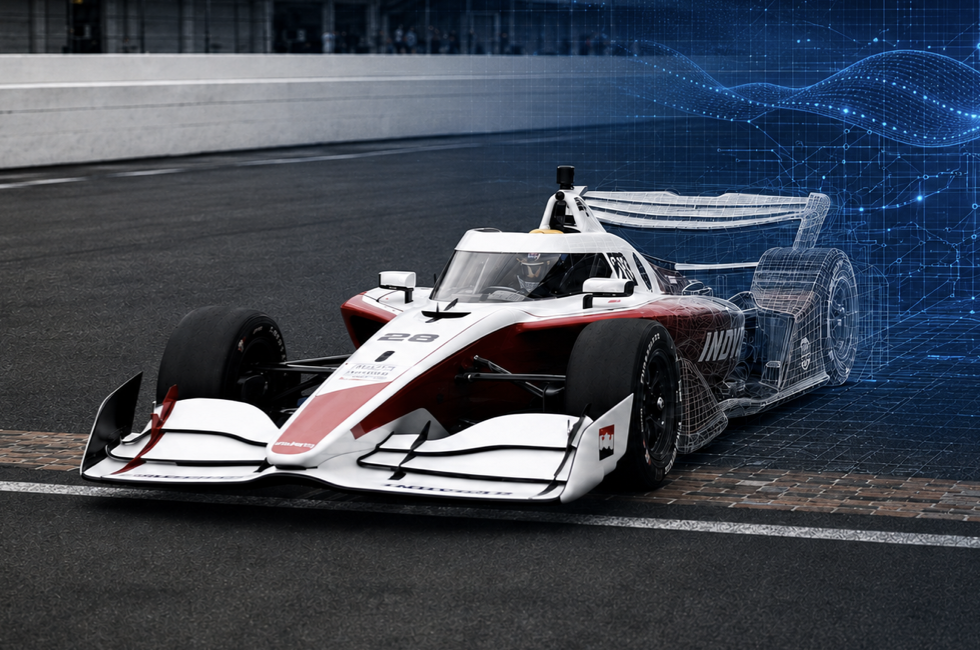
From design to high-speed reality the IR-28 was created to an expectation that is all about maintaining financial, technical and competitive parity. Is that enough? Illustration based on an image by James Black/Penske Entertainment.
Paul Pfanner has now seen video and images the Dallara IR-28 in motion, and it looks better than the renderings promised. Which frees him to write about something else: the radical car IndyCar passed on in 2010, the shop that built it anyway, and why playing it safe looks different in a world that reinvents itself every few years.
I've watched the video now, and the images, the new car in bare carbon and then in livery, close up, on track, sitting in the paddock. And I'll be honest, it looks better than the renderings did. The drawings had it reading like a warmed-over version of the old car. The real one doesn't. It looks like a new car, and a good one. Quicker and lighter and safer, and it looks like now instead of fifteen years ago. It has an identity of its own, too, nothing like a Formula 1 car, its own thing. I don't have a problem with the car. I want to say that plainly, because none of what follows is a knock on it.
What I keep turning over is what the car has become, and why.
A very good appliance, built to last
The IR-28 is a technically advanced, high-quality parity appliance. I've used that phrase before and I mean it as a description, not an insult. Everyone gets the same tool, and the racing comes down to how a driver and team use it and what Chevrolet or Honda can find in the engine.
There's a second thing about it that doesn't get said enough. This car is built to be a capital asset. It's meant to hold real value across several seasons, not one. And that's a bigger break with the Indy 500’s past than it sounds.
The world I came up in the dollars ran the other way. You bought or designed a new car nearly every year, and if you got two or three seasons out of a design you were lucky. The car was close to worthless the moment the next one showed up. In the CART years a front-running car could be a show car in a lobby inside a year or two. Racing burned through machinery and cash like a furnace. Now the machinery is supposed to sit on the balance sheet and keep its worth. That's a real change, and it tells you how the sport thinks about a car now. Less a race toward the future, more an asset to protect.
The car used to be a variable in another way, too. For most of this sport's history there was more than one chassis on the grid, built by different companies, and they didn't look alike. The IRL years were the last of that, the Dallara out front with Panoz cars still around. Now it's one car for everybody, and it has been one car, the DW12 and its updates, since 2012.
Which means almost everybody on the grid has never driven anything else. Come into IndyCar in 2012 or later and this is all you've known, and that's most of the field. The ones who remember the cars before it, the CART and Champ Car days, the earlier IndyCar Series,, you can count the full-time stars on one hand.: Scott Dixon, Will Power, Graham Rahal, the drivers who came up when the machinery still fought you and once in a while beat you. Everybody else came up in the appliance era...
Why it makes sense
I'll give the thinking its due, because there's a real logic to it.
Fox now owns a third of Penske Entertainment, which runs IndyCar and the Speedway. Put a broadcaster in the ownership chair and the whole product tilts toward what television sells best. The drivers come forward as the stars, the manufacturers carry the brand through their motors, and the circuit remains the thing everyone is challenged by . The car, in the middle of all that, becomes a constant rather than a contestant racing prove a design or make a product statement. Safe and reliable, and the same for everybody.
Look at what that removes. For as long as I've been around this sport, a great driver could lose years of his prime stuck in a car or a team that just didn't have the answer. We've all watched it happen. A parity appliance takes much of that off the table. Nobody's career gets wasted by bad machinery, because the machinery is the same for everyone. As product design, that's clean, and it's kinder to the athletes than the old way was.
There's a speed logic in it too. Nobody who knows the lethal consequences wants 245 or 250a+ mile an hour laps at Indianapolis anymore, and they shouldn't. It makes no sense in the modern world. So the car is built to run most of a lap flat out, the driver managing it in traffic, catching it when it needs herding, but never really having to lift for a corner the way you once did. The downforce sees to that. It's one reason J.R. Hildebrand's Blackbird 66 stuck a chord with me, because that car would make you lift and drive the corner again.
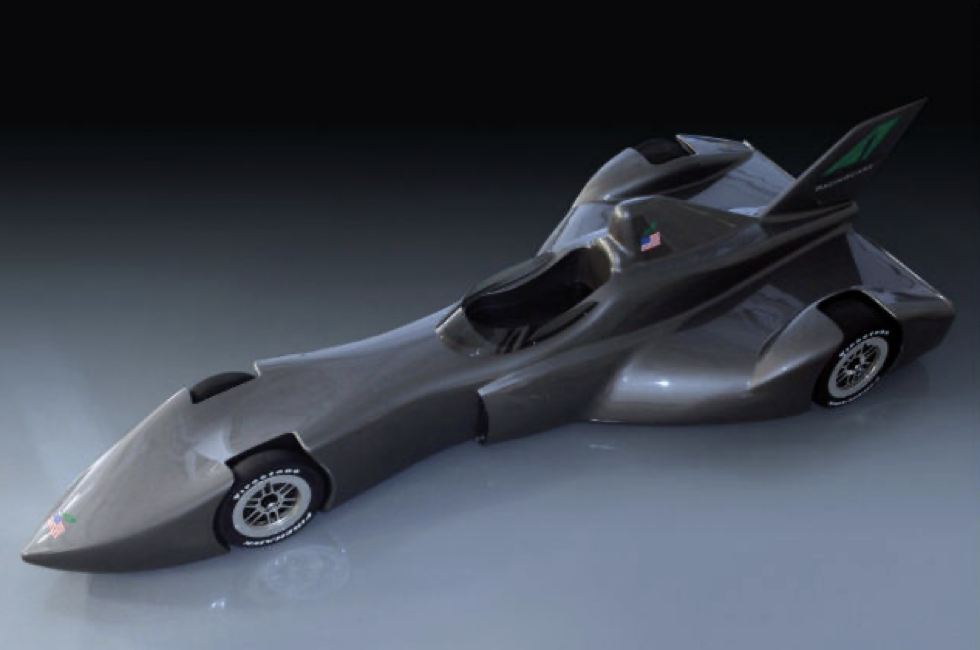
The 2010 Deltawing IndyCar concept was a shock to the status quo. That’s a good thing in a world that is changing faster than the sport can process.
The last time the car itself was the question
So the car got frozen on purpose, and for reasons that hold up. I just remember when the car was allowed to be the question, and it wasn't that long ago.
Back in 2010 and 2011, IndyCar had to replace the Dallara and Panoz chassis that it had run since the early IRL days. They opened it up and took five proposals, from Dallara, Lola, Swift, BAT Engineering, and the DeltaWing. I had a rooting interest in Swift. I helped launch and brand that company early on, and they were no small operation, they built the Formula Atlantic cars and race-winning CART Champ Cars and were the biggest American formula car builder going. Later they moved into aerospace and out of racing, the way Dan Gurney's AAR shop did.
The DeltaWing was the wild one. Ben Bowlby, formerly Lola's chief designer, backed by Chip Ganassi, who I've known a long time and think the world of. Needle nose, wheels tucked in close, no front wings, the body doing the wings' job. The pitch was half of everything, half the weight, half the power, half the fuel, and the modeling said it could still run 230 at Indy on 350 horsepower. But nobody knows if that was true, because it was never built to IndyCar spec. The numbers were simulation. It ran later at Le Mans, and that was interesting, but Le Mans has balance of performance and a dozen other variables, so it settles nothing. The DeltaWing wasn't a sure thing anyone passed up. It was a question nobody let get answered. And the shop that finally built it and put it on a track was Dan Gurney's. All American Racers, in Santa Ana, because taking the idea everybody called crazy and making it real was the whole reason that place existed.
IndyCar chose Dallara, and that was defensible, maybe right. Dallara brought staying power, one supplier you could count on, a company that would open in Indianapolis and still be there in the morning. And they are, all these years on, still doing top-level work in racing and technology. On its own terms it was a fine call.
Now look how far the world moved
I'm not second-guessing the call but I'm asking whether the world it was made in still exists.
In 2010, about one in five Americans had a smartphone. Now it's four in five, and the thing answers you in full sentences, which back then was a movie plot. There was no AI you could talk to. Now something like one in six people on earth has used it. Nobody had landed a rocket and flown it again. Now they do it so often you stop noticing. Electric cars were something you squinted to find in a parking lot, and now they're pushing one in five sold worldwide. In the time it took the world to do all of that, the Indianapolis car got new bodywork and a longer shelf life.
That's the part I find ironic. The fastest machine at the Speedway may be the one standing still, while the phone in your pocket and the car in your driveway and the way movies get made all get torn down and built again. For most of the last century, iterating was the smart, grown-up move. Reach too far and you went broke. But that math flips when everything around you is being reinvented every few years. Sitting tight stops looking careful and starts looking like falling behind.
What it looks like in five years
The car we got is good. It looks somewhat different than the car it replaces, it's safe, it's excellent engineering, and it has a place that's its own. I'm not taking any of that away from it.
And I have real respect for the people making these calls, and for where the sport is right now. It's in recovery. It's moving again, accelerating out of a slow stretch it was stuck in for a long time, and I don't take that for granted, not for a second. These decisions got it off the mat, and that counts for more than any argument about a chassis. People care about IndyCar again and new, younger fans are discovering it.
I just wonder what it looks like in five or six years, parked next to a world that will have moved again, and again, faster every month. The tools to imagine the next one already sit on a laptop. The distance between having the idea and building the thing has almost closed, which is what I end up writing about no matter where I start. The DeltaWing took a consortium and couple of years. A few sharp people could create its successor this year.
So I'll say the thing I focused on last time. The next Indy car doesn't have to look like the last one. This one is good, and I mean it. But I'm still waiting on someone who wants to start over, and the strange part is that starting over has never been cheaper to try than it is right now.
Pfanner Advantage works with clients to turn change into advantage at the intersection of mobility, motorsport, media, technology, and marketing. Learn more or start a conversation: contact us today.
Paul Pfanner’s recent Shift Happens Insights:
A Moonshot Run Out of a Race Shop
The Advantage Journal arrives every week. What matters in sport, mobility, media, and technology — curated and contextualized by Bill Sparks, Bill Long, and Paul Pfanner. No hedging. No filler. Subscribe — It’s Free

