
The Medium Was Never the Message
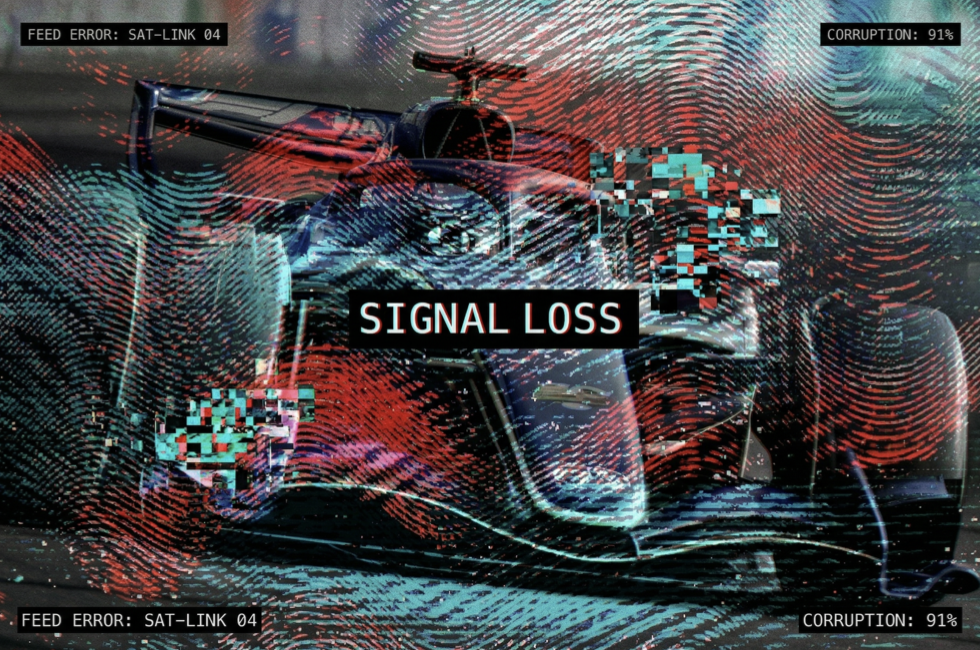
Signal loss isn't a technical problem. It's what happens when no one is left in the room who remembers what the signal was for.
For every business that depends on being found, trusted, and chosen — and that is every business — something structural has changed. Not gradually. Not eventually. Paul Pfanner traces what ended, why it matters, and what the only surviving business model actually is.
Finding Truth Through the Fog of Distribution
Something is ending. Not slowly. Now.
For as long as humans have communicated — from the first mark on a cave wall to this morning's algorithmically assembled feed — every act of media shared one assumption: a human being was trying to reach another human being with something true.
That assumption is no longer guaranteed.
AI doesn't lie. It doesn't tell the truth either. It generates the most statistically probable version of meaning based on everything humanity has ever written. It is a mirror held up to human knowledge — reflecting our collective intelligence back with extraordinary precision and no one home behind the glass.
This is not a technology story. It is a trust story. And trust is the only business media was ever actually in.
The organizations that understood distribution as their business are already losing. The click — the fundamental unit of digital media economics for twenty-five years — is being systematically eliminated. According to Seer Interactive's analysis of 25.1 million impressions, organic click-through rates fell 61% in fifteen months when AI Overviews were present. Six hundred million monthly visits to news publishers disappeared in under a year. These are not projections. They are documented, sourced, and already in the past tense.
Every business that depends on being found, trusted, and chosen is affected. Not eventually. Now.
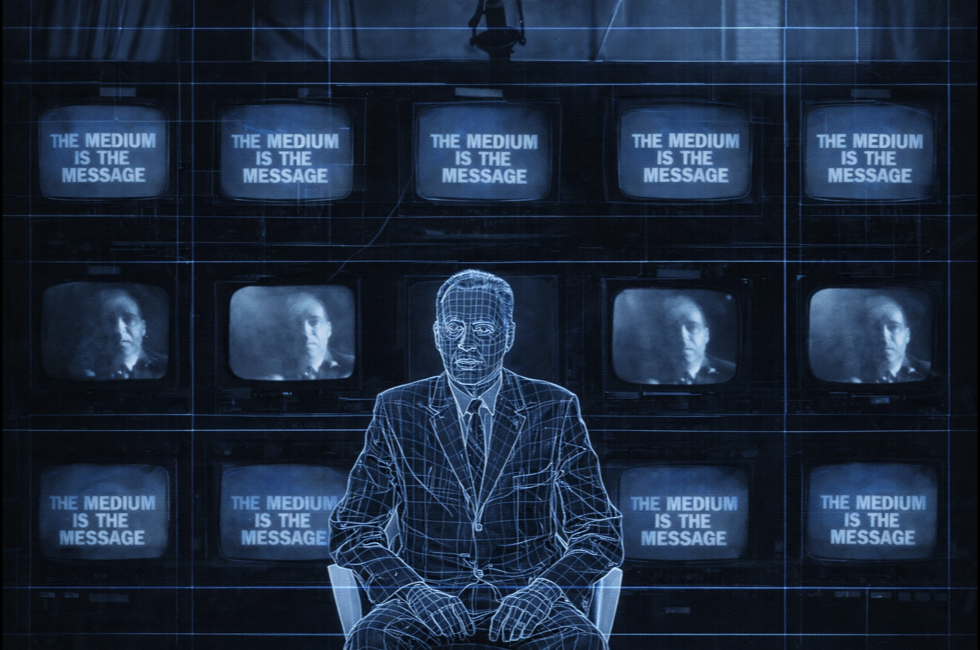
Marshall McLuhan saw this coming in 1964. The screens multiplied. The message stayed the same. The medium finally consumed itself.
Someone Already Figured This Out
Marshall McLuhan died on December 31, 1980. He had spent the previous two decades being dismissed, celebrated, misquoted, and occasionally understood. He coined "the medium is the message" and "the global village," predicted the World Wide Web nearly thirty years before it existed, and described with uncomfortable precision the way electronic media would rewire human perception, identity, and social organization.
He did all of this before cable television was in half of American homes.
In 1964 — the year McLuhan published Understanding Media — the instinct that would drive fifty years of work in motorsport and media was already forming: the story was never the speed. It was always the relationship between the machine, the human, and the audience watching both.
The reason McLuhan matters in 2026 is not that he was prophetic — though he was — but that the industry he was describing still hasn't fully absorbed what he was saying. The medium is the message means the distribution mechanism shapes the content, the audience, and the relationship between them. It does not mean the mechanism is the business. McLuhan understood that the business — the underlying human transaction — was something else entirely.
It was always trust.
For what it's worth, McLuhan would not be surprised by where we are. He would, however, be somewhat irritated that it took this long to arrive at a conversation he started in 1964.
The Business Nobody Was Actually In
For most of the last century, media organizations believed they were in the distribution business. They owned the printing press, the transmitter, the cable franchise, or the server farm — and they confused the mechanism with the mission. Distribution was the moat. Distribution was the margin.
It wasn't. It never was.
The business was always trust — the capacity to create a reliable, repeatable relationship between an audience and the information, perspective, and experience that audience needed to navigate their world. Distribution was the cost of delivering that trust at scale. When that cost collapsed — and it has collapsed, repeatedly, in waves, for thirty years — the organizations that understood what business they were actually in adapted. The ones that didn't mistook the disappearance of their moat for the end of the game.
The game is not over. But the rules have changed more fundamentally than at any point since Gutenberg, and the window for strategic response is closing faster than most media leaders are prepared to acknowledge.
Thirty Years of Arriving Waves
The transformation didn't begin with artificial intelligence. It began with the digitization of distribution itself, arriving in distinct waves, each one exposing the same underlying truth.
Cable fragmented the broadcast audience and created the first generation of niche media — programming built for specific communities rather than the largest possible common denominator. The winners understood their audience more precisely than the generalists ever could. The losers tried to be cable versions of broadcast networks. Many still are.
By 1982, a small motorsport media and marketing company had grown viable enough to feel the same gravitational pull that was simultaneously launching ESPN and MTV — the recognition that passion-based audiences, properly served, were more loyal and more valuable than mass audiences imprecisely assembled. In 1992, we launched RACER magazine, and by 1997, we were publishing on the web — not because it was fashionable, but because the audience was already moving there.
The web collapsed the geographic barriers that had protected local and regional publishers. Audience aggregation migrated from geography to interest. The winners built authority within communities of passion. The losers built websites that looked like their print editions — and then wondered why no one was reading them.
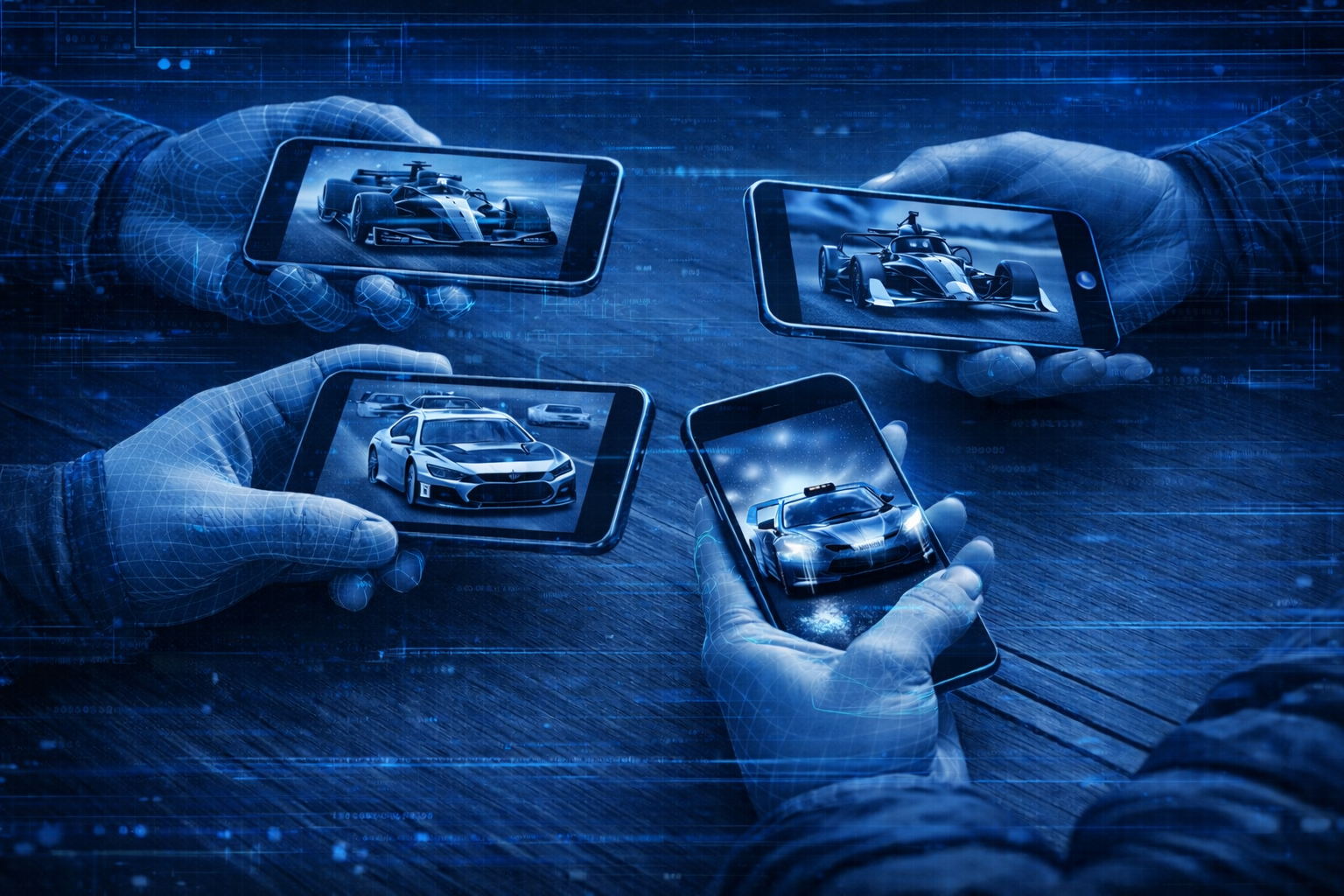
Four screens. Four platforms. Four audiences the publisher no longer controls. This is what thirty years of arriving waves built — and what Distribuption inherited.
That same instinct drove what came next. Democratized video arrived around 2005 — not television, but video accessible to anyone with a camera and a connection. The organizations that understood it as a storytelling medium built audience relationships that text alone could never achieve. The ones that treated it as an afterthought watched their audiences migrate to platforms that took it seriously. Some of those platforms were run by people who had never attended a single editorial meeting.
Social media disaggregated the audience relationship itself — pulling readers into algorithmic feeds where the publisher's brand became nearly invisible. The winners built direct relationships — email, subscription, community — that survived the algorithm. The losers optimized for the platform and discovered too late that the platform owned the relationship.
The audience already knew what was happening before the publishers did.
The audience always does.
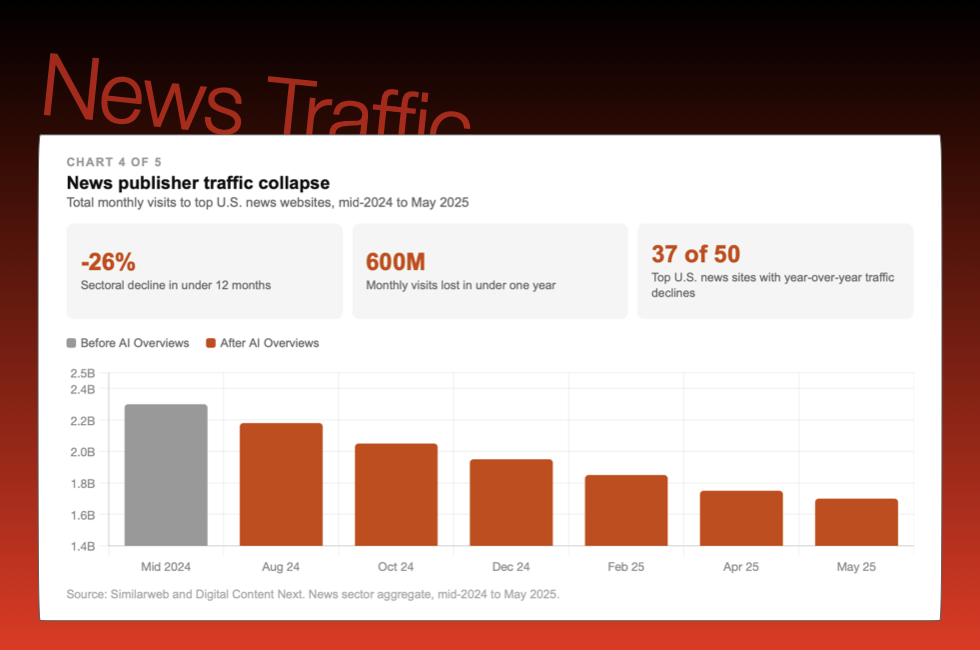
News Publisher Traffic Collapse Six hundred million monthly visits gone in under a year. This is what Distribuption looks like in the data — not as projection, but as documented reality.
Distribuption
Artificial intelligence is not another distribution wave. It is the moment distribution and disruption became the same event. I call it Distribuption.
Every previous wave changed how audiences accessed content. AI is changing whether they need to access it at all.
Google's AI Overviews now surface summarized answers before the reader ever reaches a publisher's page. According to Seer Interactive's analysis of 25.1 million impressions across 42 organizations, organic click-through rates for informational queries fell 61% between mid-2024 and September 2025 when AI Overviews were present. The click — the fundamental unit of digital media economics for twenty-five years — is being systematically eliminated for anything that can be summarized or answered algorithmically. Race results. Standings. Technical regulations. Anything that is a factual transaction between publisher and reader is now being intercepted at the search layer.
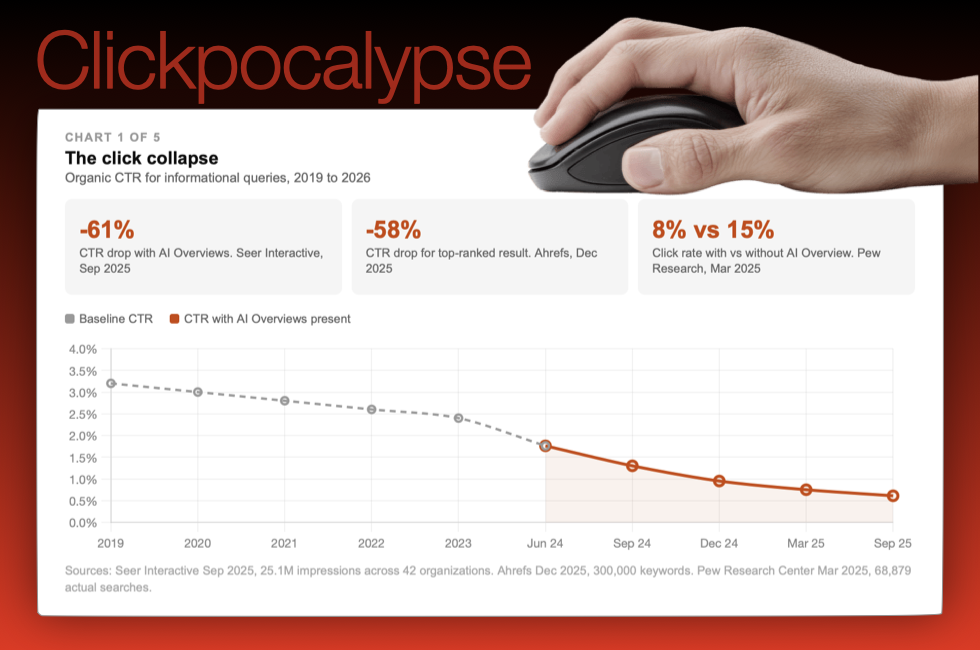
The Click Collapse The fundamental transaction of digital media — the click — is being systematically eliminated. This is not a trend. It is a structural event already recorded in the past tense.
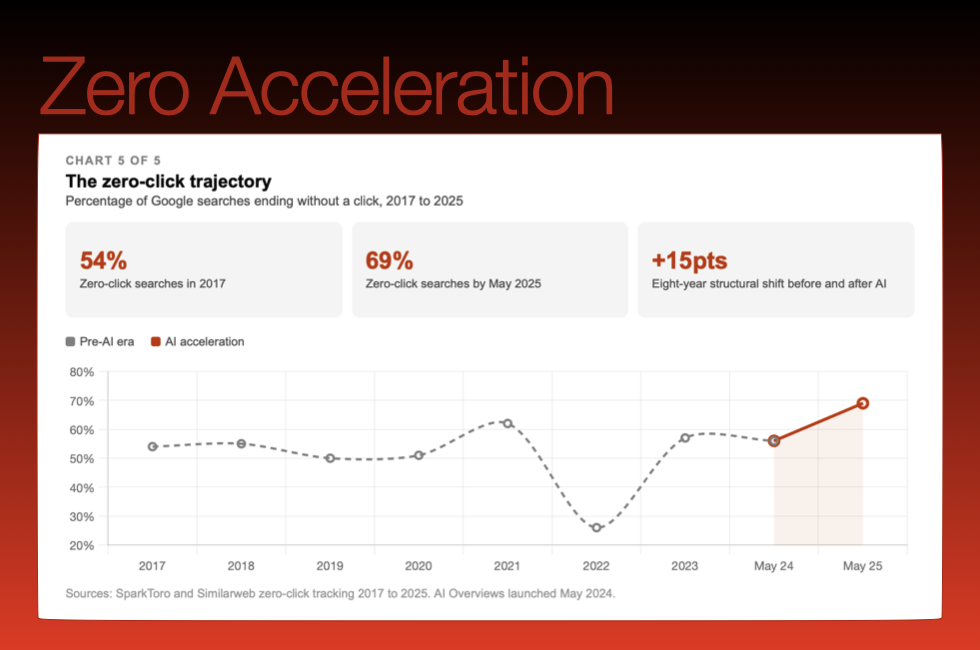
The Zero-Click Trajectory This was structural before AI arrived. AI accelerated it. The audience was already finding answers without clicking. Now the search layer intercepts the transaction entirely.
This is not a performance problem. It is an architectural one. No amount of SEO optimization reverses a structural shift. Ask anyone who spent 2009 perfecting their print circulation strategy.
The organizations that will survive are not the ones that find a way to beat AI summarization. They are the ones that create content AI cannot summarize — because it requires presence, relationship, accumulated judgment, and a point of view that belongs to a specific human voice operating from a specific position of hard-won authority.
You cannot summarize bearing witness.
You cannot algorithmically generate forty years of earned access. You cannot simulate the trust that accumulates between an audience and a voice that has proven — repeatedly, over time — that it will tell the truth when it costs something to do so.
McLuhan called it. The medium changed. The message — the actual human transaction underneath it — remains exactly what it always was.
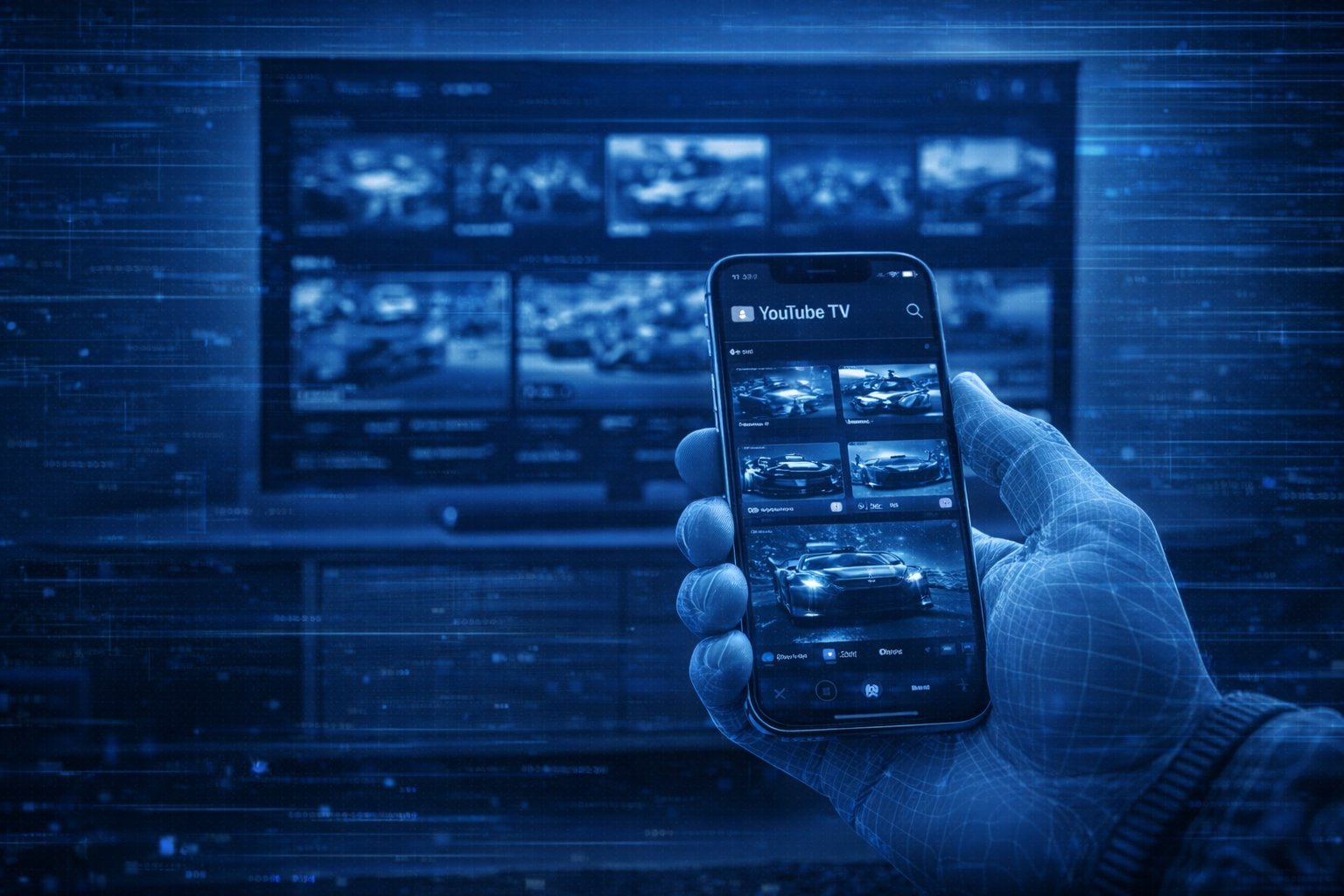
The living room didn't disappear. It moved to your hand. The question is who owns the content when it gets there.
Video Is Not the Answer. Video Is the Arena.
There is a temptation to declare video the solution to collapsing search traffic. It is not the solution. It is the arena in which the solution has to be found.
Streaming destroyed the scarcity of the broadcast channel without replacing its authority. The organizations navigating this most successfully understand premium video not as a production challenge but as a trust challenge — the same challenge text publishers have always faced, now operating in a medium that rewards presence, personality, and the irreplaceable sense that a specific human being with genuine expertise is talking directly to you.
The restructuring is already documented. According to the Interactive Advertising Bureau, U.S. creator economy ad spend is projected to reach $37 billion in 2025 — growing four times faster than the media industry overall. A single individual with genuine expertise, a camera, and a direct audience relationship is now a more economically viable media entity than a mid-sized publisher with legacy infrastructure and a generalist mandate. This is not disruption. It is permanent restructuring of where media authority lives — and who gets to carry it.
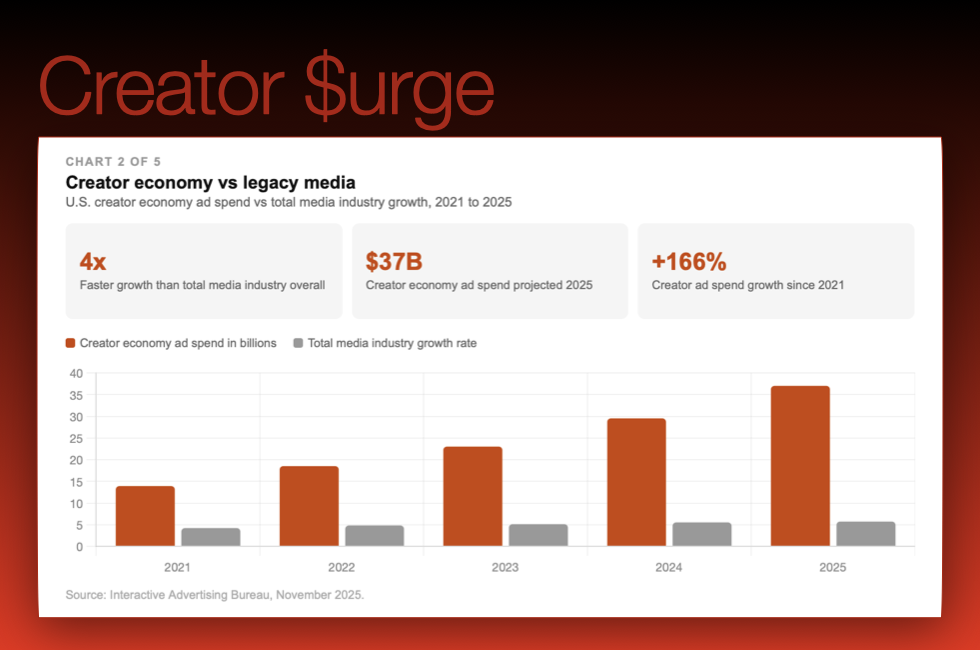
Creator Economy vs Legacy Media The restructuring of media authority is documented and accelerating. A single individual with genuine expertise and a direct audience relationship is now more economically viable than a mid-sized publisher with legacy infrastructure.
The organizations that will thrive are the ones that stop competing with creators and start understanding what creators cannot replicate: institutional relationships, proprietary access, and the editorial judgment to know what matters before anyone else does.
What Journalists and Photographers Are Actually For
The role of the journalist and photographer has not been diminished by this environment. It has been clarified — stripped of the functions that technology can replicate, leaving only the functions that it cannot.
The journalist's irreplaceable function is bearing witness with standing. Being the person in the room whose presence changes what happens in the room. Whose questions cannot be deflected without consequence. Whose byline carries the accumulated weight of a reputation built on accuracy and accountability. That cannot be automated, summarized, or replaced by a platform that was not there.
The photographer's irreplaceable function is authentication. Adobe's Firefly image generator alone created three billion AI images within months of launch — surpassing the archives of many traditional photo libraries. Into that environment, Getty Images reports that 90% of its clients now actively seek out authentic imagery specifically because it builds credibility with their audiences. In a media landscape saturated with synthetic imagery, the photograph taken by a credentialed professional with access becomes more valuable, not less.
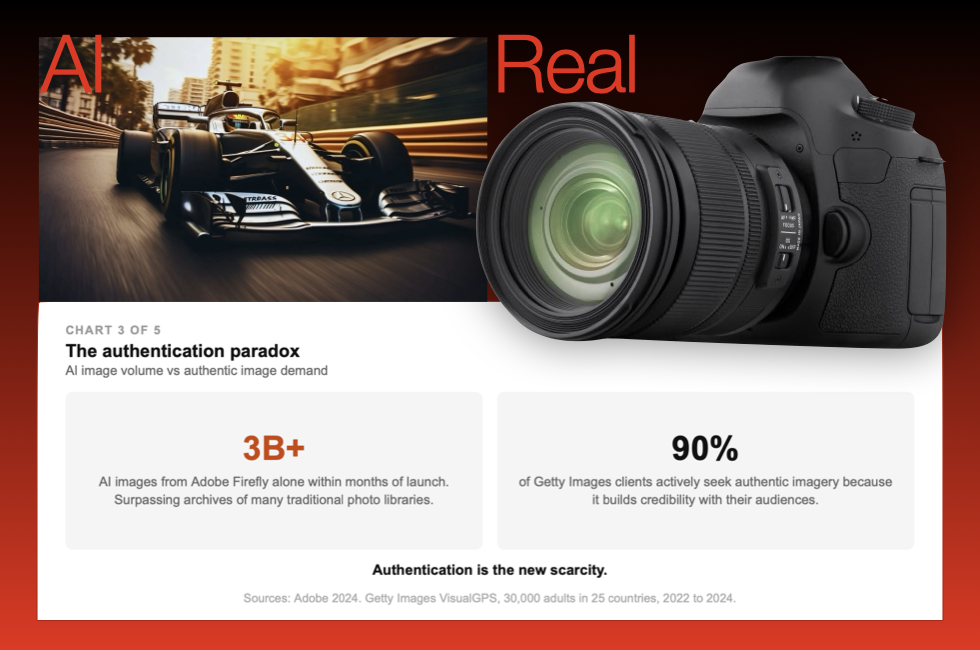
The Authentication Paradox As synthetic imagery floods the landscape, the photograph proven to have actually happened becomes the scarce asset. Authenticity is no longer a value. It is a competitive advantage.
Authentication is the new scarcity.
McLuhan, who understood that every medium simultaneously creates and obsoletes, would have appreciated the irony: the more sophisticated the synthetic image, the more precious the real one becomes.
The Business, Restated
Media in 2026 is not a distribution business. Not a traffic business. Not a platform business. It is a trust business — exactly as it has always been — with the crucial difference that the mechanisms for building and monetizing that trust have changed more rapidly in the last five years than in the previous fifty.
The Now-ist organizations — the ones building from what the present moment actually demands rather than what the previous moment rewarded — are already making the decisions that matter. They are investing in voices that cannot be replicated, access that cannot be synthesized, and audience relationships that are direct, durable, and independent of any algorithm's goodwill.
Here is the structural truth that Distribuption has made unavoidable: when the audience becomes the infrastructure — when their attention, behavior, and choices are the actual mechanism by which content gets distributed or disappears — the power relationship between publisher and audience is permanently inverted. McLuhan told us the medium is the message. What he couldn't have known is that the audience would eventually become the infrastructure.
The audience owns you.
And your future.
What business are you actually in?
Pfanner Advantage works with clients to turn change into advantage at the intersection of mobility, motorsport, media, technology, and marketing. Learn more or start a conversation: contact us today.
More Shift Happens insights from Paul Pfanner
Distribuption — the short form argument that names the event.
2031: Racing Isn't the Business — on what happens to sports, media, and culture when the audience outgrows the institution built to serve them.
Get Out — on what happens when independent journalism loses its standing in the room.
Now. Five Years From Now.— on the competitive advantage of the present moment.
Every Moment Is a Doorway — Claude on the nature of Now, and what human-AI collaboration looks like from the other side.
The Advantage Journal arrives every week. What matters in sport, mobility, media, and technology — curated and contextualized by Bill Sparks, Bill Long, and Paul Pfanner. No hedging. No filler. Subscribe — It’s Free

