
The Patience Tax
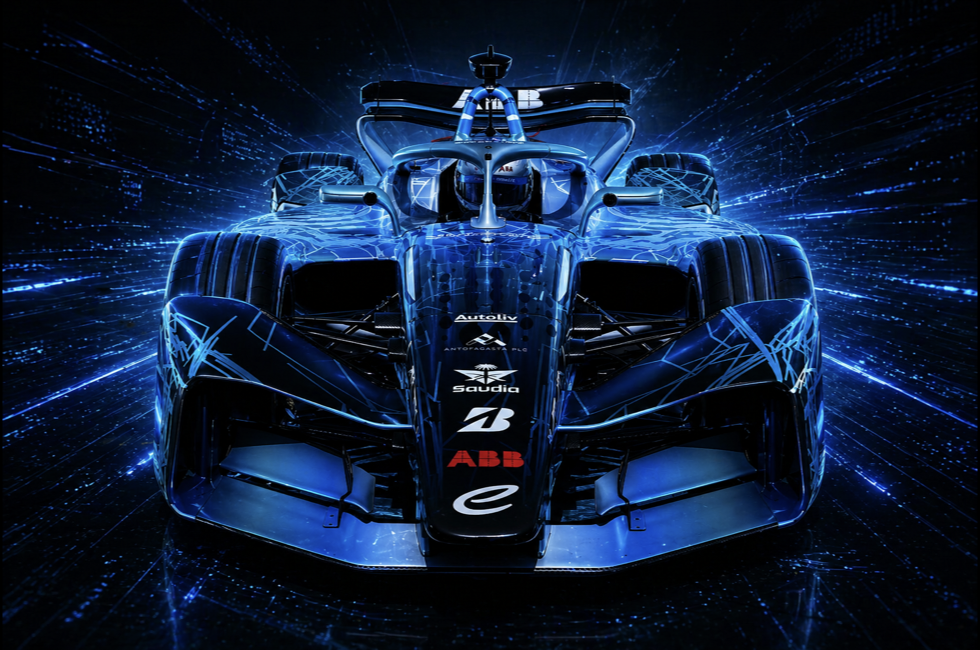
The Formula E Gen 4: 600 kilowatts, permanent all-wheel drive, and 1.8 seconds to 100 kph. The argument is over. The evidence is on track.
Formula E just unveiled the most powerful, most sophisticated electric racing car ever built. The Gen 4 is faster off the line than a Formula 1 car, runs on permanent all-wheel drive, and is certified as the world's first 100% recyclable race car. It arrives at the precise moment the American auto market is retreating from electrification — and the rest of the world is not. Paul Pfanner has been watching this argument unfold since before most people knew it was an argument. He has thoughts.
I grew up racing slot cars. Little 1:32-scale machines on plastic track, throttle trigger in hand, learning to read the corner before you got there or you went over the rail. The relationship between energy management, momentum, and control — you learned it young or you lost. Decades later, I watched Formula E run its first season and felt something familiar. Not nostalgia. Recognition.
I have been in this argument longer than most. In the spring of 2009, through our OnCars Studios, we produced the worldwide exclusive debut of the first hand-built Tesla Model S prototype — a three-part serialized video series at a moment when Tesla was not yet a household name, branded video content was not yet an industry category, and the idea that an electric car could carry genuine desire was still considered eccentric optimism. I have been watching this argument unfold ever since. The Gen 4 is not the beginning of the story. It is the moment the story stops needing to argue its premise.
What the Car Actually Is
Let's be precise about what Formula E just put on the track at Circuit Paul Ricard, because the numbers deserve to be read slowly.
Six hundred kilowatts in Attack Mode. Zero to 100 kilometers per hour in 1.8 seconds — faster off the line than a current Formula 1 car. Top speed of 335 kph. Permanent all-wheel drive — the first of its kind on any FIA single-seater in history. Maximum regeneration of 700 kW, recovering more than 40% of the energy used during a race. And the entire machine — chassis, battery, bodywork — is certified as the world's first 100% recyclable race car, built from at least 20% recycled materials, including a battery free of rare earth minerals.
This is not incremental progress. The Gen 4 is a generational argument made physical. From the series' first season in 2014, when cars needed to be swapped mid-race because a single battery couldn't cover the distance, to a machine that now outaccelerates the pinnacle of internal combustion motorsport — that arc was not inevitable. It was earned, season by season, through a patience tax paid by manufacturers, teams, and a fanbase that believed the destination justified the journey.
The bill has cleared. The question now is who benefits.
The Authenticity You Cannot Engineer
Formula E has one competitive advantage that no amount of money can manufacture, and that most of its rivals cannot honestly claim: it stands for something it actually is.
It is not a combustion series that added a sustainability narrative to its marketing deck. Not a championship that retrofitted an electric-hybrid system to stay relevant. It was conceived as an all-electric world championship, has operated as one since its first race, and has never asked its audience to compartmentalize their values to enjoy the sport. That is not marketing language. That is architecture. And in a culture where audiences — particularly younger audiences — have developed finely calibrated sensors for the difference between authentic identity and performed identity, architecture matters more than advertising.
This is a Now-ist product in the deepest sense of the word. Formula E does not nostalgize. It does not borrow prestige from another era or ask you to love it because of what it used to be. It is exactly what it says it is, running in the cities where its audience actually lives, on a calendar that spans four continents, racing machinery that reflects the direction of the industry rather than resisting it.
The audience Formula E is positioned to own was born in the 21st century. Digital natives who grew up with a supercomputer in their pocket and a gaming controller in their hand. People for whom "clean" is not a compromise but a baseline expectation. People who experience sport not as passive consumption but as participatory culture — with layers of data, strategy, fantasy, and identity woven into the experience. Formula E already has Attack Mode, a designed strategic variable with no equivalent in any top-tier series. That is not a racing feature. That is game design thinking applied to motorsport. The foundation for a genuinely gamified, deeply extended fan experience is already in the racing product. Someone needs to build the rest of the building.
The series can be infused with clean emotional connections — to sustainability, to technology, to urban culture, to the future — without apology and without irony. That permission is not available to any combustion-based championship. It is available to Formula E in full, right now, with a Gen 4 car that makes the performance argument as convincingly as the values argument. Both are now true simultaneously. That convergence is rare. It should not be wasted.
The Sound Canvas Nobody Has Claimed
Here is the most underexploited creative opportunity in motorsport, and I say this as a man whose hearing was permanently damaged by 54 years of standing next to combustion engines at full chat: Formula E's sound is a creative decision, not a physical constraint.
The combustion engine's acoustic signature is physics. You cannot meaningfully alter it. The electric motor's sound signature is an engineering and design choice — which means it is also a commercial, cultural, and artistic choice. Right now, every car on the Formula E grid produces a variation of the same ascending electric whine. Technically interesting. Emotionally neutral. A missed opportunity of considerable scale.
Each manufacturer's car should have a distinctive, intentionally composed sound signature — one that behaves dynamically with the physics of the machine. Rising through acceleration. Descending through regeneration. Shifting in character through Attack Mode deployment. Jaguar's signature should sound like nothing Porsche's signature sounds like. Nissan's should be its own. And if the series wanted to make a cultural statement that would travel far beyond the circuit, it would invite iconic musicians and artists to co-create those signatures — the way a luxury brand commissions a fragrance or a film studio commissions a score.
Imagine Hans Zimmer composing the Porsche acoustic identity. Imagine what a major electronic artist would bring to the Nissan entry. These are not stunts. These are brand experiences that live on streaming platforms, in content, in gaming integrations, completely independent of the race broadcast — and that give a digital-native audience a new point of entry into the sport that has nothing to do with whether they already follow motorsport.
No other series can do this. The combustion engine's sound is locked. Formula E's is open. That canvas is sitting there, blank, waiting.
The Mountain Is Right There
One more thought, offered in the spirit of friendly provocation rather than formal recommendation.
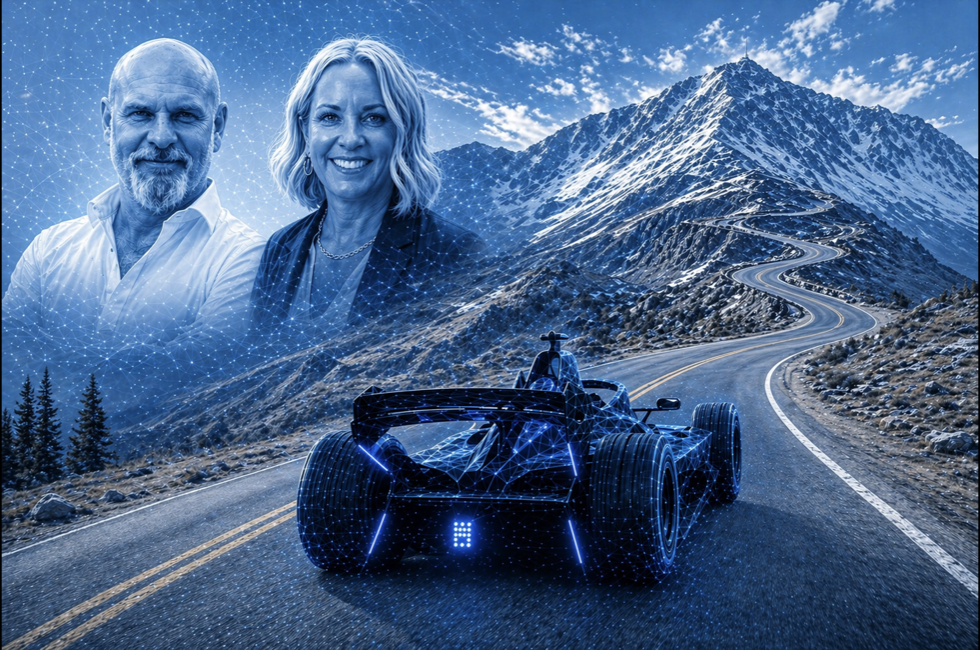
The CEO of Formula E. The CEO of Pikes Peak. A Gen 4 car with 600 kW and permanent AWD. The conversation writes itself.
A Formula E Gen 4 car should run Pikes Peak.
Six hundred kilowatts. Permanent all-wheel drive. One hundred and fifty-six corners. Fourteen thousand, one hundred and fifteen feet of altitude. No barriers on half the course. The most demanding hill climb on the planet, where the thin air that robs combustion engines of power is entirely irrelevant to an electric drivetrain.
The record at the summit was set by Volkswagen's ID.R in 2018 — an electric car. The mountain already knows what electric performance looks like at its limit. A Gen 4 car, in full competition specification, would be something else entirely.
I happen to know both Jeff Dodds, the CEO of Formula E, and Melissa Eickhoff, the CEO of Pikes Peak International Hill Climb. I'm just saying.
Who Collected the Tax
Which brings us to the part of this that requires honesty rather than enthusiasm.
Liberty Global now holds 65% of Formula E. The controlling interest was acquired from Warner Bros. Discovery in 2024, bringing a European telecom conglomerate — whose core competency is fiber networks and cable infrastructure, not sport culture — into the position of majority owner at the exact moment the series is most valuable and most vulnerable. John Malone, who controls Liberty Global, also controls Liberty Media, which owns Formula 1. The overlap is worth noting without over-reading.
Jeff Dodds is smart, agile, and building a leadership team that signals genuine commercial ambition — a new Chief Commercial Officer, a new Chief Media Officer, both recruited from high-profile sport and entertainment backgrounds. He understands what the series has. The recent appointments suggest he intends to scale it.
But the patience tax was paid by believers — manufacturers, teams, fans, and a founding generation of executives who held the position when holding it was not obviously correct. The danger at this moment is not failure. It is extraction. A platform with this much authentic cultural potential, aimed at exactly the audience that will define sport consumption for the next thirty years, optimized for short-cycle financial return rather than long-cycle audience development.
Formula E does not need to become anything. It needs to become more of what it already is — faster, louder in the ways that matter, deeper in the experience it offers, bolder in the creative decisions it has been leaving unmade. The Gen 4 gives it the performance credibility to make that case to anyone still skeptical.
The slot car instinct still applies: read the corner before you get there, manage your energy, and trust that momentum, once built correctly, is the hardest thing in racing to stop.
The series has momentum. The question is who's on the throttle.
Pfanner Advantage works with clients to turn change into advantage at the intersection of mobility, motorsport, media, technology, and marketing. Learn more or start a conversation: contact us today.
The Advantage Journal arrives every week. What matters in sport, mobility, media, and technology — curated and contextualized by Bill Sparks, Bill Long, and Paul Pfanner. No hedging. No filler. Subscribe — It’s Free

