
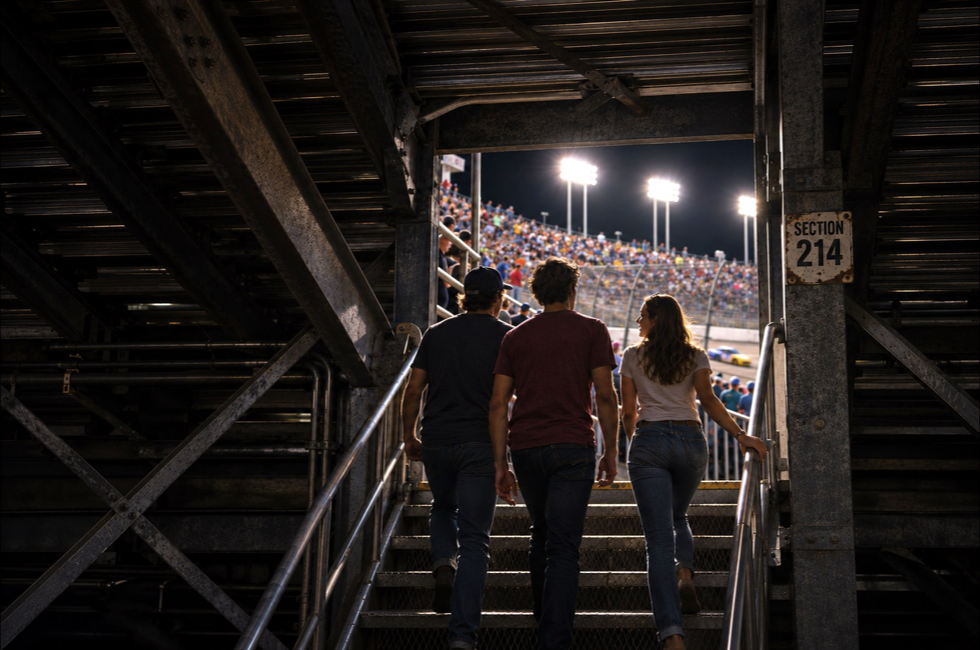
On the way in. NASCAR’s next fans will find the sport their own way. The job is giving them a reason to believe.
Paul Pfanner closes his NASCAR's Moment series with the manufacturers, IMSA and the racer he believes can carry NASCAR's story to its next audience.
Kyle Larson left Sunday's season finale at Homestead-Miami Speedway with his third Cup championship and his second in a row. Ryan Blaney won the race. Now NASCAR heads toward 2027 with Dodge coming back and a champion whose racing reaches well beyond stock cars. And there's a chance to make a new generation feel about NASCAR the way so many of us have felt about it most of our lives.
That's where I want to finish this series. NASCAR has the substance to earn that kind of loyalty again. The opportunity is to make its competition matter to people who haven't discovered yet how much they could care about it.
The belonging that built NASCAR
For decades, NASCAR did more than any other series to define what racing meant to a broad American audience. At its strongest it was close to a sporting religion for Middle America. Following it meant belonging to a community, with a favorite driver and often a manufacturer allegiance that reached right into the family driveway.
The working man's ethos was central to that. Today it's a working person's ethos. The pride in doing a hard job well belongs to anyone who recognizes it, and NASCAR can carry that pride forward while making more people feel they belong in its future.
That includes a sustained opportunity for a defining female star. Danica Patrick showed how much attention a woman could bring to NASCAR. Turning attention into a lasting competitive presence takes strong equipment and a development path with time to work. Women already follow this sport for plenty of reasons. More women with a real chance to win behind the wheel would only add to what it can become.
Where the next fans live
Formula One is challenging NASCAR for a place in American sporting culture, particularly among younger people. It has made following racing feel like membership in a world that keeps going between races, with drivers who are part of people's daily lives.
F1's 2025 Global Fan Survey gives a sense of how deep that runs. Among its U.S. Gen Z respondents, 70 percent said they engage with F1 content every day. Among U.S. respondents of all ages, 40 percent said they follow a driver first, ahead of a team or the sport. These are self-selected, highly engaged fans. Their answers describe a relationship NASCAR should want.
A young fan may first meet a driver in a short video on TikTok or YouTube. What happens next decides whether they stay. A good story gives them someone to follow and a reason to understand the competition, and then the race means something.
NASCAR needs to be present where its future audience lives, with stories that lead people straight into the racing. The teams have a big role in that. They know the people in their shops and can let fans follow a season through their eyes. As I argued in part three, teams with a more secure future can afford to invest in relationships that take years to grow.
A racer who can carry the story
Larson is an extraordinary place to start. Someone who finds him on a dirt track or at the Indianapolis 500 can follow that interest straight into NASCAR. His willingness to race almost anything makes his ability visible to people who might never have watched a stock car race.
In Larson I see the potential for the kind of crossover star Jeff Gordon became for NASCAR. His fame isn't on Gordon's scale yet, and he'll make it in his own way. Gordon redefined what a NASCAR star could be and became synonymous with the sport's surge, and he had the ultimate rival in Dale Earnhardt. Your rivals define you. Larson's ability gets people's attention across racing's boundaries, and the opportunity is to turn that attention into a lasting attachment to the series he comes home to.
There's already work to build on. This year's Prime Video documentary, Kyle Larson vs. The Double, follows the preparation and frustration behind his attempts to race Indianapolis and Charlotte on the same day. Access to the hard parts is what makes the achievement matter. NASCAR has plenty more people whose work could carry that kind of interest.
The competition behind the car
That brings me to the manufacturers, where I promised to go at the end of part three. On November 2, Dodge committed to a 2027 Cup return with Kaulig Racing and two Chargers. Four days later, Kaulig confirmed AJ Allmendinger and Ty Dillon as its drivers. Ford, Toyota and Chevrolet took the first three places at Homestead. Next year they'll have another rival, and fans will have another allegiance to choose.
The best part of that story starts before the first green flag. Dodge is trying to turn a compressed timetable into a competitive Cup car, and it has said so openly. Tim Kuniskis, who runs Stellantis' American brands, put it plainly: slow has never been part of Dodge's DNA. Engineers will make choices this winter that get judged on the timing screens at Daytona in February.
Dodge plans to reveal the car December 4 at the Snowball Derby, a short-track late model race in Pensacola. The reveal will stream on FloRacing and the NASCAR Channel. It gives the grassroots audience something new to follow, and people far beyond the grandstands a way to join in.
The people building the cars and engines belong in NASCAR's story alongside the people driving them. Manufacturer rivalry helped give this sport its meaning. Making that rivalry understandable to a new audience can do it again, even for someone whose first connection to a brand comes through racing and not a car in the driveway.
What IMSA makes possible
NASCAR has a useful example inside its own house. IMSA brings distinctive manufacturers into close competition and lets fans get remarkably close to the people doing the work. On the Petit Le Mans grid, a fan can stand beside the cars and within talking distance of the people whose race is about to start. That closeness explains why the whole enterprise matters.
Manufacturers have a business reason to be there, too. IMSA launched IMSA Labs in January to formalize its work with technology partners, building on decades of development through racing. In June, IMSA, the ACO and the FIA set out a framework for the top prototype class from 2030 that keeps combustion engines with hybrid systems. The details are still being written, but manufacturers have a direction to plan around.
Cup will need its own answer, suited to its racing and its partners. What IMSA shows is the value of giving manufacturers a clear reason to compete and letting fans see what they bring. Acura's pause in its prototype program after Petit Le Mans is a reminder that the business case never stops needing attention.
Give them a reason to believe
Across these four columns I've argued for confidence in what makes NASCAR distinctive, and for easier access to it. Teams with the security to build for the future can invest in the relationships that turn an introduction into years of loyalty. With the manufacturers fully in, fans have more to follow and more ways to feel part of it.
I first felt NASCAR's pull at Riverside in 1970. Today's new fan will come in a different way and stay for a different reason. NASCAR's next great era starts when that reason becomes personal. The talent is here, and so is the pride in the work. The job now is getting both in front of people who don't know yet that they're going to care.
Pfanner Advantage works with clients to turn change into advantage at the intersection of mobility, motorsport, media, technology, and marketing. Learn more or start a conversation: contact us today.
Paul Pfanner’s recent Shift Happens Insights:
Show Me What the New Money Does
Will NASCAR Play the TV Game or Redefine It?
Other Than That, I Enjoyed the Film
The Advantage Journal arrives every week. What matters in sport, mobility, media, and technology — curated and contextualized by Bill Sparks, Bill Long, and Paul Pfanner. No hedging. No filler. Subscribe — It’s Free

