
Inside the Beast
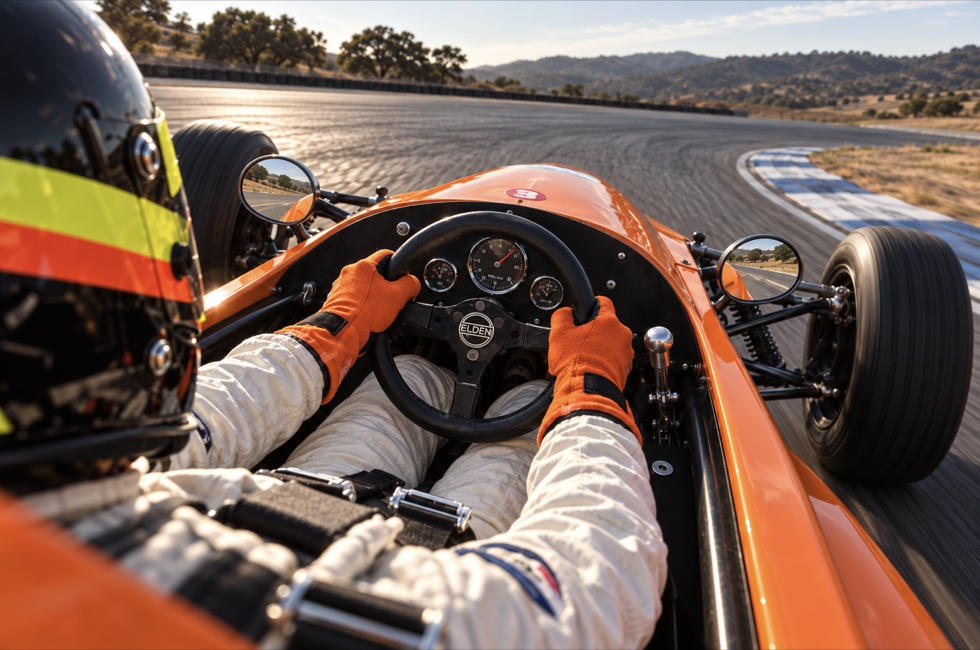
Riding the bull, my way. Getting in a race car is about the closest thing to being a human agent I've ever experienced. You're absolutely in the moment, processing everything coming at you at speed. You're a now processor.
Last week Paul Pfanner climbed on the bull and made an album. This week he says what the ride was for, and why racing, and the media built around it, have always rewarded the people who've been inside the beast.
Last week I ended with three words. It's not enough.
The album was never the destination. I made it to find out from the inside how far these tools have come, and what that means for the work I've done my whole life.
The gap has closed
The distance between an idea and its execution, on something you've never done, has shrunk to an impossibly small time frame. I knew that in theory. Making the album taught it to me the way a corner does once you've driven it. The tools for making the thing are astonishing. Getting it out into the world is too, and the tools that teach you what you're doing while you're doing it may be the biggest surprise of all. Five years ago, ten, none of this was within reach of someone like me.
Wings, then tunnels
It reminds me of wings coming to Formula 1. Jim Hall had shown the way in Can-Am in 1966, with a big wing standing up on struts over the Chaparral, pressing the car into the track. By 1968 wings were sprouting all over Formula 1. Some teams chose to embrace it and make it work for them. The ones that didn't fell behind, and fast.
Ten years later it happened again. Colin Chapman's Lotus turned the whole underside of the car into a wing, and Mario Andretti won the 1978 world championship with ground effects. Most of the grid spent the next season catching up. A team that had been brilliant one year could be lost the next without doing anything wrong, just by standing still.
Change is relentless, and it doesn't wait for anyone to get ready. Be the change is always what I choose.
My medium got shaken first
I've spent my life working in a medium that has been absolutely shaken during this decade. Search and the social platforms started it, and now AI answers the reader's question before they ever reach the page. What's been shaken is the business model wrapped around the work. The writers, photographers and editors who bring a race to life are as good as they've ever been, and some of the best people I know are in that craft.
Everything will be touched by it. Teams, sanctioning bodies, the brands on the cars and the tracks they race on. Racing already showed us how this goes, twice, and I don't see any reason this time will be different.
The seat is the point
What I've always loved about racing is that it's the ultimate form of personal agency. When you're operating the race car there is nothing else you can do but be in that moment, and the consequences of drifting out of it are huge. Same for the people working with you on strategy and performance from the pit wall. It carries into the broadcast booth too, which is why ex-racing drivers are pretty damn good at it. They understand the moment from the other side.
I built media properties on that idea. The people I looked for had driven, raced, worked on teams or on the technical side, and then came into the journalism. They weren't reporting from a distance. They could shorten the gap between what a driver was telling them and what the reader understood, because they'd been inside it.
What the tools can't hand you
Every channel on a modern race car is recorded. Engineers have more data than any generation before them, and they still want to hear from the driver what the car felt like through the fast stuff. The data shows what happened. Why it happened still comes out of the driver's mouth, usually in the first few minutes after they climb out.
That's where we all are now. If you're building something in racing or media, the tools will get you to a finished thing faster than you'd believe. They won't put you in the seat. Understanding still comes from doing the laps, and from getting it wrong and going back out again. That's what I meant last week when I said the machine by itself isn't enough. Somebody still has to get in the car, and the price of getting in has never been lower.
Always moving
In the weeks ahead I'm turning to NASCAR and NHRA, two giants of American motorsport and very different animals. I loved both early, and both taught me a lot about life and the joy of this sport. They deserve research and respect, and the perspective you only earn being a fan for more than six decades. I'm not going to bang them out for the sake of banging them out.
The ride did one more thing for me. I needed to know all of this while I work on another project, one I believe is larger and more important than anything I've done. I'll tell you about it when it's ready
Pfanner Advantage works with clients to turn change into advantage at the intersection of mobility, motorsport, media, technology, and marketing. Learn more or start a conversation: contact us today.
Paul Pfanner’s recent Shift Happens Insights:
The Advantage Journal arrives every week. What matters in sport, mobility, media, and technology — curated and contextualized by Bill Sparks, Bill Long, and Paul Pfanner. No hedging. No filler. Subscribe — It’s Free

