
How AI Is Getting Between Brands and Customers
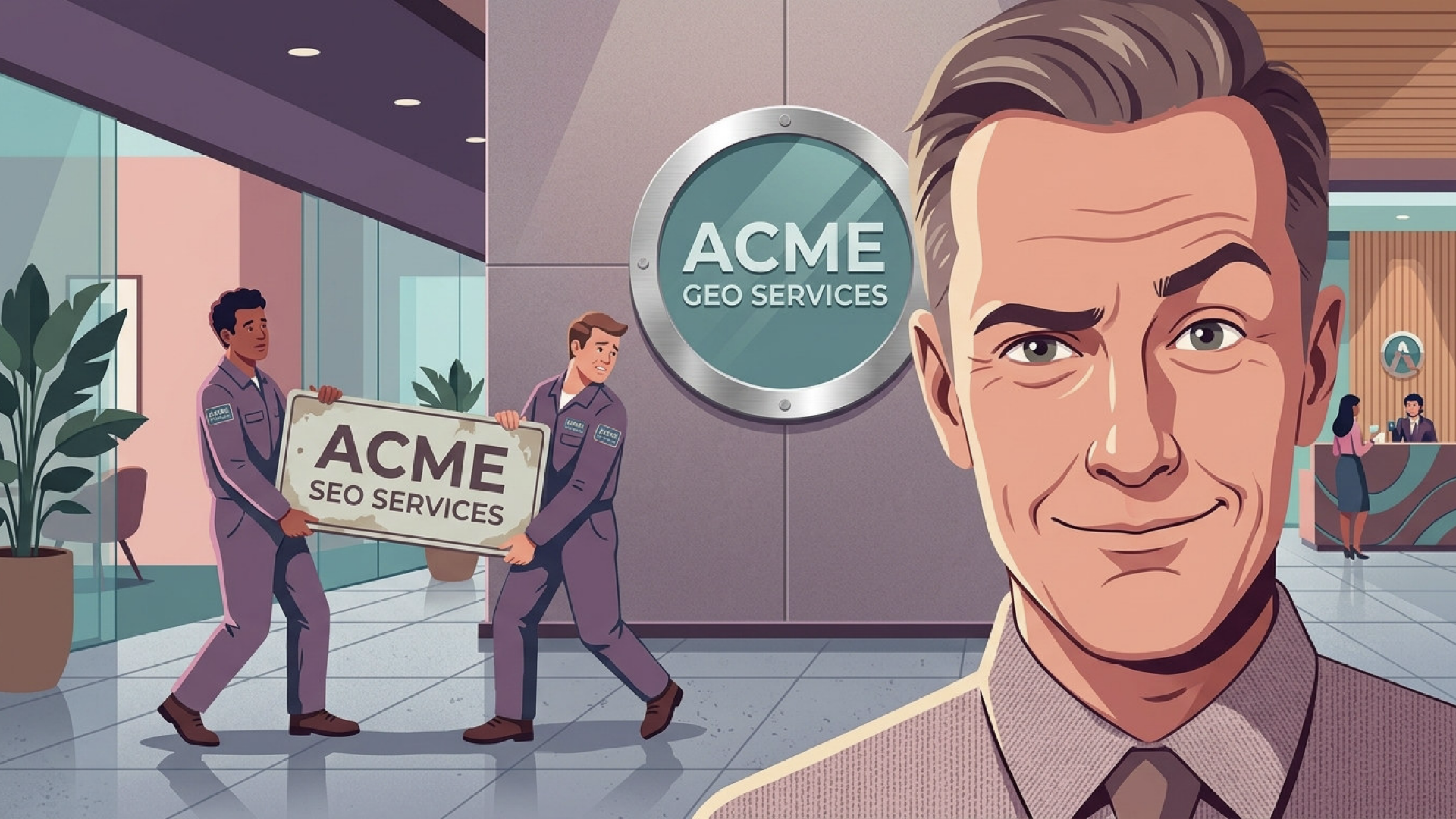
AI-mediated buying is the next evolution in consumer behavior. Marketing in this new environment will require mastering new and unfamiliar strategies.
Part 1 of Bill Sparks' series on how AI is becoming the new middleman between brands and customers. This installment looks at how AI-mediated buying is developing and the steps that can be taken to prepare for the next evolution in marketing.
About 60 percent of Google searches now end without anyone clicking a link. When Google's AI Mode is triggered, that figure climbs to 93 percent. Think about what that means. For every hundred people who type a question into Google, only seven will visit a website when the AI has an answer ready.
The old arrangement was straightforward. You published useful content, Google sent you visitors, and you converted some of those visitors into customers. That arrangement is breaking. The visitors are not disappearing. They are getting their answers from the search results page itself, or from a chatbot, or from an AI assistant on their phone. The question your brand used to answer on its own website is now being answered by a machine, in its own words, with your name either attached or not.
From rankings to citations
Companies have spent two decades perfecting their search engine optimization techniques. The new frontier requires developing generative engine optimization (GEO) marketing skills.
For two decades, the discipline was search engine optimization. The goal was to rank highly in a list of blue links. The emerging discipline is generative engine optimization, or GEO, and the goal is fundamentally different. You are no longer trying to be listed. You are trying to be cited inside the answer itself.
The playing field is also fragmenting. ChatGPT's share of AI web traffic fell from about 76 percent to 53 percent over the past year, according to Similarweb data. In the same period, Google's Gemini rose to about 28 percent and Anthropic's Claude tripled to roughly 9 percent. That fragmentation matters because visibility on one engine does not carry over to the next. A study of 4,100 B2B queries by the research agency Something Inc. found that a source cited by ChatGPT was also cited by Perplexity only 44 percent of the time. Each engine draws on a different mix of sources, weights them differently, and can tell a very different story about your brand.
The comfortable habit of optimizing for Google and trusting the rest to follow is finished. A company now has to think about how it appears across multiple AI systems, each with its own preferences and blind spots, and there is no single playbook that covers all of them.
And the shift is accelerating, not leveling off. ChatGPT alone now has more than 800 million weekly active users. Google's AI Overviews appear on roughly a third of US desktop queries. Total AI search traffic to websites grew more than 500 percent between January 2024 and May 2025. This is not a curiosity confined to early adopters. It is becoming the default way a growing share of customers start looking for answers, and for many of them, the AI's answer is where the search ends.
Smaller traffic, better buyers
If the volumes are smaller, why should anyone care? Because the traffic that does arrive is significantly more valuable. Adobe Analytics data from the first quarter of 2026 found that AI-referred visitors to US retail sites converted at a 42 percent higher rate than traffic from other sources. That makes sense. People who get a direct answer from an AI and still click through to your site are further along in their decision than someone browsing a list of links. They already know what they are looking for. They are coming to buy.
There is also an uncomfortable fact in the data. As of March 2026, Reddit was the number-one or number-two most-cited domain on every major AI engine. Your customers' conversations about you, their complaints, their comparisons, their unsolicited recommendations to strangers, may carry more weight in an AI's answer than anything you publish on your own website. The machines are not reading your marketing copy first. They are reading what real people say about you.
What the machines actually pick up

AI wants sources that are fresh and that deliver a verdict. It doesn't want your brand manifesto or narrative written in your company's voice.
So what kind of content gets cited? The research here is still young, and much of it comes from GEO agencies with obvious commercial incentives, so treat the specifics as directional rather than gospel. That said, the findings point in a consistent direction.
Comparison and "alternatives" content earned about a third of all citations in Something Inc.'s study of B2B queries. Content that states a clear verdict outperformed brand-voice storytelling. The machines are looking for content that answers a question directly, not content that builds a narrative arc around your brand's purpose. If someone asks an AI "what is the best CRM for a company with 50 employees," the AI wants a source that names a product and says why. It does not want your brand manifesto.
Freshness matters too. GEO agency Tygartmedia reported that 65 percent of AI citations in their analysis pointed to content published within the past year. Evergreen pages that sat comfortably in Google's top ten for years may not be what the AI reaches for. The engines appear to favor recent, specific, well-sourced material over legacy content, which means that the publish-and-forget approach to content marketing has a new and expensive failure mode.
The returns for companies that act on this are real. One B2B SaaS company restructured its content around comparison queries and direct-answer formats and saw AI-referred trial signups climb from 575 to 3,500 in seven weeks. That is vendor-reported and should be read with the usual skepticism, but the direction is consistent with everything else in the data: content built to answer specific questions earns citations, and citations drive traffic that converts.
The practical playbook is less exotic than the jargon suggests. Write content with concrete facts and figures, not vague value propositions. Build comparison pages that honestly answer the questions people actually ask, including "what are the alternatives to your product." Make sure your company description is consistent across your own site, third-party directories, trade publications, and review platforms, because the AI reads all of them and inconsistency breeds confusion. And update regularly, because the machines notice when you stop.
None of this replaces traditional SEO. It layers on top of it. But the gap between companies that are doing this work and those that are not will widen quickly, because AI engines are being adopted faster than most marketing teams are adjusting.
What you can do now
Start with the simplest possible test: ask the leading AI tools what they say about you. Type your company name into ChatGPT, Perplexity, Gemini, and Claude. Read the answers. Then do the same for your top two or three competitors. What you find may be accurate, outdated, wrong, or entirely absent, and every one of those results is useful. This is not a research project. It is a fifteen-minute exercise that should happen this week.
Next, rethink what counts as marketing. Your third-party presence, industry reviews, trade press coverage, responses to customer questions on Reddit, is no longer PR overflow. It is now part of how AI engines decide whether to mention you. If your marketing team does not manage that presence deliberately, you are leaving your brand's representation in AI answers to chance and to whatever your competitors' customers feel like posting.
Finally, change the metric. For 25 years, marketing teams tracked where they ranked in search results. That metric still matters, but it is no longer sufficient. The new question is how often your brand is cited when someone asks an AI for a recommendation in your category. The measurement tools for this are early and imperfect, but the discipline has to start somewhere, and starting imperfect is better than not measuring at all.
Companies that move early will have an advantage that compounds. AI engines learn from the sources they find, and early movers shape the material the machines draw on. Companies that wait risk being defined by what others have said, or not mentioned at all.
Next: should you let the bots in?
Everything above assumes the AI can read your content in the first place. That assumption is increasingly wrong. More websites are deciding that AI crawlers should not have free access to their pages, or at least not without paying for the privilege. In Part 2, we look at the fight over whether AI companies should be allowed to read your content, the emerging market for charging them when they do, and how to decide what your own policy should be.
Pfanner Advantage works with clients to turn change into advantage at the intersection of mobility, motorsport, media, technology, and marketing. Learn more or start a conversation: contact us today.
More Cold Read Insights from Bill Sparks:
What 1979 Telss Detroit About 2026
What Aren’t Americans Buying EVs?
Part 8: State of the Art Branding Case Studies
Part 7: How the Ad Industry is Reinventing Itself
Part 6: AI and the Personalization of Brand Narrative
Part 5: Building Brand Loyalty Through Community
Part 4: Independent Creators as Brand Storytellers
Part 3: Brands as Publshers: The Rise of Owned Media
The Advantage Journal arrives every week. What matters in sport, mobility, media, and technology — curated and contextualized by Bill Sparks, Bill Long, and Paul Pfanner. No hedging. No filler. Subscribe — It’s Free