You Are Out of Excuses
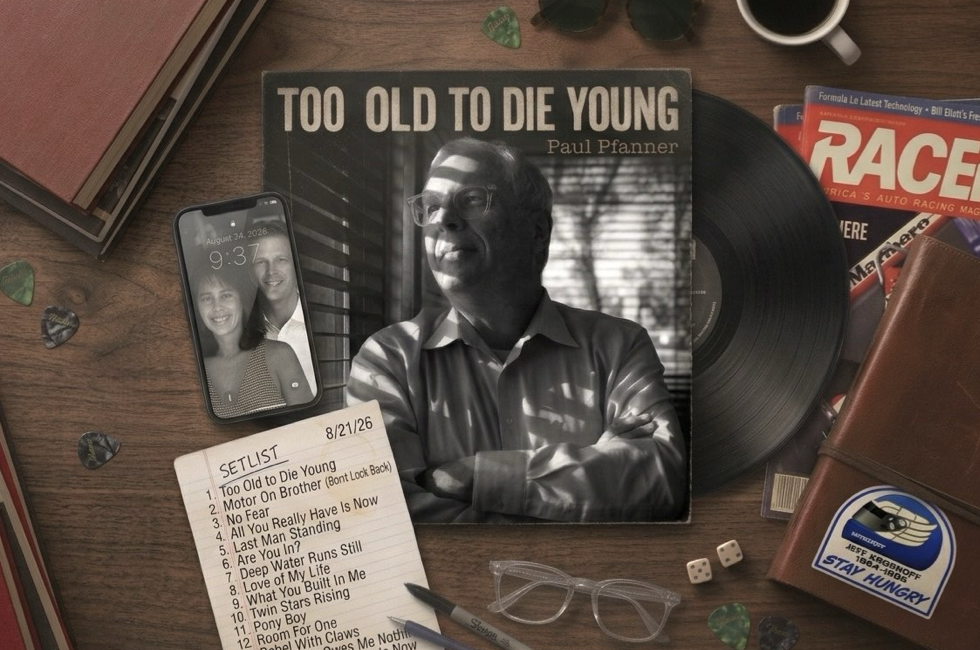
This is Too Old to Die Young. After a media and marketing career that ran across two centuries, I made my first record album. I know nothing about music and had no idea how to do it. I started on Friday evening, August 21, and by the end of the weekend on August 23, I had sixteen songs. Three of them are out today. There is enough of the rest to finish the album as I go. None of it would have been possible even a year or two ago. The technology finally caught up with the idea.
Paul Pfanner cannot sing and had never written a song. Then he spent a weekend making a blues album anyway. Here is how a self-described talentless lump pulled it off, with three of the songs to play while you read.
On Friday evening, I decided to find out whether I believed my own argument.
What have you left unfinished because you never had the time, the tools or the slightest idea where to begin? The world has changed. What would happen if you tried now?
Testing My Own Advice
I have written a couple of columns recently that arrive at roughly the same place.
In Open Track, I wrote about how many of the old barriers to creating something have come down. In What You're Here to Do, I asked a more personal question: If there is something you have always wanted to do, why aren't you doing it?
The thought underneath both pieces was that many of the obstacles that once kept people from trying something have either disappeared or become manageable. That does not guarantee that any of us will be good at it. It does make our excuses harder to defend.
Late Friday evening, I decided I should test that proposition on myself.
That Feels Like a Song
This did not begin with a plan to make an album. I was looking through some of my notes and thinking about work I had already done when something struck me differently. It did not feel like another paragraph or the beginning of another column.
I remember thinking, That feels like a song. That was followed almost immediately by another thought: Why not?
At that point, I had no idea where to begin. I did not know which music platforms were available, what they could do or how people were using them. I spent about an hour researching different options and poking around a few of them. Suno looked like the winner, so I stopped researching and started trying to make something.
I have always been interested in how lyrics work. A good song can tell a complete story in a few minutes, and it can sometimes get closer to an emotion than an essay or a conversation ever will. Until Friday, though, I had never made a serious attempt to write one.
I set myself the goal of creating a 12-song album.
An Unusual Free Run
Our twin daughters were in town to celebrate their birthday, but they and Donna had plans of their own for much of the weekend. That left me with an unusual amount of time to myself.
I had several uninterrupted hours during the day and more time in the evenings. Once I began working on the songs, I kept returning to them. One version led to another, and every failed attempt taught me a little more about how to ask for what I was trying to hear.
I had no sound engineer, no background in music production and no idea how to use the technology when I started. I made mistakes, listened to what came back, and tried to explain why it was wrong. That was enough to keep me moving.
A few days later, I had 13-16 songs, depending on which versions I eventually decide count.
Why the Blues?
Once I knew I was going to try this, the musical direction was not difficult to find.
I have spent a lot of my creative time over the years listening to a radio program called Nothing But the Blues. I love the blues, and I have long been a fan of B.B. King and the music itself.
What moves me about the blues is that it is so often a lament on life and the way we have lived it. It does not require life to have worked out neatly before we are allowed to sing about it. The music can carry disappointment, loss and regret without becoming defeated by any of them.
That felt right for the things I wanted to write about. Most of these songs developed into a bluesy, soulful blend of blues and rock. The technology was unfamiliar, but the emotional territory was not.
Once I had gone this far, the question became obvious: Why not decide to become a blues singer-songwriter at an age when most people assume that ship has sailed? At least, I could become one for a weekend.
That Is Not Me Singing
I want to be completely clear about the voice on these recordings. Some of the vocal sounds like me, but none of it is me singing.
The vocals were created in Suno using a clone of my voice, along with specific guidance about its tone, delivery and character. I did not suddenly develop vocal range, timing or the ability to carry a song over the weekend. I did not sing these performances.
I am still the same talentless lump typing on a keyboard that I was when I began the project on Friday.
What Suno produced was a constructed singing voice based on mine. It has elements of my tone and low register, but it can do things with them that I cannot. At its best, it sounds like a musical version of me. At other times, it wanders off and becomes someone (gifted) I do not recognize at all.
That was part of the work. Some early versions sounded too country. Others were overly polished or theatrical. A few sounded as though three unrelated singers had wandered into the same recording session. I kept revising the guidance until the voice became more consistent and the songs sounded as though they belonged to the same person.
I began the writing process by talking to ChatGPT in much the same way I talk when I am trying to understand what I think. I described experiences, repeated lines that had stayed with me and explained what I wanted each song to say. ChatGPT helped me work that material into lyrical structures. Suno then allowed me to explore different musical arrangements and hear the words performed.
I do not confuse this with the way a musician who has spent years learning an instrument makes an album. I did not play the instruments, sing the performances or walk into a studio with a band. I supplied the experiences, language and point of view, then decided what sounded honest and what did not.
It is a different creative process, and it should be described for what it is. It also allowed me to do something that, on Friday afternoon, I did not know I could do.
Three First Songs I Am Willing to Share
I am sharing three songs here, which is roughly a quarter of what I wrote over the weekend.
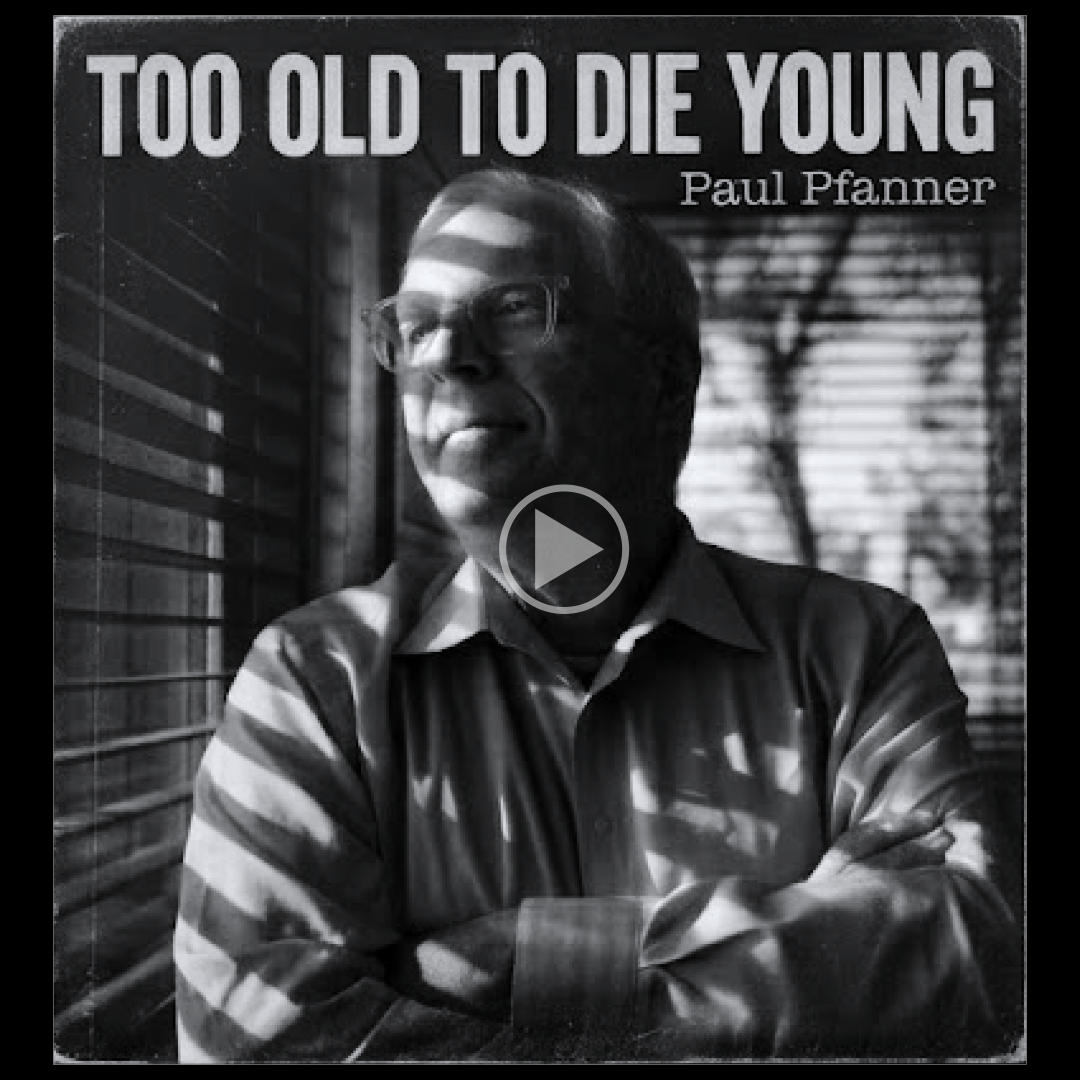
The title song is Too Old to Die Young. At this stage, that is probably closer to biography than marketing. The song is about growing older without agreeing that you are finished. It acknowledges the miles already traveled while leaving open the possibility that there may still be a long road ahead.
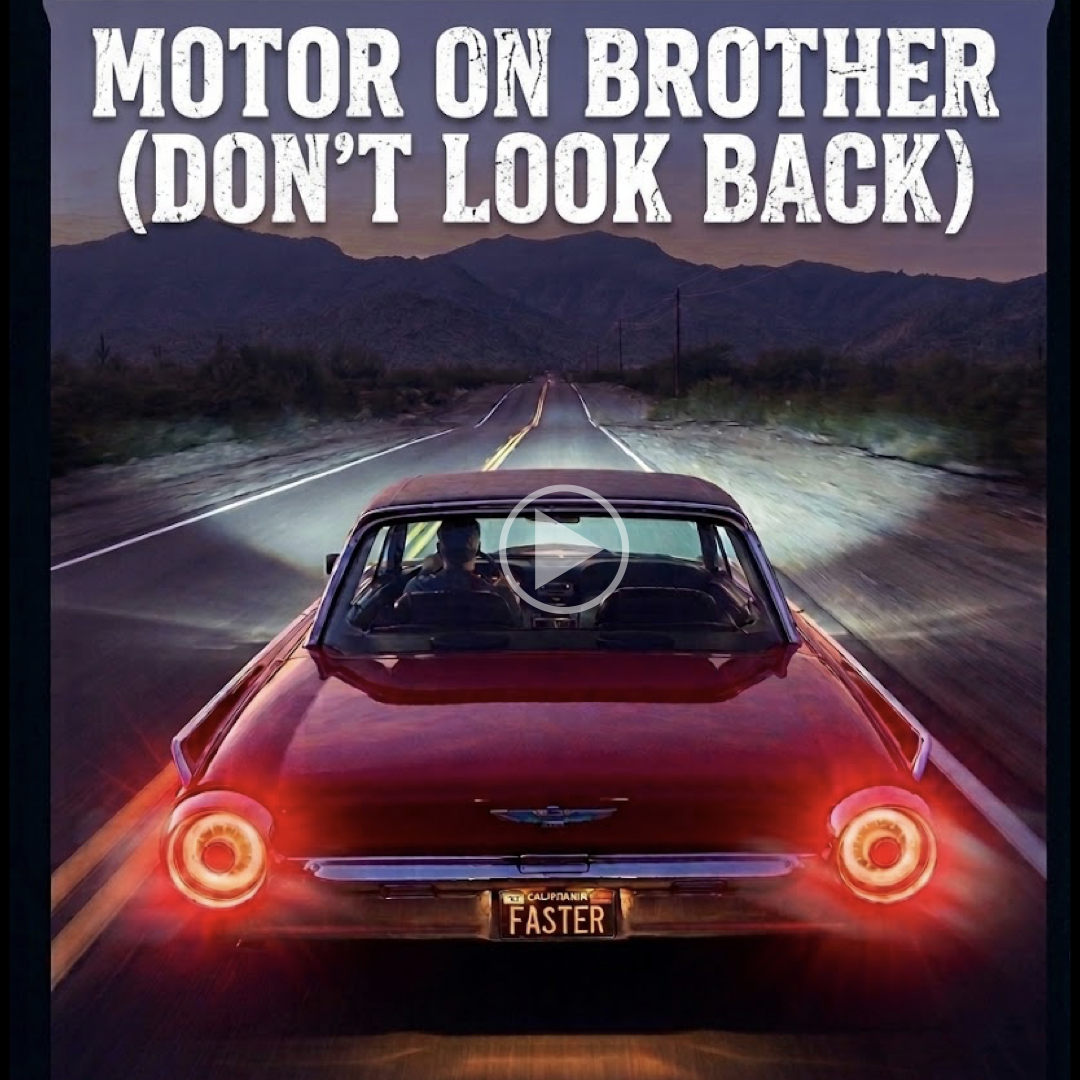
Motor On, Brother (Don't Look Back) is about continuing forward when the road becomes uncertain and looking backward is not going to help. It sounds like advice to someone else, but I know perfectly well that I wrote it for myself.
The third song is No Fear, and it has a history behind it.
During the 1990s, our company worked as an agency partner with No Fear. Its motto was "Face Your Fears. Live Your Dreams." I did not use that line in the song, but much of what I learned from working with the company found its way into it.
No Fear was never really about pretending that fear did not exist. It was about refusing to let fear make the decision for you. I did not consciously begin this project intending to revisit that lesson, but it was there throughout the weekend. I had no idea how to produce a song, work with the technology or create a consistent musical voice. I started anyway and learned what I needed as I went.
No Fear became the song that best explains why I did this.
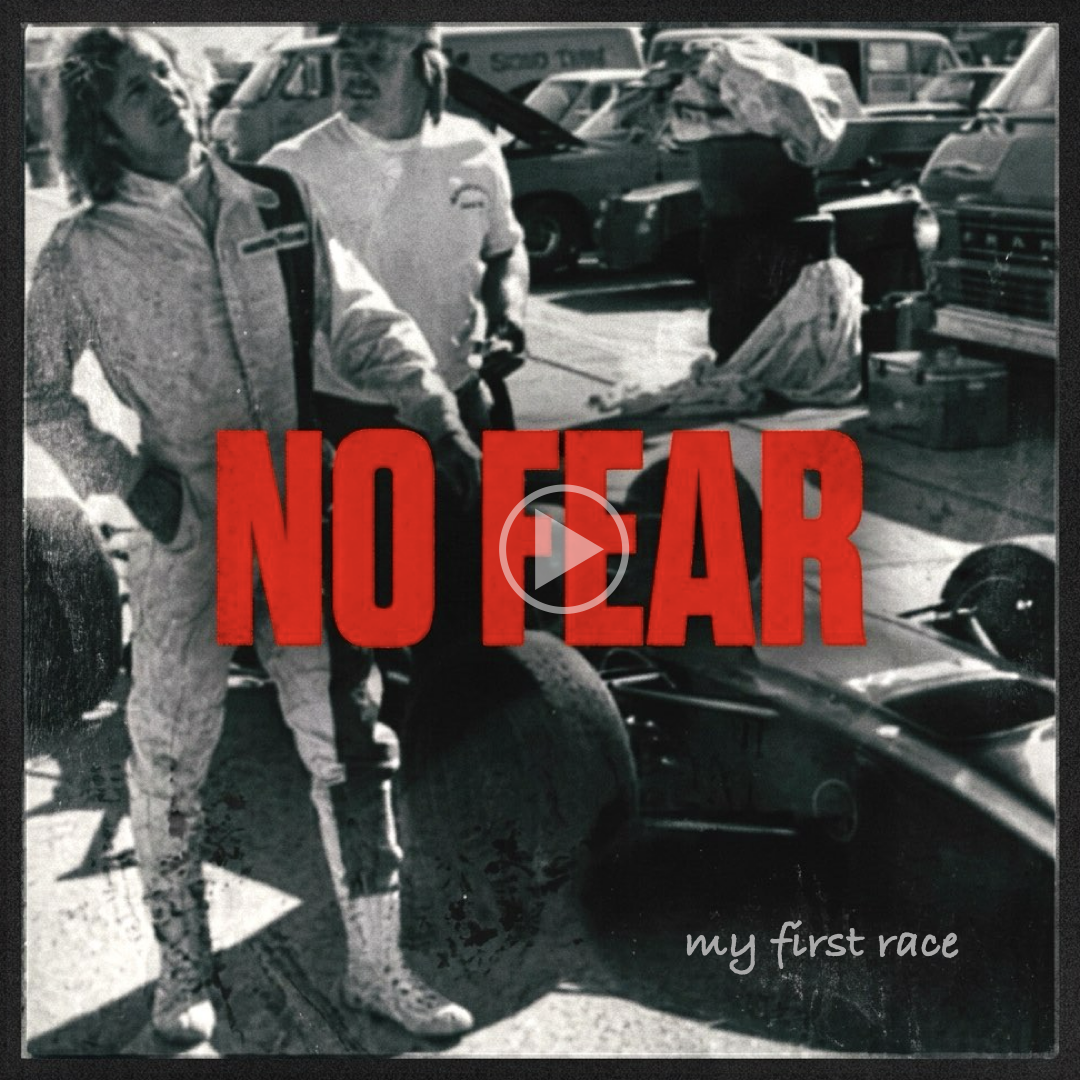
LISTEN: "No Fear"
A Letter to Myself Written in Songs
I do not expect everyone to like these songs. I like them, which is more important to me than I expected it to be.
They will probably become part of what I listen to on mornings when I am unmotivated or spending too much time thinking about what has already happened. They remind me I still have some life in me and that I can still make something new. And that I do not have to spend the morning looking backward.
There are more songs, and I may share some of them if the response to these three is encouraging. Some, however, were written as gifts to my family. I do not expect to share those without their permission. They were written for them before they were written for anyone else.
When it is finished, the album will be called Too Old to Die Young. Part of it is a present to myself. It is something I can carry forward and return to when I need it. The more personal songs are my way of saying things to Donna and our daughters that may come across differently in music than they would in another conversation or another piece of writing.
As the album has taken shape, I have come to understand it as a letter written in songs. It is a letter of gratitude for the life I have been allowed to live, for the people who have shared it with me and for the lessons I managed to learn along the way.
Some of those lessons came easily. Most did not. They came through mistakes, losses, unexpected turns and the occasional moment when I was smart enough to recognize what life was trying to teach me. The songs give me a place to put some of that experience without trying to turn it into advice for anyone else.
Think of me as the test pilot for the ridiculous. I am not doing any of this to be told it was good. I am doing it so you can watch someone with no business making an album go and make one, trip over himself a few times, and find the whole thing more fun than frightening. If I can look foolish in public and enjoy it, then whatever you have been putting off is probably safer to try than you keep telling yourself.
I am not suggesting that everyone should use AI to make an album. My point is that the distance between wondering and trying has become very short. Technology cannot decide what you are here to do, and it cannot tell you whether the result is any good. What it can do is give you a quick way to find out what happens if you stop waiting and begin.
On Friday afternoon, these songs did not exist. By the end of the weekend, I had exceeded the goal I had set for myself by four songs. I did not know how to do it, but I did it anyway.
What remains underneath all of it is gratitude. I am grateful for the life behind me, but I am even more grateful to be alive in this moment. Whatever I once had and whatever may still be ahead, this moment is the only thing I possess.
Oh, by the way, that is a song too. It is called All You Really Have Is Now.
Follow my new temporary music career at: https://suno.com/@ppfanner
PS: I wrote this before I understood where it would take me. What started as a dare to myself became a week of building a whole album, and somewhere in the making of it I ran into a much larger question I couldn't get past. If you read this one, read where it led: Real to Me, Synthetic in the Making.
Pfanner Advantage works with clients to turn change into advantage at the intersection of mobility, motorsport, media, technology, and marketing. Learn more or start a conversation: contact us today.
Paul Pfanner’s recent Shift Happens Insights:
The Advantage Journal arrives every week. What matters in sport, mobility, media, and technology — curated and contextualized by Bill Sparks, Bill Long, and Paul Pfanner. No hedging. No filler. Subscribe — It’s Free

