
Tesla's Absolute Ambition
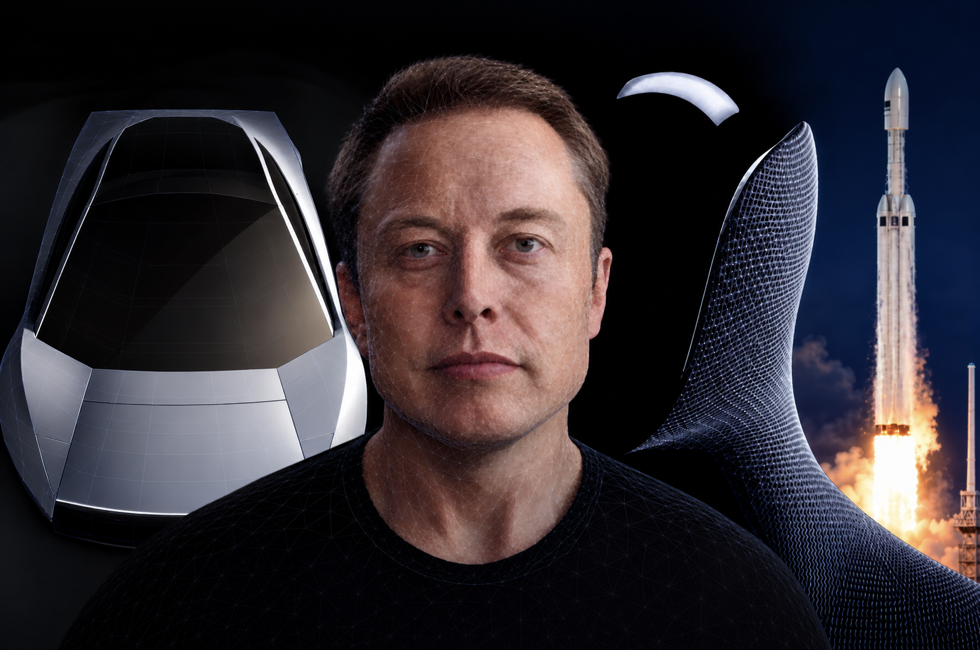
Elon Musk at the center of it all. His ambitions for Tesla reach well beyond the car, into robotics and the rockets and networks other businesses now depend on. How far that reaches, and on whose terms, is the question.
Paul Pfanner looks past Tesla's Roadster unveiling at the company's car business and its growing ties to SpaceX, and sees an ambition to reshape whole systems, with consequences for the people who will depend on them.
On the evening of October 15, I watched Tesla make a car fly. The next day I wrote an essay titled I Saw What You Did There and asked what that had to do with the automobile business. I wanted to know what the hardware was good for and how far the show was from a car somebody could buy. I still want to know.
I noticed the SpaceX connections and Tesla's turn toward autonomy and robots, too, but I was too quick to dismiss the show. I didn't follow those connections far enough to see how the pieces might work together. So I went back to the Roadster, the earnings and SpaceX's own plans, and came away with a different question. What kind of business is Tesla building around the car?
That same evening, Porsche unveiled its Mission S concept in New York, a new mid-engine car to sit above the 911, and I wrote about that one too, in I Love Mission S. Now I Want to See Mission P. Watching both on the same night, I couldn't miss the irony. Porsche is one of the great performance brands in the world, and it has been through a very hard stretch. Not long ago it planned for eight of every ten new models to be fully electric by 2030, moving in the direction Tesla had shown the industry, with European rules pushing carmakers the same way. When electric demand grew more slowly than expected, Porsche reversed course. Unwinding those plans, along with its battery business and U.S. tariffs, cost about €3.9 billion in 2025, and its operating margin fell from 14.1 percent to 1.1 percent.
The difference in scale is just as striking. Porsche delivered 178,532 cars in the first nine months of this year, down 16 percent. Tesla delivered 486,532 in the third quarter alone. Porsche is now narrowing back toward the cars that made its name, while Tesla is reaching well beyond the car.
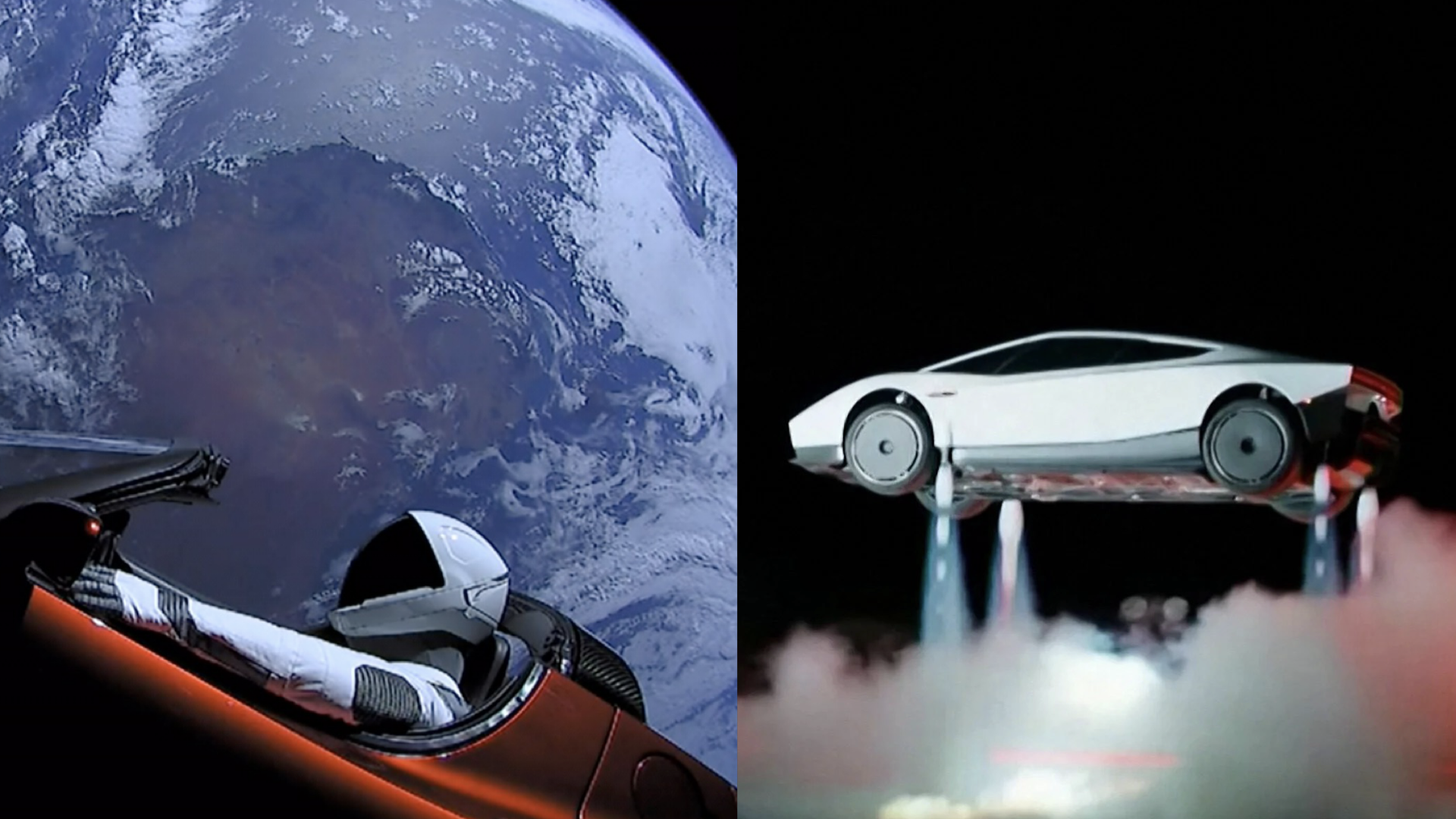
Elon Musk has a gift for capturing attention and defining change, from the original Roadster floating above the Earth in 2018 to the new prototype's airborne unveiling. Tesla's livestream of the October 15 event, from SpaceX's test site in McGregor, Texas, is above. Musk shared the stage with chief designer Franz von Holzhausen and Lars Moravy, Tesla's vice president of vehicle engineering, who walked through the technology underneath, from the fan-suction system to the SpaceX-derived thrusters. As car launches go, I've never seen anything like it.
Tesla knows how to give people a picture they won't forget. The original Roadster floating against the Earth and the new one in the air at its unveiling belong in the same conversation. The show got my attention. This time I wanted to look at what's underneath it.
Start With the Car
When I first wrote about the new Roadster, I had the 2017 concept in my head. Looking at the new images, I realized how far Franz von Holzhausen and his team have taken the design. In MotorTrend's October 16 first look, Franz calls it "a prototype with production intent." Production is targeted for 2028, and some big decisions are still open.
I like where Franz has gone with it. The low wedge, the broad surfaces and those small triangular headlights give it an unusual restraint. There's very little clutter. The longer I look at it, the more I want to know how all that racing hardware fits inside such a simple shape.
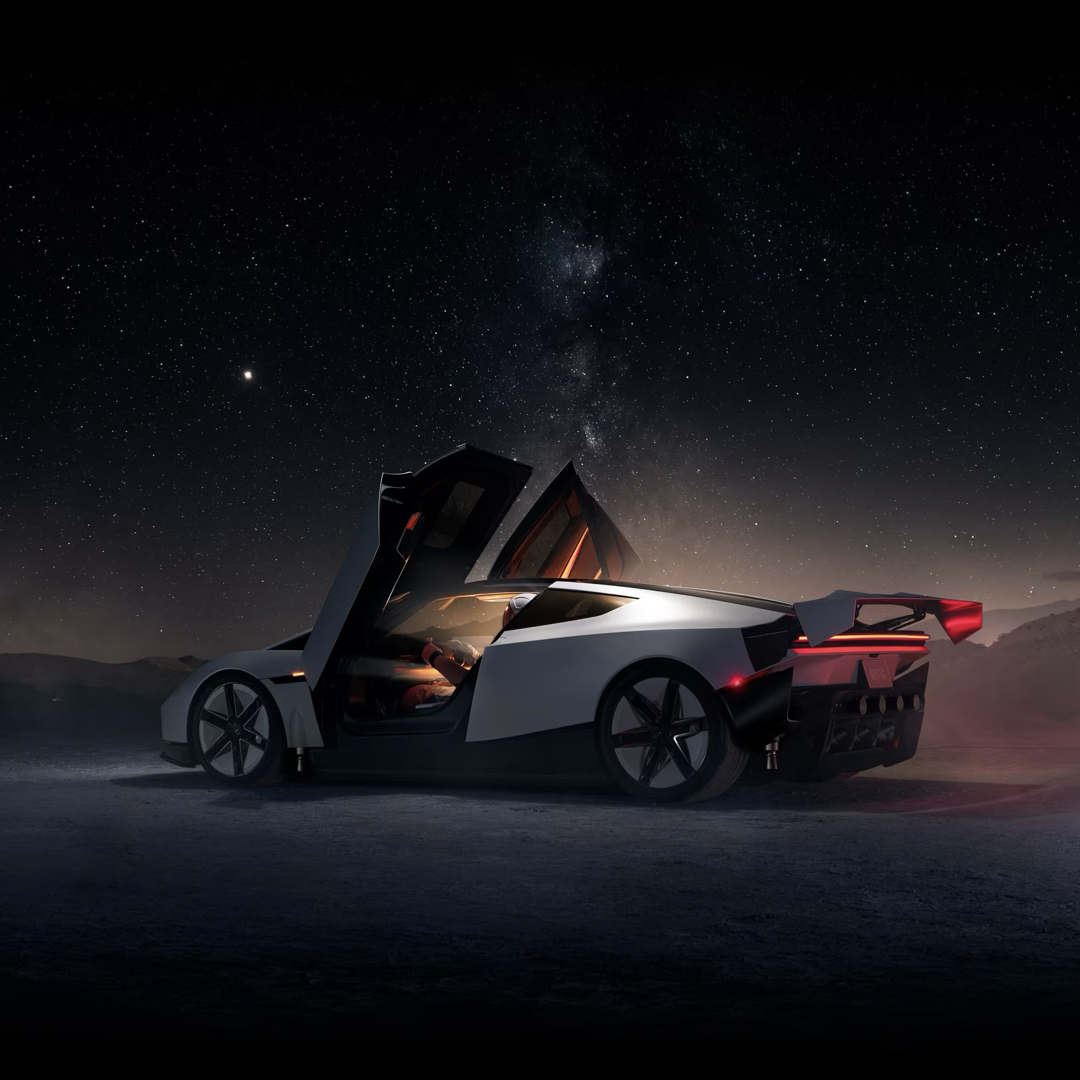
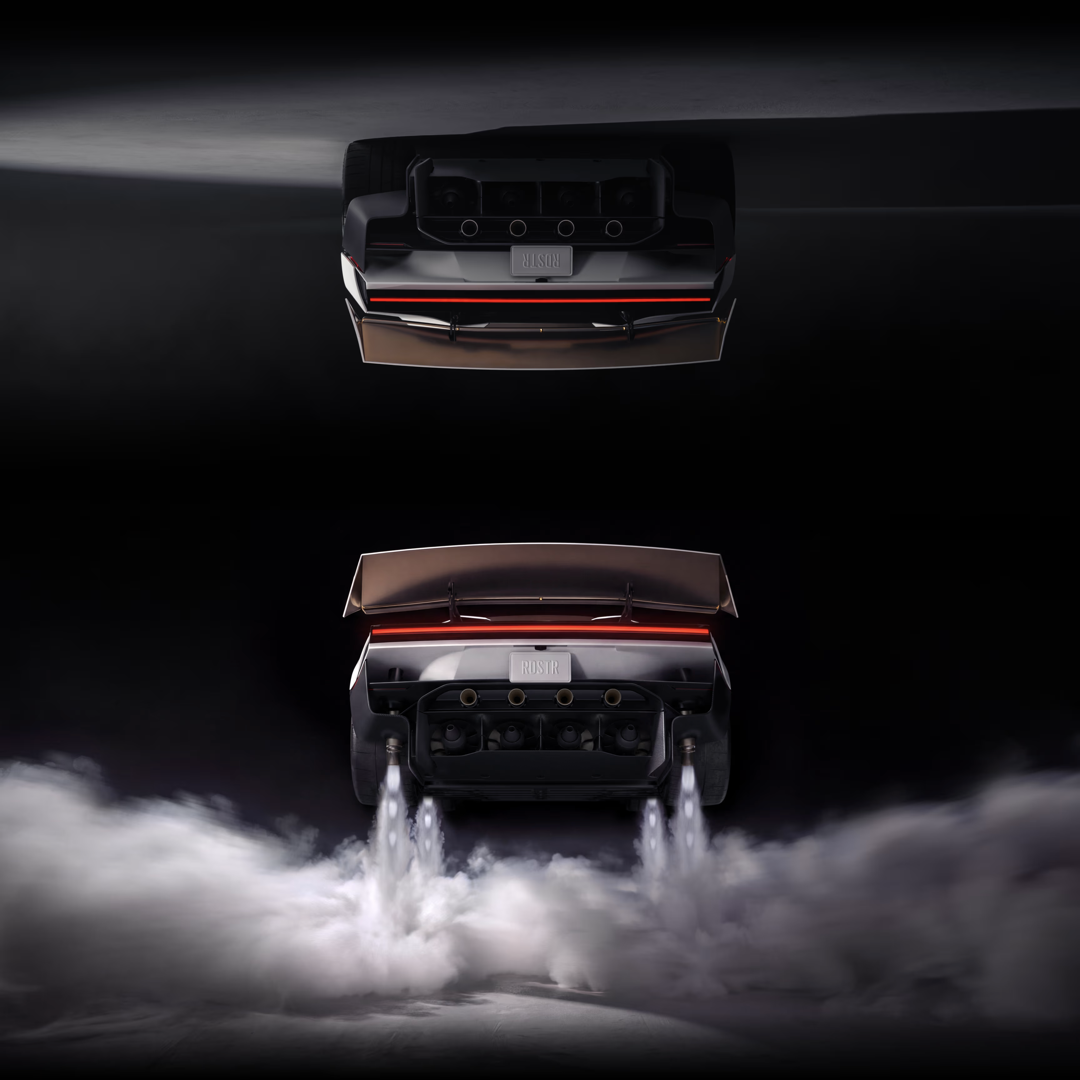
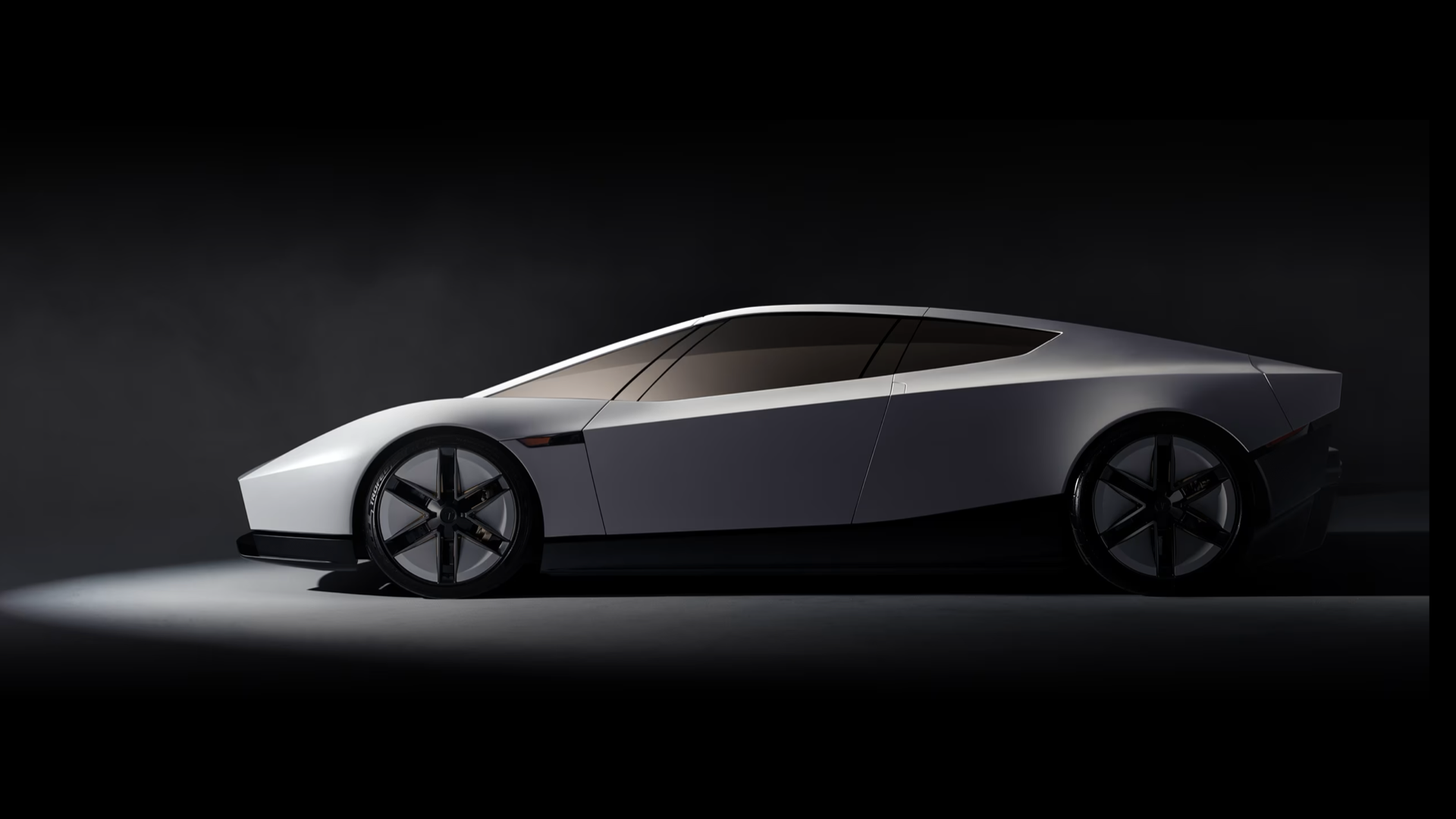
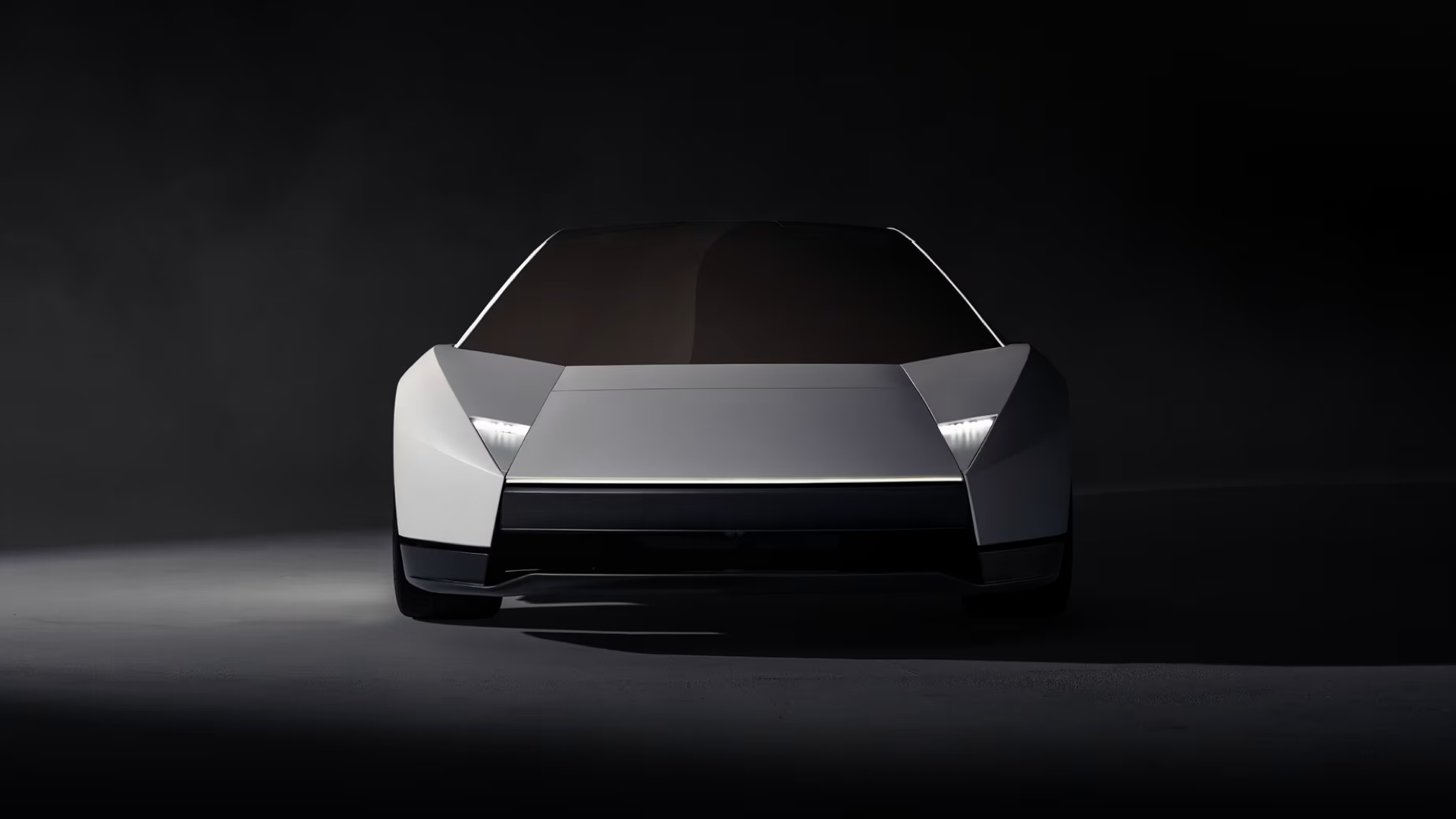
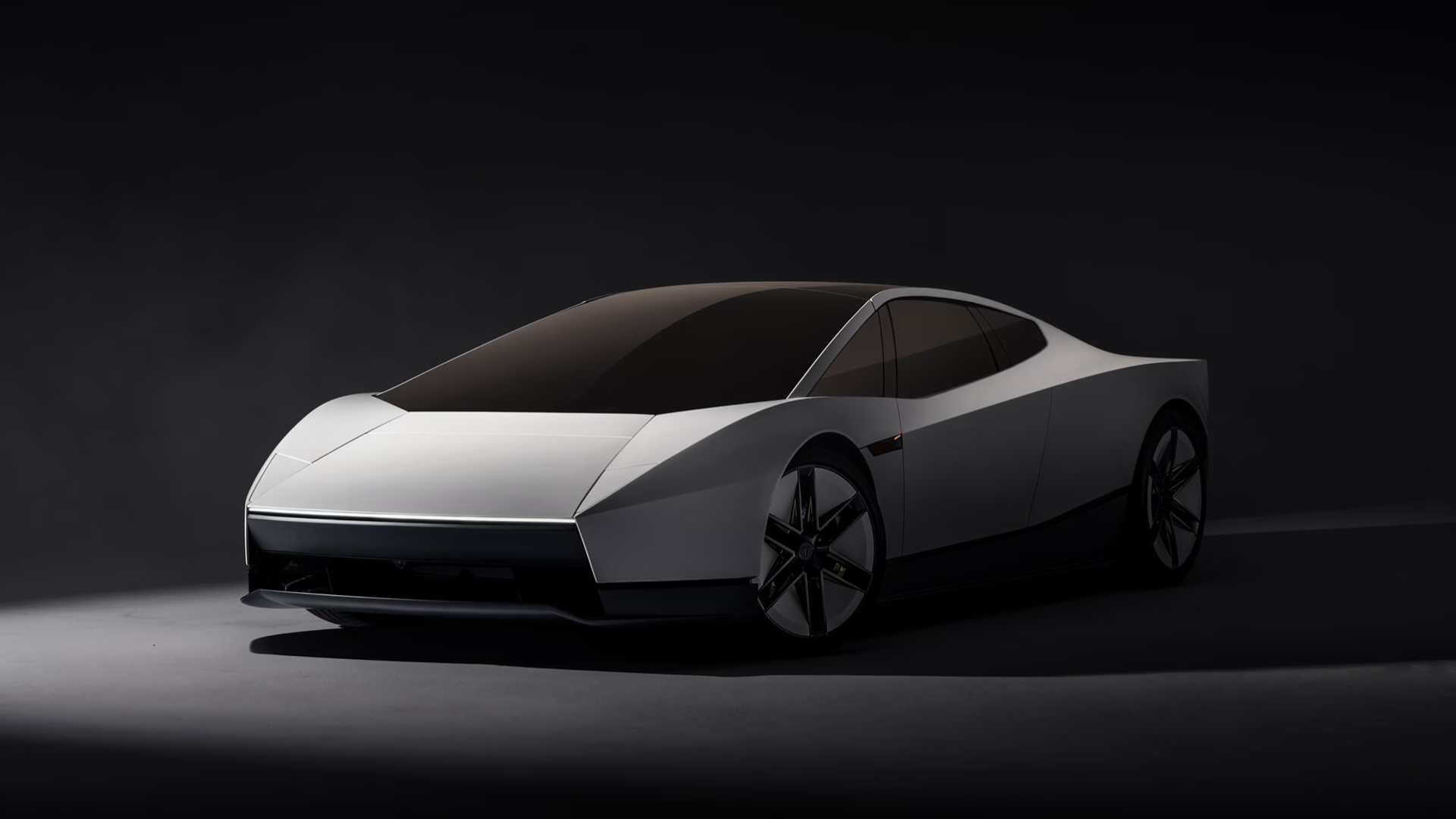
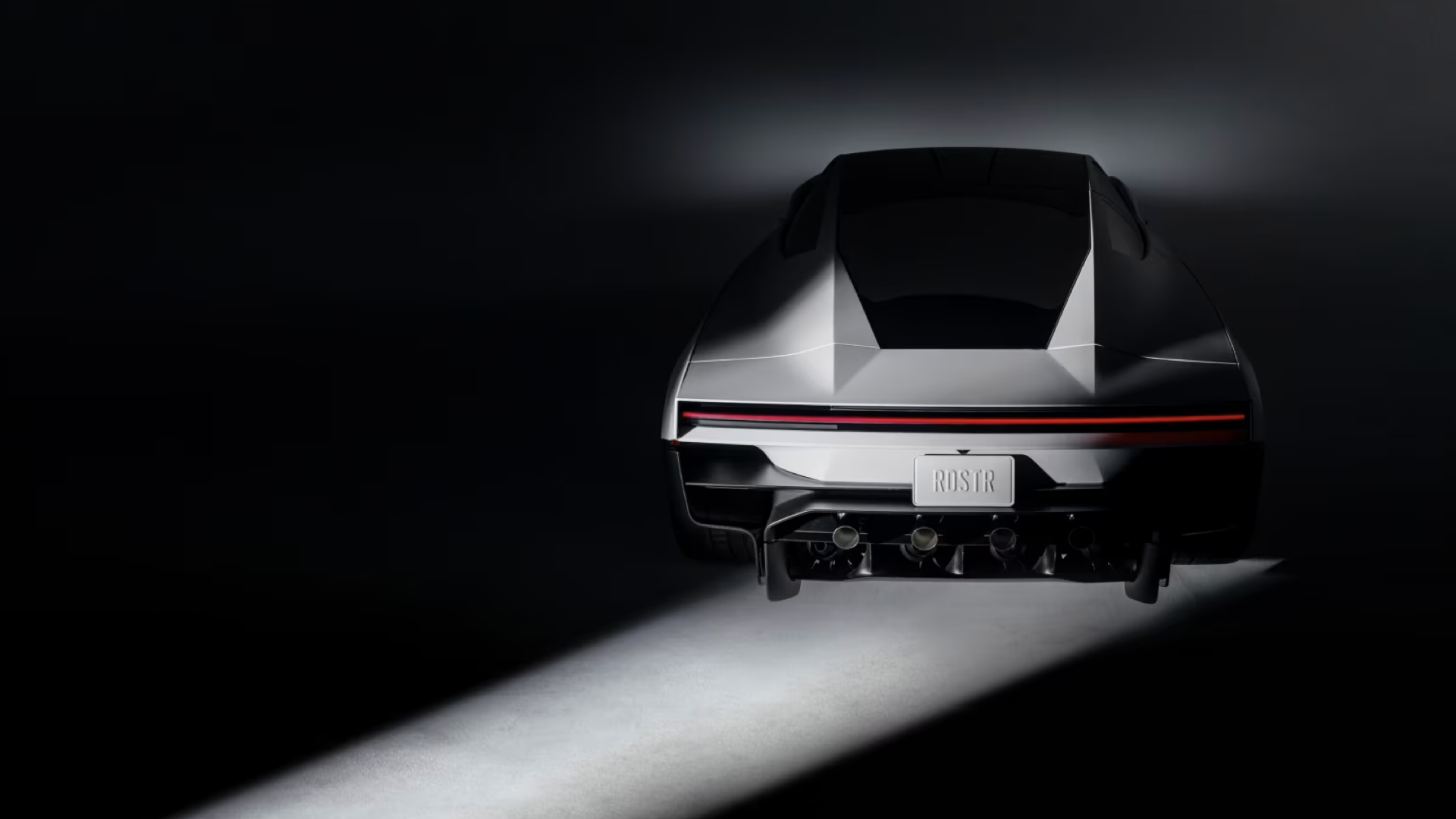
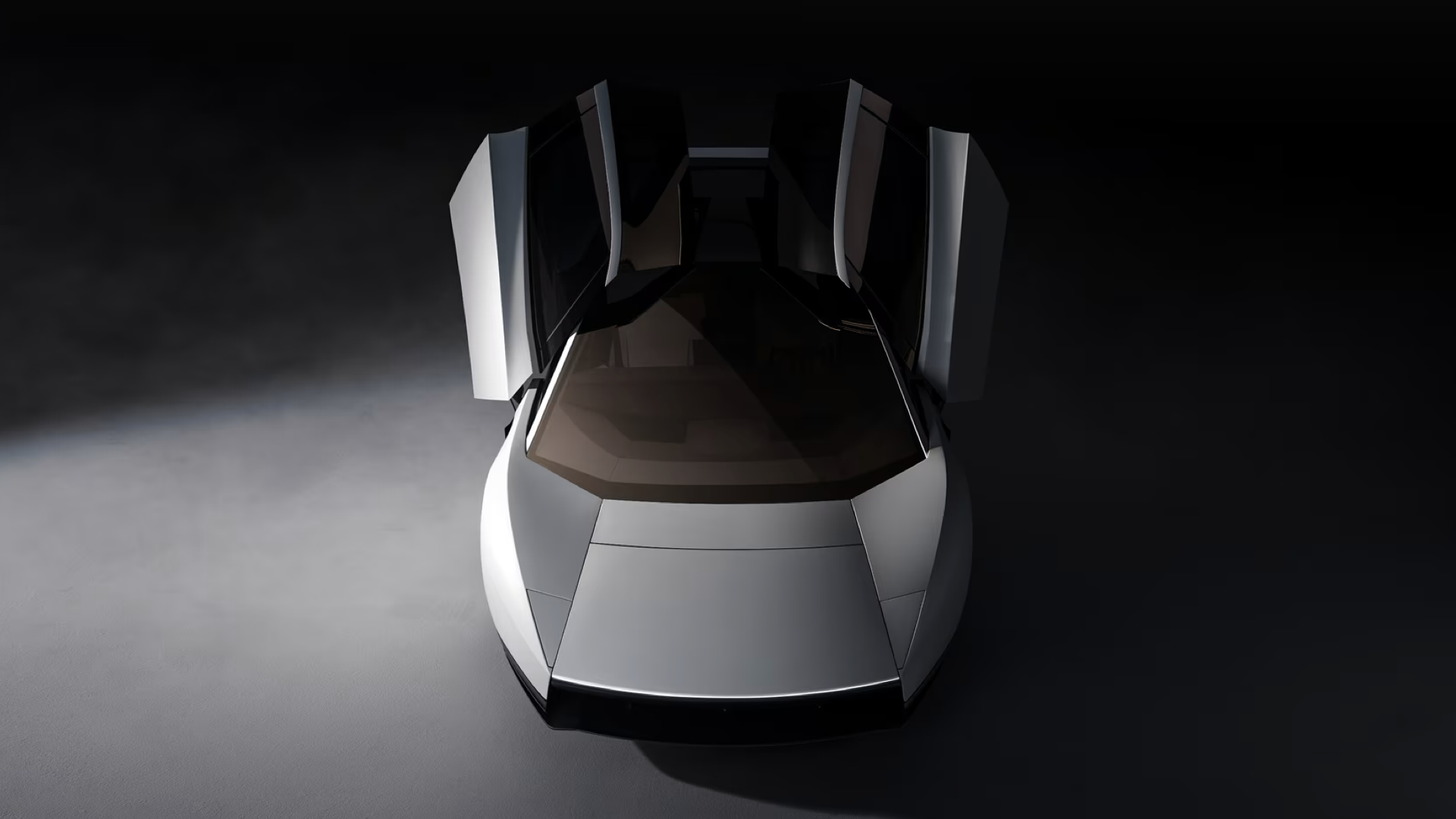
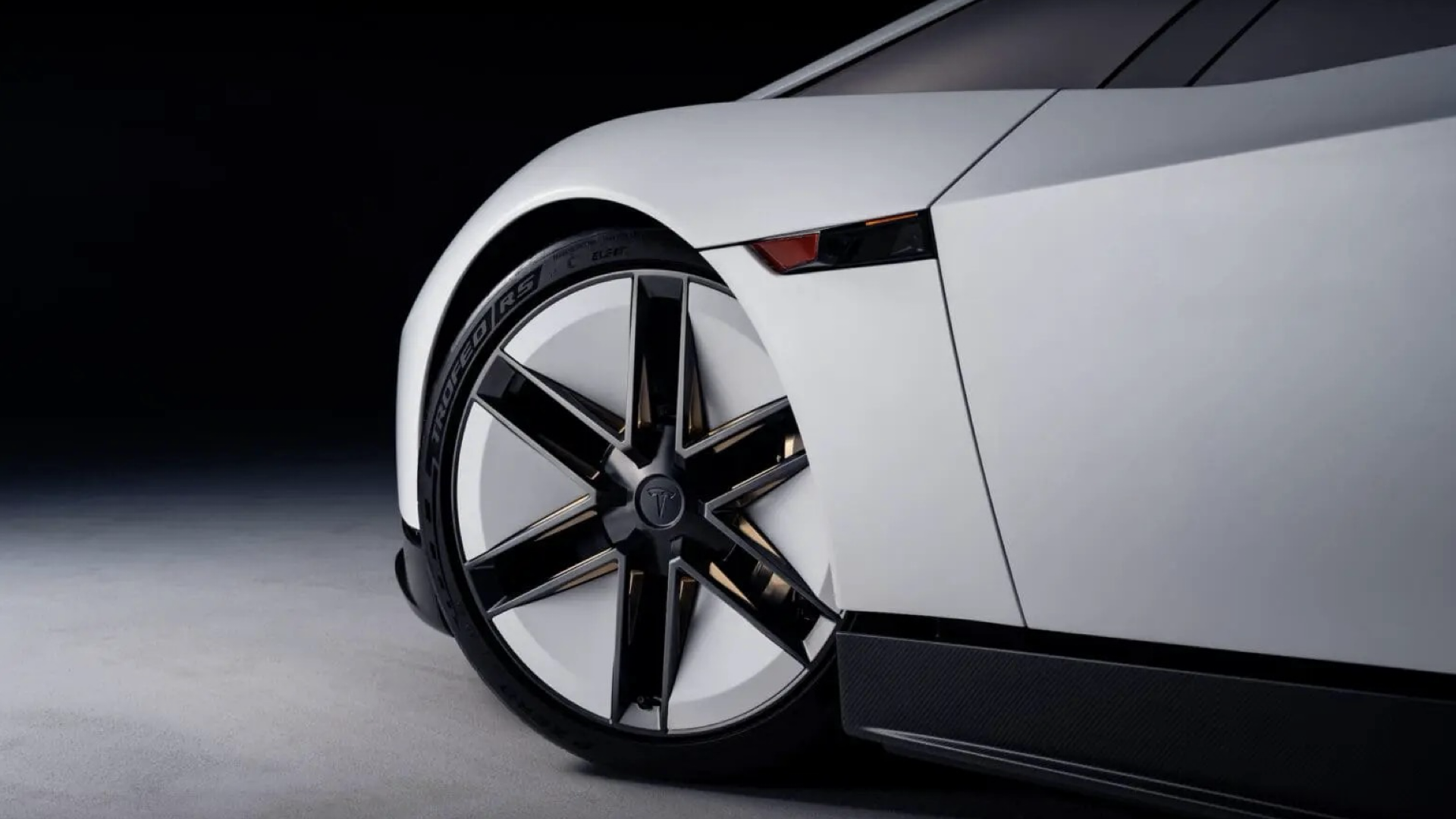
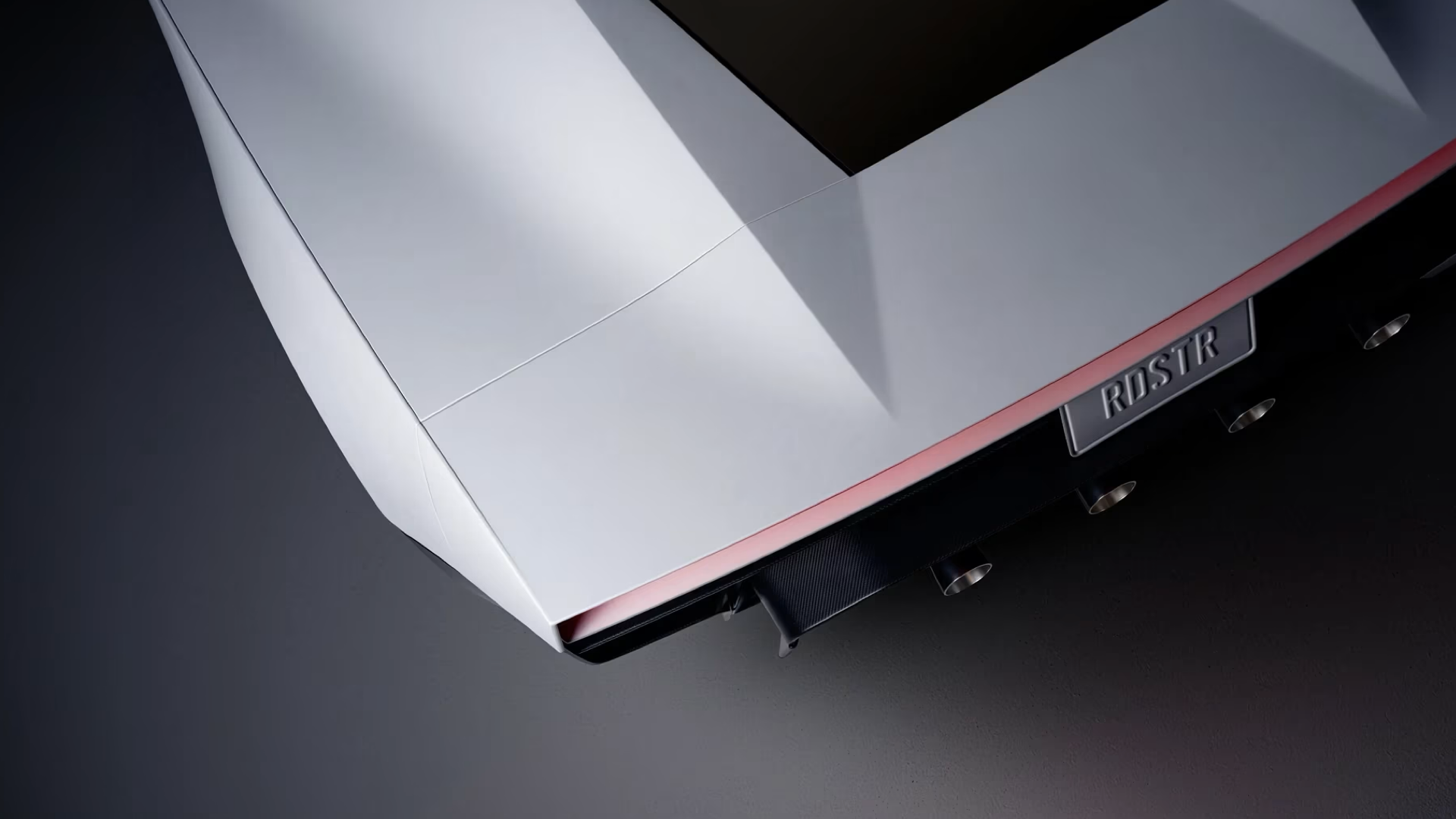
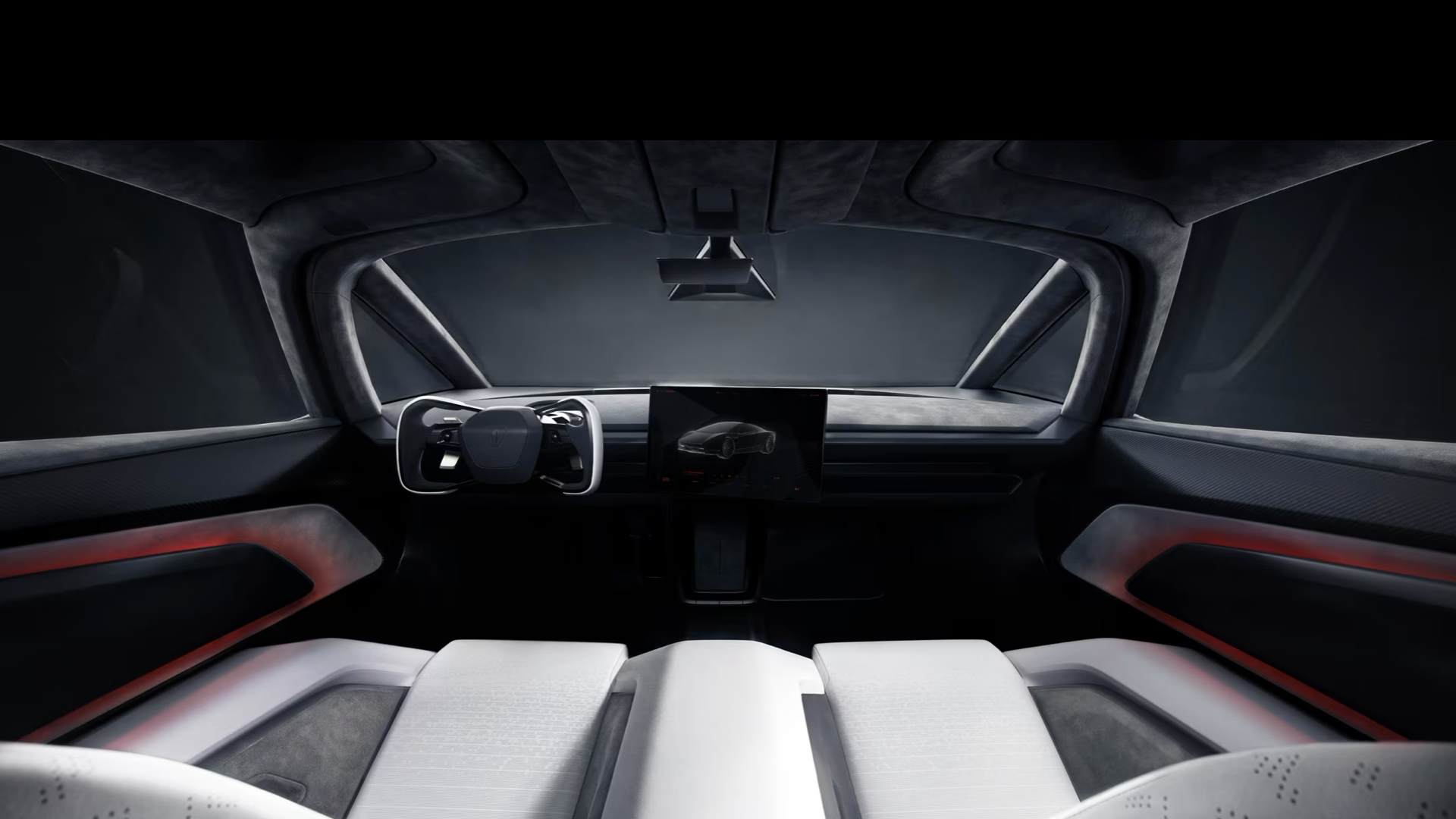
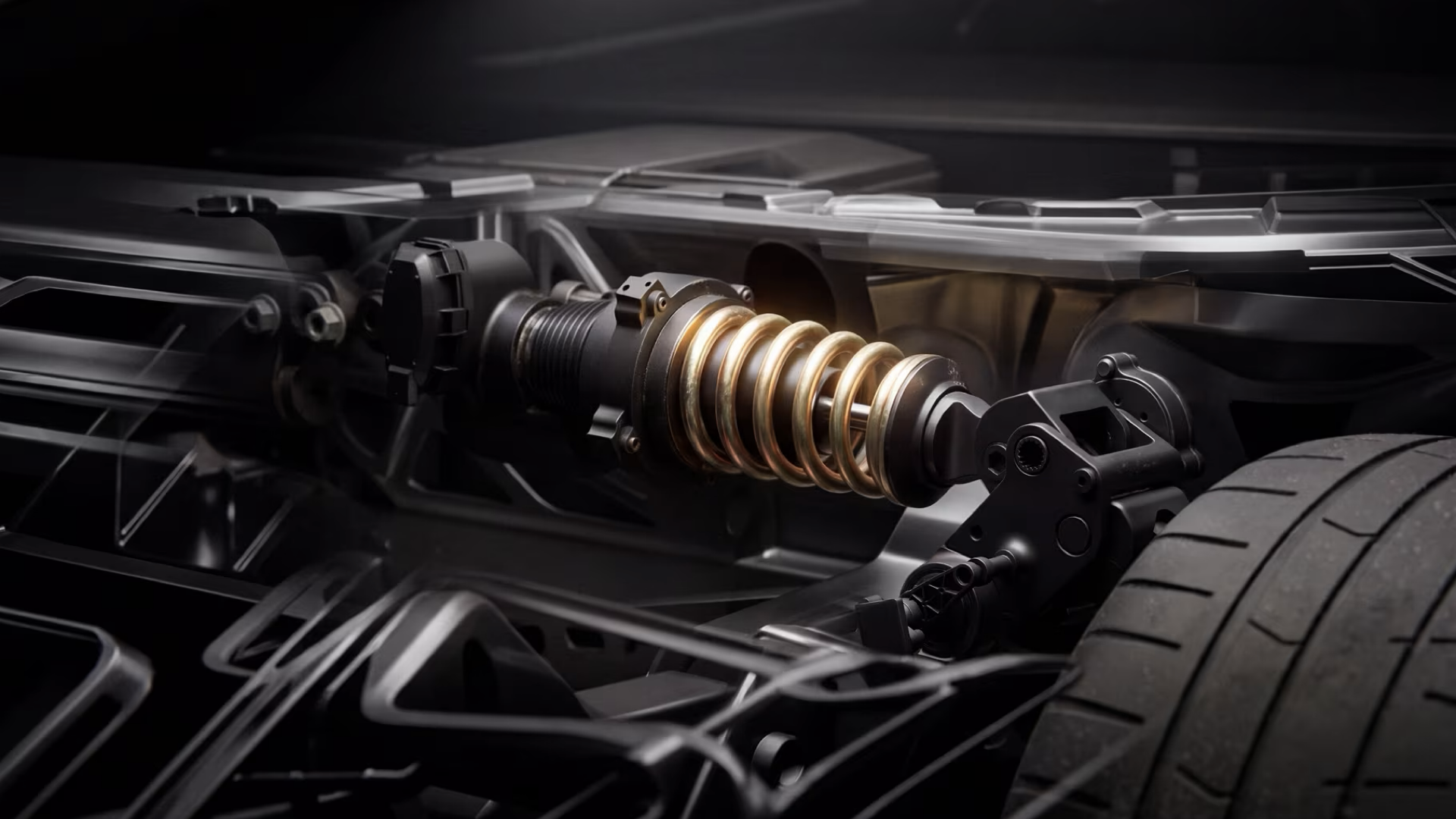
Franz von Holzhausen and his team have given the Roadster a clean, beautiful shape that's bristling with technology and performance. I'm not an automotive journalist, and I haven't had any time in the car, so I'm not going to review it. MotorTrend, Car and Driver, Hagerty, Road & Track and Top Gear are all doing great work on it, and I'd urge you to check them out. MotorTrend's Ed Loh and photographer Cavan Bennigson got up close with the car right after the unveiling, and their images and coverage are fascinating. Images: Tesla
Lineage: Tesla Roadsters
From Lotus to liftoff. Tesla's first Roadster was built on a Lotus chassis derived from the Elise, which Lotus made from 1996 to 2021, though Tesla said the two cars shared under 7 percent of their parts. About 2,450 were built from 2008 to 2012. When I drove one in the spring of 2009, it felt quick and lively, and I couldn't have imagined where the idea would go. The second-generation Roadster was shown as a concept in 2017, promising 0 to 60 in 1.9 seconds and deliveries in 2020. That date slipped year after year. The prototype unveiled this October claims 0 to 60 in under a second, with production now targeted for 2028.
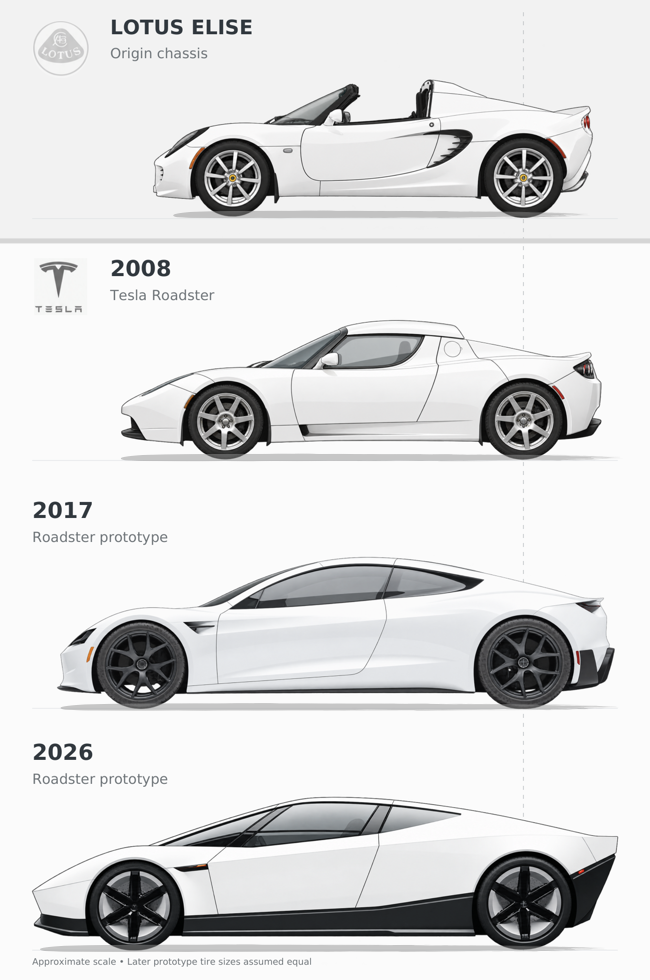
There are five Cybertrucks that I see every day while walking the dog in our Laguna Beach neighborhood, and I can't walk past one without looking. Franz has given Tesla a visual language all its own, and I find the Roadster a particularly appealing version of it.
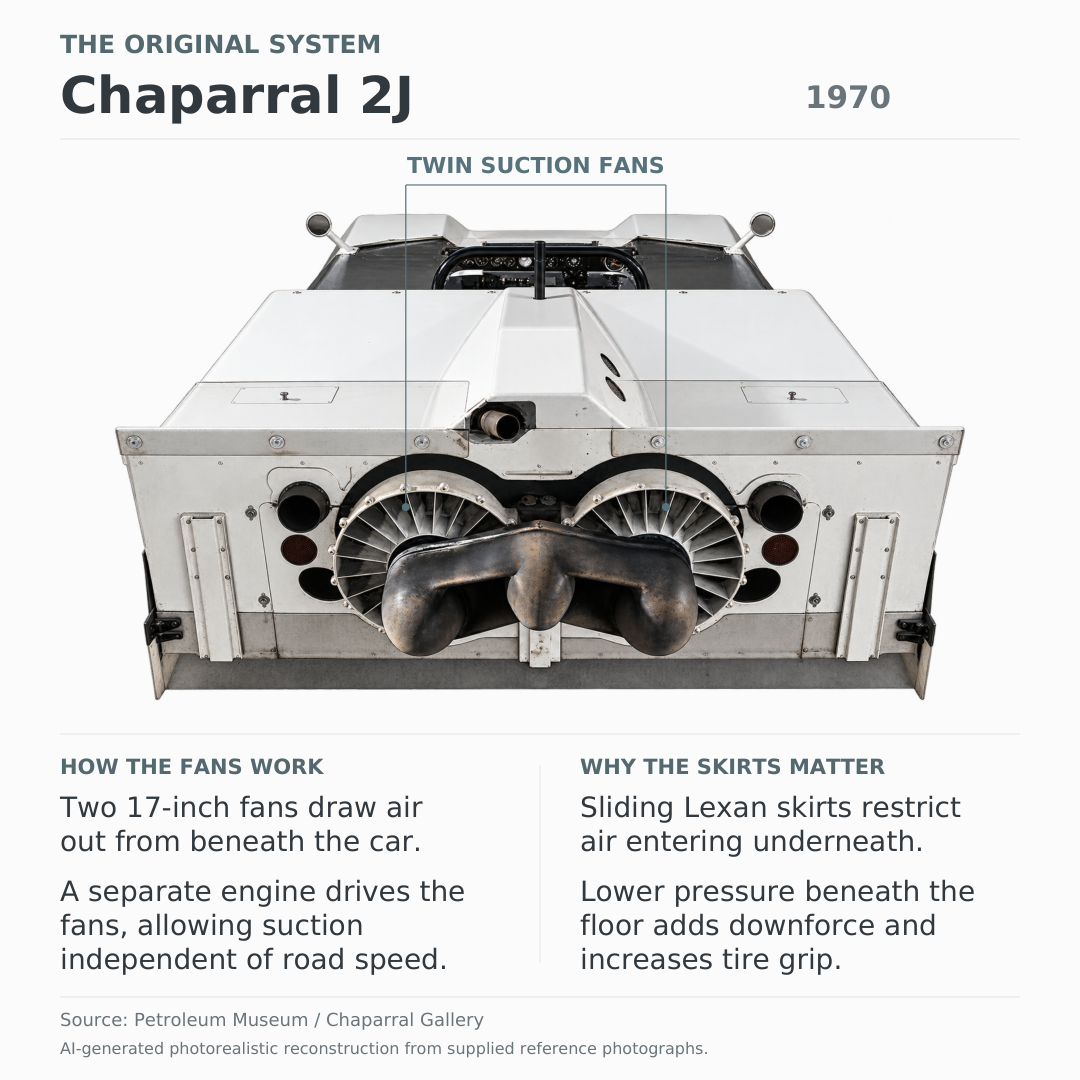
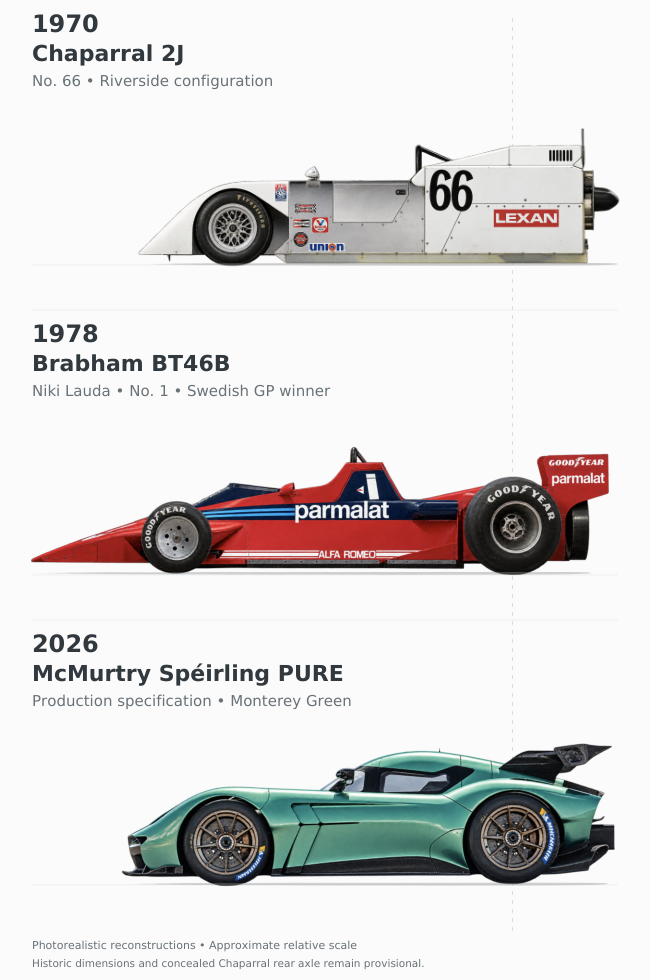
The engineering takes me back further. In 1970 I was at Riverside, watching Jim Hall's Chaparral 2J from Turn 8. Its fans pulled the air out from under the car, so it had downforce whether it was going fast or slow. I was stunned by the way it cornered. I also remember it running over oil dry on the track and sucking it up, and the auxiliary engine failing.
Fan Club: Delivering The Sucker Punch
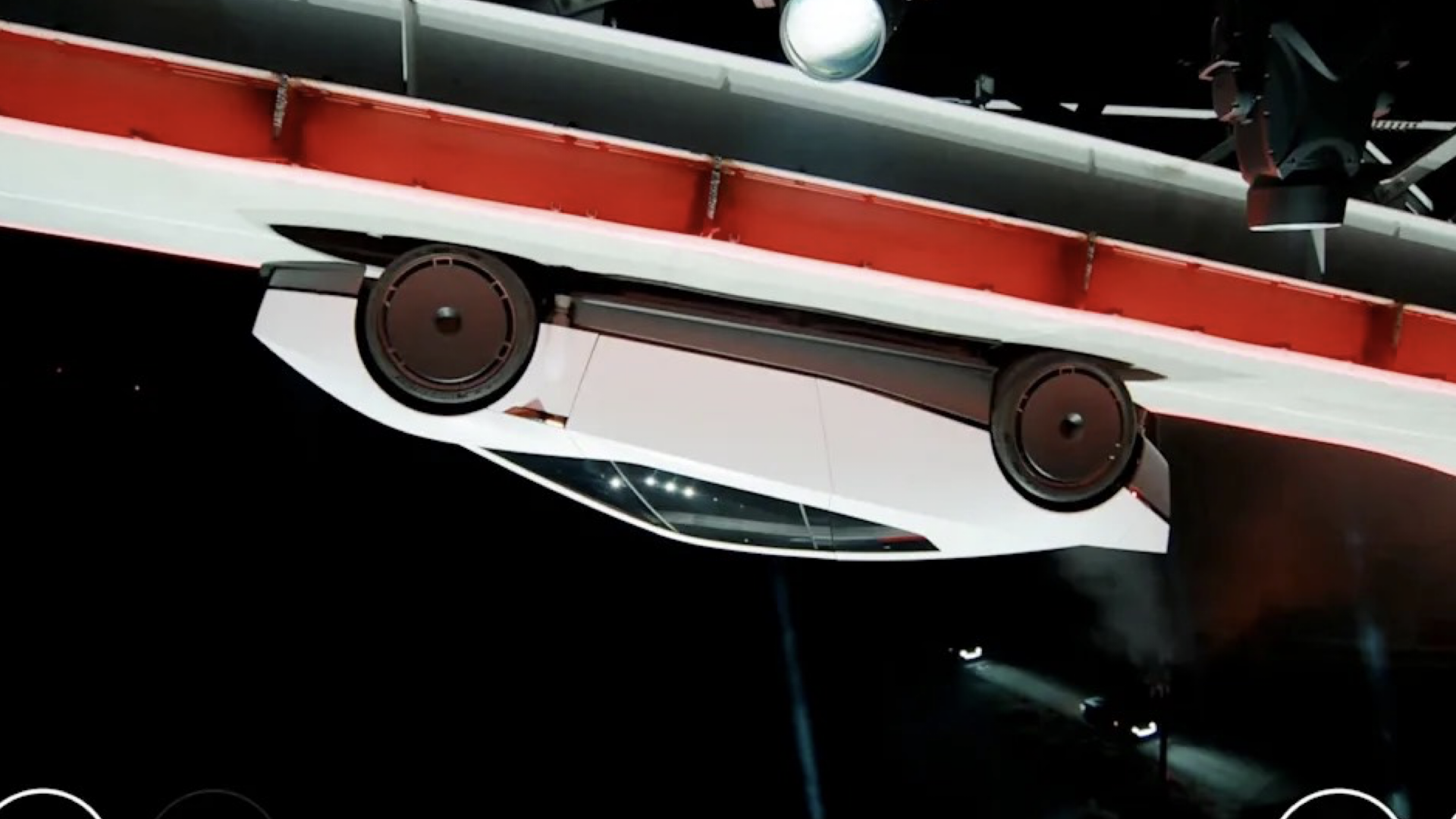
Upside down and holding on. Fan suction kept the Roadster pinned to the ramp before it went airborne. Image: Tesla
The two fans at the back of Jim Hall's 1970 Chaparral 2J explain the cornering that stunned me at Riverside. A separate engine drove them, pulling air out from under a floor sealed by sliding skirts. With lower pressure underneath, the air above pressed the car onto the track, and it had that grip before it ever built up speed. The 2J was banned after that 1970 season.
Gordon Murray brought the idea to Formula 1 with the 1978 Brabham BT46B. Its rear fan, driven by the race engine, drew air through the radiator and from under the car. Niki Lauda won the Swedish Grand Prix with it. Brabham withdrew the car after that one race, and the rules soon shut the door on fans in Formula 1.
Both cars were legislated out of racing almost as soon as they appeared. The electric McMurtry Spéirling PURE uses the same principle today. Its powered fans make downforce even when the car is standing still. The hardware has come a long way since 1970. It's there for the same reason Jim Hall used it, grip that doesn't wait for speed.
Tesla's Roadster prototype puts that racing idea into its latest show. Fan suction held the car to the curved ramp at the unveiling, and separate gas thrusters supplied the push for its jumps.
That's why Tesla's suction system interests me. I've seen what the idea can do to a car, and I want to know how this version behaves lap after lap, on surfaces its engineers can't control. I haven't driven the Roadster. Its handling and durability are still open questions for me, and I want to know what the production car will weigh.
Some of the connections are already built into the car. MotorTrend reports that the movable rear wing uses actuators borrowed from Optimus, and the thrusters draw on SpaceX engineering. Tesla's own quarterly presentation calls the Roadster "the best of the last human-driven cars." A company betting its future on autonomy is still celebrating the urge to drive. I understand that urge.
The Numbers
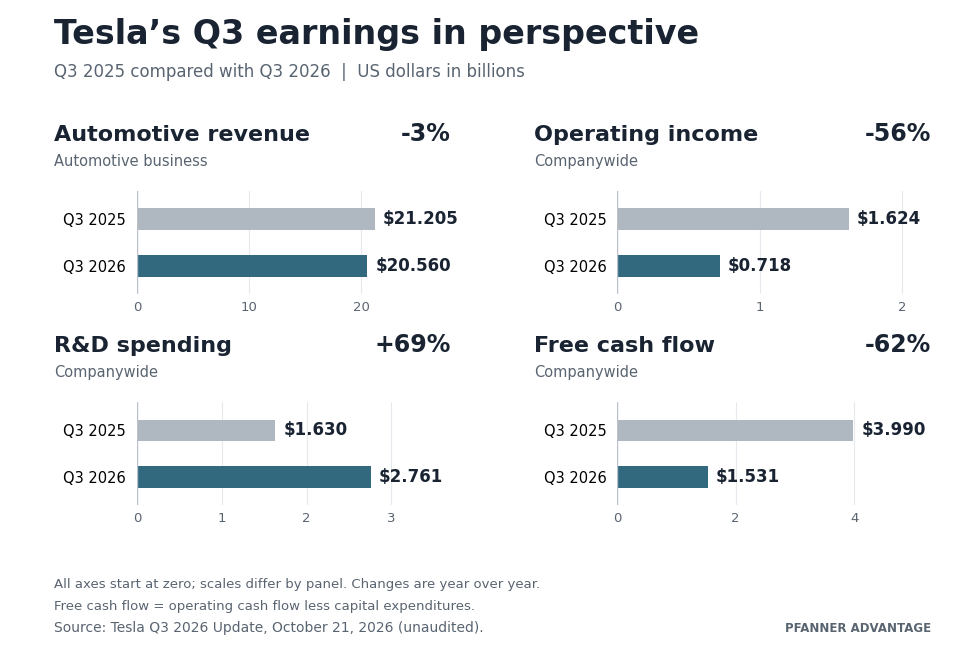
Tesla's October 21 results tell their own story. It delivered 486,532 vehicles in the third quarter, down 2 percent from a year earlier. Automotive revenue fell 3 percent to $20.56 billion, but automotive gross margin, leaving out regulatory credits, improved to 18.1 percent from 16.3 percent the quarter before.
Tesla’s ambitions reach beyond the car, into robotics and the infrastructure that connects and powers other businesses. Elon Musk is pictured with the new Roadster, Optimus and a SpaceX launch.
Companywide operating income fell 56 percent from a year earlier to $718 million, and free cash flow came in at $1.53 billion. Research and development spending was part of the squeeze, along with stock compensation, lower regulatory credit revenue and lower energy gross profit, so you can't hang the whole decline on the cost of inventing the future.
Management says its passenger-vehicle order backlog is the biggest in four years and that battery supply held production back. The next few quarters of deliveries will help test that account. The CFO also cut this year's capital spending outlook to about $20 billion, from more than $25 billion.
Where the Model S Was Built
It took Tesla 46 days to tear out the Fremont line that built every Model S and Model X, after the last cars rolled off in May. The space now holds its first Optimus line, designed for up to a million robots a year. The rest of the plant still builds the Model 3 and Model Y. Video: Tesla.
The Model S part matters most to me. Our OnCars Studio team helped introduce that car in 2009, thanks to a conversation with Franz that our colleague Emile Bouret made possible (see the Epilogue at end of essay). I remember the prototype at Rick Graves's studio and the short deadline for our films, and I remember wondering whether a young company could turn that car into a manufacturing business. The people who pulled it off changed what an electric car could mean to the person who owned one.
Back in April, Tesla said its first large-scale Optimus line would replace the Model S and Model X lines in Fremont. Now it reports that robot production has started there, in what it calls an early ramp. A different kind of machine is taking shape where that car was made.
A robot coming off a line still has to prove it's useful, and reliable enough to be worth what it costs. That's when a factory announcement turns into a business you can measure.
The future Tesla keeps talking about has started coming off a production line. Its third-generation Optimus robot is now being built in Fremont, in what the company calls an early ramp. Video: Tesla Car World
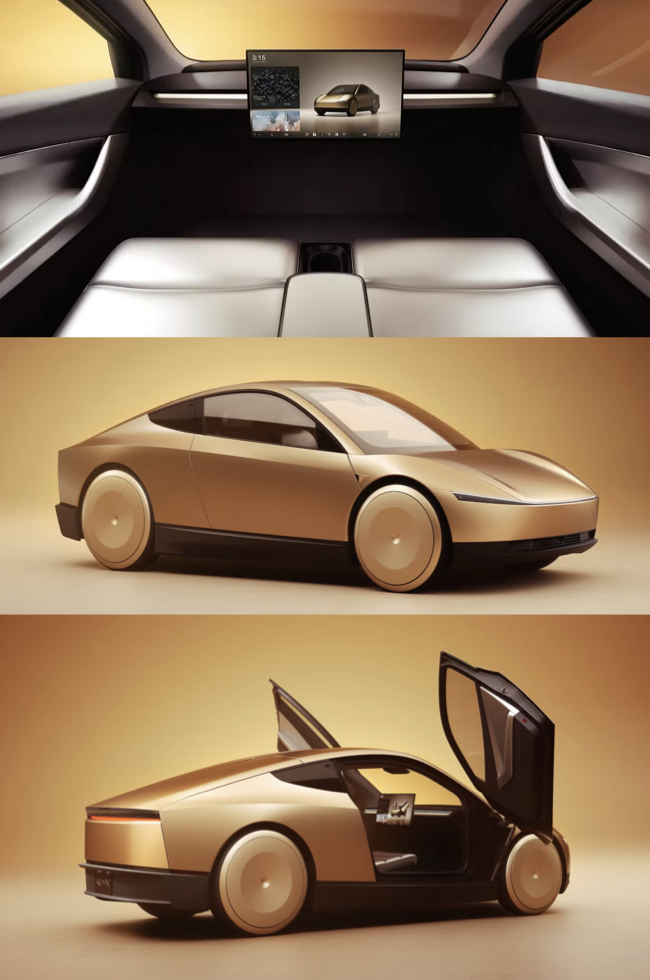
The Cybercab has two seats, one screen, and no steering wheel or pedals. Musk says most will stay Tesla-owned and sell transportation by the ride, so the rider pays for the trip and Tesla keeps the car. Images: Tesla
Musk described another shift, this one in Tesla's relationship with its customers. Most Cybercabs, he told analysts, will remain Tesla-owned and provide transportation by the ride. Selling a car hands over the physical asset. Running a fleet keeps the investment with you, along with much of the work of keeping it running, and the payback depends on paid rides over the life of every vehicle, maintenance included.
Cybercab is already carrying passengers. Tesla began offering rides in Austin on September 3, and by the end of the quarter it reported nearly two million unsupervised miles across its whole Robotaxi service, a figure that includes Model Ys. Cybercab itself is still limited to parts of Austin. Federal regulators are auditing how Tesla certified a car with no conventional driving controls, and they're weighing a petition alleging school-zone speeding by Model Y and Cybercab Robotaxis. Neither has produced a finding against Tesla.
Tesla has published encouraging safety results for its driverless service. Its own injury measure counts collisions where a Robotaxi made first contact, though, while its human benchmark counts every vehicle involved. I'd like to see the comparison made on the same terms, and to see how these cars hold up as the service grows.
No Ceiling
Tesla's Master Plan Part IV, published in September 2025, spells out how far it means to go. Among its principles are "Growth is infinite" and "Innovation removes constraints," and it ties manufacturing and autonomy to a broader promise of prosperity. I see an absolutism of ambition in that language. That's my reading of what they've written, an expectation that technology can keep taking limits away. Set beside the growing connections among these businesses, it points toward building and operating the systems whole industries depend on.
SpaceX shows how the pieces can connect. On its October 20 calI, the company said Starship Flight 14 reached orbit and deployed working Starlink V3 satellites. Flight 15, targeted for November, is meant to try catching both the Starship spacecraft and its Super Heavy booster. That's still a goal, and even a clean catch would leave the work of proving reuse is dependable and economical. [6]
SpaceX's October 22 filing describes the mass it puts in orbit as supporting growth in communications and what it calls superintelligence. The rocket is infrastructure for other businesses. The same filing records SpaceX's earlier purchase of xAI, which already owned X, and of Cursor, the coding software company. Some of the consolidation has already happened.
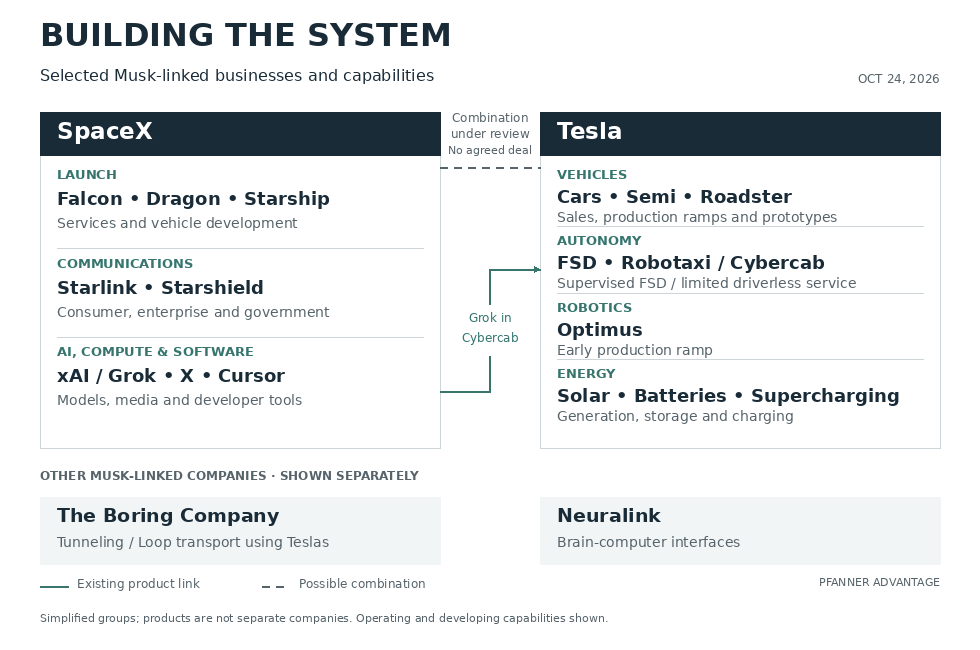
The businesses associated with Elon Musk span launch, communications, AI, transportation, robotics and energy. Existing product connections sit alongside plans for closer integration, including a possible Tesla–SpaceX combination. This map shows selected businesses and capabilities, ranging from established services to development programs, as of October 24, 2026.
On the call, Musk also talked about bringing SpaceX's engineering to computing infrastructure, and suggested it might eventually be deployed "faster than everyone else combined." He's measuring against the whole field put together, which tells you the scale he's thinking at. It's still a forecast.
Energy is part of this too. Tesla says its Texas Megafactory has started production, and that it has shipped the first Megapacks built with LFP cells from its Nevada factory. As demand for computing grows, so does the need for power and storage, and the connections run right back into factories and supply chains. [1]
None of it happens without tests, failures and do-overs, or without suppliers, customers, regulators and public money. NASA helped finance and develop the commercial capabilities SpaceX built on. Any honest account of what these companies have done keeps that in view.
A closer tie between SpaceX and Tesla may come, but nothing is settled. Independent committees at both companies are studying it. SpaceX's filing says any deal would need approval from its committee, its board and its controlling shareholder. Musk has stepped back from the committee discussions, but he's still that shareholder.
The Roadster puts some of these engineering connections where you can see them. That doesn't mean the unveiling was meant to promote a merger. What interests me is how one business is increasingly able to supply what another needs, and what that means for the people paying for the services and depending on them.
The infrastructure behind the ambition. In "How Starlink Actually Works," The Space Race explains how SpaceX launches and connects thousands of satellites to build a communications network spanning space and Earth. It offers a closer look at the engineering behind Starlink's growing global reach. Video: The Space Race
Starlink makes the ambition easier to see. SpaceX builds the satellites, launches them itself and sells continuing access to the network they form. On the October 20 call, Gwynne Shotwell named cars and robots among the future sources of demand for that network. That's a forecast, but the network already has 13.6 million consumer subscribers. Amazon has even bought SpaceX launches for its competing satellite system. There's real advantage in supplying the infrastructure other businesses run on, including the ones you compete with. Tesla doesn't own that network today, and what closer integration might deliver, and on what terms, is part of the question.
The Elephant in the Room
At CPAC on February 20, 2025, Elon Musk raises a chainsaw given to him by Argentine President Javier Milei, presenting it as a symbol of cutting bureaucracy. Video: Associated Press
Musk's ambition doesn't stop at the factory gate. In May 2023, asked whether his public statements could drive away customers and advertisers, he invoked The Princess Bride and told CNBC: "I'll say what I want to say and if the consequence of that is losing money, so be it."
He has acted on it. He endorsed Trump in July 2024 and became one of his biggest financial backers, then a White House adviser. At CPAC in February 2025 he held up a chainsaw from Argentina's Javier Milei and called it "the chainsaw for bureaucracy." He said DOGE's purpose was cutting the federal deficit. His scheduled government service ended that May, and his public break with Trump over spending came in June.
The business record takes careful reading. Musk acknowledged blowback from his government work, and Tesla's automotive revenue fell 10 percent in 2025. Product changes and competition played a part too, and nobody has cleanly separated politics from the rest. The recovery counts as well. Tesla's registrations in Europe were up 50 percent in the first nine months of this year.
He's back in politics now. Bloomberg and WIRED reported on October 23 that his contributions to Republican groups this cycle have passed $445 million. On October 8 Trump awarded him the National Medal of Science, and MITRE lists him as a co-director of Project Meridian, an initiative developing recommendations on future warfare.
Musk’s own explanation ties it to the rest of this essay. "The only way we're going to solve the national debt is with AI and robots," he told Walter Isaacson in an interview recorded in August. That's his belief, and it's still to be demonstrated.
Who Sets the Terms
Putting systems together can make them work better and cost less. It can also put decisions about who gets access, and on what terms, in fewer hands. A customer can end up depending on an operator long after the sale. That's a different question from whether a product looks impressive the day it launches.
Dependence on SpaceX's communications services has already drawn Senator Richard Blumenthal's October 22 inquiry into Starlink and Starshield. When Ukraine's service slowed this month, Musk denied acting on his own and pointed to the administration, while Secretary of State Marco Rubio said those decisions belong to Musk. On October 24, Ukraine's Defence Ministry said connectivity had recovered on platforms moving above 400 km/h, and that it's still monitoring the services. Who authorized the restrictions is still unresolved, and Congress has asked for the records.
The Model S changed the industry by giving people a car they wanted to own. What's being assembled now reaches into services people may use without owning the machines that provide them. I want to understand what that arrangement delivers, and what ongoing responsibilities come with running it.
I asked Tesla to show me the car business. The results answer part of that, and the Roadster still deserves a proper assessment as a car. The rest of the answer is in how the businesses around it fit together, and in the terms people will live with once they depend on them.
Epilogue: The Original Teslas
When Franz von Holzhausen came to our OnCars studio in Aliso Viejo in March 2009, he arrived in an original Tesla Roadster. Emile Bouret brought us together. He and Franz were roommates at Art Center and close friends, and that friendship is how the Model S work came to us.
Emile was the heart and soul of OnCars. He's a gifted car designer, illustrator and graphic designer, and a performance and racing driver on top of that. He brought all of it to what we were doing, and he understood cars well beyond what they could do on the road. [19]
I went out in that Roadster with Franz. What stayed with me was the torque and how lively it felt. It was a sports car I could enjoy, and I remember thinking Tesla had something.
Emile Bouret drives the wheels off the original Tesla Roadster in this 2009 OnCars director's cut, and he's clearly having the time of his life. Director: Rick Graves, Editor: Andrew Snider
The original Roadster used a Lotus-built chassis with Tesla's electric powertrain and its own carbon-fiber body. Franz told me he hadn't designed that one. Back at the studio, we talked about the sedan he had designed.
Tesla needed a way to explain the Model S and get people to reserve one, and that's how we got involved. We produced a video series on the car. Around the time of the Hawthorne unveiling, the prototype came to Rick Graves's studio in Santa Ana, and Rick and his team, including editor Andrew Snider, worked against a short deadline. Emile did the driving. The series was ahead of its time. In 2009, carmakers rarely explained a new car in depth through online video, and ours did that job for several years, showing people how different this well-designed car was.
Bill Sparks and I were at the core of OnCars, and we still work together today. That history gives us a personal connection to this story. It also obliges us to judge what Tesla is doing now on its own evidence.
The Roadster was always meant to be more than an electric sports car. Tesla's 2006 master plan laid out the idea: start at the expensive end of the market and work toward more affordable family cars. Regular Roadster production began in March 2008, and Tesla unveiled the Model S on March 26, 2009.
Later the original Roadster took on a very different job. Musk's own car rode on Falcon Heavy's test flight on February 6, 2018, as the payload. The picture of it against the Earth, with a mannequin in a spacesuit at the wheel, is still one of the most memorable meetings of Tesla and SpaceX.
The next Roadster was unveiled in November 2017, with deliveries promised for 2020. The redesign shown this October is still a prototype, with production now targeted for 2028. The design has changed a lot, and nine years have gone by.
I know what the first Roadster opened up for us that day. I can appreciate what Franz has designed for its successor and still judge the next chapter by what Tesla delivers.
Our 2009 OnCars video series on the Model S, edited into one video, follows the car from the studio all the way to the night it rolled onto the stage of the Late Show with David Letterman and met the wider world. Rick Graves, Emile Bouret and the team did a great job. Director: Rick Graves. Editor: Andrew Snider
Pfanner Advantage works with clients to turn change into advantage at the intersection of mobility, motorsport, media, technology, and marketing. Learn more or start a conversation: contact us today.
Paul Pfanner’s recent Shift Happens Insights:
I Love Mission S. Now I Want to See Mission P.
The Advantage Journal arrives every week. What matters in sport, mobility, media, and technology — curated and contextualized by Bill Sparks, Bill Long, and Paul Pfanner. No hedging. No filler. Subscribe — It’s Free

