
What Comes After Faster?
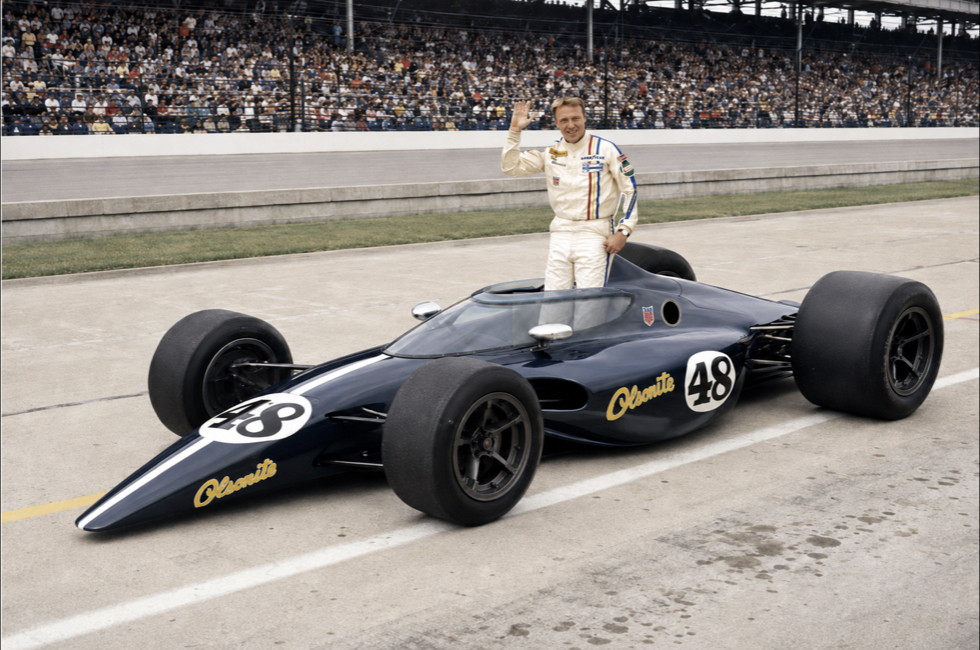
The Blackbird 66 Mk.1, drawn by J.R. Hildebrand and Patrick Faulwetter from an idea that was always Dan Gurney's. It felt right to put the 6’ 4” tall Big Eagle in the cockpit with the iconic number 48 on the car.
Third in a series Paul Pfanner founded Pfanner Communications, the motorsport marketing firm that launched RACER in 1992, and has spent his career close to the cars he loves, illustrating and helping develop racing car concepts from Formula Fords to Indy cars with the people who build them and the governing bodies who sanction them. After two columns on why today's Indy car is what it is, here he asks what the next one should prove to fans young and old.
On August 26, 1972, I stood near the pit wall at Ontario Motor Speedway while All American Racers prepared to break a barrier that had seemed unimaginable only a few years earlier. I’d (barely) graduated from Whittier High School in June and the credential that got me inside the pit area was artfully forged by hand. The start of my professional journey inside the sport was still two months away so I had no business being so close to such a historic moment.
Bobby Unser was expected to do it. He’d developed the new Eagle with Dan Gurney and the AAR team, and he was the real favorite to record the first official 200 mph lap by an Indy car. Then his engine failed. The replacement failed too.
His teammate Jerry Grant went out for his run. Jerry's first qualifying lap took 44.7 seconds, an average of 201.414 mph around the 2.5-mile oval. He followed it with another lap above 200 before his pace faded.
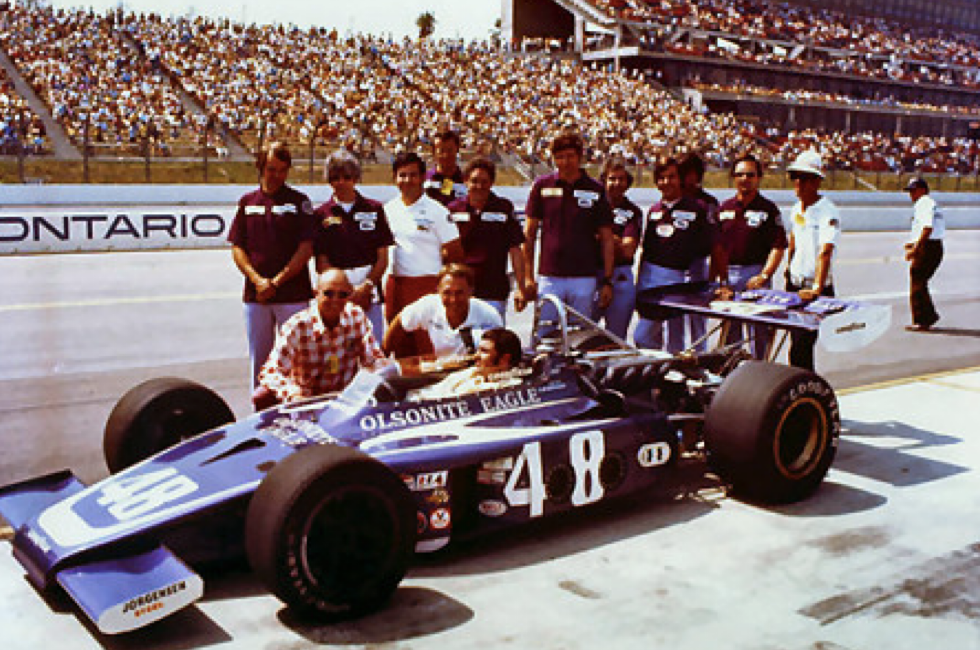
Jerry Grant with the All American Racers team at Ontario Motor Speedway after his pole run and the first official lap over 200 mph in an Indy car. Photograph from the All American Racers collection.
I watched the photographs being taken and felt the excitement around Jerry, Dan and the team. The purple Eagle was one of the most beautiful racing cars I had ever seen. Roman Slobodynsky had designed it, and the people inside AAR had built something beyond the other cars of the period. At Ontario in 1970, the pole winner, Lloyd Ruby had a fastest individual lap in his Mongoose Ford of 178.042 mph. Two years later, Jerry had recorded a lap in his pole run that was 23.372 mph faster.
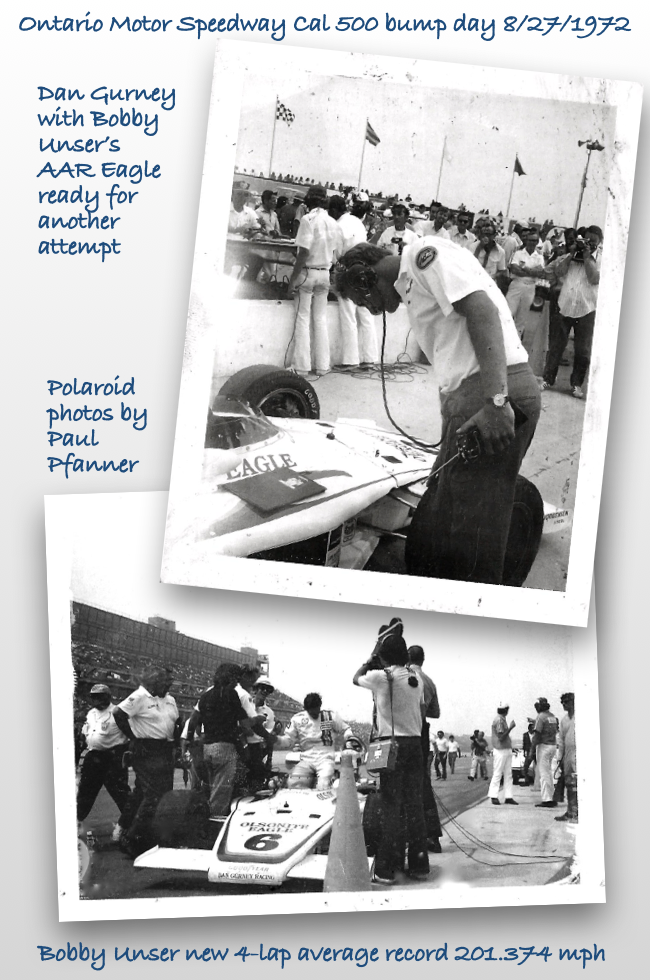
Bobby returned the next day and recorded a lap of 201.965 mph, but Jerry would always be first. Bobby never hid his disappointment.
Even as everyone celebrated, I wondered what came next. Racing had crossed the barrier so quickly that it left me with an uncomfortable question. What were we trying to prove now?
After the barrier fell
Indianapolis approached the same number in 1973, when Johnny Rutherford ran 199.071 mph. That May was catastrophic. Art Pollard and Swede Savage suffered fatal accidents, and crew member Armando Teran was killed in pit lane. USAC then reduced wing dimensions, turbocharger boost and fuel capacity. Indianapolis did not officially break 200 until May 14, 1977, when Tom Sneva ran 200.535 mph in Roger Penske's McLaren-Cosworth.
Dan never stopped trying to improve the system around the cars. In 1978, he wrote the white paper that named Championship Auto Racing Teams and explained its purpose. CART completed its first season in 1979, the year I formed my company.
Our first client was Interscope Racing, which was developing a Porsche-powered car for the 1980 Indianapolis 500 directly across the parking lot from us. Danny Ongais and the team regularly came through our door, and the secret Porsche became our first project. Roman Slobodynsky designed it nearby. USAC approved the engine under one turbocharger boost allowance, then reduced the boost when news of the Porsche’s testing pace at Ontario Motor Speedway scared another leading USAC team owner/driver. Porsche withdrew, although the engine later powered the Porsche 936 to victory at Le Mans. I learned early that the racing car cannot be separated from the institution governing it.
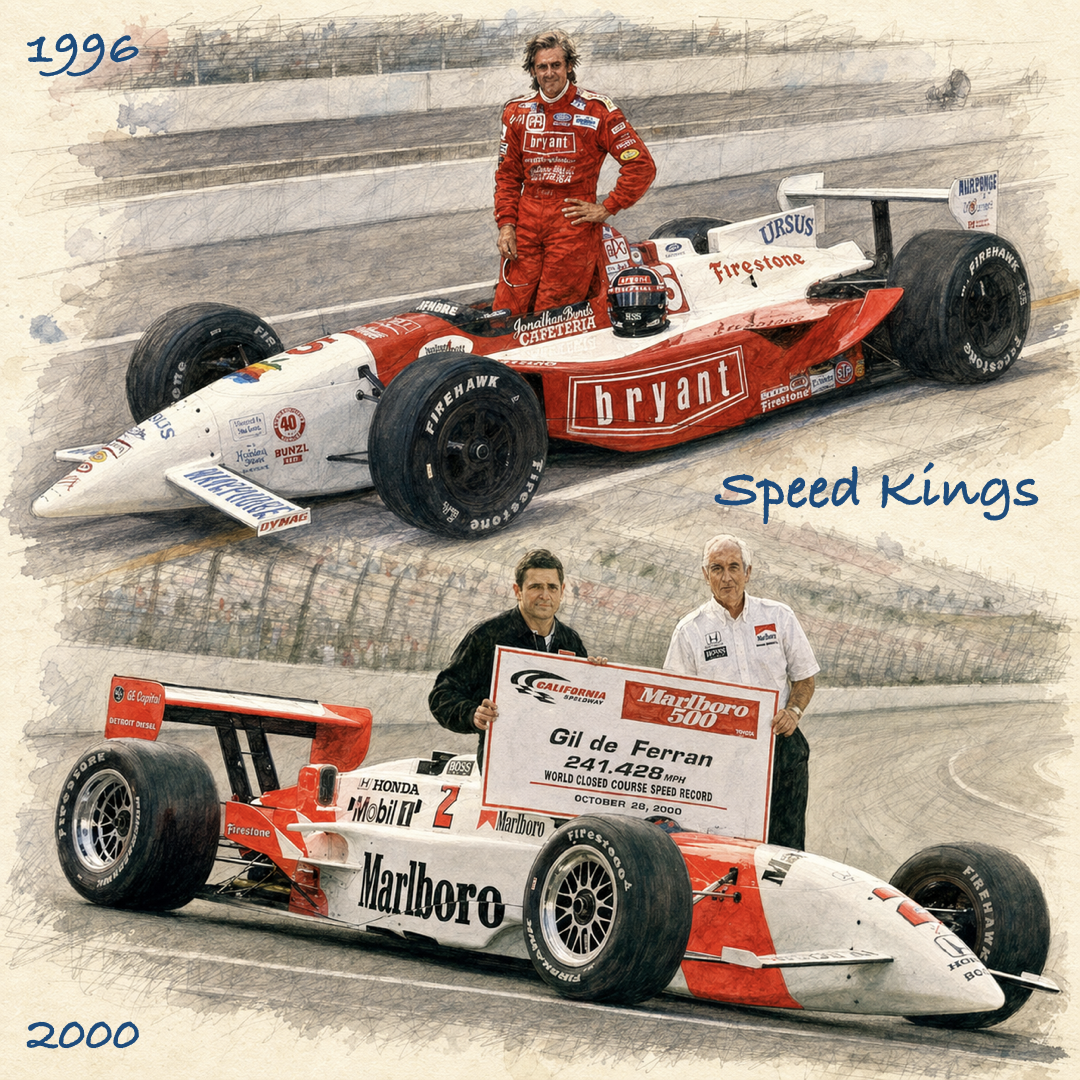
Two speed records that still stand, from the years the chase was the whole point. Top: Arie Luyendyk after his 1996 qualifying record at Indianapolis, in the Reynard 94I Cosworth. Bottom: Gil de Ferran and Roger Penske hold the sign for Gil's 241.428 mph world closed course speed record at California Speedway, October 28, 2000, set in the Penske Reynard-Honda.
Records that outlived their tracks
On May 10, 1996, the first year of the CART vs IRL split, Arie Luyendyk ran an unofficial practice lap of 239.260 mph in 37.616 seconds around IMS. Two days later he established the official one-lap qualifying record at 237.498 mph and the four-lap record at 236.986 mph. The car, often described at the time as a 1995 Reynard, is identified by the Speedway Museum as an older Reynard 94I. Thirty years later, all three records still stand.
Four years later, I was at the pit wall at California Speedway, only a few miles from the former Ontario Motor Speedway site. Our company had been the agency of record when Penske Motorsports launched the track, and Gil de Ferran was a friend. With some irony, Pfanner Communications had designed the track’s branding and the credentials. Remembering my youthful ingenuity, we made them unforgeable with a holographic image.
On October 28, 2000, Gil qualified his Team Penske Reynard-Honda in 30.255 seconds. CART recorded 241.428 mph for the lap, with the car reportedly reaching about 258 mph on the straight. It looked like a cruise missile, and the margin between a world record and an unimaginable tragedy felt very small.
Gil's record still stands. Ontario is gone, and the two-mile California Speedway oval has been dismantled. The records have outlived the places that produced them. I still remember the chill at both pit walls and the same thought: What the hell are we doing here?
I had gone from finding my own way inside to helping journalists and photographers get the access and resources to bear witness themselves. That has been much of my life in motorsport.
When the finish becomes the point
IndyCar has since controlled speed while improving safety. Its advocates have a legitimate case for close racing.
Trouble begins when the finish becomes the main test of the formula. Make the cars sufficiently alike and a dramatic ending becomes more probable. Repeated often enough, it becomes a sophisticated thrill show in which the last lap carries more meaning than the work that preceded it.
"Are you a fan?"
In 2016, IndyCar CEO Mark Miles invited J.R. Hildebrand, Clay Dean, Diego Rodriguez, Reilly Brennan and me to consider where IndyCar should go next. We called ourselves the Velocity Collective. Mark deserves full credit for initiating the project, and listening as the discussion moved well beyond a replacement car.
During a January 2017 conference call, I sat with Dan Gurney in his office at AAR in Santa Ana, CA, while the others in our Velocity Collective joined by phone. Dan spoke with unmistakable force and clarity. He opened the conversation with a pointed question to JR: "Are you a fan?" that quickly oriented the discussion to the point of view of the person who loved the sport and all it represents. Dan got to the heart of the problem as he usually did: "Take the wings off, and give them an engine that sings."
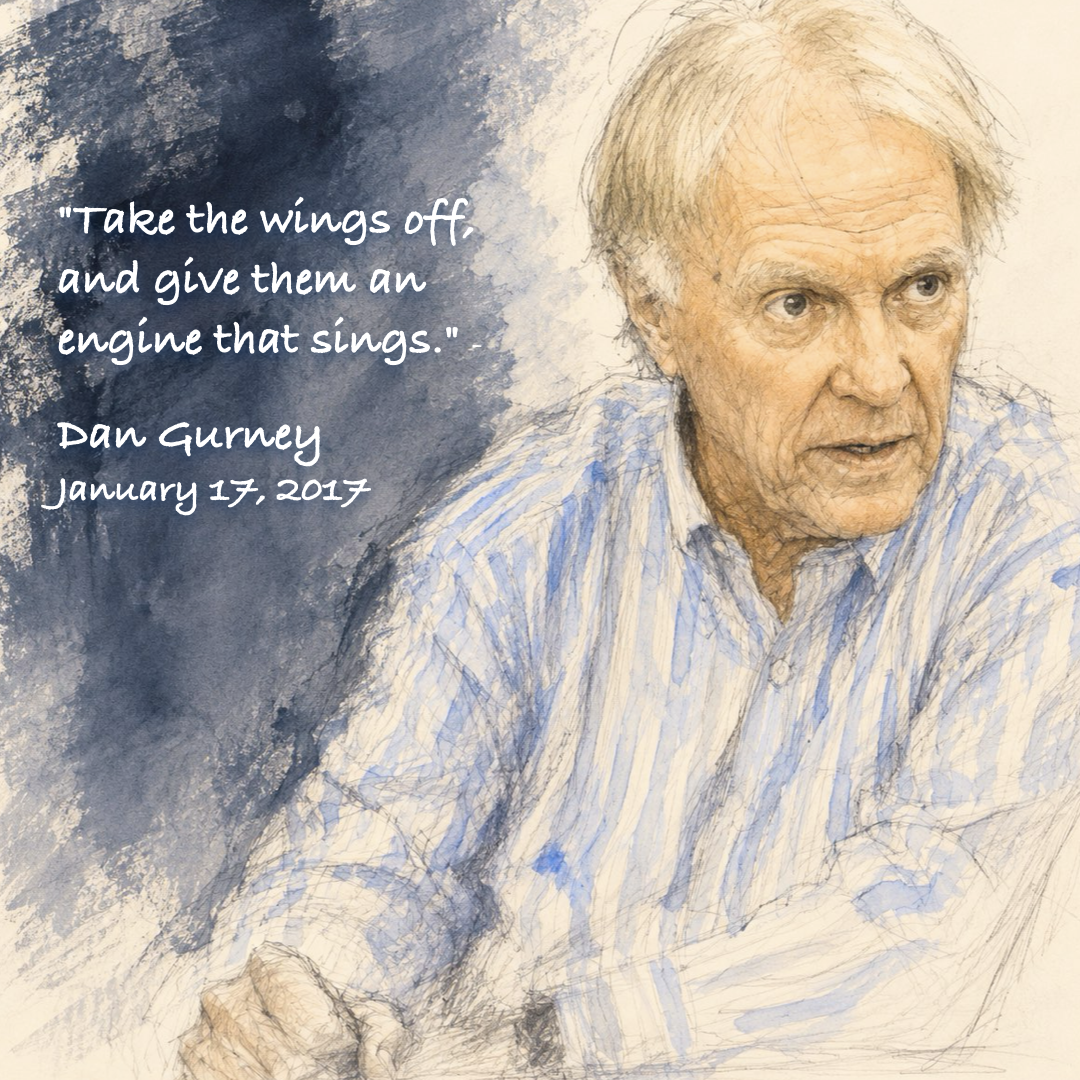
Dan had been making the same case for years, in more detail: "Looking back, something that wasn't good, in the long run, was the advent of wings, and that would be the thing I would take off. What racing needs is more power, and less downforce, but it's gone completely the other way. Driving a race car should be more difficult, and it should look that way. I think that's what people really enjoy."
What are you going to do, argue with Dan Gurney? Of course you could. Dan expected people to think for themselves, but you couldn't dismiss what he had learned. He brought Colin Chapman and Ford together at Indianapolis, helped launch the rear-engine revolution and built the Eagles that transformed the Speedway. The Gurney flap made wings more effective. He helped Chris Pook create the Long Beach Grand Prix, then wrote the white paper that led to CART.
Dan's fingerprints were all over modern motorsport, which made his willingness to question its direction hard to ignore. I don't pretend to be dispassionate about him. He was one of the coolest people on this planet and one of the greatest humans I ever knew, but his judgment matters here because his life's work supports it.
The Velocity Collective concluded that the Indy car needed a reset, with enough power and movement for an audience to see the driver accelerate it, lift or brake for a corner, and manage the edge of adhesion. It could be safer without looking effortless. Difficulty and danger need not be the same thing.
What the car could show
The moment was not right for such a departure. IndyCar was still seeking stability after years of division. Roger Penske acquired the Speedway and the series in January 2020, invested in the facility, then faced the global pandemic almost immediately. There were sound reasons to avoid imposing a radical vehicle program on teams and manufacturers. Work done at the wrong moment can still be right for another one.
J.R. carried the shared premise forward and, with concept designer Patrick Faulwetter, gave it form in the Blackbird 66. It is light, extremely powerful and carried on enormous tires without conventional wings, intended to move progressively in yaw and make the driver's work readable from across the fence.
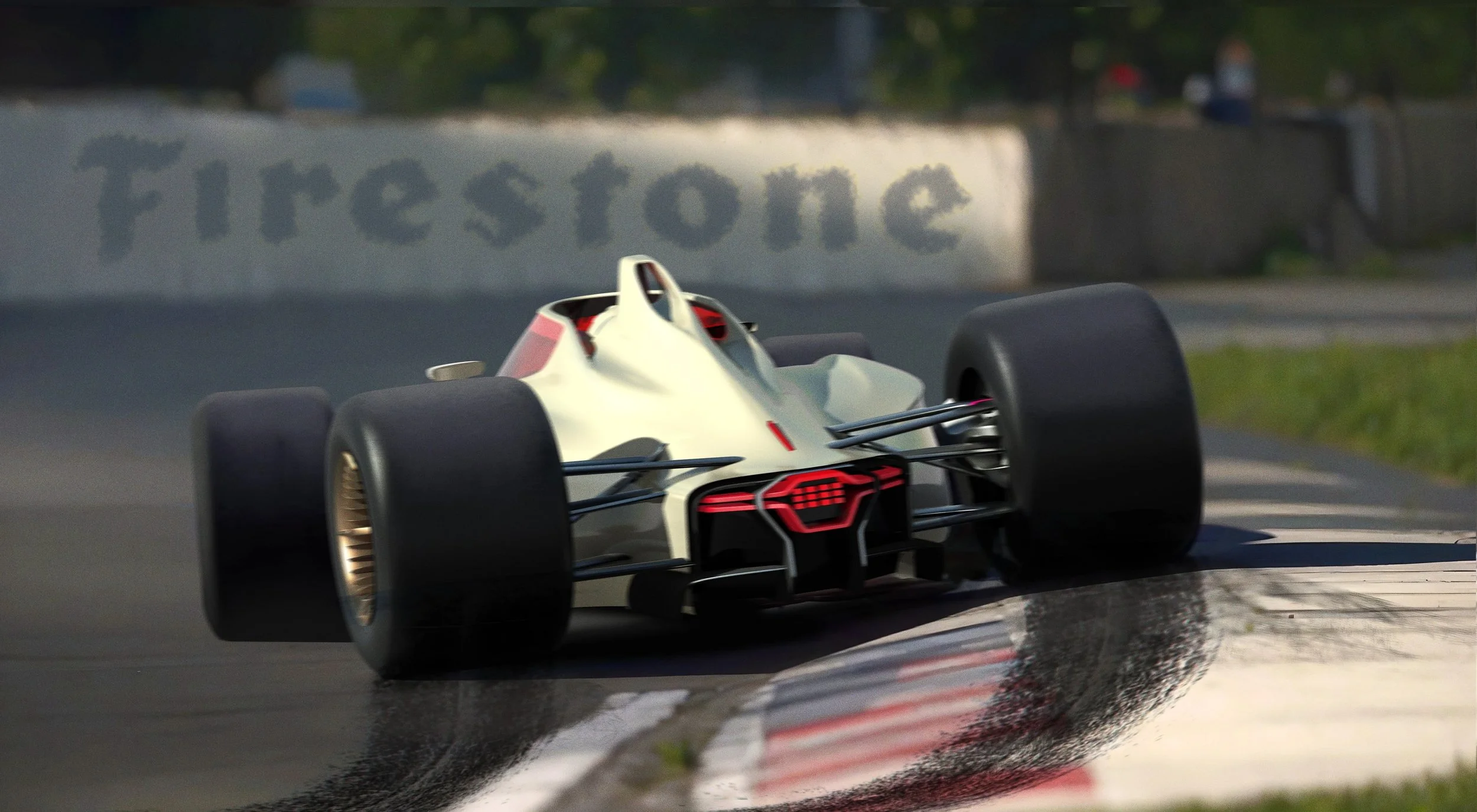
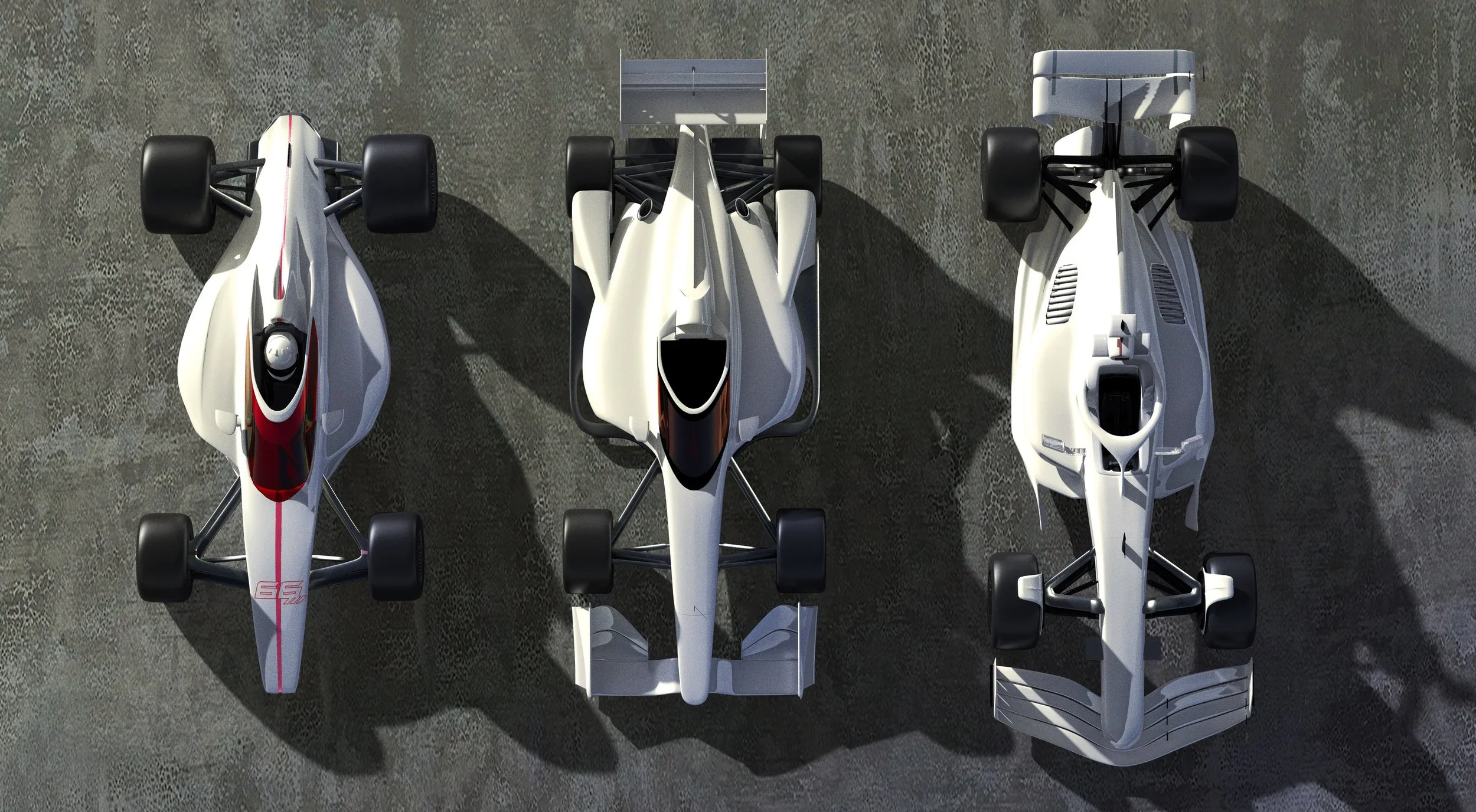
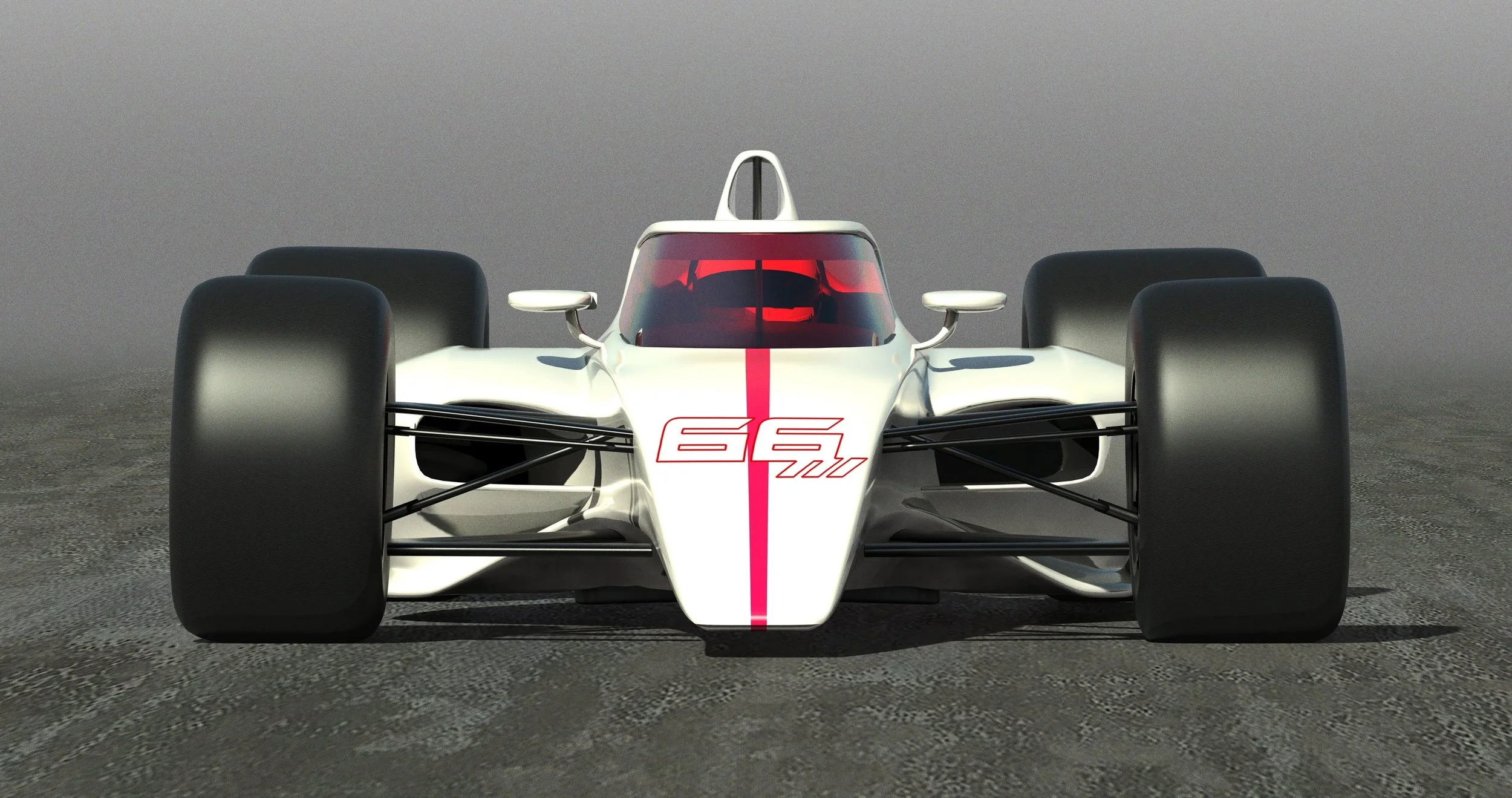
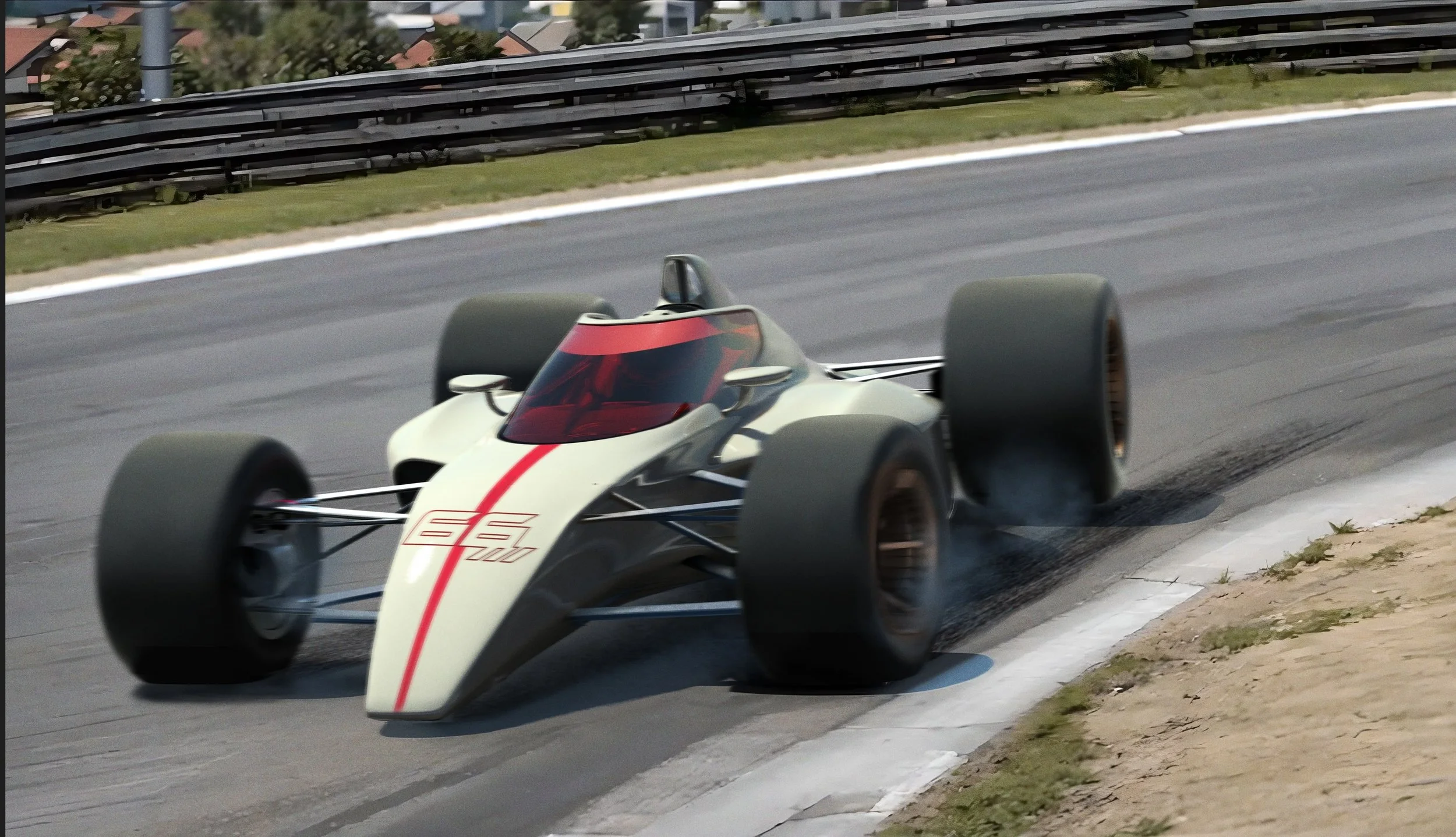
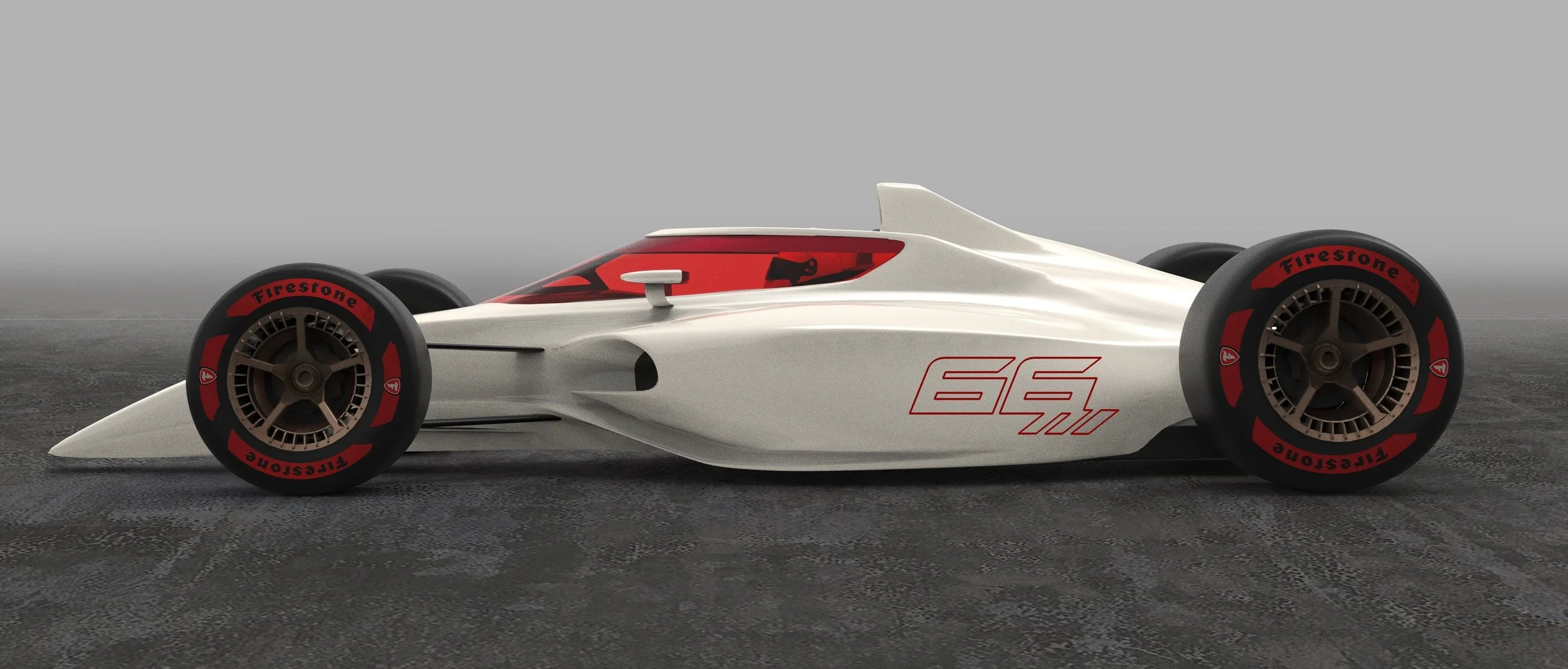
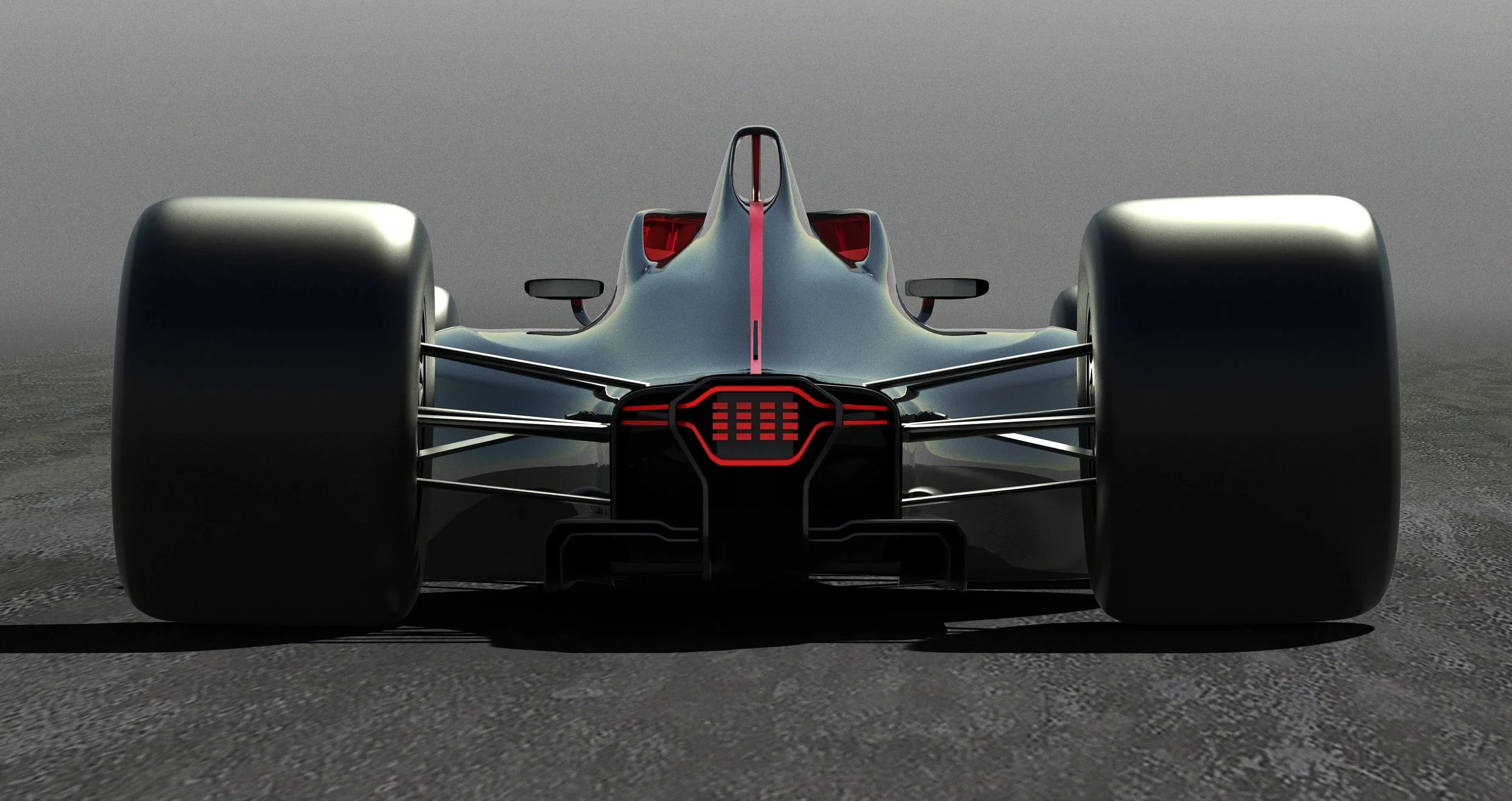
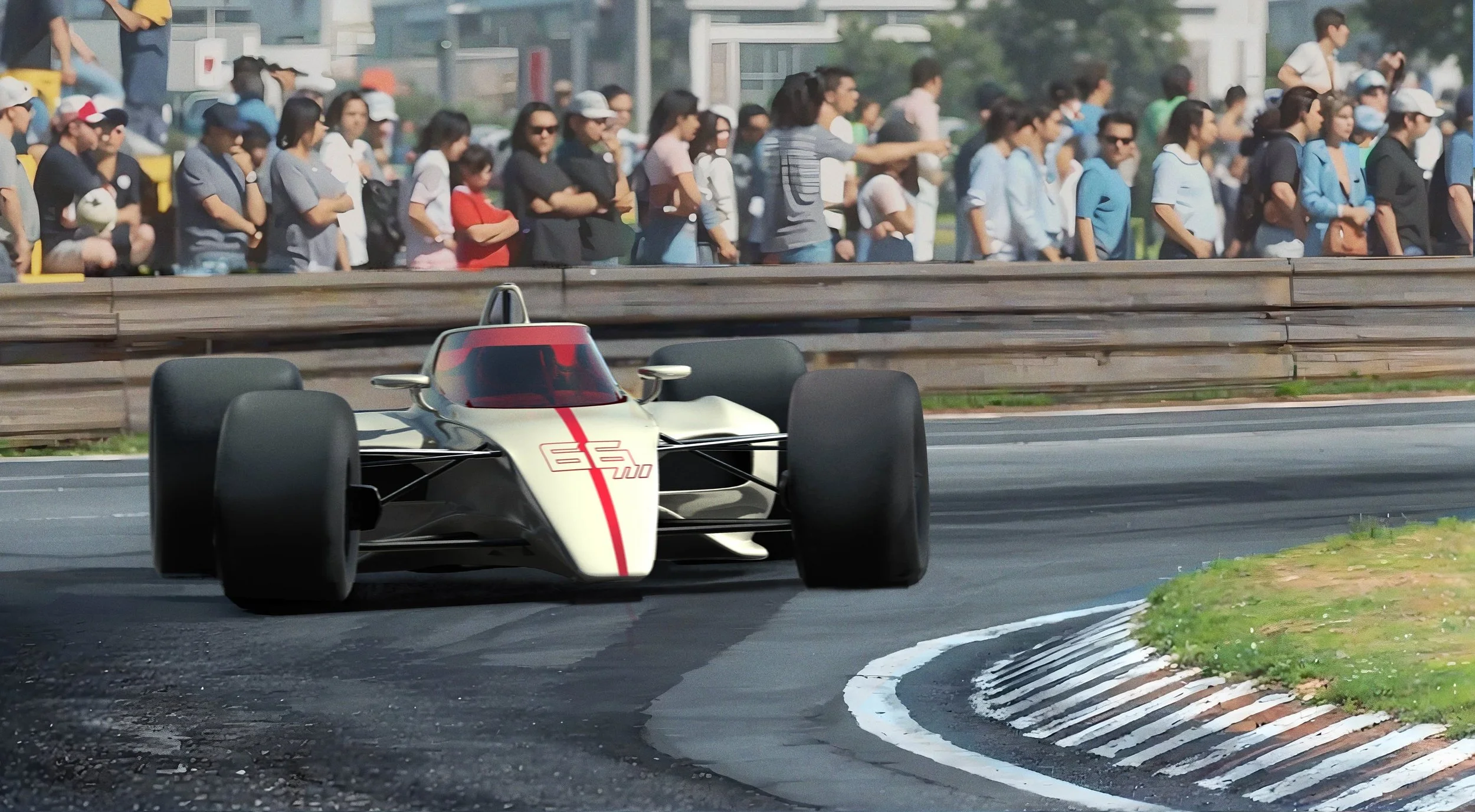
Blackbird 66: how do you think this wingless machine measures up?
Blackbird still requires a virtual model, engineering study and eventually a prototype. Its value is that it makes the premise specific enough to test. Through my own illustrations, I want to explore whether Indy cars could have different body shapes within common performance and safety limits. The body could carry a manufacturer's identity again instead of serving mainly as a surface for another wrap.
Removing the wings wouldn't eliminate aerodynamic development. The body and floor could become expensive versions of the same problem, requiring firm control of total downforce and development cost. Controlled performance does not require visual sameness.
Perhaps racing should now learn how to create a safer, affordable car that remains visibly difficult to master, while allowing different ideas without reopening the spending wars that damaged the sport before.
The Indianapolis Motor Speedway was built to test the future in public. IndyCar can reclaim that role by creating a competition in which the driver is decisive, the machine is meaningful, and the best people and ideas have a credible path to prove themselves.
Videos related to what comes after faster?
Essays on the next IndyCar after the IR-28
The Fastest Thing off the Shelf
The New Indy Car is No Accident
It Was Never Just the Car, It’s Who Gets the Seat
Paul Pfanner on the Launch of the 2028 IR-28 Indy car
Pfanner Advantage works with clients to turn change into advantage at the intersection of mobility, motorsport, media, technology, and marketing. Learn more or start a conversation: contact us today.
Paul Pfanner’s recent Shift Happens Insights:
The Advantage Journal arrives every week. What matters in sport, mobility, media, and technology — curated and contextualized by Bill Sparks, Bill Long, and Paul Pfanner. No hedging. No filler. Subscribe — It’s Free

