
The Fastest Thing Off the Shelf?
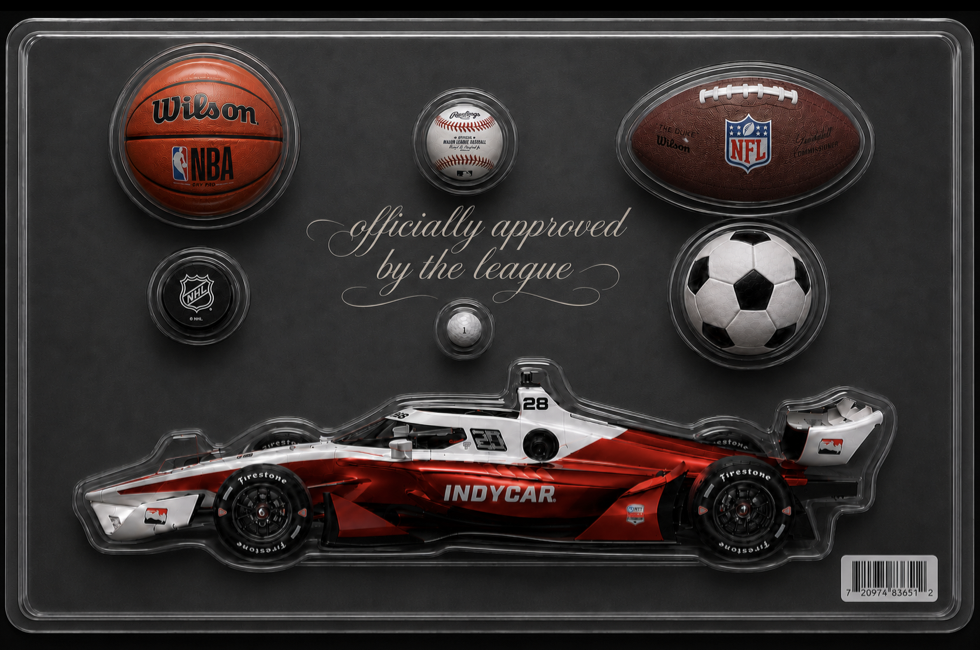
Official league equipment. Identity and meaning earned separately.
Second in a series: Paul Pfanner has spent a working life across this sport, publishing RACER and SportsCar and the IndyCar and Champ Car magazines, and working with its sanctioning bodies, manufacturers, teams, and tracks. He opened this series with "The Museum and the Paddock." Here he asks whether IndyCar has permanently decided the machine no longer is the focus beyond safety, parity, cost control, and the visibility of the vinyl wrap displaying the sponsor’s brand identity. He argues that if it has, the sport should say so out loud and mean it.
Picture an Indy car the way the sport now builds it. One chassis for everyone, a shared spec for nearly all of it, nudged forward a little once a decade so the field stays even. Shrink-wrap it in plastic and stand it on a shelf between a basketball and a hockey puck, and it would look right at home. Official league equipment.
Sit with that picture, because it's close to what the Indy car has become, and the car after the IR-28 is the moment to decide whether it's what the sport wants to be. The argument was never how the next car should look. It's a cost-versus-value question the fan styling debate never reaches. What does IndyCar gain by making the car equal, predictable equipment and what does it give up to get it?
Equipment, or competitor?
Start with what the car is, because the rest follows from it. Is it a piece of equipment, or is it a competitor?
A basketball is a piece of equipment. It sits there until a player picks it up, and whatever happens next happens in the athlete's hands. The ball has no say. That's the whole design. Stick-and-ball sports run on a passive object and let the human be the entire story.
A race car has never been passive. It's engineered to take part, to make itself quicker or slower for reasons that have nothing to do with the driver. It is, on purpose, a second competitor. Pretending it's the same kind of thing as a ball, an inert object the athlete simply throws, hits or kicks, is the quiet dishonesty underneath the whole equal-car idea. There is still real engineering in these cars, some of the best the sport has seen, and most of it is now invisible. That's not a complaint. All of racing works that way. The point is what we've turned the machine into. We've reduced it to a soulless parity appliance, a safety cell wrapped inside a device tuned to keep everyone equal, and we've started calling that an Indy car.
Remember what the sport is called. Auto racing. Motorsport. The machine is right there in the name. Take the auto out of auto racing and drain the motor down to an appliance nobody's meant to notice, and you're left with racing. Fast, brave, close, and no different in kind from any other game where gifted people move a standard object around in front of a crowd.
What the equal car bought
None of this makes the equal car a mistake. It bought the sport real things, and they matter. Every driver in the same car means the human is the variable, and no one buys a title by out-spending the grid into a machine nobody can touch. It steadied the sport after years when the money ran wild and teams folded chasing it. And for a manufacturer, a controlled, lower-cost formula is an easy thing to defend to a board.
And it can still produce something extraordinary. This past May the equal car gave the sport the closest finish in the history of the Indianapolis 500, Felix Rosenqvist edging David Malukas to the bricks by twenty-three thousandths of a second, at the end of a race that changed the lead a record seventy times. Nobody who watched it will forget it. That is parity at its best, and it is real.
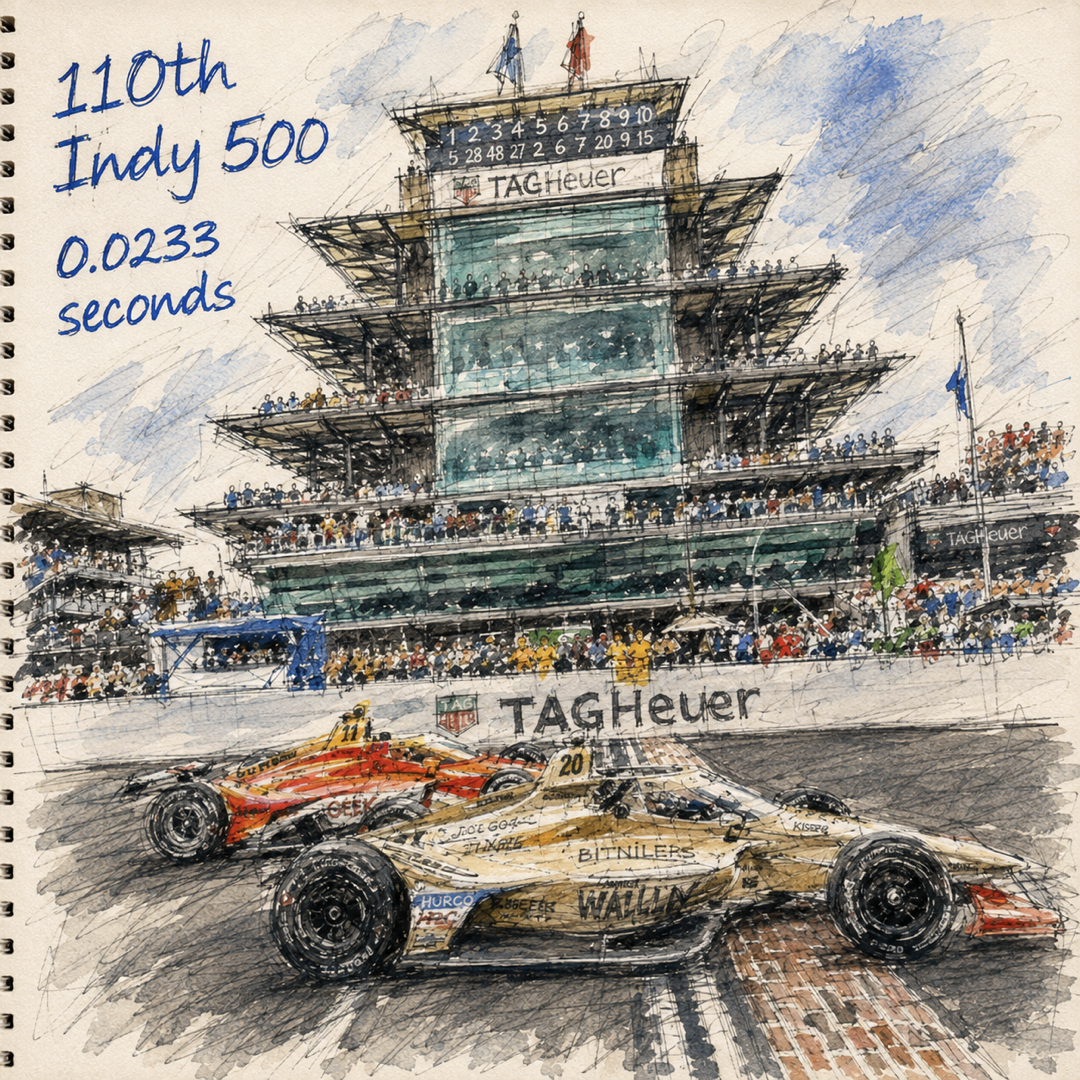
The closest finish in the history of the Indianapolis 500, and almost certainly the loudest roar the Speedway has ever heard.
There's more to say for it than that, and it's the honest part. The last century taught the sport something in blood and money. Left to develop without limit, these cars got faster and more dangerous and more expensive than anyone could sustain, and somebody finally drew the line. Parity wasn't only fear talking. A lot of it was hard experience turned into policy.
What it leaves behind
The bill comes due on the other side. Retire the machine as a competitor and you lose the weight it carried, the emotional gravity that made this more than fast athletes in matching suits. What's left to sell is the driver, the driver's face, how the driver looks on Instagram, which nightlife the driver moves through. All of that matters in the modern world. None of it is what made auto racing auto racing. The car was the soul of it. Reduce the car to a soulless parity appliance and you keep the sport and lose the soul.
If the car moves forward once a decade, and only far enough to keep the field even, then invention isn't the point of the sport now. It's a thing the sport permits between rule cycles, and the place built to show the world what a car could become turns into a place that shows a very fast contest between drivers in matching machines.
There's a money version of this too, and it cuts against the cheap-is-safe instinct. Inside Chevrolet and Honda the race car isn't only racing other series. It's racing for a share of the budget, against software and batteries and AI and tariffs and fast competition out of China. Honda cancelled a run of electric vehicles it had planned for North America and put the cost of resetting that plan as high as ¥2.5 trillion. Ford lost $4.8 billion on its EV business last year. None of them quit racing. They spend where racing pays them back, on engineering and exposure and proof the company still builds things worth wanting. The engines still carry a genuine fight between Chevrolet and Honda, and it matters. But the chance to out-engineer anyone on a spec car keeps shrinking, and what a series wants from a manufacturer in the end isn't only a better engine. It's investment. Money into the sport, support for the media partner, a badge on the car and a stake in the business. That's a fair thing to want. It's just not the same thing as technical competition, and it's more honest to say which one we're asking for.
Then say so, out loud
We've lived inside this version of IndyCar for most of a decade. A young driver coming up today, and much of the new audience arriving with the sport, have never known anything else. To them there is no other expectation. One side of an old argument quietly won, and it owns the story the sport tells about itself now.
So here's the braver pitch, the one I'd respect. Say it straight. The car is settled on purpose. This is the greatest test of a driver in racing, at the highest speeds, on the most demanding schedule anyone runs, and no one will ever lose again for lack of a good car, because there are no better cars. Everyone has the same one. That is a real, defensible choice, and the idea of the car as a pure expression of the driver is new to the top of this sport. We picked it. Own it, frame it, and stop pretending the machine is still the co-star after we've written it into a supporting role.
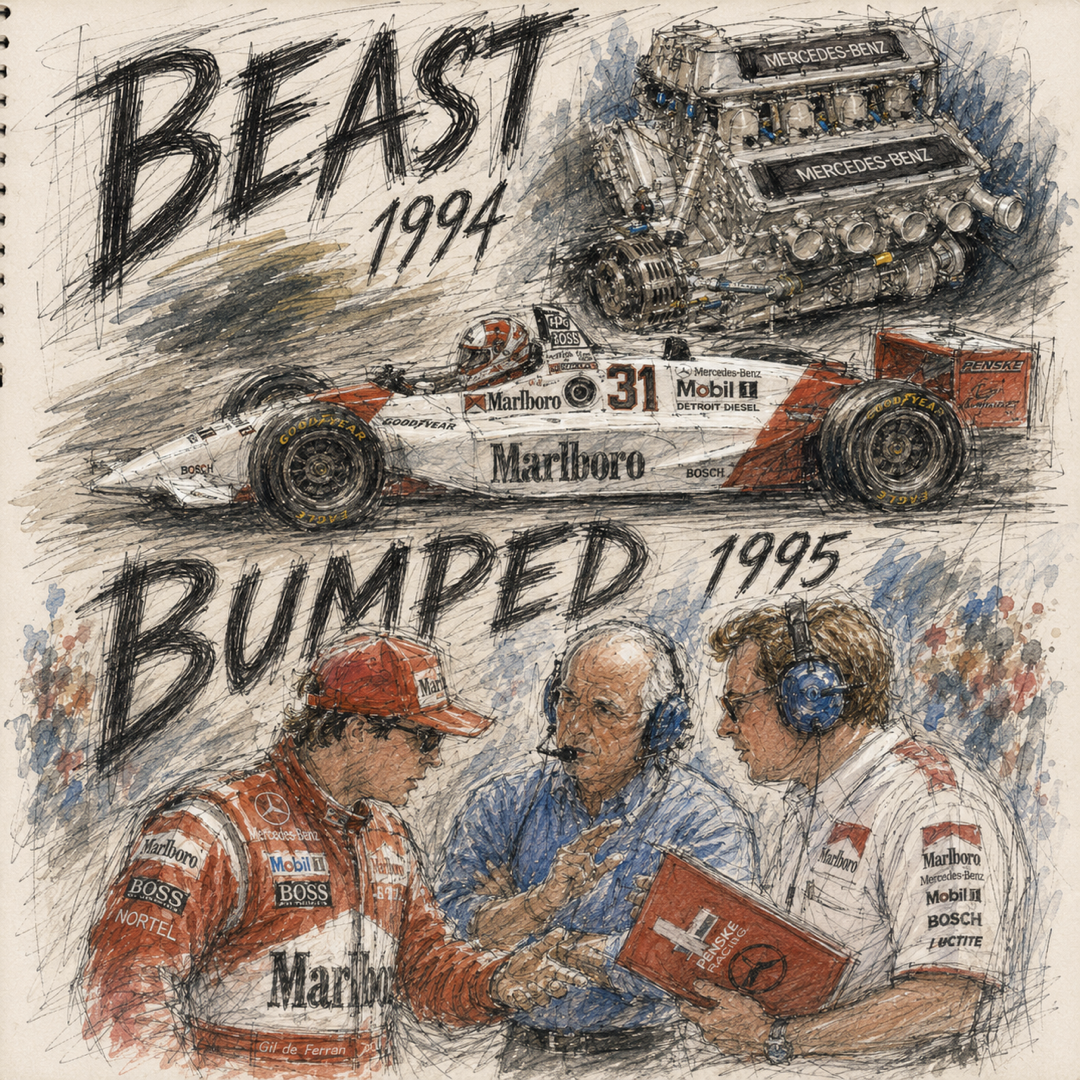
One year after the Beast dominated the Indy 500, the same team’s cars couldn't make the field. The CART era at Indianapolis deserved to end on an exclamation point. It ended on this instead, which is the whole problem with the old model.
The pendulum
There's an irony in all this that the man in charge would savor better than anyone. IndyCar is Roger Penske's now. Penske is the author of one of the greatest machine-as-competitor stories the sport ever told, the pushrod engine he had built in near-secrecy to win the 1994 Indianapolis 500, a crushing advantage found entirely inside the rulebook. Al Unser Jr. drove it to his second win at the Brickyard, and I was in the grandstands for it. You could feel it in the place, a hush and a disbelief, everyone understanding at once that this car was running on a plane the rest of the field couldn't reach.
Then the pendulum swung the whole way back. The next May the same Penske organization, the strongest team in racing, failed to qualify for the Indianapolis 500. The machine as competitor in a single year handed you the mountaintop and the humbling.
That 1995 race was also the last time the CART teams ran at Indianapolis. The war between CART and the new IRL broke out after it, and it cost everyone for years. Here's the part worth grieving. A lot of people still call that stretch the high-water mark of American open-wheel, the closest this sport ever came to challenging Formula One on the world stage. Within a couple of seasons you had Honda, Toyota, Mercedes, and Ford building engines, and Lola, Penske, Reynard, Swift, and Eagle building cars, every one of them a different argument about how to win. It was the most alive this sport has ever been. The tragedy is that the fight wasn't happening at the Indianapolis 500. That's where the story came off the rails.
The equal car is the child of that wreck. It exists so the sport can never tear itself apart over machines again, and that is a serious and honorable reason. The sport that built the beast now runs on the promise that no beast will ever appear again.
The clock is running
The lead time is already ticking. The IR-28 is here and in development, and it will race for something like five years, probably longer. The moment to decide what comes after it, and what the sport wants to stand for, is now, while the sport can still choose instead of react.
On the value side of the ledger, the strongest answer to what the next car should be may not be a car. It may be cars. A field of different bets on how to win, the one thing this sport can still do better than anyone. The trick it never quite managed was keeping that variety without the ruin that came with it. That is the work now. Because in a sport built on motion, in a world moving this fast, the vulnerable place to end up is frozen in place with a proposition that's equal, and safe, and emotionally empty.
The ball's in your court, IndyCar.
Other essays on the next Indy Car after the IR-28
The New Indy Car is No Accident
Paul Pfanner on the launch of the 2028 IR-28 Indy car
The Future Arrived Looking Familiar
Pfanner Advantage works with clients to turn change into advantage at the intersection of mobility, motorsport, media, technology, and marketing. Learn more or start a conversation: contact us today.
Paul Pfanner’s recent Shift Happens Insights:
The Advantage Journal arrives every week. What matters in sport, mobility, media, and technology — curated and contextualized by Bill Sparks, Bill Long, and Paul Pfanner. No hedging. No filler. Subscribe — It’s Free

