
Zanardi’s Choice
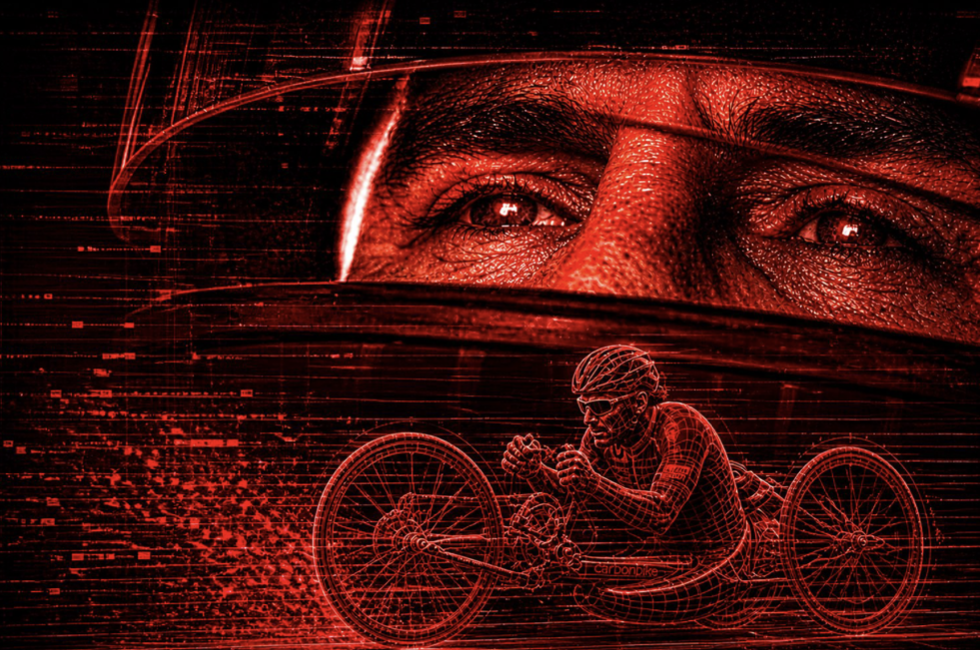
Two lives. One choice.
On May 1st, 2026, Alex Zanardi died at age 59. Before dawn the next day, Paul Pfanner published a brief tribute to Zanardi across his social channels. The response was immediate and substantial. People who knew him, people who followed racing, people who simply witnessed what Zanardi chose to do with his life after catastrophic injury—they showed up. They shared. They remembered. But as Pfanner sat with that response, he realized the tribute had unlocked something larger. It wasn't about mourning a racer. It was about a question Zanardi's life kept asking: What do you do when circumstance takes everything? The answer, Pfanner came to understand, wasn't about Zanardi alone. It was about all of us, right now, facing our own version of that choice.
The Pattern
Alex Zanardi lost both his legs in a crash at the Lausitzring in Germany on September 15th, 2001—the weekend after 9/11. Most people would have spent the rest of their lives asking why? Zanardi came back. He learned to live differently. He discovered paracycling. He won gold medals at the Paralympics. He competed in marathons. He set records. He raced again. Everyone who encountered him described the same thing: he was fully alive. Present. Intentional. Creating meaning with what remained.
But here's what matters. Zanardi wasn't unique in making that choice.
Nelson Mandela spent twenty-seven years in a cell. He emerged asking not how to reclaim what was lost, but how to build something that had never existed. His actions created a nation. Beethoven composed his Ninth Symphony completely deaf—the "Ode to Joy"—not in spite of his silence, but because his inner ear was finally free from the constraints of physical sound. His music still moves millions. Viktor Frankl survived four Nazi concentration camps. Lost his wife, his parents, most of his family. Faced absolute horror. And then he chose to say: even here, even in this darkness, humans retain one freedom. The freedom to choose their attitude. The freedom to find meaning. He wrote that down. Millions of people have read it. It changed how we understand what's possible when everything is taken from us.
The Real Question
The pattern isn't about overcoming adversity. It's about something harder. It's about seeing your circumstance with absolute honesty—what's actually true, economically, physically, socially—and choosing to create meaning anyway. Permission comes from that honesty. From accepting what's real and deciding to build something larger than your loss.
But here's where this stops being about them and starts being about you.
You're facing your own version of that choice right now. Maybe not the loss of your legs or your freedom or your family. But disruption. Technology that's rewriting what your skills mean. Platforms that decide what you see. Algorithms that know what keeps you engaged—not what's true, but what makes you feel something. You're scrolling through a curated reality that confirms what you already believe. It feels like truth. It feels like choice. It's neither.
Accepting your circumstance as a ceiling instead of a threshold—that's where you die. Not physically. Intellectually. Creatively. As a human being. The enemy of being alive is accepting your circumstance as a feeling instead of a fact you can work with.
What You Actually Have
Here's the truth: you have more power at your fingertips than at any time in human in history. More access to information. More tools. More ability to create, to learn, to build, to reach. Frankl faced absolute powerlessness in a concentration camp and found freedom in the choice of his attitude. You face absolute power and choice. So the question becomes urgent and real.
What are you going to do with it?
Not someday. Now. Are you going to let the algorithm choose your meaning? Are you going to accept the comfortable lie the scroll whispers back to you? Or are you going to ask what's actually true, and then—given that reality—create something that only you can create?
Zanardi's presence outlived his legs. Mandela's choices outlived his cell. Beethoven's music still moves millions. Frankl's meaning outlived the camps. They didn't survive. They created legacy. They defined what was possible as human beings.
Intention is the mother of invention. And the most important thing you can invent is your potential every single day you wake up and face the choice. You've got this. Not because inspiration is real. Because clarity is. Because you already know what to do.
Live now. Or simply exist. Your choice.
Pfanner Advantage works with clients to turn change into advantage at the intersection of mobility, motorsport, media, technology, and marketing. Learn more or start a conversation: contact us today.
The Advantage Journal arrives every week. What matters in sport, mobility, media, and technology — curated and contextualized by Bill Sparks, Bill Long, and Paul Pfanner. No hedging. No filler. Subscribe — It’s Free

