
What if the Market Doesn't Want What You're Selling?
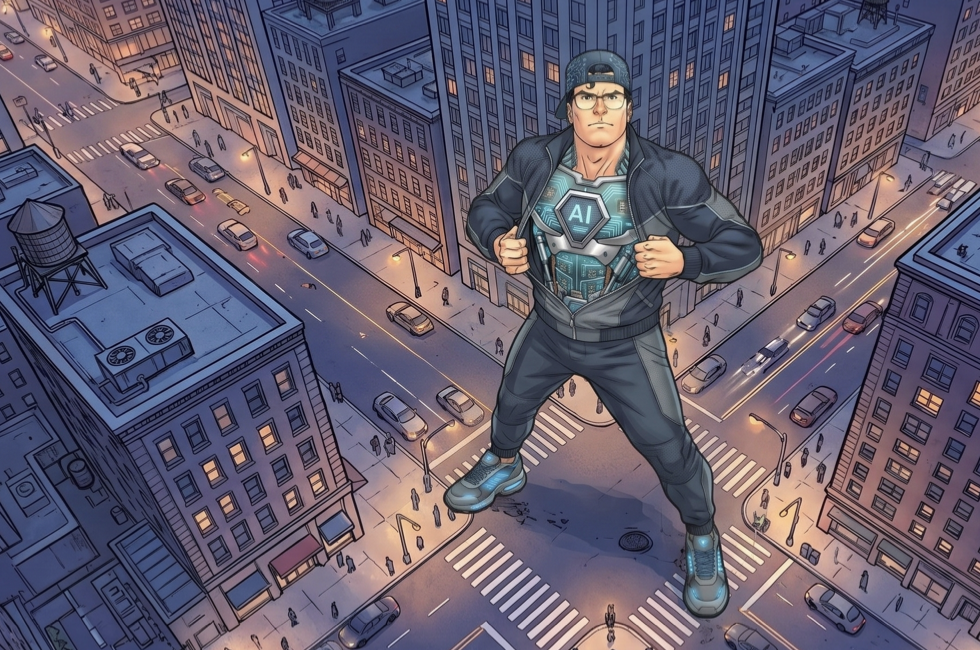
Allbirds' recent and already legendary pivot from sneakers to AI could be the most brilliant business move of 2026. Or maybe not. Choose your side and place your bets.
Bookshelves are full of advice about "reinventing the company" and "embracing disruption." There's a much thinner shelf about what happens when companies actually try to follow all this advice. Bill Sparks discovered there’s probably a good reason for that.
On April 15, 2026, sneaker company Allbirds announced that it was exiting the footwear business. Not pivoting withinfootwear. Not adding a new product line. Exiting. Allbirds was founded in 2015 and publicly listed in 2021. Between 2022 and 2025, sales plummeted by 50%. In 2026, the company shuttered all of its U.S. stores and sold its entire brand and shoe intellectual property to American Exchange Group for $39 million. It kept the public listing, and rebranded itself as NewBird AI, a GPU-as-a-Service provider.
The stock (ticker BIRD) jumped more than 700% in a single session.
The leadership team is drawn from the existing Allbirds organization. The CEO, Joe Vernachio, spent his career before Allbirds at Mountain Hardwear and The North Face. The $50 million financing facility earmarked for GPU procurement is, as Steven Dickens of HyperFrame Research observed, a couple of orders of magnitude short of the capital established players in that market typically deploy. "$50 billion, not million," was how he put it.
Whether NewBird AI turns out to be the most creative corporate reinvention of 2026, or something else, is not a question anyone can answer yet. But it's a useful prompt. When the market rejects what you're selling, the bookshelves are full of advice about "reinventing the company" and "embracing disruption." There's a much thinner shelf about what happens when companies actually try.
So, let's look at what happens when companies actually try.
The Grim Math of Reinvention
There is no clean, rigorous statistic that measures "pivot success rate." The word pivot itself is fuzzy and definitions vary, as do the outcome measures. Anyone who tells you "X percent of pivots succeed" is reading more into the numbers than they support. What we have instead are several pieces of evidence that all point in roughly the same direction, and the direction is not encouraging.
McKinsey's 2018 survey of 1,733 executives found fewer than 30% of digital transformations succeed at both improving performance and sustaining those gains. BCG's work across roughly 300 large-company transformations landed in similar territory: about one in four delivered both short-term gains and long-term value. The popular "70% of transformations fail" figure floats around with murky sourcing, but the named studies point in the same direction.
Longevity data tells the same story. Innosight's research shows the average tenure of a company on the S&P 500 fell from 33 years in 1964 to 24 years in 2016, and is projected to drop to around 12 years by 2027. Of the original 1955 Fortune 500, only 49 companies remained on the 2024 list.
All the data supports the conclusion that reinvention is brutal, and it usually fails. So, who has successfully managed it?
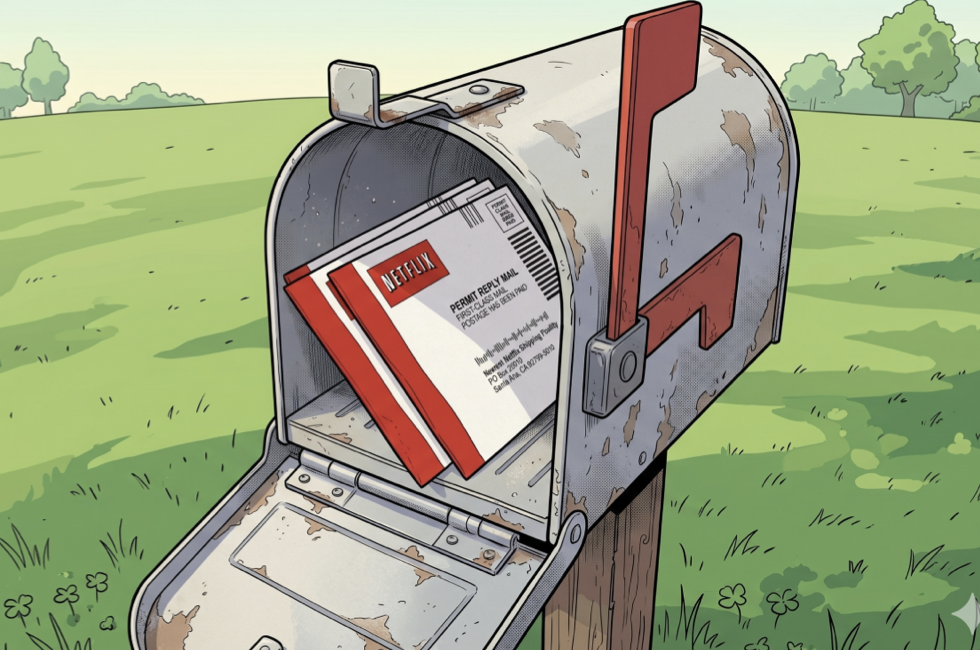
Netflix intentionally destroyed its own DVD-by-mail business model to become the world's most dominant high-end content streaming service.
When Pivots Actually Work
The most instructive thing about the successful pivots is that, almost without exception, they leveraged some existing strength the market had already validated. The customer came first. The product changed second.
Nintendo is the canonical example because the company has been doing this for 135 years. Founded in 1889 in Kyoto as a maker of Hanafuda playing cards, it spent the 1960s trying everything to find the next business (taxi service, "love hotels," instant rice, a TV network). All failed or stalled. What finally worked was electronic toys in the 1970s, which became video games in the 1980s, which became a cultural IP empire worth roughly $80 billion in market cap today. Nintendo still makes Hanafuda cards. The company has outlived every business model it ever adopted except the first one.
Wrigley is arguably the most on-brand pivot story in American business. William Wrigley Jr. founded the company in 1891 to sell scouring soap. To entice grocers to stock the soap, he threw in free baking powder; grocers liked the baking powder more, so he pivoted. Then he threw in free chewing gum. The gum was more popular than the baking powder. Mars bought the company in 2008 for $23 billion. Three pivots, each driven by giving the customer what they actually wanted rather than what Wrigley was originally trying to sell them.
Netflix is a more recent study in disciplined self-cannibalization. Reed Hastings watched broadband adoption and YouTube's 2005 launch and concluded his own DVD-by-mail business had a ceiling, so he started investing in streaming before DVDs peaked. He was famously willing to spin off the DVD business as "Qwikster" in 2011, but it was a PR disaster that wiped out 60% of the stock in a matter of weeks and had to be reversed inside a month. A useful reminder that pivoting well and communicating the pivot well are two different skills. But fifteen years later, Netflix has 300 million paid subscribers and a market cap north of $400 billion, and the DVD mailers are a footnote.
Shopify is the pattern in reverse: a product built for the founders' own use that was more valuable than the business it was built for. In 2004, Tobias Lütke and two friends opened an online snowboard shop in Ottawa. Lütke, a trained programmer, couldn't find e-commerce software he liked, so he built his own. By 2006, the snowboards were gone and Shopify the platform was the business. It now powers millions of merchants and trades at a market cap over $130 billion.
In each of these cases, the pivot worked because the company already had a real asset. There were customer relationships, a technology, a brand affinity, or an operational capability that carried over into the new business. They didn't purchase a new identity. They discovered one.
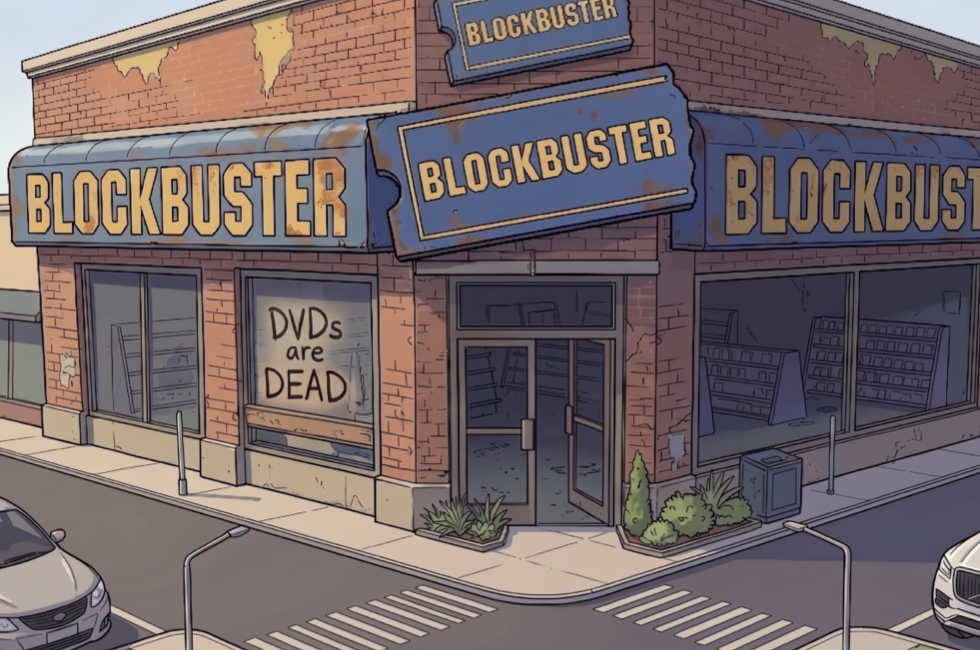
Chapter 11 came for Blockbuster in 2010 after its pivot to online streaming proved to be too little, too late. Blockbuster management laughed Marc Randolph and Reed Hastings out of the room when they pitched selling them Netflix in 2000.
When Pivots Fail Loudly
The failures are, on the whole, the opposite story. The company tried to buy itself a new identity with capital, or with a name change, and hoped the substance would follow.
Kodak is the most painful example because they had every advantage. A Kodak engineer, Steven Sasson, invented the digital camera in 1975 inside Kodak. Management's response was that it was cute but don't tell anyone. By the time Kodak took digital seriously, Canon and Nikon had eaten the high end and the smartphone was coming for the low end. Chapter 11 arrived in 2012. The second act is also worth knowing. In January 2018, Kodak announced KodakCoin, a blockchain platform for photographers; the stock more than doubled in a day. The product never shipped. In July 2020, Kodak announced Kodak Pharmaceuticals — the stock soared 1,500%, and the loan was paused within days amid insider-trading scrutiny. The rebrand-for-a-stock-pop is an established pattern and one the Allbirds announcement is inevitably being read against.
Blockbuster got the Netflix pitch in 2000. According to Marc Randolph's memoir, he and Reed Hastings offered to sell Netflix for $50 million and were, in his words, "laughed out of the room." Blockbuster eventually did try to stream. Blockbuster On Demand launched in 2008, but it was ten years too late. Chapter 11 came in 2010. One franchise store survives, in Bend, Oregon, which is apparently a tourist attraction now.
Polaroid survived two bankruptcies and stopped being a real operating company around 2008. The brand has been sold and resold at least four times since. The company had roughly 21,000 employees in 1978 and fewer than 150 at the second bankruptcy.
MoviePass is the purest case of pivoting your way to destruction. They were selling at a loss to acquire users,betting the consumer data would eventually pay for it. Subscribers went from 20,000 to 3 million in a year. The company was burning $40 million a month, and at one point had to borrow $5 million overnight just to keep the service turned on. It shut down in 2019 and went bankrupt in 2020.
The Pattern
The line between the two groups is less about industry or era than about honesty. The successful pivots all start with a real, validated asset that the company can credibly bring to the next business. The failed pivots start with a narrative.
This is why the "crypto-or-AI rebrand" has become a reliable failure pattern. Long Island Iced Tea Corp renamed itself Long Blockchain Corp in December 2017; the stock rose 289% in a day, the company was delisted from Nasdaq the following year. More recently, BuzzFeed's January 2023 announcement that it would use AI to generate content sent its stock up 300% in two days. BuzzFeed News was shuttered three months later.
The Hail Mary
No one is going to argue that a leader facing a dying business should just let it die. The data is clear that reinvention is hard and usually fails, but it's equally clear that standing still is worse. The 1955 Fortune 500 companies that didn't try to change are mostly gone. But then again, so are many of the ones that did try. The fraction that tried and succeeded — Nintendo, Wrigley, Shopify, and 3M among them — are some of the most durable companies in the world.
The useful question isn't "can we pivot." It's "do we have any credible claim on the new business we're entering?" If the honest answer is yes, then reinvention is worth the risk, even if the odds of success are long. If the honest answer is no, then what's being pivoted isn't a company. It's a ticker symbol looking for a story.
And the market, eventually, notices the difference.
Pfanner Advantage works with clients to turn change into advantage at the intersection of mobility, motorsport, media, technology, and marketing. Learn more or start a conversation: contact us today.
The Advantage Journal arrives every week. What matters in sport, mobility, media, and technology — curated and contextualized by Bill Sparks, Bill Long, and Paul Pfanner. No hedging. No filler. Subscribe — It’s Free