
How the Ad Industry Is Reinventing Itself
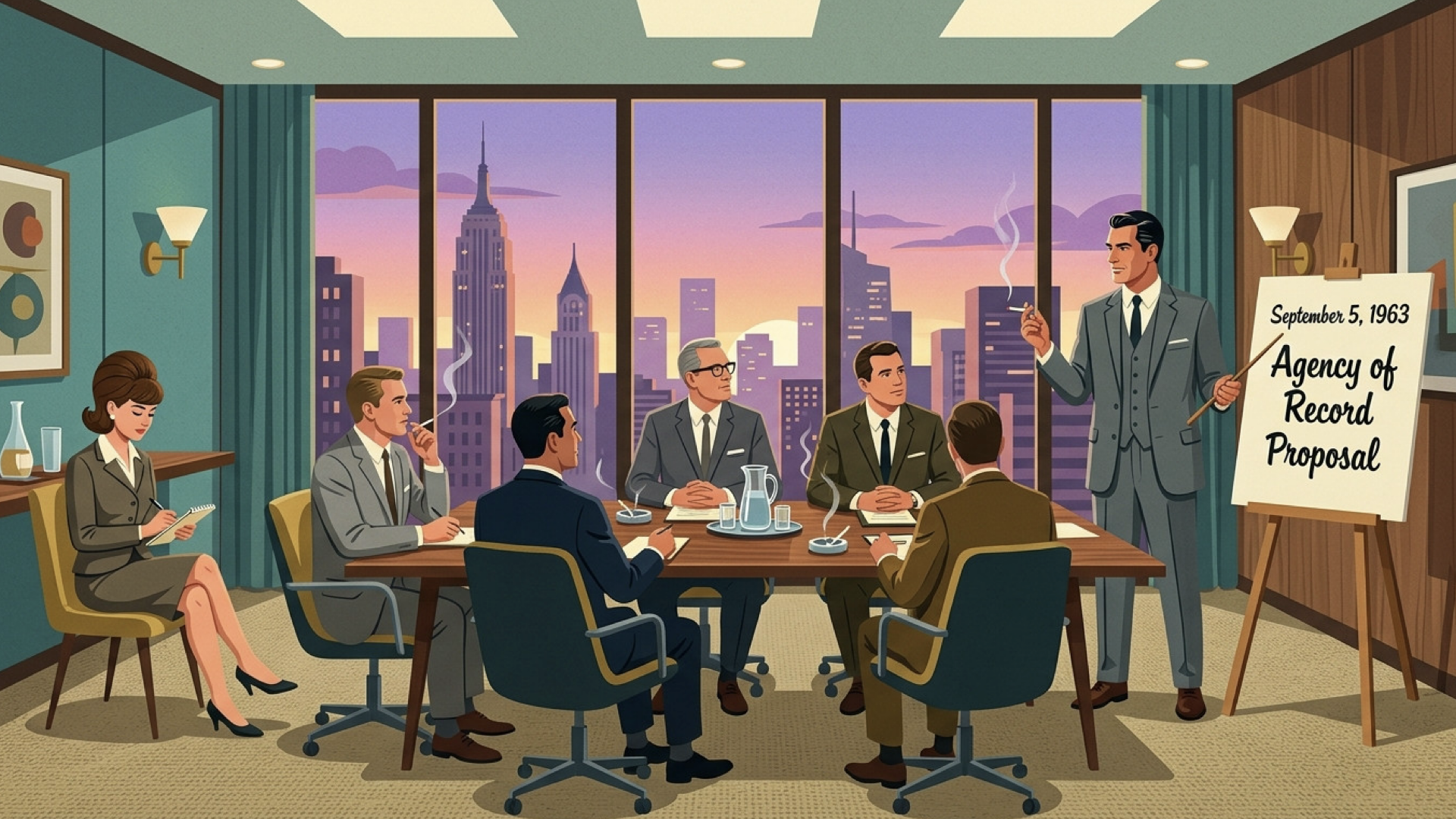
The old-school agency-of-record business model is collapsing. What is going to replace it is still evolving.
Part seven of Bill Sparks' series on the evolution of branding. Bill looks at the dismantling of the traditional advertising agency model and the current real-time evolutionary process that is developing what comes next.
Internal planning and buying teams and small, specialized shops are challenging the traditional agency of record business model. Agencies that have quickly adapted to this new reality are still doing well. Those that are not have fallen behind.
For most of the twentieth century, the advertising agency was the storyteller. Companies made products; agencies made the stories that sold them. The relationship was stable, lucrative, and often measured in decades. A major consumer brand would appoint an agency of record, hand over a significant percentage of its revenue as an advertising budget, and trust that agency to define how the brand showed up in the world. The agency hired the creative talent, produced the campaigns, bought the media, and managed the narrative.
That system is now in the middle of the most violent restructuring in the industry's history, and the results are playing out in real time across the financial statements of the world's largest advertising holding companies.
The Wreckage
The numbers at WPP, the world's largest advertising group by revenue, tell a stark story. The company reported a 2.4 percent decline in like-for-like revenue for the first half of 2025, and the full year was worse: reported revenue fell to £13.6 billion from £14.7 billion. Shares had already plunged 16 percent after its 2024 results. WPP responded with a restructuring program called Elevate28 that targeted £500 million in annualized cost savings. Headcount dropped 8.7 percent over the course of the year, a reduction Storyboard18 summarized under the headline “WPP's painful reset: Revenue falls, clients exit, margins shrink.” CEO Mark Read described the reorganization as a necessary response to a changing market. The market, evidently, was not reassured.
WPP's difficulties aren't unique. IPG posted similarly dismal results before being acquired by Omnicom. Dentsu has struggled with its own transformation. Even Edelman, the world's largest public relations firm and technically not an advertising holding company, is reorganizing. The firm laid off 330 employees in December 2024 as part of a restructuring it described as simplifying its organization for “greater integration.” A year later, Richard Edelman, the firm's CEO, published a blog post titled “The Year the Agencies Died,” an arresting headline from the head of a company that is, itself, an agency. His argument was that the holding companies had systematically dismantled the traditional agency model by separating media buying from creative, organizing by function rather than by agency, and extracting growth areas like healthcare and influencer marketing into separate operations. What remained, he argued, no longer matched what clients need.
The media-buying function once monopolized by agencies has been commoditized by companies like Google and Meta.
What's Driving the Collapse
The forces dismantling the traditional agency model are structural, not cyclical. Three of them matter most.
The first is in-housing. A World Federation of Advertisers survey found that 66 percent of global brands have brought some form of digital planning and programmatic media buying inside their own organizations. The Association of National Advertisers has tracked the trend for years and describes it as continuing to “gain steam.” The logic is straightforward: as marketing became increasingly data-driven, brands decided they didn't want their customer data flowing through a third party. The tools that once required an agency's expertise, programmatic ad buying, social media management, basic content production, became accessible enough that an internal team could handle them. Every capability a brand pulls in-house is revenue an agency loses.
The second is platform competition. Google, Meta, and Amazon now control so much of the digital advertising infrastructure that the media-buying function agencies once monopolized has been commoditized. A brand can buy ads on these platforms directly, using tools the platforms themselves provide, without an agency intermediary. The margins agencies earned on media buying, historically a major revenue source, have been compressed by platforms that sell access to their own audiences more efficiently than any agency can.
The third is the consulting firms. Accenture, Deloitte, and their peers built digital marketing practices exceeding a billion dollars in revenue, carving into territory agencies once owned. Digiday profiled Deloitte's “$1.5 billion ad agency” as early as 2018. The consultancy threat hasn't entirely materialized as predicted; the creative and strategic work that defines the best agency output proved harder for consultants to replicate. But the consultancies captured enough of the data, analytics, and technology integration business to permanently compress the space agencies occupy.

Ad agency Publicis Groupe posted a record year in 2025. The key to its success was the 2019 acquisition of data analytics and identify management platform Epsilon. Publicis is selling data and AI-powered targeting alongside its creative.
Who's Adapting
Against this backdrop, one holding company has been conspicuously outperforming the rest: Publicis Groupe. While WPP shrank, Publicis posted another record year in 2025, ahead of expectations, and unveiled an AI strategy it positioned as the foundation for its next century of operations. The key to Publicis's divergence from its peers traces to a single bet it made in 2019: its $4.4 billion acquisition of Epsilon.
Epsilon gave Publicis something none of the other major holding companies had: a proprietary first-party data asset. In a market moving rapidly toward data-driven, personalized marketing, and away from the mass-media model that had sustained traditional agencies, Publicis owned the infrastructure its clients needed. While competitors were still primarily selling creative services, Publicis was selling data, identity resolution, and AI-powered targeting alongside the creative. The market has rewarded the distinction. Publicis's stock has traded near multi-year highs while WPP's has languished.
Omnicom's response was scale through consolidation. Its acquisition of IPG, an all-stock deal that closed in November 2025, created the world's largest advertising company. The combined entity, with pro forma revenue exceeding $25 billion, was explicitly positioned as achieving the mass needed to compete with tech platforms on data and distribution. BestMediaInfo marked the closure with the headline “'Big Six' no more,” reflecting the fact that the industry's holding company structure, stable for decades, was being remade in real time.
The End of the Agency of Record
Perhaps the most significant long-term shift is one that doesn't show up in earnings reports: the erosion of the agency-of-record relationship itself. Marketing Brew reported that the days of the traditional AOR model “could be numbered.” Storyboard18 documented the replacement dynamic under the headline “Project, pitch, repeat: Why brands are rewiring the agency model.” The long-term, comprehensive relationship in which an agency managed all of a brand's storytelling is giving way to project-based engagements, often distributed across multiple specialist firms.
This fragmentation favors smaller, more specialized shops. Ad Age reported that agency specialization became the key to winning new business in 2026, as brands increasingly sought narrow expertise in areas like creator partnerships, social commerce, or AI-driven personalization rather than the generalist capabilities the holding companies were built to provide. Independent agencies have been growing market share by being faster, cheaper, and more specialized than the holding company networks they compete against.
The practical effect for brand storytelling is significant. When a company's narrative was managed by a single agency of record, there was at least the structural possibility of coherence. That agency knew the brand's history, understood its competitive position, and could maintain consistency across campaigns. In a world of project-based work distributed across a dozen specialist shops, coherence becomes the brand's responsibility, not the agency's. Companies that haven't built the internal strategic capacity to manage their own narrative across fragmented agency relationships are finding that nobody else is managing it for them.
What Comes Next
The advertising agency is not going to disappear. The best agencies still do work that no in-house team, consulting firm, or AI tool has replicated: the conceptual creative leap that turns a brand's strategy into a story people remember. But the industry that supports that work is being rebuilt around fundamentally different economics. The holding company model of the late twentieth century was built on media-buying margins and agency-of-record relationships, both of which are in structural decline. What replaces them is still being negotiated, and the answer appears to be some combination of data platforms, AI tools, consulting-style client relationships, and creative talent organized in smaller, more specialized units.
The companies that navigate this transition most successfully will likely be the ones in the final post of this series: the brands that have figured out how to integrate owned media, creator partnerships, community, AI, and whatever agency support they still use into a coherent storytelling strategy. What those companies look like, across a range of sizes and industries, is where we turn next.
Next in the series:
Who's Getting It Right — Case Studies Across the Size Spectrum
Pfanner Advantage works with clients to turn change into advantage at the intersection of mobility, motorsport, media, technology, and marketing. Learn more or start a conversation: contact us today.
The Advantage Journal arrives every week. What matters in sport, mobility, media, and technology — curated and contextualized by Bill Sparks, Bill Long, and Paul Pfanner. No hedging. No filler. Subscribe — It’s Free