
AI and the Personalization of Brand Narrative
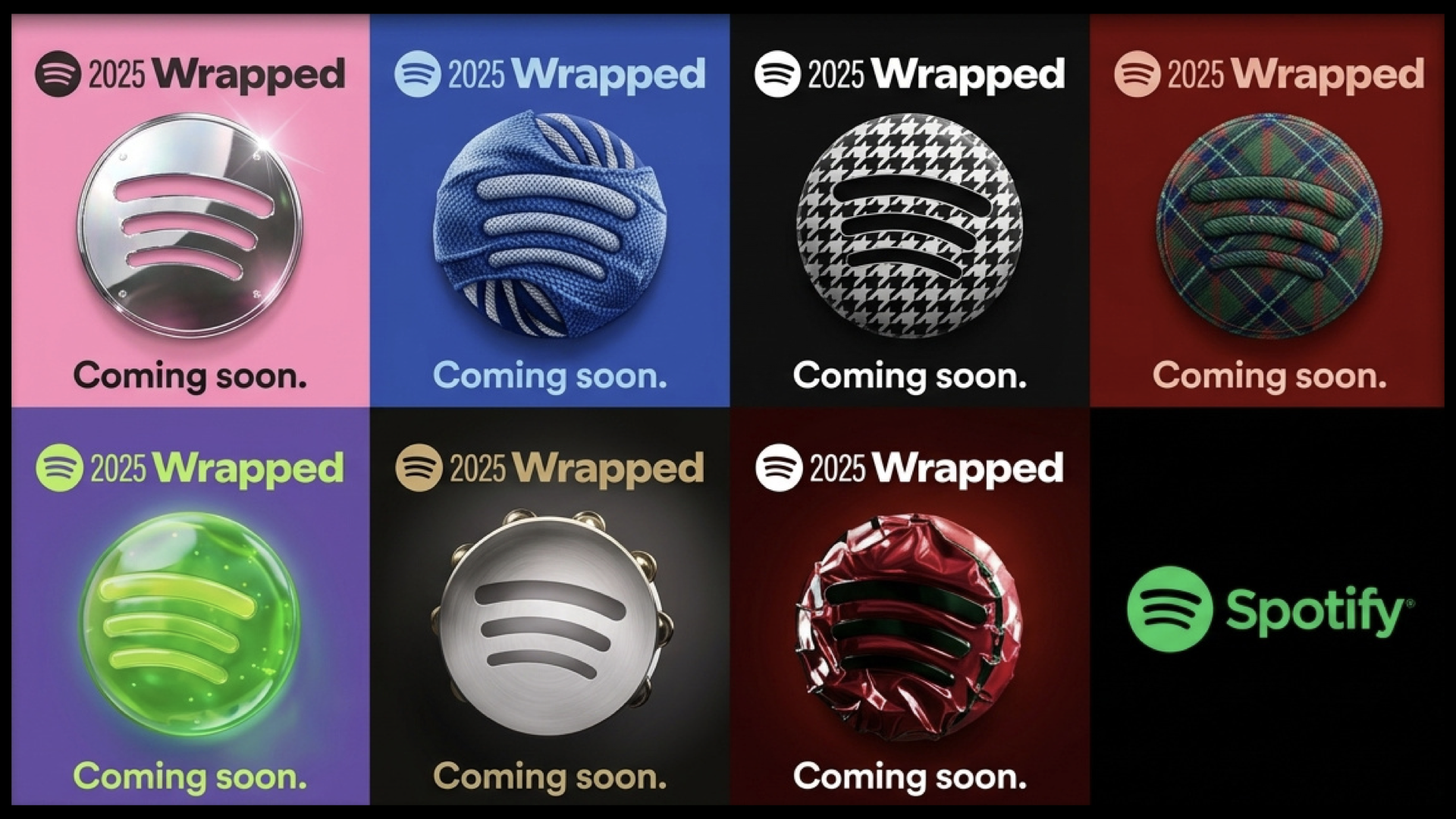
Spotify uses AI to tell 250 million users stories about themselves based on their most played songs. and genres. It’s a level of personalization no human team could ever achieve.
Part six of Bill Sparks' series on the evolution of branding. AI can generate personalized brand experiences for hundreds of millions of individual customers and thousands of targeted ad variations. But concept and creative direction still require a human in the loop.
Every December, roughly 250 million Spotify users receive a personalized summary of their listening habits for the year. Spotify Wrapped tells each person a story about themselves: their most-played songs, their top genres, the minutes they spent listening, their position among a given artist’s fan base. The stories are generated algorithmically, each one assembled from individual data by AI systems operating at a scale no human editorial team could approximate. And users don’t just receive these stories. They share them. Wrapped generates billions of social media impressions every year, not because Spotify asks people to post, but because the stories are interesting enough, personal enough, and specific enough that people want to.
Wrapped is the clearest example of what AI-powered brand storytelling looks like when it works. The AI does the heavy lifting. It processes listening data for hundreds of millions of individuals and generates a unique narrative for each one. But the creative framework, the visual design, the emotional hook, the decision to make the story about the user rather than the product, all of that is human. The machine personalizes. The humans decide what personalization should feel like. It’s a division of labor that the rest of the marketing industry is still trying to figure out.
What AI Actually Does Well
Stripped of the hype, AI is transforming brand storytelling in three concrete areas, all of which function as infrastructure rather than as the public-facing creative itself.
The first is personalization at scale. The Spotify Wrapped model is one version, but the principle extends across the marketing landscape. Netflix’s recommendation engine effectively tells each of its 325 million subscribers a different story about what the platform contains, curating thumbnails, categories, and suggestions so that the version of Netflix you see is optimized for your viewing behavior. This isn’t traditional advertising. It’s an AI-constructed brand experience that feels personally relevant because it is. The technology that powers this, predictive audience modeling, has become one of the primary applications of AI in marketing, identified by MarTech as a defining capability for 2026.
The second is dynamic creative optimization, known in the industry as DCO. This is the automated generation of ad variations tailored to different audiences, contexts, and moments. A single campaign framework might produce hundreds or thousands of creative variations, each adjusted for geography, demographics, browsing behavior, time of day, or device type. The AI assembles the variations from modular creative components and adjusts in real time based on performance data. A decade ago, producing that many variations would have required an army of designers and weeks of production time. Now it runs continuously.
The third is content velocity. Brands that once published a blog post a week or a social media update a day now operate at a pace that would have been impossible without generative AI. Translation, format adaptation, SEO optimization, headline testing, image generation for secondary placements, all of this can be accelerated dramatically by AI tools. The core story still needs a human to conceive it, but the multiplication of that story across formats, languages, and channels is increasingly automated.
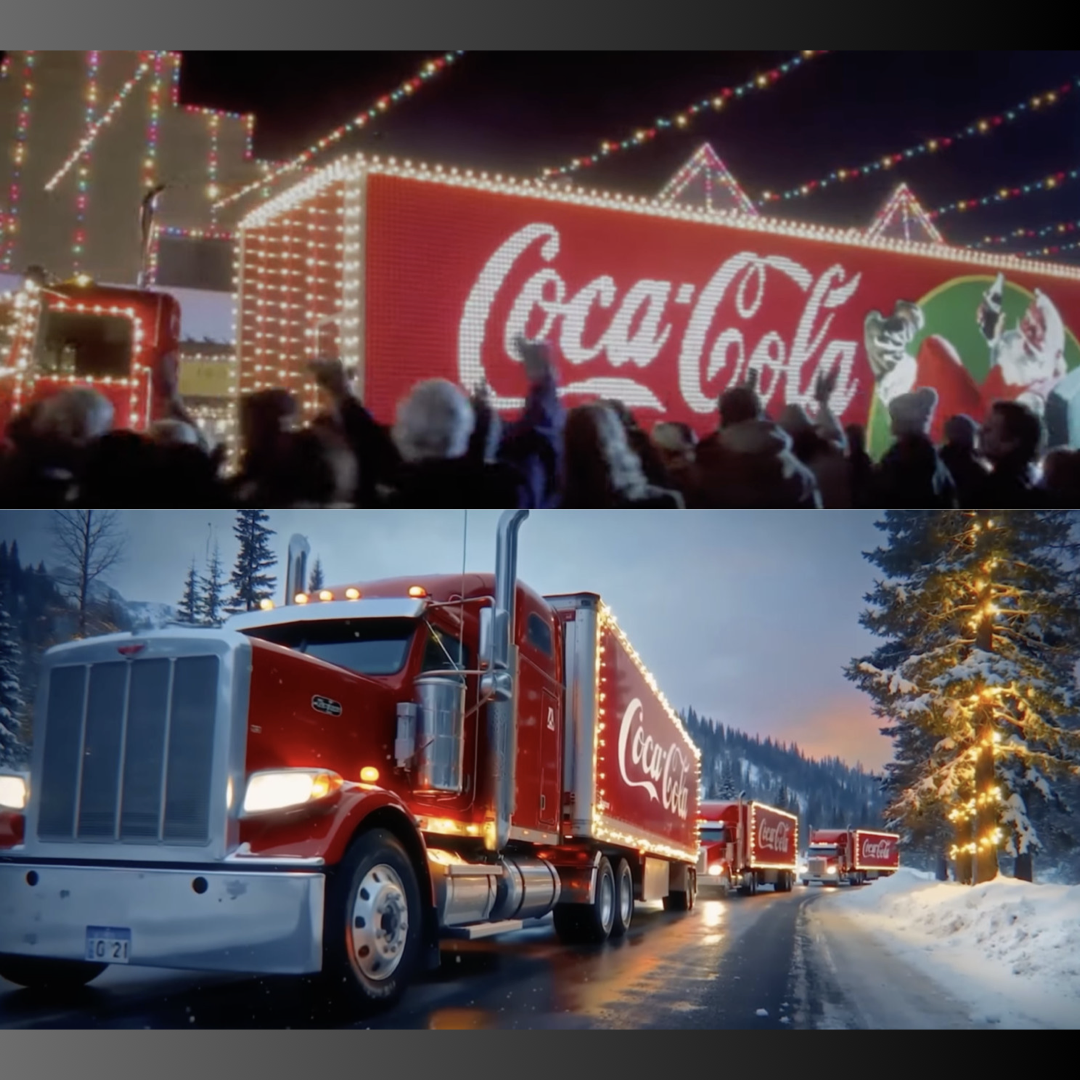
TOP: It’s the real thing, a TV spot featuring real humans filmed by real humans. BOTTOM: It’s not the real thing, a TV spot created by AI. Despite negative feedback, Coke continues to push the boundaries of AI content creation.
Where the Wheels Come Off
If AI works well as infrastructure, it has fared considerably worse as the front-facing creative itself. And the market has been generating case studies in what not to do.
In late 2024, Coca-Cola released a holiday commercial that recreated its iconic “Holidays Are Coming” truck advertisement using AI-generated video. The result triggered a wave of criticism that NBC, among others, covered as a news story. Viewers described the ad as “soulless.” Social media commentary was withering. The original 1995 commercial had been filmed with real trucks, real snow, real people, and the warmth it communicated was inseparable from the fact that those elements were real. The AI-generated version had a surface resemblance to the original but lacked the quality that had made it resonate for three decades. Coca-Cola defended the campaign, but the reception was a public lesson in the limits of substituting computation for craft.
The Coca-Cola episode was high-profile, but the broader problem is less visible and more pervasive. The flood of AI-generated content across the internet has been significant enough to earn its own dismissive label: “slop.” CNN ran a story in late 2025 titled “Why 2026 could be the year of anti-AI marketing,” reporting on a growing consumer backlash against the generic, frictionless content that AI makes easy to produce in volume. Digiday documented the counter-trend: after oversaturation of AI-generated content, creators’ authenticity and what the publication called “messiness” are in high demand. The imperfection that AI eliminates turns out to be, in many contexts, the quality that audiences value.
The survey data reinforces the pattern. An eMarketer analysis found that shoppers aren’t impressed by AI-generated marketing. A study published by the Nuremberg Institute for Market Decisions, titled “Transparency Without Trust,” found that labeling content as AI-generated didn’t increase consumer trust. In some cases, it decreased it. The research suggests that consumers have developed an instinct for AI-produced content, and that instinct is increasingly accompanied by skepticism rather than admiration.
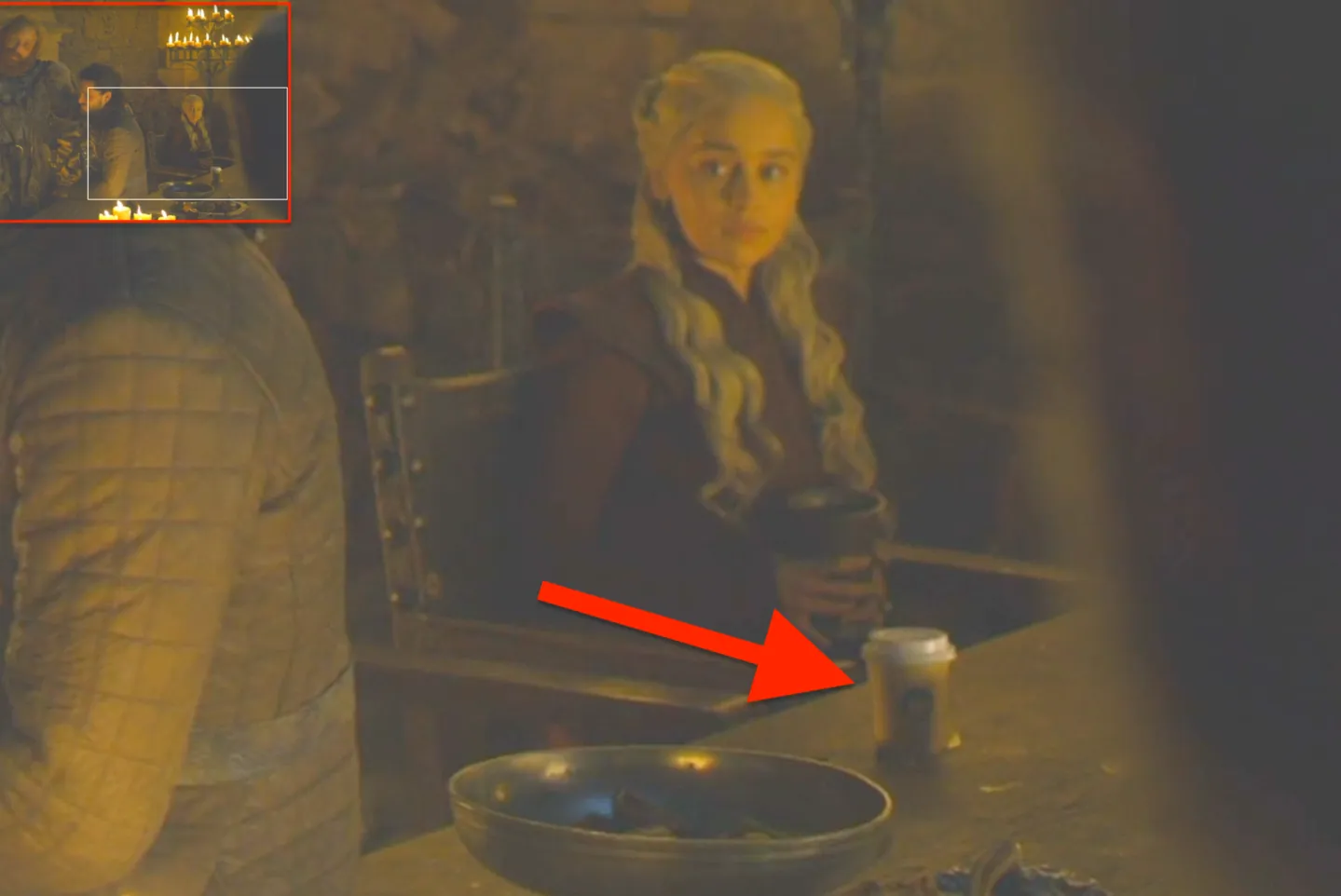
The infamous Starbucks’ cup in this Game of Thrones shot represents the kind of human imperfection that audiences seem to value.
Infrastructure, Not Replacement
The companies getting AI right in brand storytelling have arrived at a distinction that sounds simple but requires real organizational discipline to maintain: AI as infrastructure, not AI as replacement.
The Breef marketing consultancy published an analysis in 2026 arguing that “AI-first” brands, companies that led their marketing with the fact that AI was involved in creating it, were starting to fall flat with consumers. The brands succeeding, by contrast, were using AI extensively behind the scenes while keeping the creative identity, the narrative voice, the emotional intelligence of their storytelling recognizably human. Axios reported a parallel development in Hollywood, where studios were reframing AI as “infrastructure, not replacement,” using it for production efficiency while maintaining that the creative decisions, the story choices, the directorial judgment, remained human responsibilities.
This framing aligns with the trust dynamics discussed earlier in this series. Consumers have made clear that they value authenticity. AI can personalize a story, but it cannot yet be authentic in the way a human storyteller can. The audience may not articulate the difference in technical terms, but they feel it. An AI can generate a thousand variations of a product description optimized for different customer segments. It cannot yet tell a story that makes someone feel something they didn’t expect to feel. The companies that understand this distinction are using AI to make their storytelling faster, more targeted, and more efficient while relying on human judgment for the part of storytelling that actually creates emotional connection.
This is not a stable equilibrium. The technology is improving rapidly, and the line between what AI can and cannot do in creative work moves in one direction. But for the moment, the evidence from the market is clear: AI that serves the storyteller is an advantage. AI that replaces the storyteller is a risk. The companies paying attention to how their audiences respond have figured out which side of that line to stay on.
The next post turns to the institutions that used to manage all of this on behalf of their clients, the advertising agencies, and examines what happens to a business model built for a world that no longer exists.
Next in the series:
The Agency Reckoning — How the Ad Industry Is Reinventing Itself
Pfanner Advantage works with clients to turn change into advantage at the intersection of mobility, motorsport, media, technology, and marketing. Learn more or start a conversation: contact us today.
The Advantage Journal arrives every week. What matters in sport, mobility, media, and technology — curated and contextualized by Bill Sparks, Bill Long, and Paul Pfanner. No hedging. No filler. Subscribe — It’s Free