
Why Aren't Americans Buying EVs?
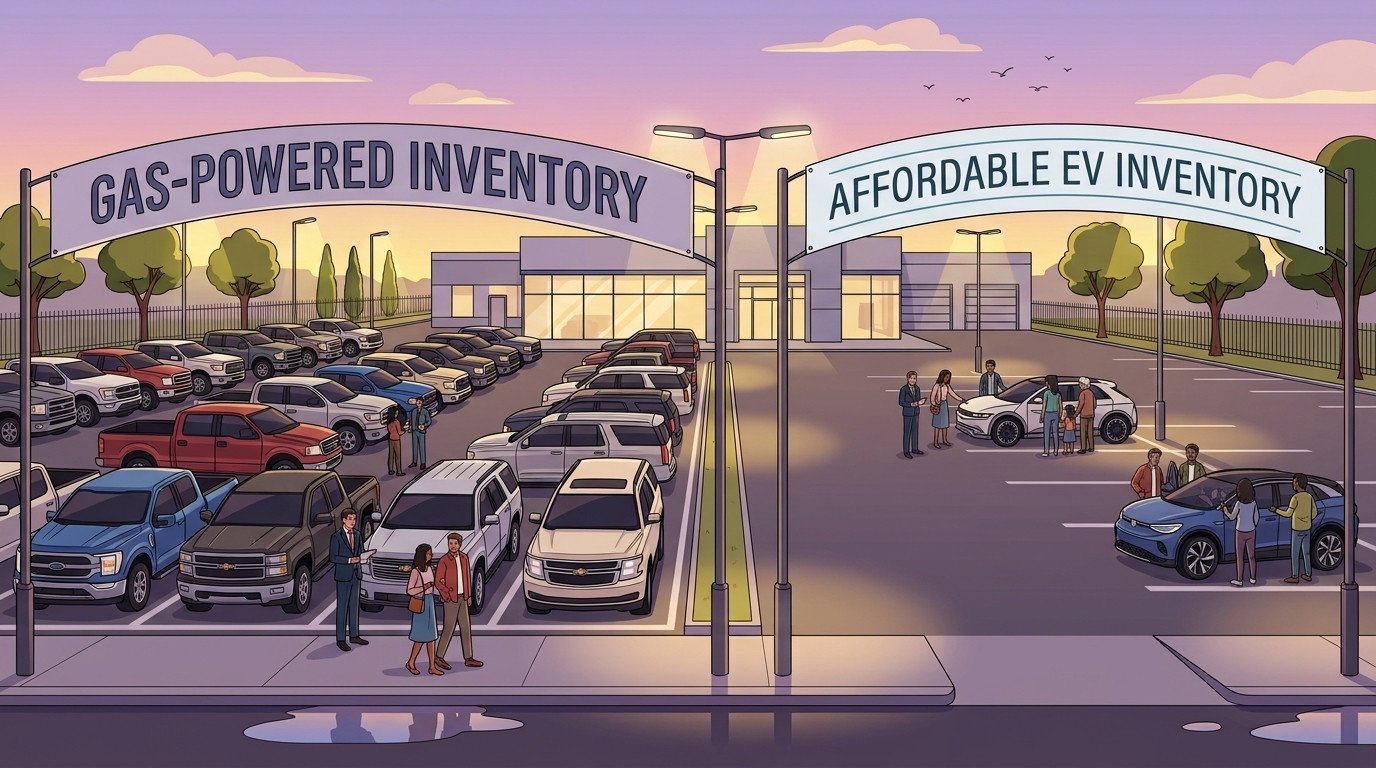
Despite a sudden spike in gas prices, North American EV sales fell 33% in August. This was due to inventory and product mix issues rather than a rejection of electric vehicles.
The last time an international oil price shock suddenly spiked gas prices, the American auto industry lost market share it never recovered. This is the first in a series of articles in which Bill Sparks looks at how the current oil price crisis could result in a similar outcome.
In late February, before the United States and Israel struck Iran, a gallon of regular cost Americans $2.98 on average. At the time this was written, the national average was above $4.47. That is up 50% since the war began and more than a dollar above where it stood a year ago. Diesel topped $6 a gallon for the first time. Brent crude settled above $100 a barrel after Iran attacked ships near the Strait of Hormuz.
What happens next is supposed to be simple. Expensive gasoline makes electric cars cheaper to run, so buyers switch. And across most of the world, they did. Europe's EV sales rose 36% in August year over year, and markets outside China, Europe, and North America nearly doubled. In China, plug-ins took a record 65.2% of retail car sales that month. Not because more people bought EVs. EV sales actually fell 10%. Gasoline car sales fell 40%. The electric alternative was already on the lot.
Then there is the United States. Cox Automotive counted 247,226 new EVs sold in the second quarter, down 20.5% from a year earlier, for a 5.8% share. July came in at 5.6%. Across North America, EV sales fell 33% in August while the rest of the world moved in the opposite direction.
The easy explanation is that Americans looked at $4 gas and decided they still did not want electric cars. You will hear that a lot, but it is mostly wrong.
Automakers made their product plans in 2025 in a world of cheap gas. Now that the $100 fill-up is common, American-made electric options are hard to come by.
The tax credit is only half the answer
Start with the obvious suspect. The $7,500 federal EV tax credit expired on September 30, 2025. Fourth-quarter sales fell 45% year over year. Seems straightforward.
Except Gil Tal, who runs the Electric Vehicle Research Center at UC Davis, estimates that losing the credit on its own should have cut sales by about 15%. They fell three times that. Tal splits the rest roughly evenly: half softer demand, half automakers pulling back supply.
That supply retreat deserves attention. Detroit's Big Three took about $53 billion in combined EV write-downs: roughly $26 billion at Stellantis, $19.5 billion at Ford, $7.6 billion at GM. Ford killed the F-150 Lightning. Stellantis cancelled the all-electric Ram. Volkswagen shut down ID.4 production in Chattanooga this spring. GM shelved its full-size electric trucks and SUVs indefinitely. Then Washington removed the regulatory pressure that had made those programs necessary. On February 12, the EPA rescinded the greenhouse-gas endangerment finding and every vehicle emissions standard built on it since 2010. By Tal's count, battery-electric models from traditional automakers dropped from about 10% of their sales to 5%.
Automakers built their 2026 product plans in 2025, for a world of cheap gas and no mandates. Then the oil shock arrived.
The wrong cars on the lot
This is where the "nobody wants them" story falls apart. EVs are sitting on dealer lots right now. Cox counted 80 days' supply in July. That is not a shortage.
The problem is which EVs. The average new EV sold for $56,126 in July, about $6,000 more than the average new vehicle. Most of the EV models on American lots are SUVs and crossovers priced well above $50,000. Cars.com found the Cadillac Escalade IQ and Volkswagen ID. Buzz sitting on lots for more than 200 days. Meanwhile, EV searches on the site jumped 25% in the month after gas prices spiked.
Interest was never the problem. Edmunds saw EV consideration climb from 9.6% of shoppers in February to 11.6% in March. Analyst Jessica Caldwell described the effect as "nudging behavior gradually rather than triggering an immediate surge." The real issue was finding an EV you could afford. When the Hyundai Ioniq 5 sold through its inventory, its national sales collapsed 53% by June. The car did not lose appeal. Dealers ran out of cars to sell.
California makes the point even more clearly. In the second quarter the state's EV share rose 3.3 points to 19.1% while the national figure stayed flat. Tesla Model 3 sales jumped 144% in California against 19% nationally. The Toyota RAV4 plug-in hybrid went from 423 sales in a quarter to 2,763 once allocations arrived. Tal's conclusion is direct: "The response to the gas price shock was directed by supply; sales were a result of deliberate inventory decisions." Where automakers put affordable electric cars on the lot, people bought them.
The buyer's math
Before we pin this entirely on Detroit, consider what buyers actually did when gas hit $4.50.
Resources for the Future economists Mohit Bisbey and Joshua Linn tracked household purchases as gasoline climbed from about $3.00 to $4.50 between February and May. Roughly 56,000 households moved away from gasoline-only vehicles. About 38,000 bought conventional hybrids. Of the 18,000 who chose a plug-in, nearly all picked a plug-in hybrid. The all-electric share did not move. Hybrid sales rose 37% in the two months after the war began. Battery-electric sales rose 11%. By August, J.D. Power estimated hybrids at 18.2% of retail sales, up 4.8 points from a year earlier. Toyota and Lexus alone sold more than 124,000 electrified vehicles that month, most of them hybrids, equal to 57.6% of their U.S. volume.
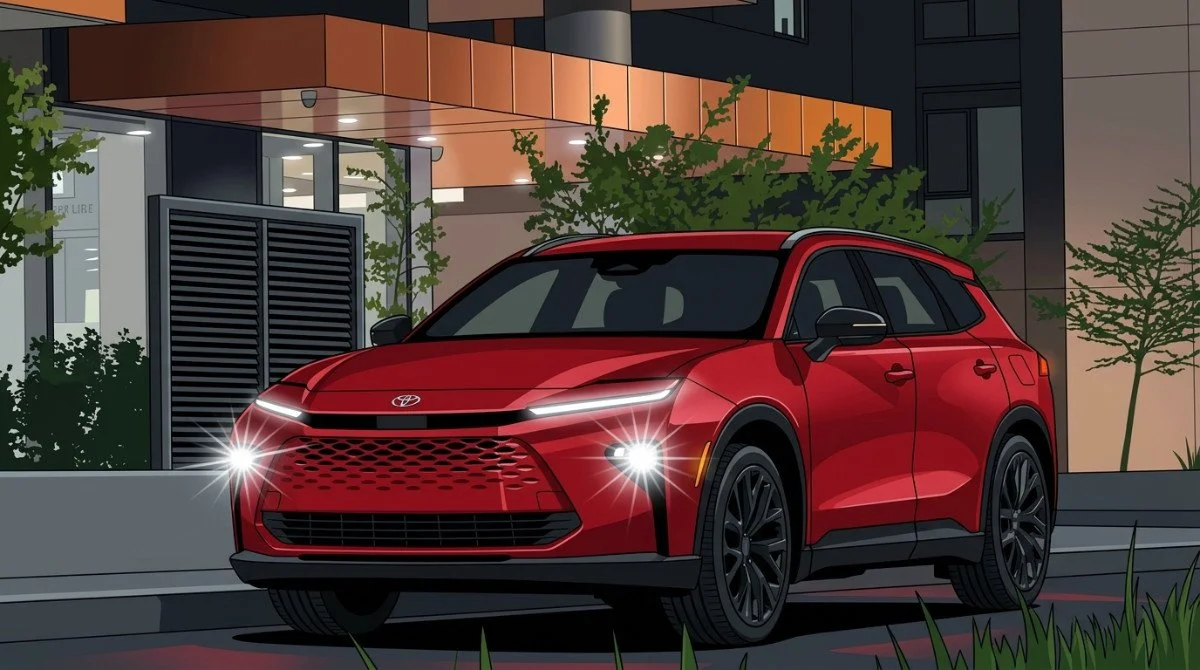
Toyota and Lexus sold 124,000 electrified vehicles in August. It paid to have the right vehicles available at the right time.
The Energy Information Administration's September forecast puts gasoline at $3.84 on average for 2026 and $3.35 in 2027 as Hormuz flows recover. A buyer signing a five-year car loan has good reason to wonder whether $4.47 is a new baseline or a spike. And research from Busse, Knittel, and Zettelmeyer published in the American Economic Review found that car buyers discount future fuel savings at rates close to their loan interest rates. They are not being shortsighted. They are weighing risk.
A hybrid is a hedge. It saves real money if gas stays high and costs little extra if it does not. It needs no home charger. Residential electricity averaged 18.34 cents per kilowatt-hour in June, up 5% year over year, which chips away at the EV's running-cost advantage. And the buyers who did want a battery-electric at a reasonable price found one on the used lot. Used EV sales were up 10% year over year in July, one of the few bright spots in the data.
What the lot decides
A market's response to a price shock gets set months earlier, by whatever happens to be sitting on the lot when the shock arrives. America did not reject EVs in 2026. It ran out of affordable ones. The hybrid, a technology Toyota never stopped building, caught the wave.
That lesson goes well beyond the car business. Any company that builds its product mix around the current price environment is making the same bet Detroit made in 2025: that next year will look like the last calm one. The companies that came out ahead in 2026 were the ones that kept a hedge on the shelf.
In 1979, the last time an Iranian oil shock hit American drivers, a foreign competitor had the right car ready to go, and Detroit spent a decade paying for it. That history, and why it rhymes uncomfortably with 2026, is Part 2.
Pfanner Advantage works with clients to turn change into advantage at the intersection of mobility, motorsport, media, technology, and marketing. Learn more or start a conversation: contact us today.
More Cold Read Insights from Bill Sparks:
Part 8: State of the Art Branding Case Studies
Part 7: How the Ad Industry is Reinventing Itself
Part 6: AI and the Personalization of Brand Narrative
Part 5: Building Brand Loyalty Through Community
Part 4: Independent Creators as Brand Storytellers
Part 3: Brands as Publshers: The Rise of Owned Media
The Advantage Journal arrives every week. What matters in sport, mobility, media, and technology — curated and contextualized by Bill Sparks, Bill Long, and Paul Pfanner. No hedging. No filler. Subscribe — It’s Free