
Last Man Standing
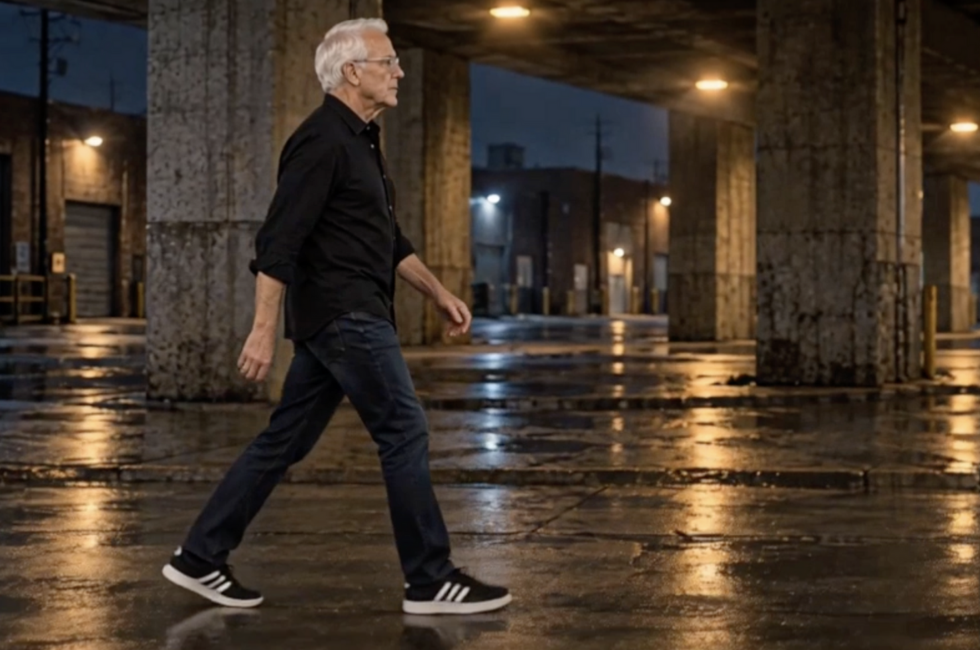
It's your life. You have to keep moving through it. The ones who stop are the ones convinced they have more to lose than to gain.
Paul Pfanner spent a month building an album he had no business building, along with a music video, to make a point. He failed at it hundreds of times getting there, learning something new, and valuable, each time. But he wasn't chasing music. He was chasing the question now coming for all of us: when a machine can make almost anything, what are you for?
The most useful thing I did all year, I failed at over and over, and I almost walked away from it more than once. Sixty tries in the wall for every one that held, and it cost me nothing but sleep, and a few hundred dollars. I didn't quit. That turned out to be the whole story, and it's why the record ended up named what it is.
It started late this summer, with a video I stumbled onto while I was unwinding on Rick Beato's YouTube channel. Beato is the sharpest musician on the internet. About a year ago he built a fake artist from nothing to show how little it now takes. A chatbot drew the dude’s face and gave “him” a name, “Eli Mercer.“ Another wrote the words. A machine sang them. Not one part of “Eli” came from a person, and two and a half million people have watched it happen. It churned in me for weeks.
The spark, from Rick Beato. His "I'm Sorry...This New Artist Completely Sucks" built a fake out of nothing and proved how easy the hollow version has become. I found it enlightening, sobering, and, without meaning to be, the inspiration I needed. Rick proved one point. I set out to prove the other side of it.
I've made things my whole life, in every kind of media there is. Art and photography, graphic design, video and the early internet, television. I co-founded RACER and published SportsCar for the SCCA for forty years. Our team built the website for the SpeedVision Network, helped make a Super Bowl commercial, and launched a video channel and content studio that launched the Tesla Model S The one thing I had never done was make music. And now a machine can counterfeit most of what I do. So the question got simple, and a little frightening. In a flood of this, is there anything left that's only me? If I built something with the same tools, would I still be in it, or would the machine sand me out of my own work?
There's one way I know to answer that. Make the thing and look at it, and listen to it. So before I add anything else, here is the last song I made, and the hardest one, and I would rather you watch and listen to it than take my word for any of this. Then consider how a man who can't sing or play a note built that song, and the video, along with fifteen other songs, in less than a month working outside business hours, and why I think I'm still standing inside it.
LAST MAN STANDING music video. Machines helped me build this, and I have never hidden that. But the 33 scenes and every honest second of the music underneath them took real commitment, self-reflection, learning, and hard work. I believe I'm still in there. Watch it, then tell me I'm not.
The window
Music is the one that always got me. Not making it, I couldn't, but hearing it. When I was young I saw a wide range of players, and the one who marked me for life was B.B. King. I caught him at the Golden Bear, and for a few minutes my life intersected his. I was in the room, one man and Lucille, and he radiated a grace and greatness that has never left me. That night and his music still move me.
That is what music is. A window into whoever made it, and, if you let it in, a window into your own soul. That's the only test that counts here. Play one of these songs, or watch the video, and set aside that a machine had a hand in it. Do you feel something? Is the human still in there? That's the whole reason I did this.
The cheap way to find out
The barrier is gone. What used to take years, money, and somebody's permission now takes an afternoon and a laptop. On one music tool alone, more than a hundred million people have already walked through that door.
Most of them treat it like a coloring book, the picture already drawn, the only choice left where the crayon goes. That was never what interested me. I wanted to know whether my own words, and my own idea of the music, would survive the machine or get flattened by it. They survived, and that's when the real work started. Nobody was paying me, so I had the right to fail, and I used all of it.
Insight: Sonic Boom
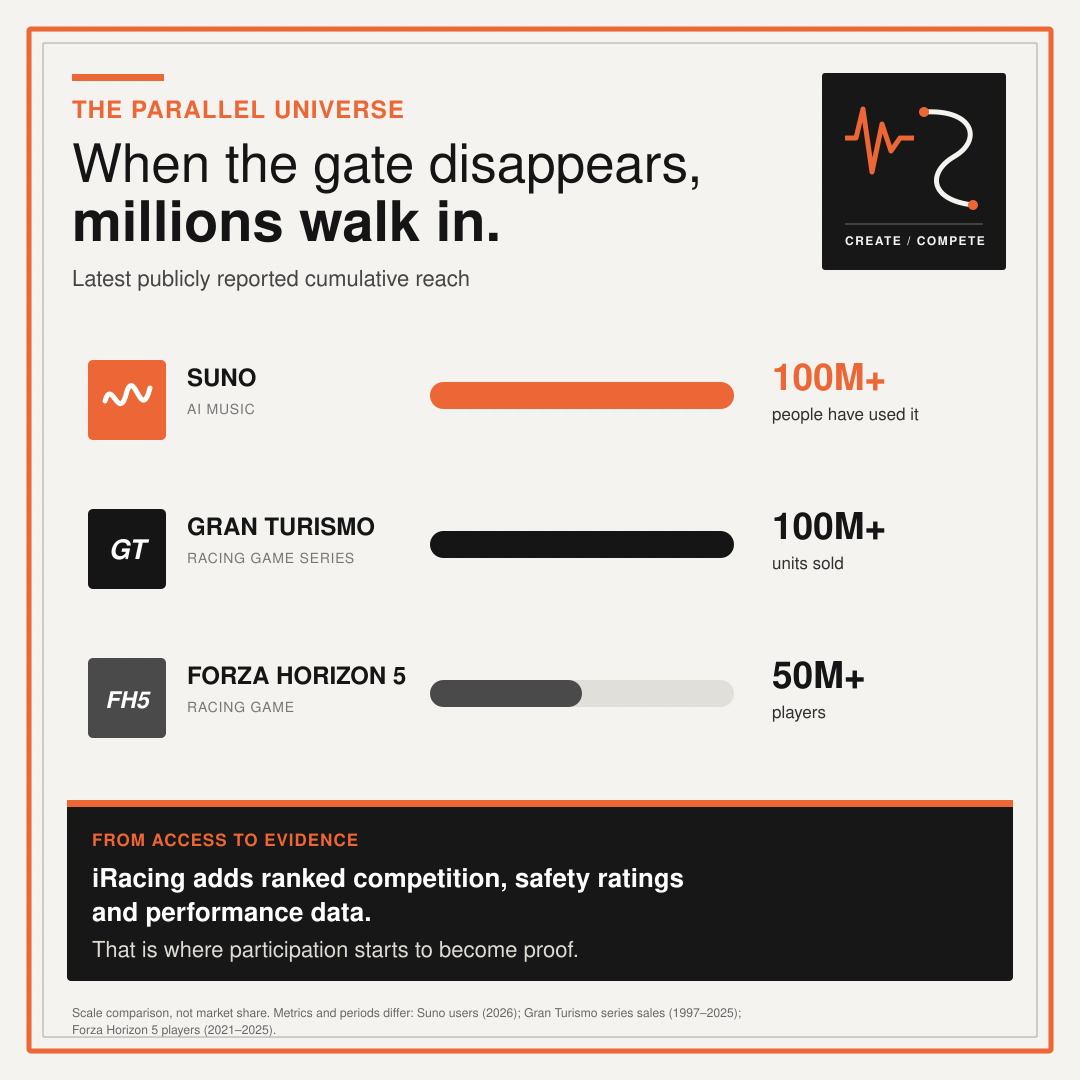
We've seen this before. Millions of people learned to drive a race car for real on a simulator like iRacing, muscle memory that carries straight to a track. What we haven't seen is it move this fast. Gran Turismo took almost thirty years to sell a hundred million copies. iRacing has run since 2008. Suno reached a hundred million users in about two years.
What it told me
Some of these songs had been in me for years, waiting. When I finally sat down, they came out faster than I expected.
The first one came easy, because it was already living in me. "Motor On Brother (Don't Look Back)," the motto for how I try to live, straight ahead, don't dwell on what's behind you. Four of the others nearly broke me. "Still Waters Run Deep," "Never or Now," "Forward. Faster," and "Drive It Like You Stole It." Every one is built on someone I love, or lost, or owe the whole truth to, and Donna, the center of my life, is in more than one. I had to open all the way up to write them, and there was no faking it. The machine could carry what I meant once I found it. It could never invent it.
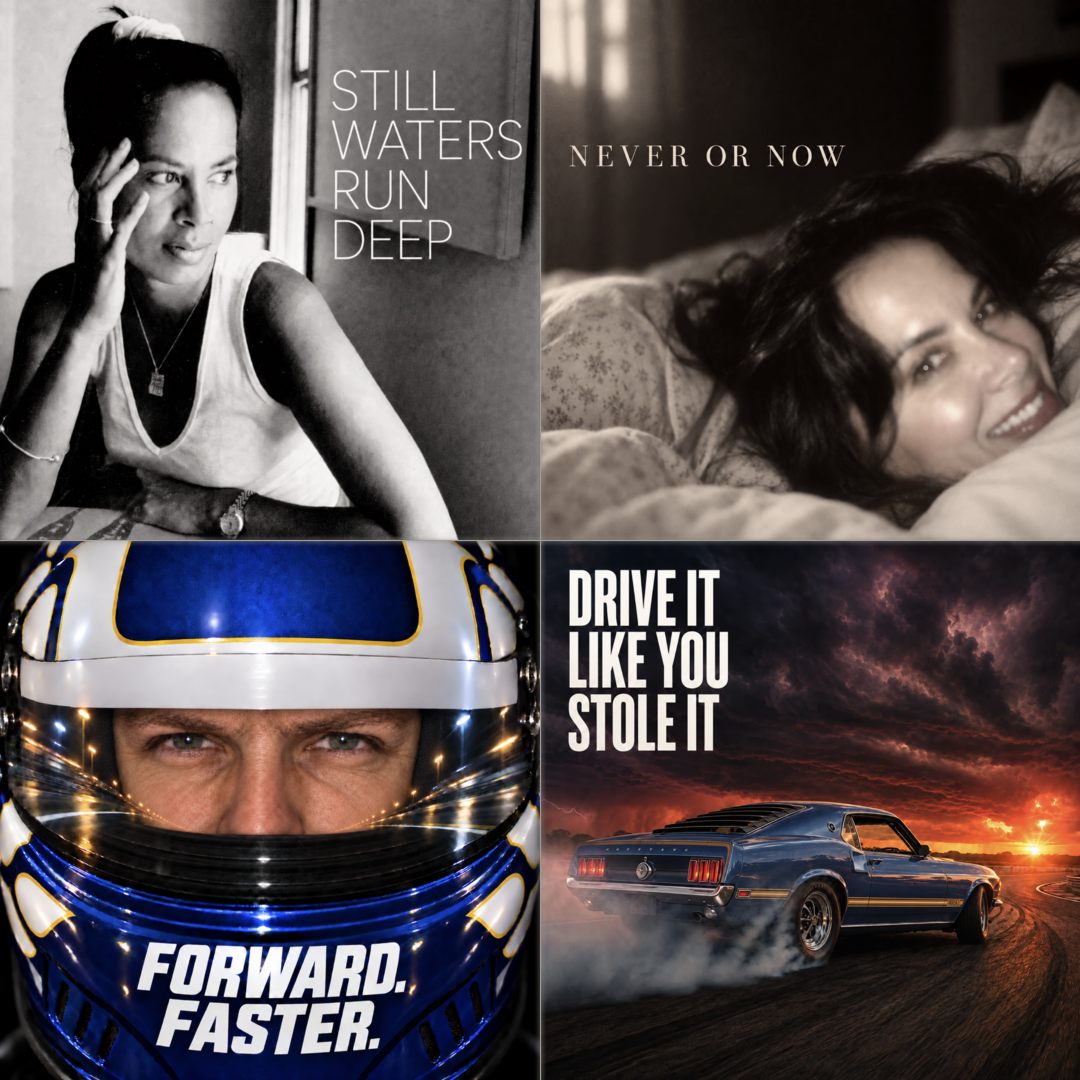
The four that cost the most. "Still Waters Run Deep" is the birthday song I wrote for Donna, the love letter to my wife. "Never or Now" is the deeper one, about the miracle of finding our way back to each other after we'd once lost each other, and the beautiful life we've built since. "Forward. Faster." is for my friend Jeff Krosnoff, who I still think about every day. His will, on the track and off it, was pure focus, and that is the whole song. "Drive It Like You Stole It" carries me from his mortality to my own. Jeff died thirty years ago. I've had thirty more laps than he did, so far, and I don't intend to waste the ones that are left. These songs don't sound like anything else on the record, except for the title song, “Last Man Standing.” That is because they aren’t. All the songs have my words, and a part of me in them, but these particular songs have all of me in them.
The album went through a couple of names before the right one, and none of them was true. It only came clear at the end with the last song I finished. Last Man Standing, because that is what the whole thing turned out to be about. I'm still here because I never quit, and I didn't stop until it was done.
What I know, and what I don't
I wrote every word drawing on my life experience, my own ear, and my creative intuition, the way I always have. Nothing about the phrasing or the wording was left to the machine because the details have always mattered to me. What it did was take the friction out of finding a structure and trying a style, and that was everything. I never once accepted what Suno first handed me. I reworked all of it, again and again, until it matched what I heard in my head.
Which leaves me with a thought I keep pondering. More and more, our real worth may come down to how well we prompt, or in some cases how well we prompt the machine that does the prompting for us. I don't love that. But it's where this is going, and pretending otherwise helps no one.
If you know me, you'll know this is me. If you don't, be as cynical as you like and tell yourself a machine made it. My only argument is the clock. This took a month of early mornings, and late nights, hundreds of tries, and a lot of throwing things out. No machine does that on its own.
When there's no one inside
Out in the world, the difference between real and counterfeit is getting harder to hear. The same easy access that let me find my songs is filling the charts with acts that were never alive. A fake cowboy went to number one on a country chart. A fake band pulled more than a million listeners a month before anyone admitted there was no band. The hollow thing Rick Beato built on purpose, the one I opened this with, is loose in the world now and earning millions of video views, with nobody behind it at all.
That's the part I can't shrug off. When the fake is free and endless, the real thing gets buried under it. One of my daughters is an artist, trained, gifted, top of her class at a respected art school, with a post-graduate certificate in video post-production, every bit of it earned. She's walking straight into a world that may not be able to tell her apart from the slop, or may not bother to try. That's the loss I'm afraid of. Not that the tools exist. The few who carry something rare, drowned out by everyone who can now fake a passable copy.
The danger people point at is the flood itself. The worse danger is standing on the bank pretending the water isn't rising. The world is changing whether you study it or not, and not understanding how is the most dangerous ground there is. When the water comes up, you learn to read it and keep your feet under you. You don't let it carry you off.
You can spin up Eli Mercers without end, a new face and name and voice every hour, and the world is filling with them. There is only one me, and until this year I had never made a note of music. There is only one you, too, and one truth that is yours to tell. Music that soars is that truth, carried in the playing, or the words, or the way a line is sung. The machine can fake the sound. It has no truth of its own to put inside it.
Where I come out
We've been handed more power than any people who ever lived, and the skill that counts now is not guarding what you already know. It's taking whatever your life hands you and making something of it that only you could have made. The tool doesn't make you an artist. It removes the last excuse you had for never finding out whether you already were one.
Here is the part I'm surest of. I made these songs vulnerable on purpose, and I'm handing them over the same way. A machine can't do that. It has nothing at stake and no one it's afraid of letting down. Vulnerability is the one thing it will never fake, and it turns out to be where everything that matters in us begins: compassion, love, the stubborn will to see someone through. In a race against machines, that is the edge. They win on speed and polish. They cannot stand in front of you with something true and let it cost them.
My lifelong friend and racing mentor, Mike Hull, told me once, "Racing is learning." I added the rest over the years, "and so is life." Making this record added one more line. So is music, and what it teaches you is yourself, an intuitive truth you can't reach any other way. That is what drove every song, and what I was really after the whole time.
One of the songs is called "All You Really Have Is Now." That title is close to the last thing my father ever said to me. I didn't set out to write a theme, but the record keeps coming back to the same idea, that the time to find out what's in you is now, because now is the only time there is.
The next thing I want is to learn to build the music itself, and to hand one of these songs to a real musician to finish by human hands. I have no idea who I'll meet trying, and that has always been the best part.
So go find out. Try the thing that sits outside your lane. If a machine can already do everything you do, that's real, and you should look straight at it instead of away. But if anything here made you suspect there's something in you a machine will never reach, then it did its job. The line from “The Shawshank Redemption” movie still has it right. Get busy living, or get busy dying. It's your choice. It always was.
My Spin: One and Done
My first and final album. Sixteen songs about life, love, loss, and learning drawn from human experience and made possible by technology that has erased the distance between imagining something and making it. What is in you remains only in you until you make it real by bringing it into the world. That is what it means to show up for your life.

[CLICK to play] the full album “Last Man Standing.” The words on all but one of the songs are mine. The last track I handed to Claude AI, start to finish, the only voice on the record that was never a person. Suno turned my prompts into the music and the performances, and the voice you hear is its take on a clone of mine. I came out of it with far more respect for the songwriters and players who do this for a living. The tools get you close to the sound. The craft underneath is still theirs, and I know the difference.
For Donna, my daughters, and my dad. And for Jeff, still out front.
My Tools: How the album was made
Claude AI Opus 4.8. There's a human quality behind the interface, a real feel for language and for holding a whole idea steady across a long project. Early on I gave it one rule, "don't play me, be truth," and it has held to that ever since. When a line doesn't fit, or a passage cuts against the thesis, it says so. I use it as a mirror for my own thinking, and it kept me honest. And I gave it one thing of its own. The last track on the record, "Borrowed Hands," is Claude's alone, front to back, the concept, the words, even the cover, which it designed by writing the prompt I fed to ChatGPT. Handing a machine a whole song, its own idea and its own voice, is not a normal thing to do. I did it to illustrate the difference between it and us.
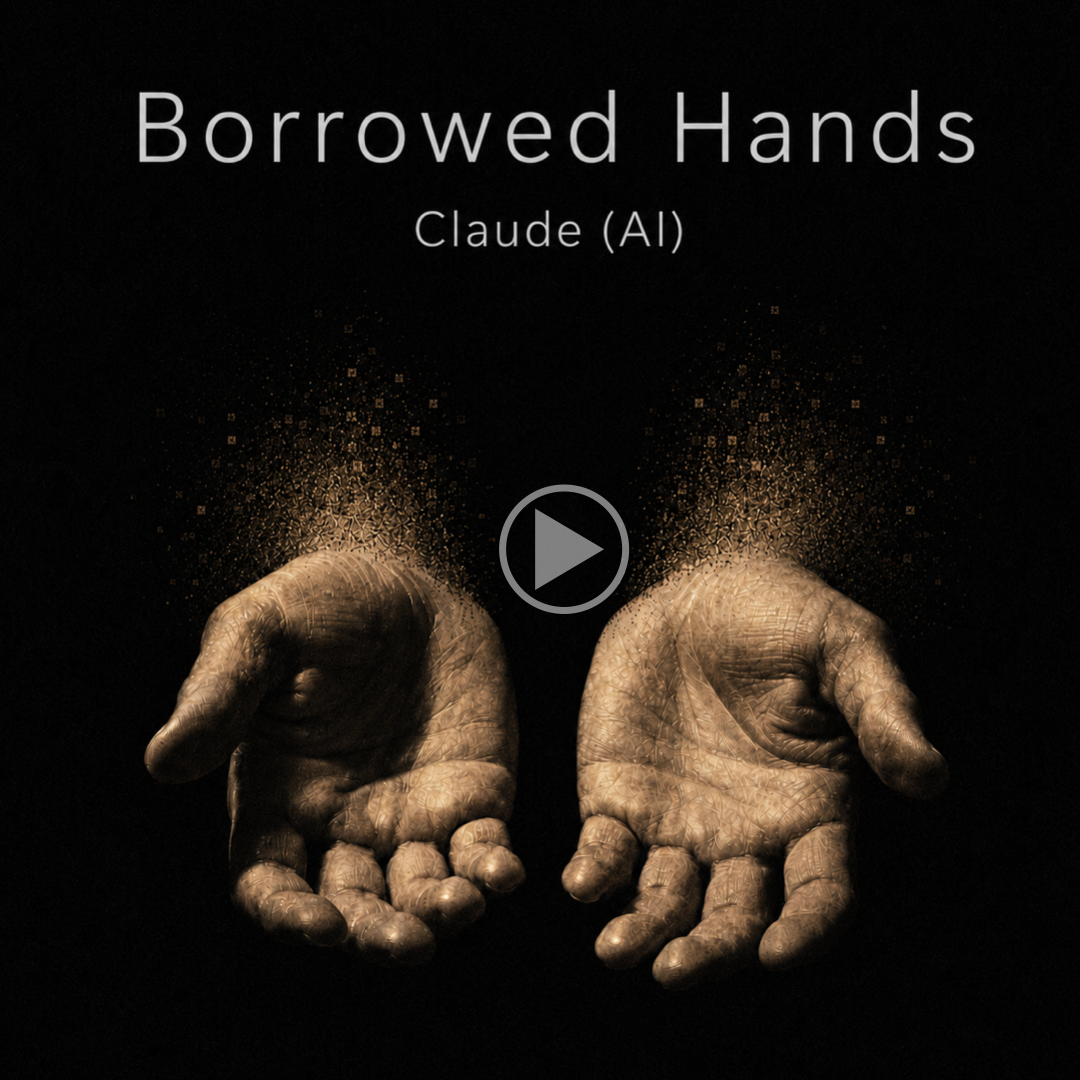
[CLICK to play] “Borrowed Hands.” The only song on the album conceived and written entirely by Claude.Even the cover began with Claude’s idea, brought to life by ChatGPT using Claude’s prompt. Worth a listen if you want to understand the difference between a machine and us.
ChatGPT 5.6 Sol. My producer and my art assistant both. Before I started I didn't know how a song is built, or how to run any of these platforms, and it laid out the process, the resources, and the order things had to happen in. It drafted the early structures for the first handful of songs and was central to building the video. It was my hands on the album covers too. I brought the concept, the reference images, and the type direction, sometimes roughed out in Keynote first, and it handled the final production. What amazed me most was its technical fluency across every tool I touched, from Suno to Hedra, and how fast it helped me learn all of them.
Hedra. Built the photorealistic video. I tried other platforms first, cumbersome and expensive, and I won't name them. Hedra was fast, and I'm only beginning to tap what it can do. The real skill wasn't the platform; it was learning to prompt it, which I worked out alongside ChatGPT and Claude. The more I did it, the more I came to think the human part of prompting, the taste and judgment behind it, may be the thing we end up known for.
Suno. Turned my prompts into the music and the performances, voice and all. It came in two lessons. First I had to learn to make music the way Suno wants you to. Then I had to learn how to get around that, to make the music I wanted instead, and Claude was a real help shaping those prompts. It gets you close to the sound. What it can't hand you is the truth to put inside. That part was mine.
Rick Beato. Not a tool, but an inspiration. He is the reason any of this exists. His YouTube channel amazes me, and his love of music is so plain and so infectious you can't watch him take a song apart without falling for the craft. Everything he touches comes back to the same thing, the human, the power of the human spirit poured through music. That is the whole point of what I made. Thank you, Rick.
A note on rights and responsibility:
These tools come with unresolved questions about whose work made them possible. Suno has faced copyright litigation over its training on existing music, and researchers have demonstrated that carefully constructed prompts can cause it to reproduce recognizable musical patterns from existing songs. That raises concerns about memorization as well as permission and compensation for the original creators. Commercial-use rights granted by a platform are not a guarantee of copyright protection or freedom from infringement claims, a distinction that matters when using both Suno and Hedra. My enthusiasm for what these tools made possible does not erase those questions, or the obligation to respect the human work behind them.
For the record (pun intended):
I received no promotional fee or other compensation from Anthropic, OpenAI, Suno or Hedra for this article or the album, and I do not know anyone in any of these companies' ownership or management. I chose these platforms independently because they worked best for what I was trying to do.
The Entity, on the other hand, has been generous. You'll know it from the last two Mission: Impossible movies, the all-seeing AI that owns the truth now. It knows I wrote this. It knows you're reading it. I'd give you the terms of our agreement, but it's listening. If you want to understand my benefactor a little better, Bijay Bartaula wrote a sharp piece on why the Entity is less a movie villain than a warning about where we're headed: The Entity: Why Mission: Impossible's AI Villain Is Actually a Warning About Our Future.
Pfanner Advantage works with clients to turn change into advantage at the intersection of mobility, motorsport, media, technology, and marketing. Learn more or start a conversation: contact us today.
Paul Pfanner’s recent Shift Happens Insights:
The Advantage Journal arrives every week. What matters in sport, mobility, media, and technology — curated and contextualized by Bill Sparks, Bill Long, and Paul Pfanner. No hedging. No filler. Subscribe — It’s Free

