
I Love Mission S. Now I Want to See Mission P.
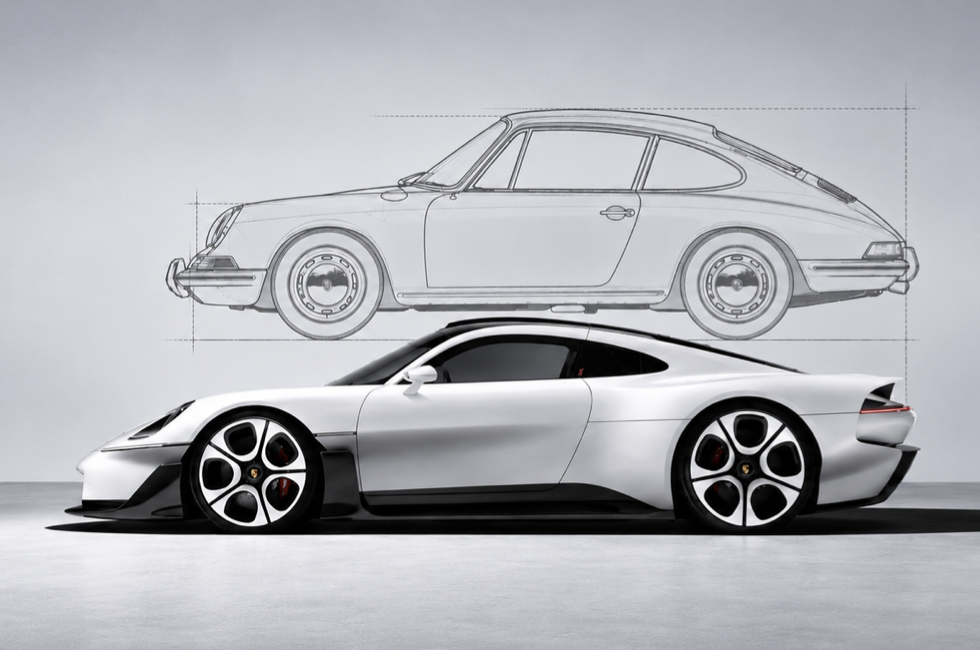
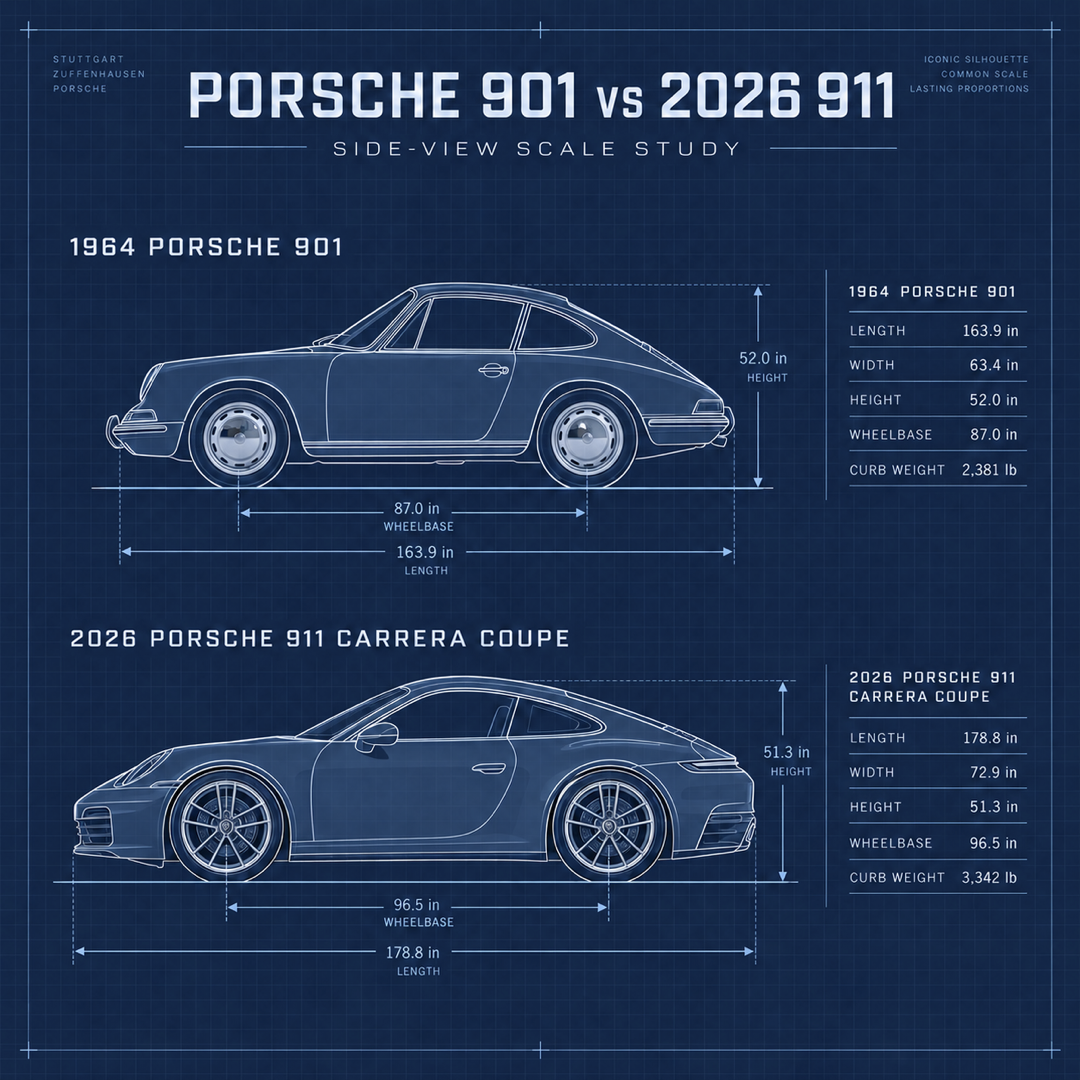
Here's where the iconic Porsche shape began, ghosted against where it's headed. The question is what got left behind along the way.
Porsche's Mission S is a beautiful piece of engineering, and Paul Pfanner loves it. It also left him wanting something smaller and lighter, so he got busy and imagined it. Here's Mission P, three concept cars and a few engine questions from an enthusiast. At the end, he'll tell you why Porsche has fueled his passion since he was eight.
What Porsche got right
Porsche is a dream machine. For millions of people around the world it stands for ambition, the car you promise yourself someday, and there's something very human about that. Porsches never felt designed by a committee. Each one began with an intention, and the intention was always a better and different solution. More often than anyone, Porsche has led the way to the future.
Like everyone else who loves these cars, I was looking forward to Mission S. Porsche revealed it in New York on October 15, the same day Tesla staged its Roadster show in Texas. I'll come back to that.
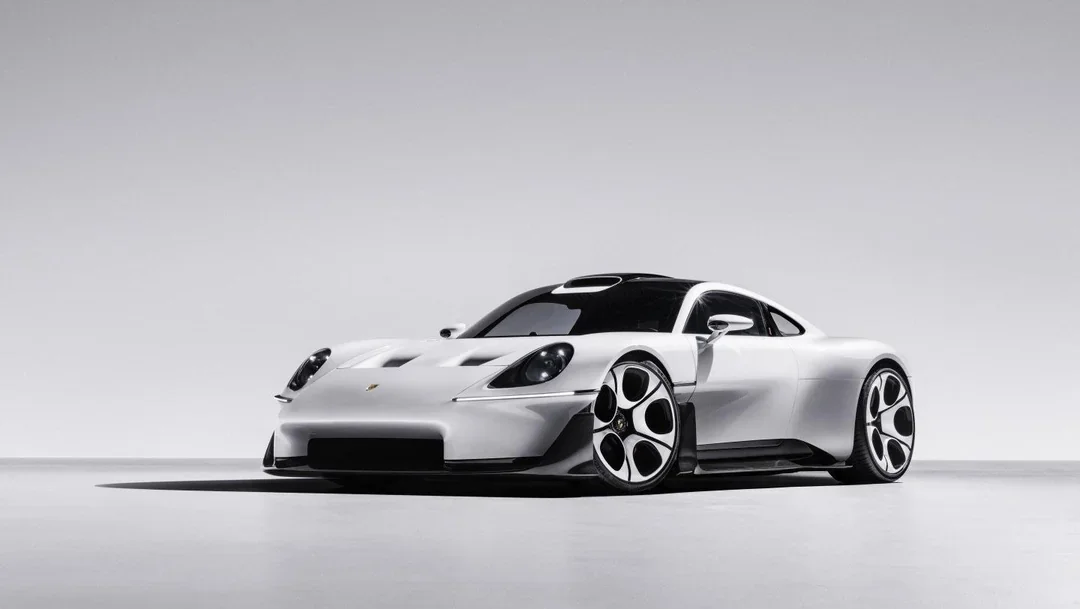
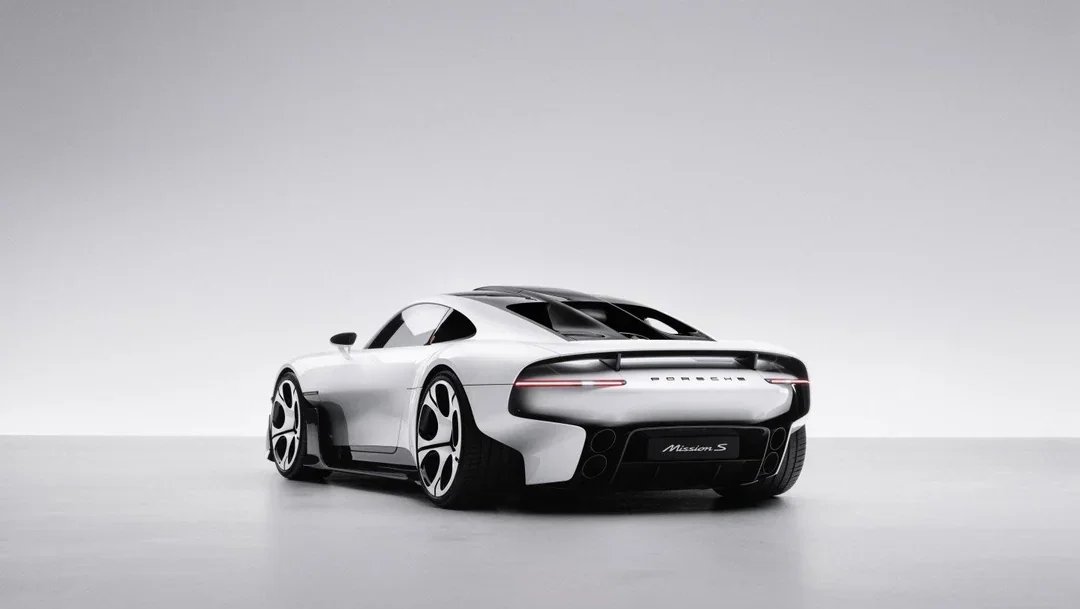
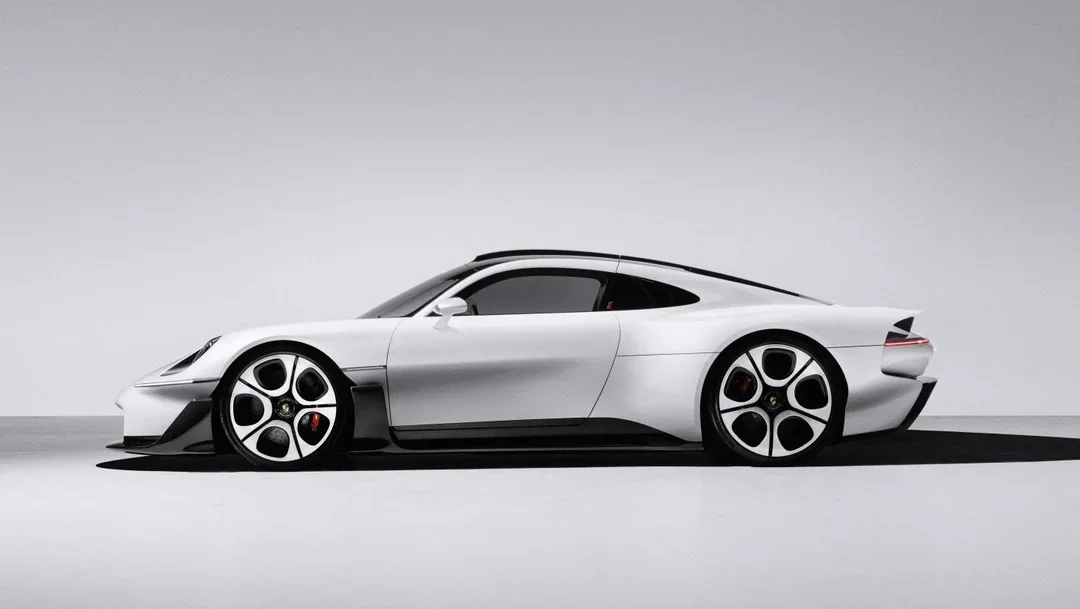
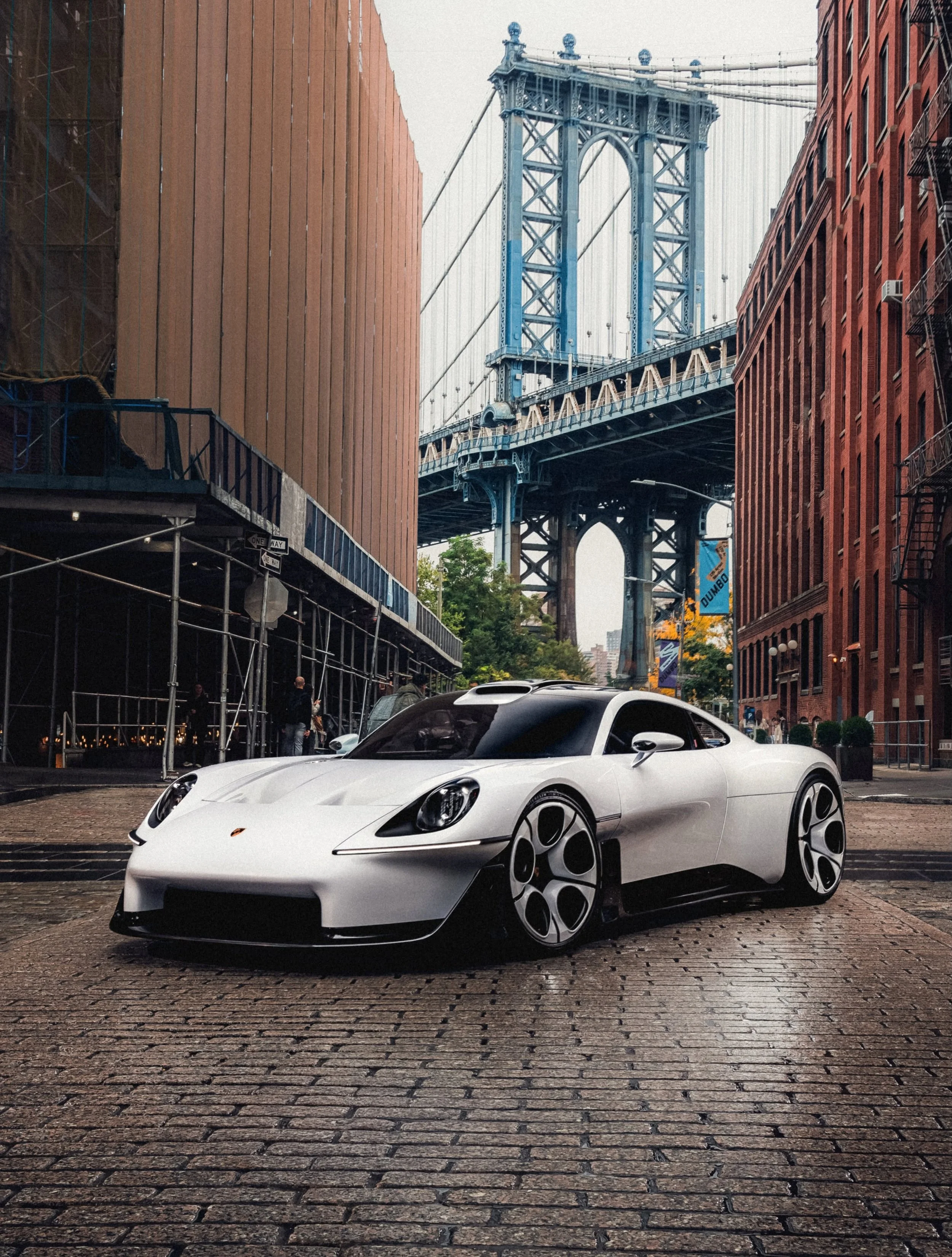
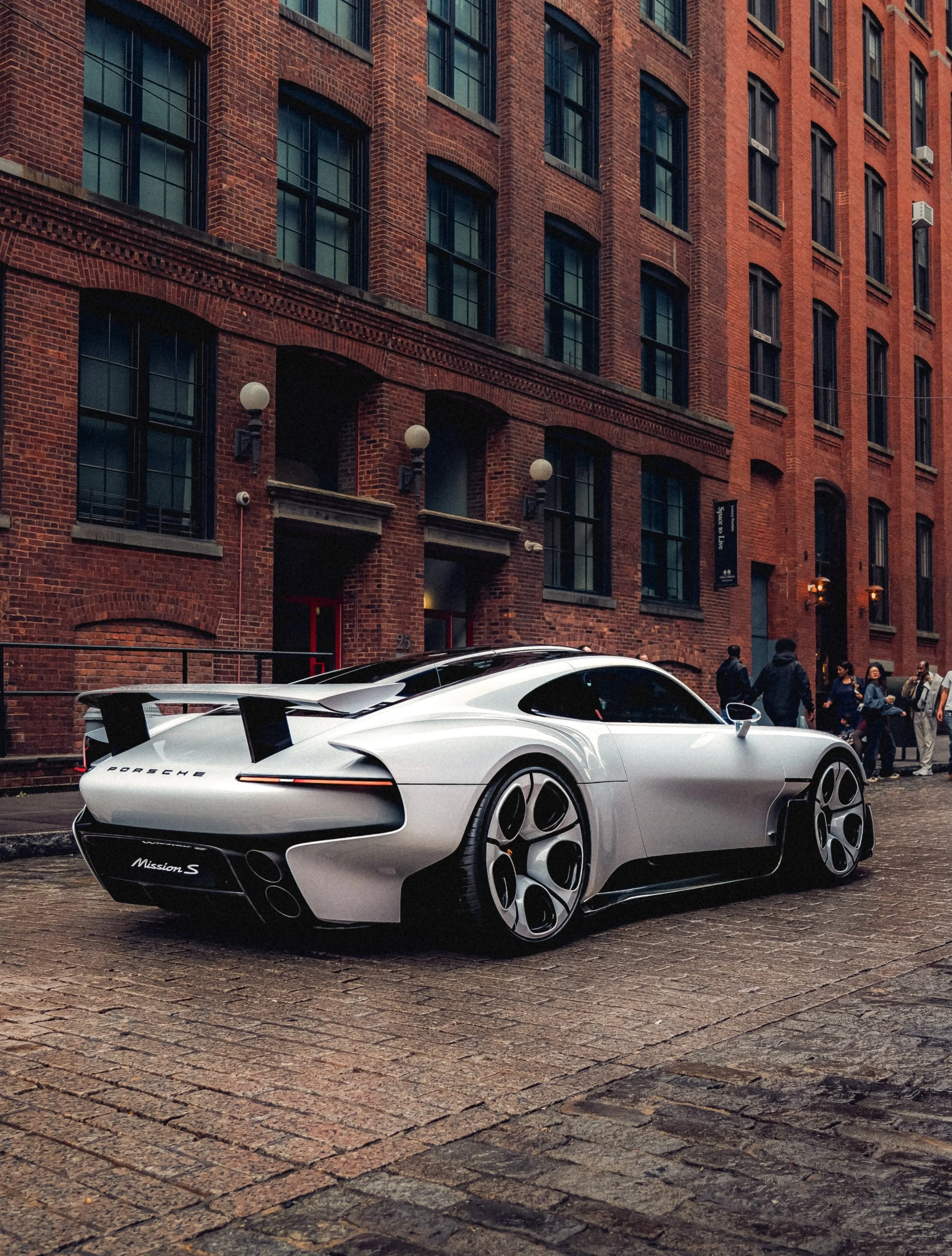
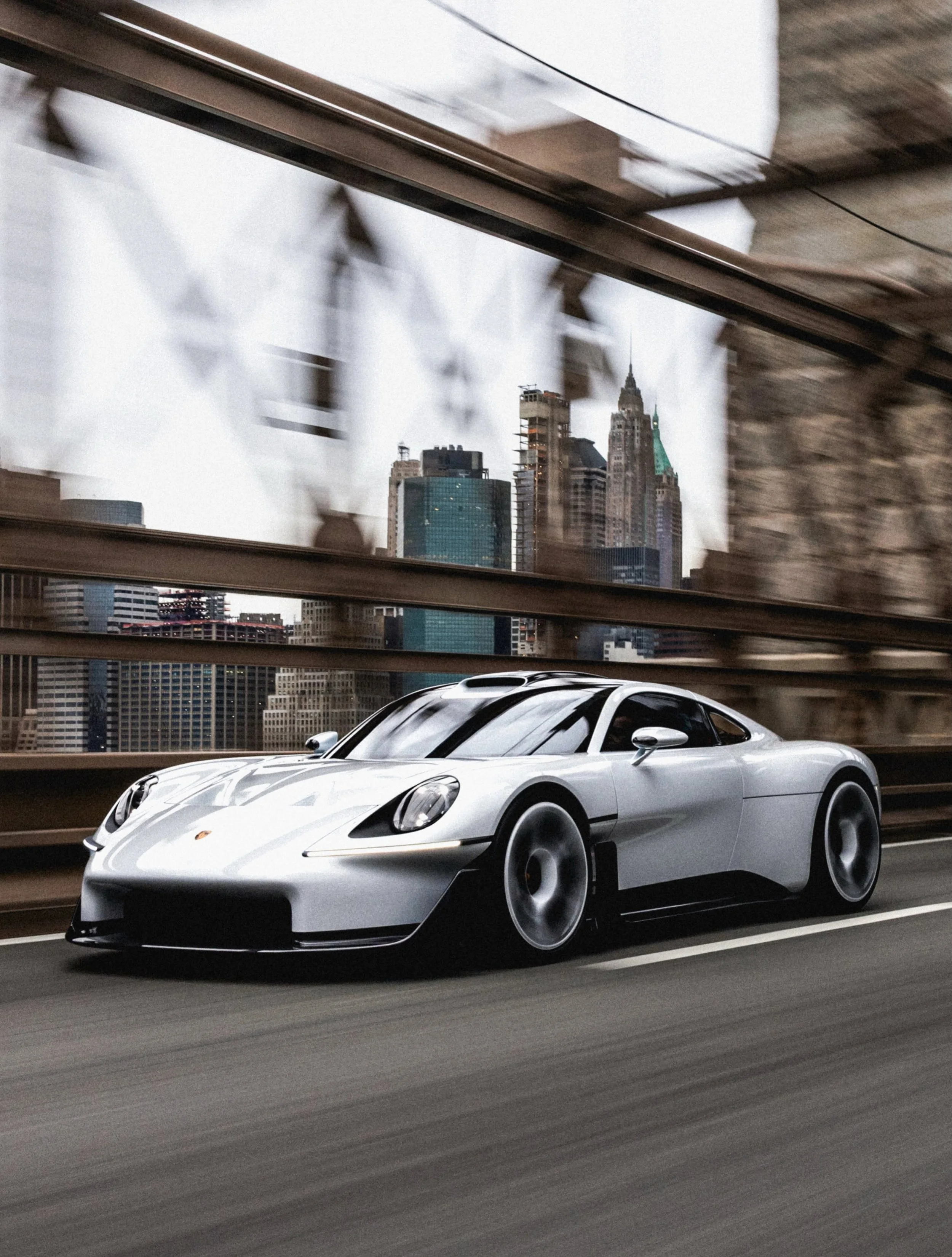
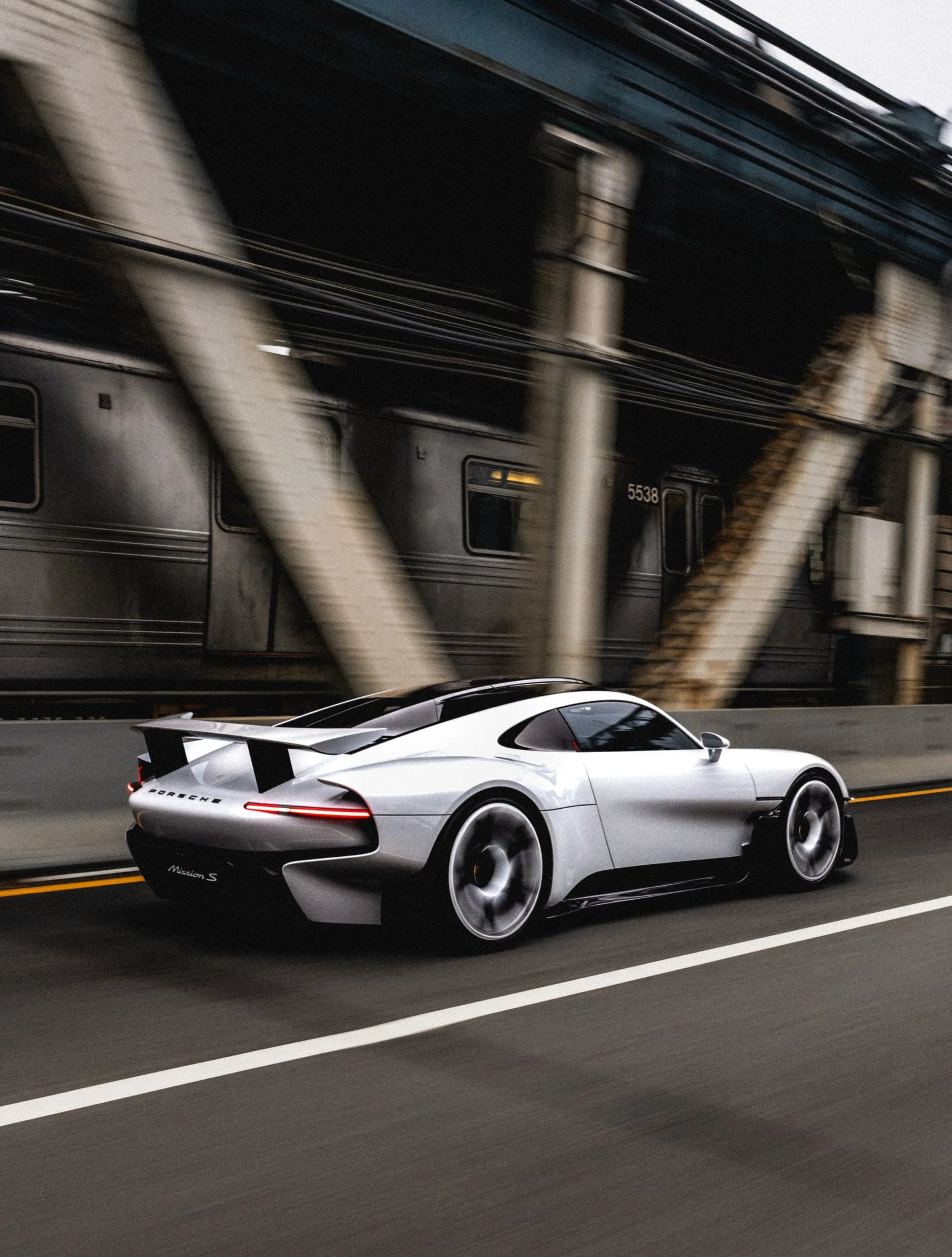
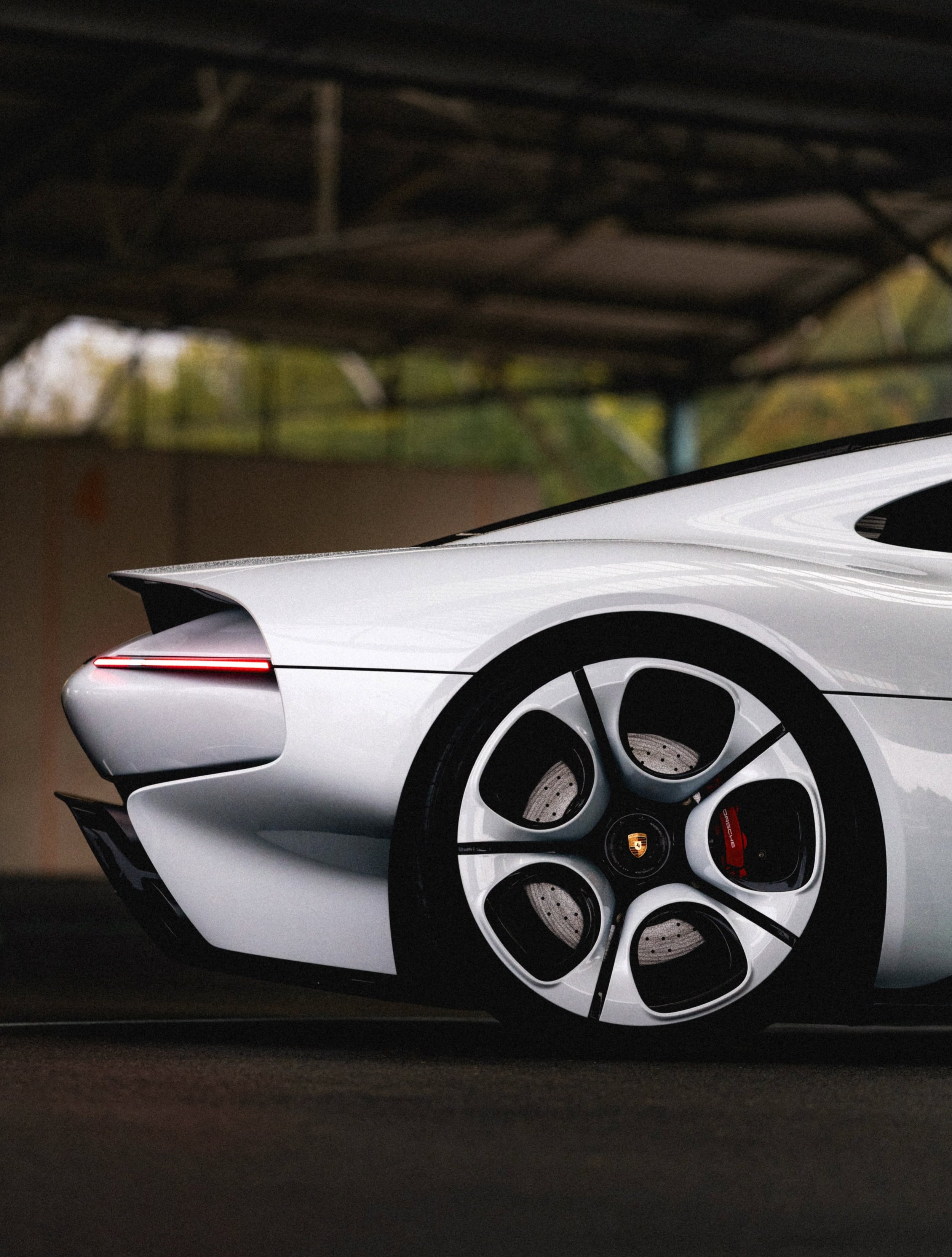
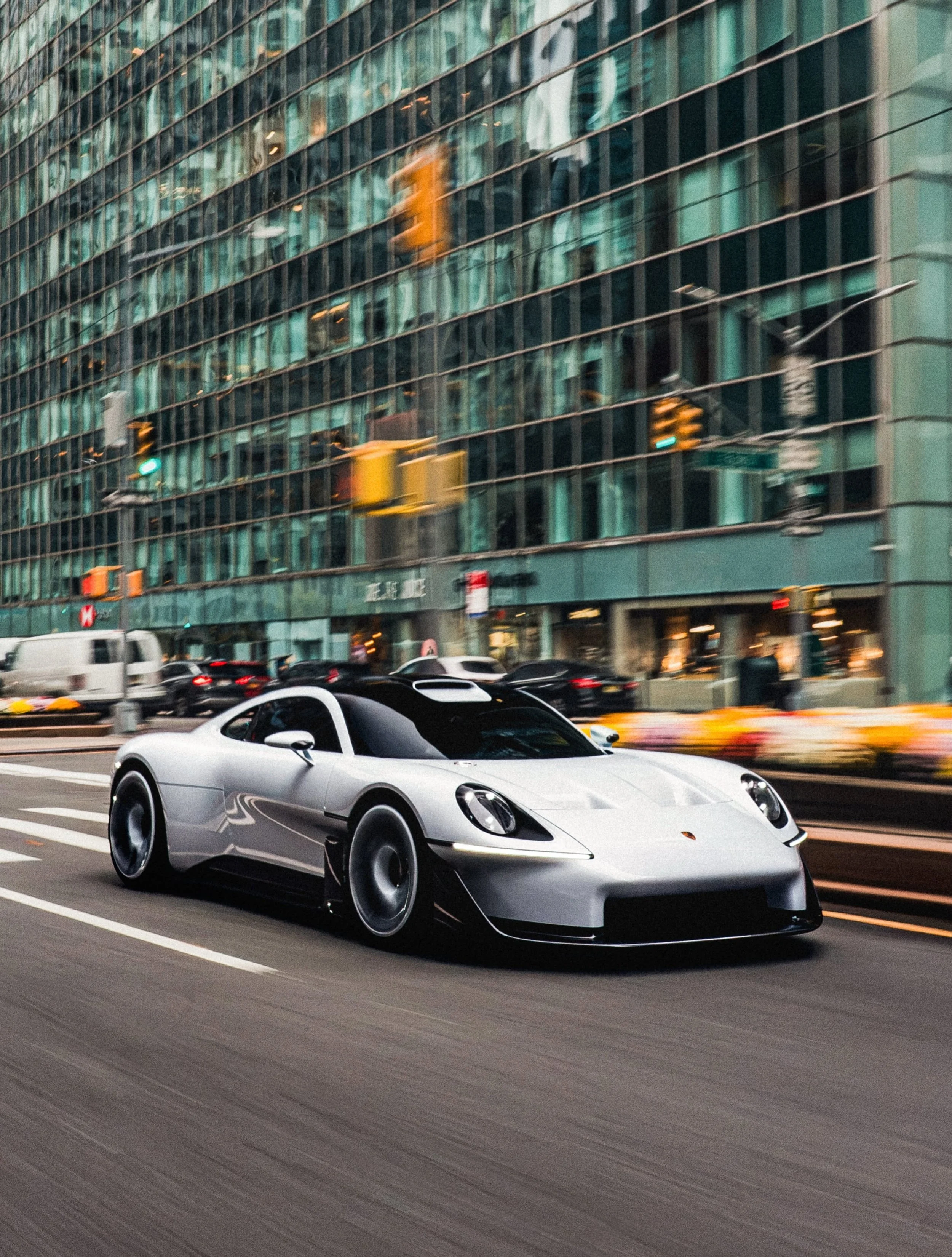
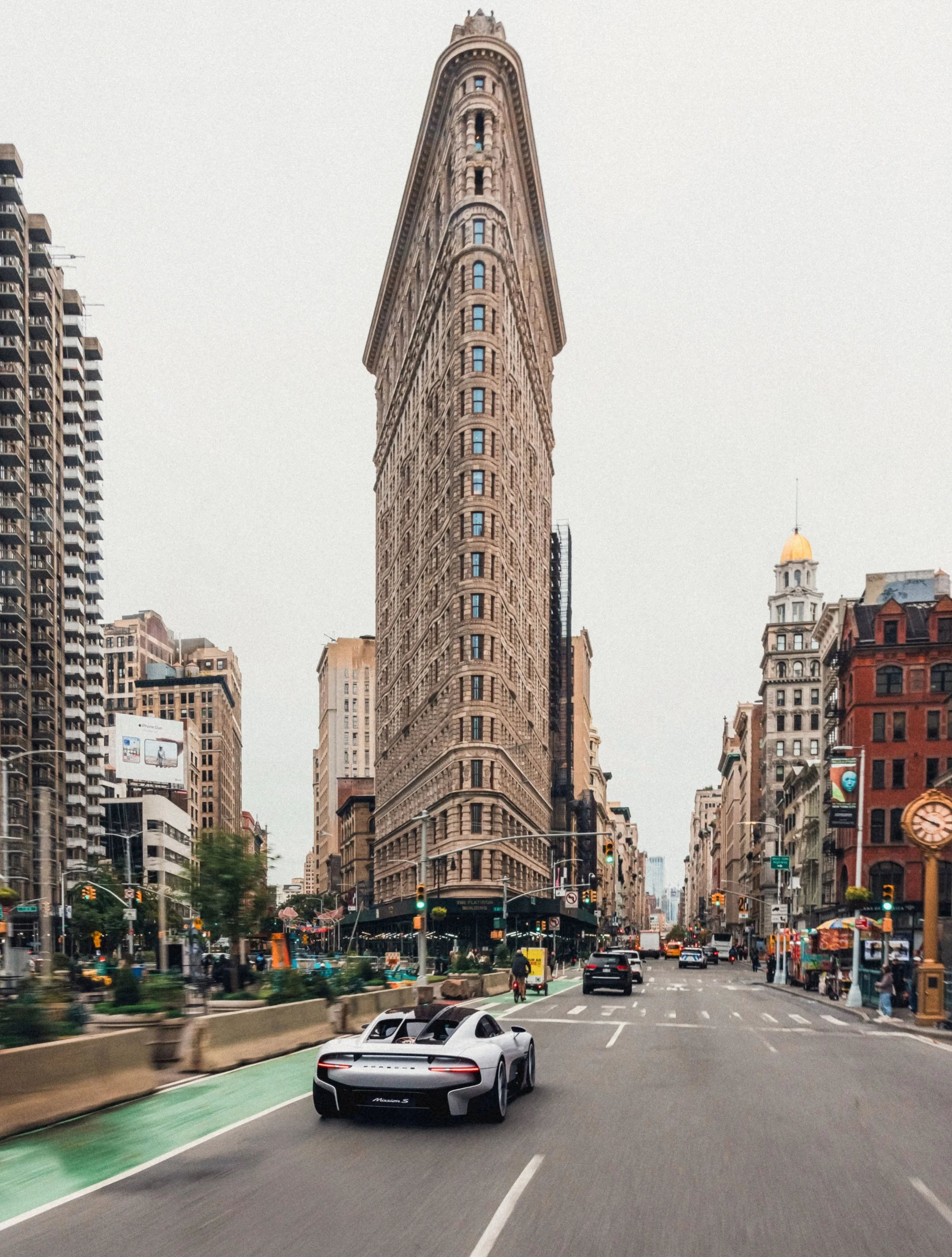
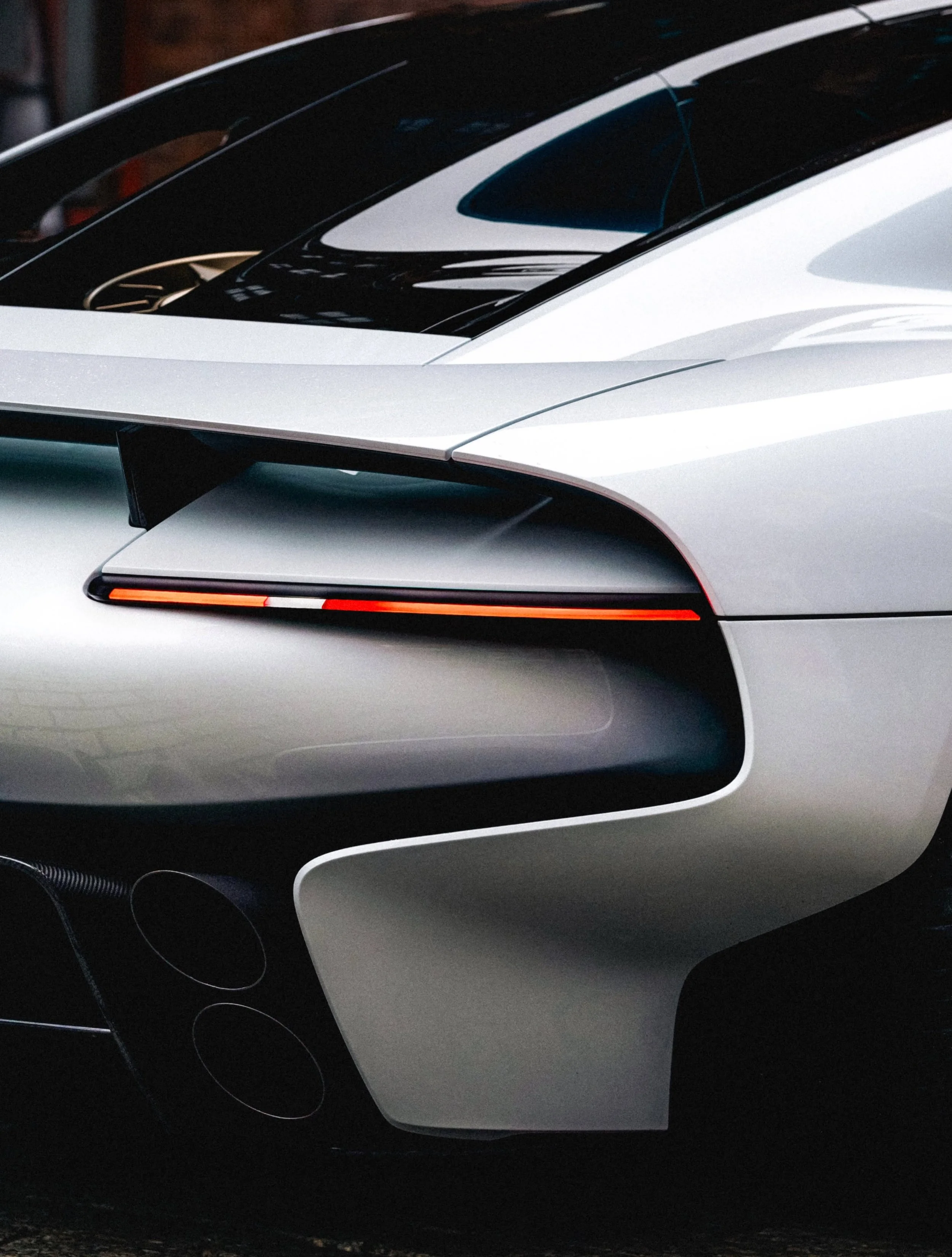
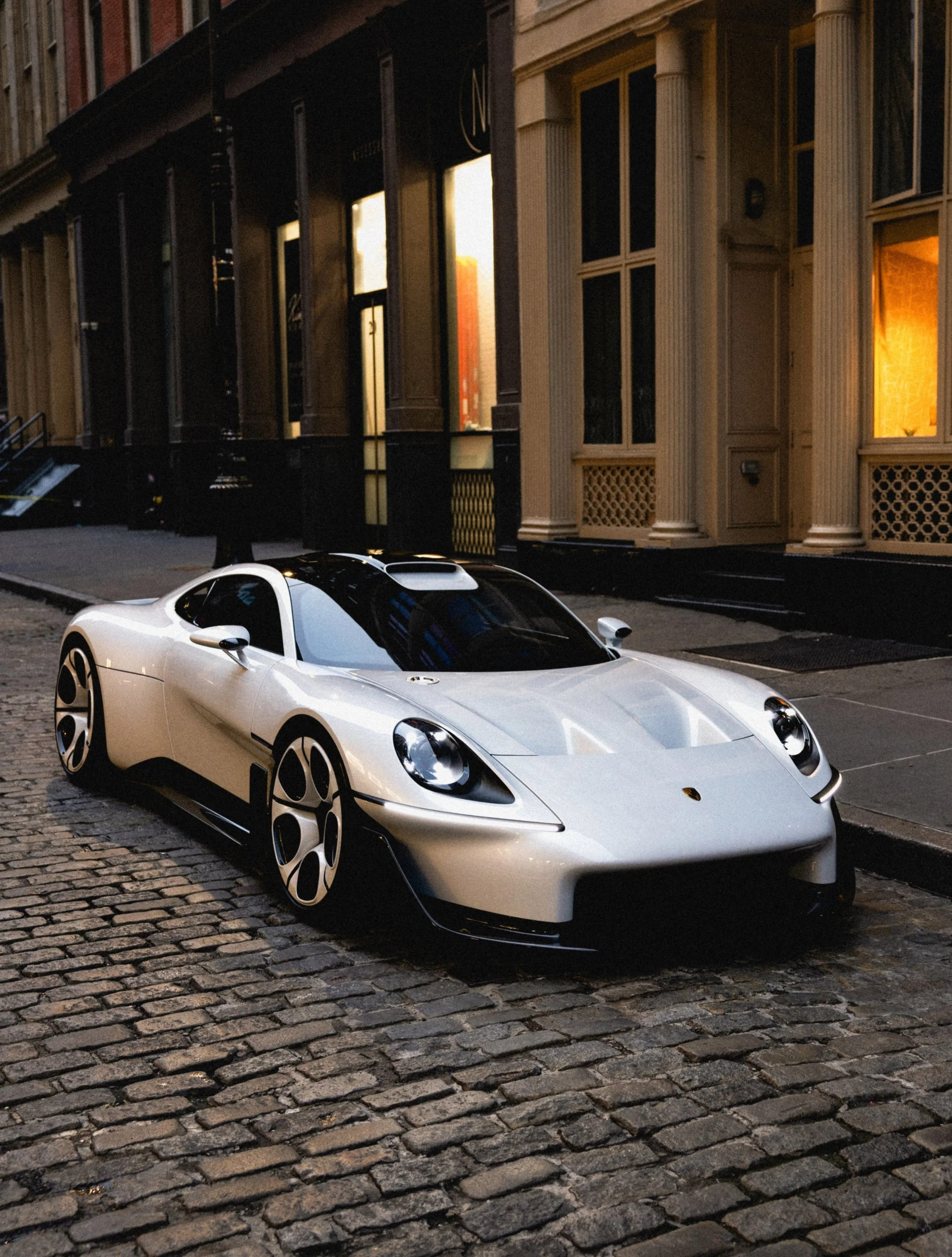

The Chrysler Building and the UN are right where they were in 1953. So is Porsche. Hats off to Porsche's marketing team, who went back to the same pier and let the history do the talking.
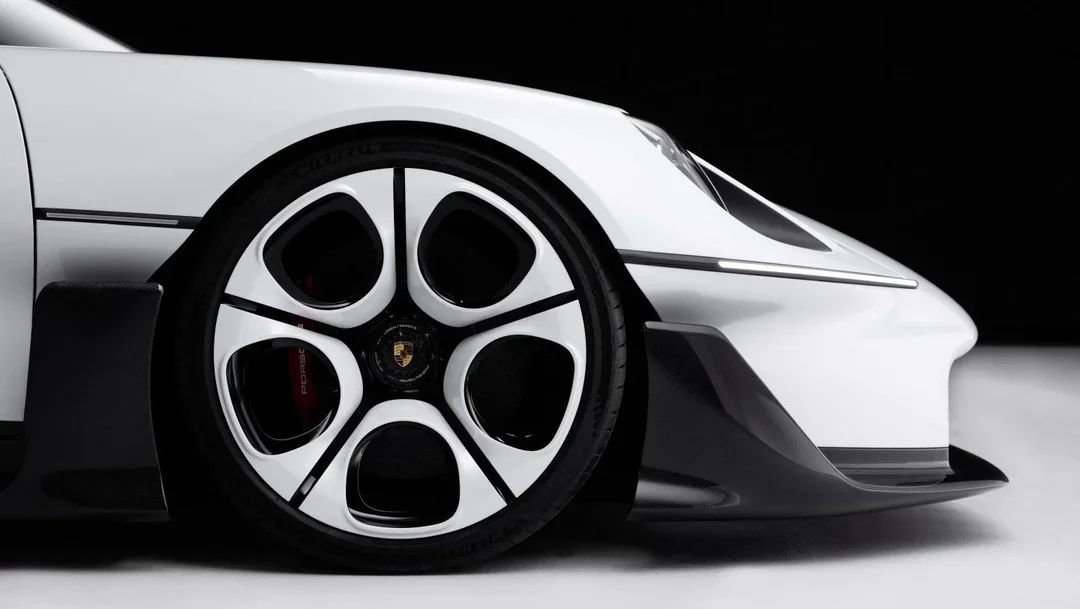
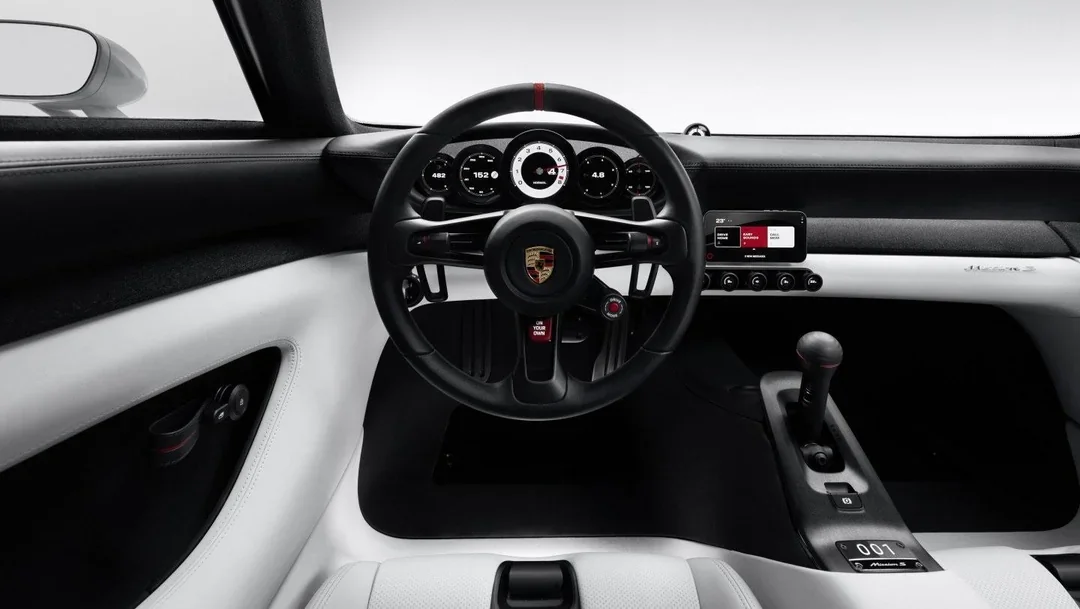
Mission S answers questions a lot of us have been asking. There's no center touchscreen. Five round gauges sit behind the wheel with a real needle sweeping the tachometer, and the key is on the left where it belongs. Porsche modeled the cabin on the 550 Spyder and the 356, and the buttons and switches are physical. Porsche hasn't said what's behind the seats yet, but the reporting points to a new flat-eight, and that's exciting to me. It's quite a statement, and very impressive on a number of levels. It's receiving positive reviews. I like it.
Now the other show. The same day, Tesla's new Roadster drove up a ramp until it hung upside down, flipped through the air and later hopped a row of parked Teslas on cold-gas thrusters, with nobody inside it. I wrote about that on Friday in I Saw What You Did There. It was a great show, a stunt staged to grab attention, and it got it. Porsche held a proper car launch, the kind where the car stays on the ground. It built something meant to be driven and enjoyed by a person in the seat. I know which one tells the truth about what a car is for.
Do I want it? That's the question. One, I can't afford it. Most people can't. It will sit above the 911 in the lineup, and that tells you about the price. It's a statement. I get it. I respect that. I respect the effort that's gone into crafting this car. It's absolutely a Porsche. But it's a long way from what a Porsche once was, and it leaves me wanting more. Actually, less.
A friend in a group text I've shared for years with people who design and race cars called it Porsche's greatest hits gathered into one car. He's not wrong. But every one of those hits began with an intention, and the shape came after. I keep wondering what Porsche would build if it went back to the intention.
The intention is the inheritance
The early Porsche didn't need to behave like a smaller Ferrari. It had its own answer: mechanical precision, agility, efficiency and an unusual sense of manufactured integrity. The 356, 550, 904, 906, 914 and 911 weren't built around the same architecture or appearance. Their inheritance was the approach to the problem, not a particular silhouette.
Somewhere along the way the cars got big. The first 911 weighed under 1,100 kilograms, about 2,400 pounds. Walk through Laguna Beach today and you'll see how large and luxurious Porsche's sports cars have become. They're astonishing machines. They're also a long way from the small car that captured me in my grandfather's garage.
Electrification was the warning. Porsche bet heavily on an all-electric future, the market didn't follow at the pace it expected, and the company has paid for it. Some of today's struggle comes from having to conform to arbitrary dictates, and from trying to anticipate a market that behaves nothing like the people who made Porsche what it is. I watched that wave build up close. In 2009 my studio, OnCars Studios, produced the film series that introduced the original Tesla Model S prototype, so I understand the pull. But a heavy car carrying a big battery isn't what a Porsche is.
Mission P: a different question
I welcome Porsche's return to driving purity through Mission S. But why must it take the form of a super sports car positioned above the 911? What might Porsche build if its engineers began with the original mission?
That question became an experiment I called Mission P. Imagine Porsche had stayed a small, confident builder of analog sports cars, uninterested in competing on scale or maximum horsepower. Give it today's understanding of materials, safety and manufacturing, and ask its engineers for the most satisfying sports car they know how to make.
I started with roughly the scale of the original Porsche, with room for modern crash structures. The priorities were modest mass, naturally aspirated engines, manual gearboxes, good visibility and responsive controls. I didn't want nostalgia, and I didn't want something that looked fast merely because it was enormous.
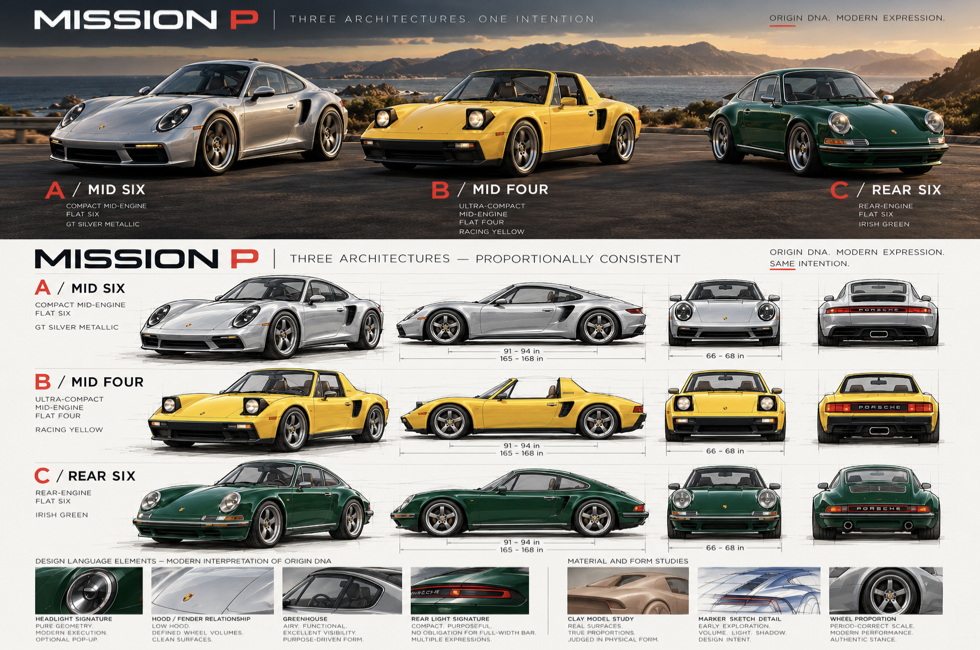
Rather than declare the traditional rear engine sacred, I explored three packages, each built around a different flat engine. AI-assisted drawings, renderings and short films let me make them visible. They're an enthusiast's concept studies, and bringing them through modern safety and emissions rules would take real engineering. But a question doesn't need a finished answer to be worth asking.
Concept A: GT Silver Mid Six
A compact mid-engine coupe with a naturally aspirated flat-six near the center of the car. It treats central mass as the start of a new small Porsche instead of an imitation of a Cayman or a 911. Restrained outside, analog inside.
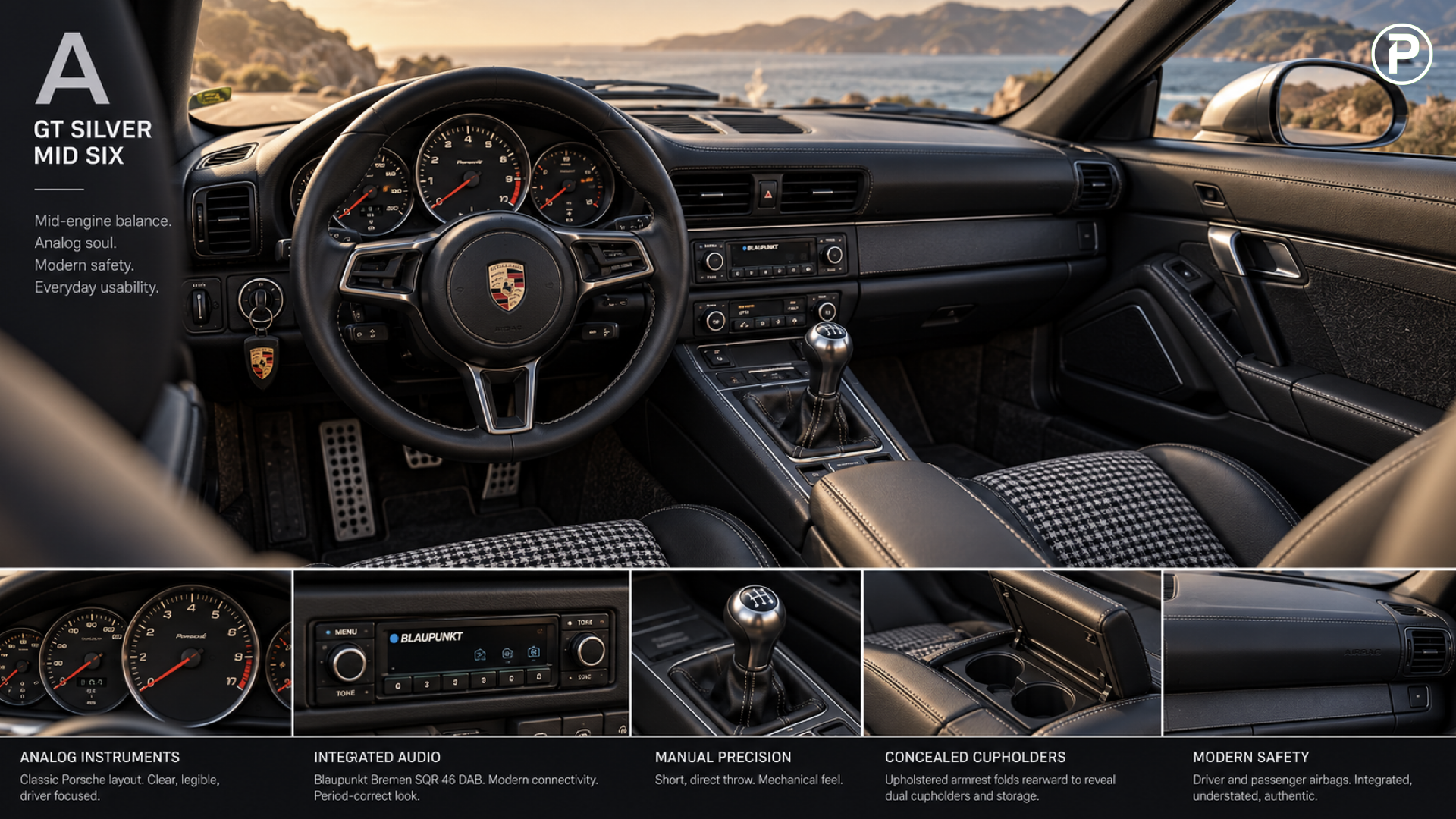
Mid-engine flat-six · GT Silver Metallic · Manual · Concept study
Concept B: Racing Yellow Mid Four
This one starts from the 914's confidence in an efficient package: a low, open cockpit, a flat-four ahead of the rear axle and as little weight as practical. Its body-colored Targa bar, clean nose and quiet cabin aim for the same lighthearted mechanical intimacy.
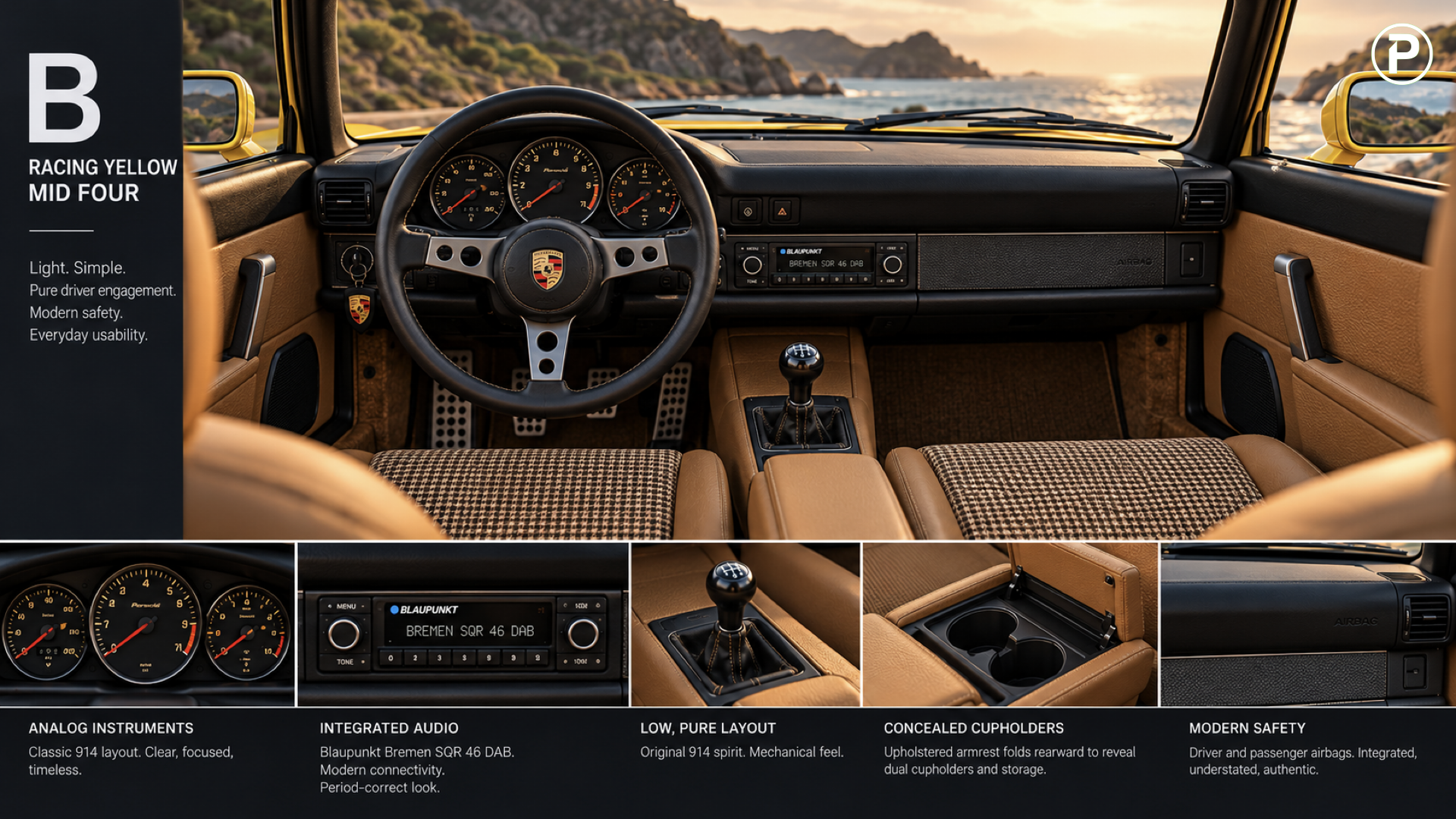
Mid-engine flat-four · Racing Yellow · Open Targa · Manual · Concept study
Concept C: Irish Green Rear Six
The Rear Six keeps the layout that shaped the original 911 and asks it to earn its place in the driving experience. Irish Green connects it with Porsche's earliest production history, and its five-gauge cockpit echoes the original 901.
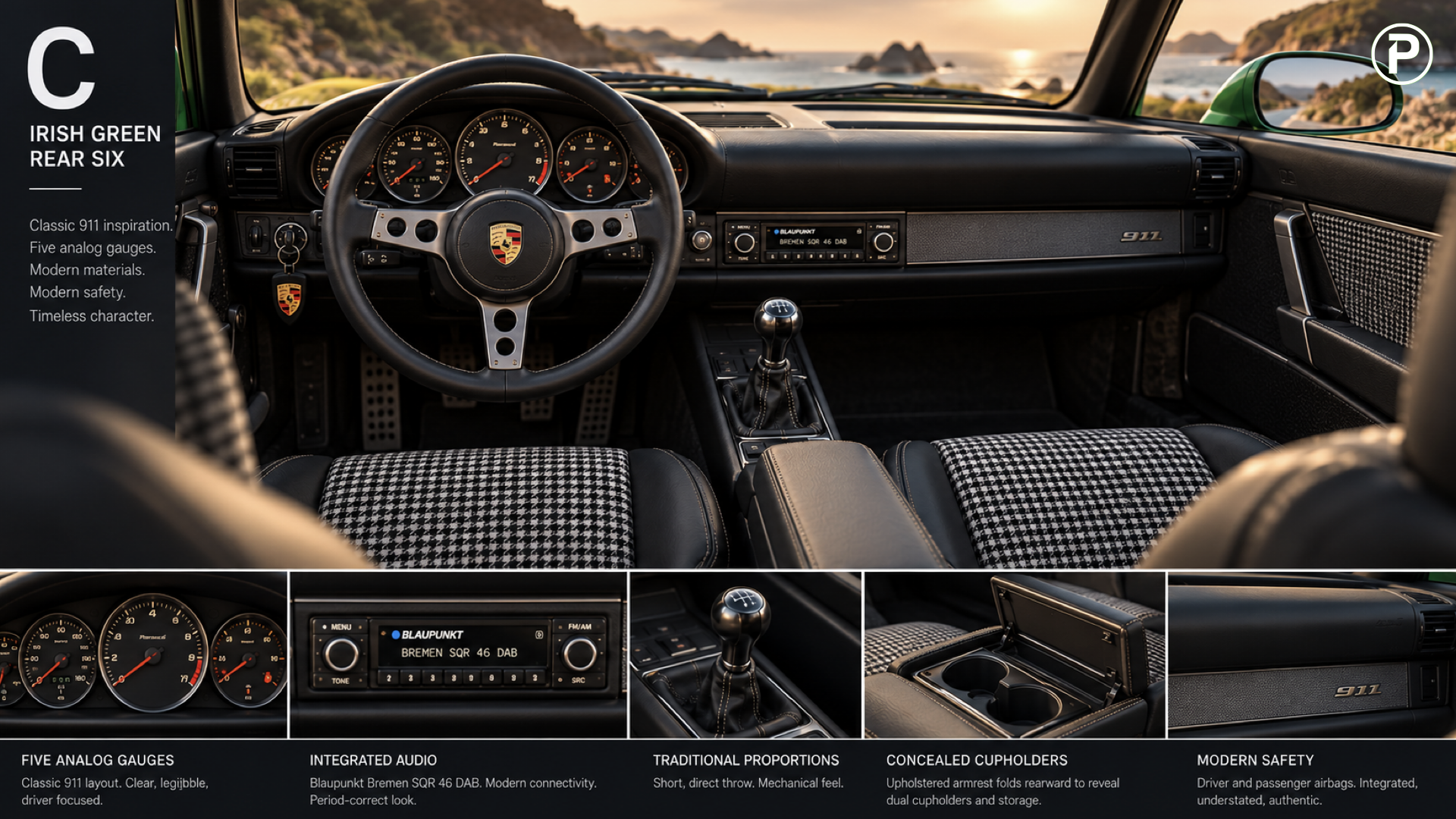
Rear-engine flat-six · Irish Green · Manual · Concept study.
Why not? Enthusiast's engine questions
I'm not an engineer. I'm an enthusiast, so forgive me for thinking out loud. These are the questions I'd love to hear Porsche's engineers answer.
Why not start from a clean sheet? Porsche began with a flat four that came out of the Beetle and later built its own six. It has reset once before. Maybe it's time again.
Why not print the engine? Porsche has already 3D-printed pistons for the 911 GT2 RS that came out 10% lighter, letting the engine rev 300rpm higher and make almost 30 more horsepower. Lighter and more efficient at the same time. Imagine a whole engine designed that way.
Why not make weight the first spec? The first 911 weighed less than 1,100 kg. A lighter car needs less engine and less fuel, and maybe no battery at all.
Why not chase efficiency inside the engine? Most road-car engines struggle to reach 35% thermal efficiency, and Formula 1 has gone past 50% on the dyno. That's a lot of room left.
Why not bring Formula 1 combustion to the street? Maserati already did, with a pre-chamber ignition system derived from Formula 1.
Why not rethink the architecture itself? Koenigsegg built a 2.0-liter three-cylinder that makes 600 horsepower with no camshaft and weighs 70 kg. Opposed-piston engines are flat by nature, and in trucks they've shown fuel economy gains of as much as 20%.
Why not finish what Porsche started with fuel? Its synthetic fuel plant in Chile works, but it's still a pilot plant making up to 130,000 liters a year. Scale it up and the combustion engine has a future.
Why not some of the air-cooled spirit? Maybe not air cooling itself. But the lightness, the sound and the simplicity it stood for could come back.
Porsche has people who can answer all of this better than I can. I'd just love to see them try.
An obligation to begin again
The exercise suggested something beyond three cars. What if Mission P became a recurring program, a deliberate return to first principles every few years, with no obligation to keep the previous design, engine or power output? The job would be to ask again what makes the most satisfying Porsche possible with what the engineers know at that moment. Brand is behavior. Behavior is brand.
I don't want Porsche to go backward. I want it to move forward without feeling obligated to defend every turn it has taken. The intention can be permanent even when the answers change.
I still want that car
I admire Singer and the others who bring real care to Porsche's history. But I would love to see Porsche itself build the small, agile, beautifully resolved car I've been waiting for. Not another oversized luxury machine or horsepower spectacle, and not a copy of a car we already love. A Porsche whose value is obvious in the way it moves and the way it feels in my hands.
I don't pretend to be a better Porsche designer. Some will look at Mission P and say it's too familiar, that I'm going backward. That's why I'm not a Porsche designer. But I remember where Porsche came from, and I remember its honesty. Maybe I'm just someone reminding Porsche of that while it works to find itself and compete in the second quarter of this century. I believe in the brand and I believe in its people. Most of all, I believe in the original intention. If you don't know where you came from, you can't understand where you're going.
Mission P is an expression of desire from someone who loves this company.
Less is more.
Epilogue: Why I care
Porsche was the spark of my automotive awareness. In the early 1960s my grandfather took European delivery of a 356 Cabriolet, and the car spoke to me. I saw it, touched it, smelled it and rode in it, and I can still remember all of it. I didn't care about cars before that. Afterward I did, and the receptors were open to racing and all it meant.
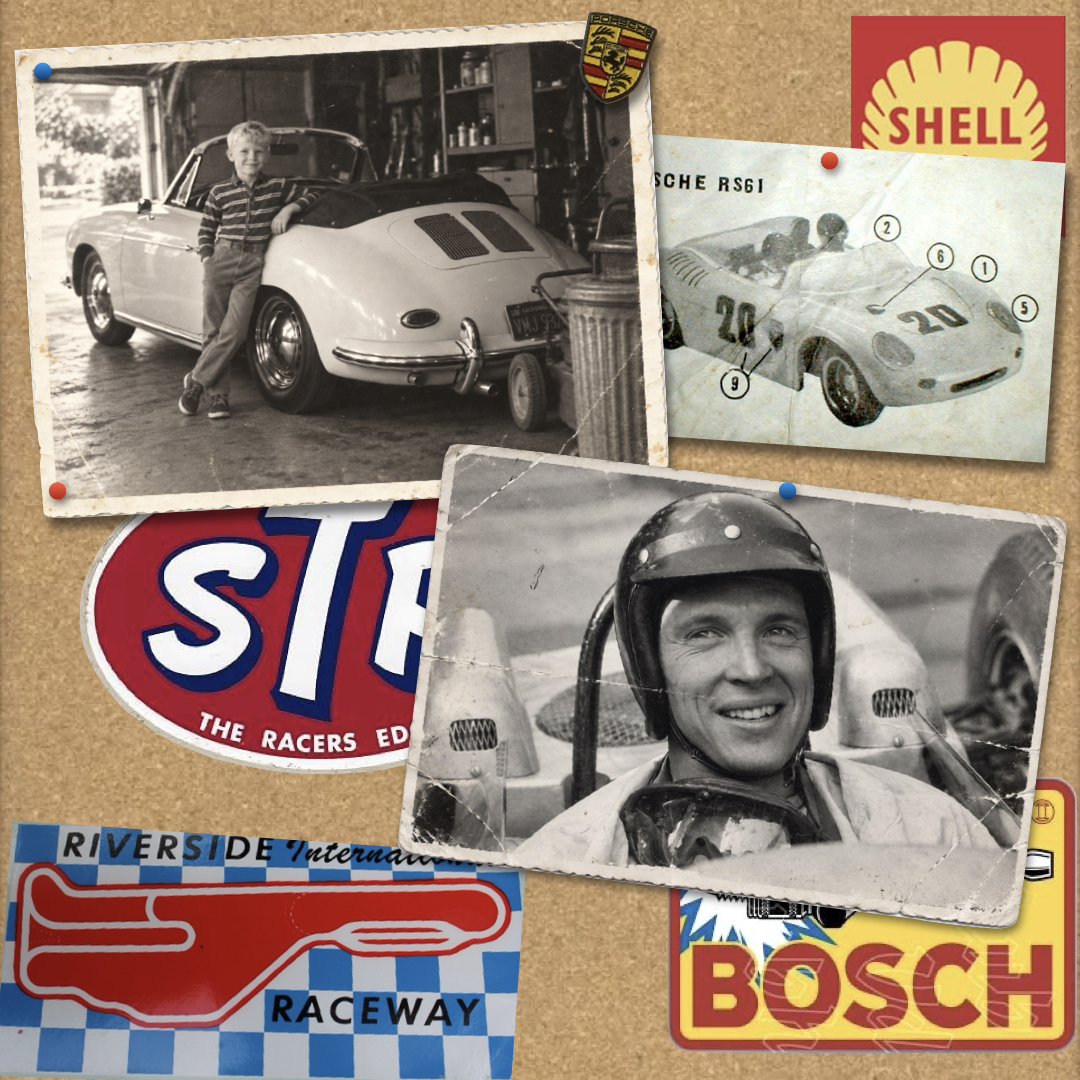
Porsche made me fall in love with a car for the first time. My grandfather's 356 Cabriolet opened the door, and racing, and my heroes, came right through it
When I pulled on the string that was Porsche's story, there was an abundance of meaning in it. Porsches weren't like everything else. Compared with the other cars I liked, there was something absolutely simple and true about them. What I like most about a Porsche is that it's honest about what it is.
Racing came next, and Porsche was in it from the start. Dan Gurney won a Formula One Grand Prix for Porsche in 1962, and he became a hero of mine. My first professional work, in October 1972, was a pair of illustrations of Porsche 917/10s, sold as prints from a card table at Riverside. A year later I stood among the IROC Carrera RSRs on the grid there. They smelled like new cars and race cars at the same time, and I wanted one more than anything on earth. A Porsche was a race car wearing civilian clothes.
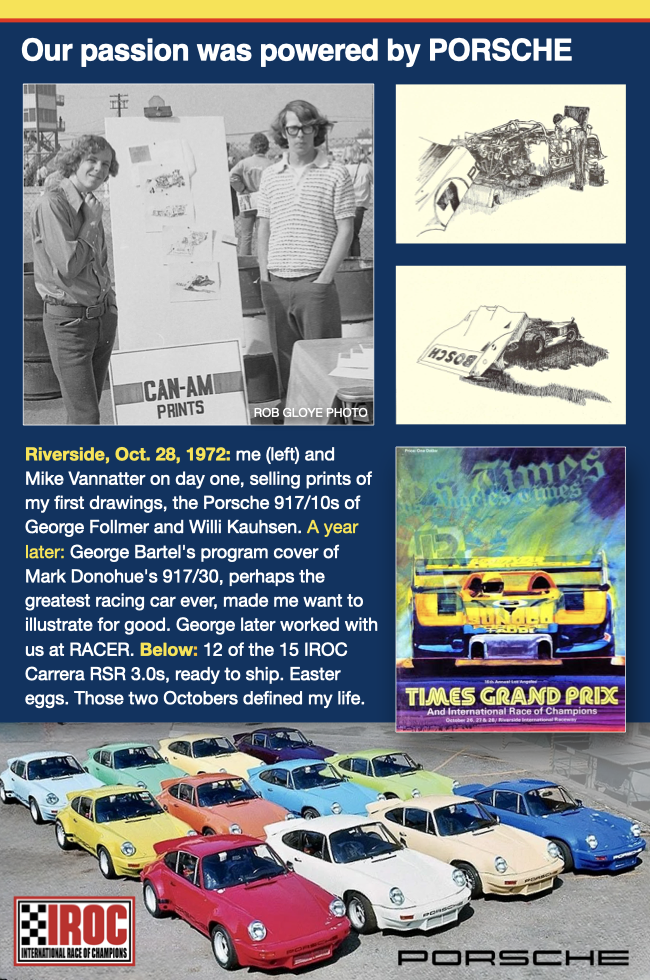
A passion for Porsche has powered my professional journey inside motorsport, mobility, media, and marketing since day one.
Porsche kept turning up after that. Jeff Zwart and I first imagined RACER on a drive up Highway 101 in his 914-6. My company's first commission, in 1979, was an Indy 500 effort by Interscope Racing in collaboration with Porsche North America. In 1998 Porsche asked us on a Thursday for Le Mans victory ads, and they were ready Monday. My one Porsche, an early Boxster, caught a good bounce on the styling and a bad bounce on the materials, and I'm still looking for the feeling I had in my grandfather's garage.
Porsche has been fueling my passion since 1962, and I'm grateful. I just want to see what it would build if it started over. And I will own another Porsche.
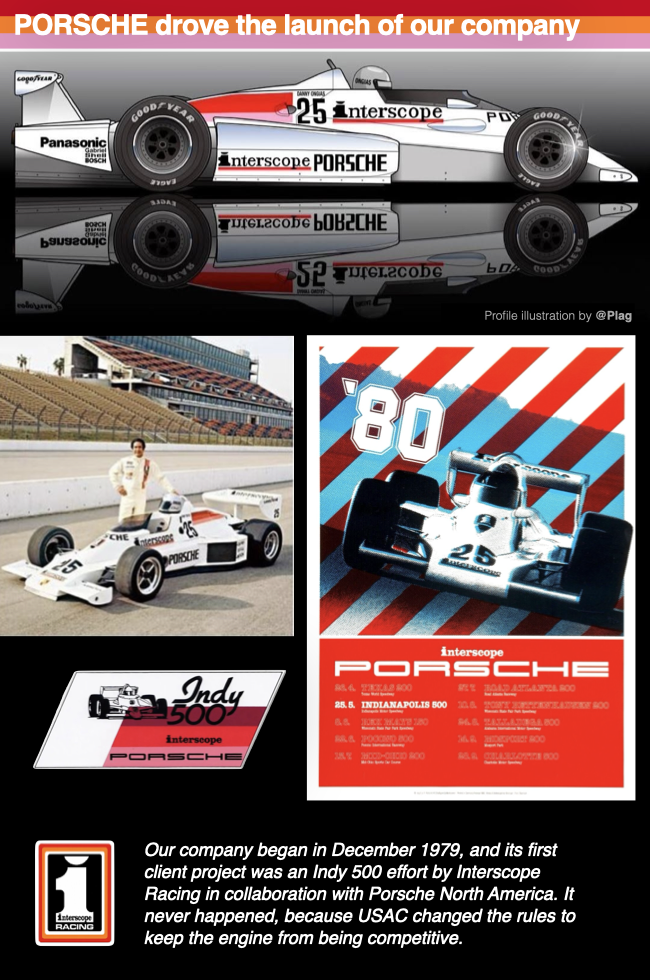
Project 001. We opened for business on December 18, 1979, in an office next door to Interscope's headquarters, and went on to do many more projects for them. Fittingly, our very first one was a Porsche. The Indy car never raced, but its engine did. Porsche pulled a retired 936 out of its own museum, rebuilt it around that engine as the 936/81, and won Le Mans in 1981. The same engine then powered the 956 to four straight Le Mans victories.
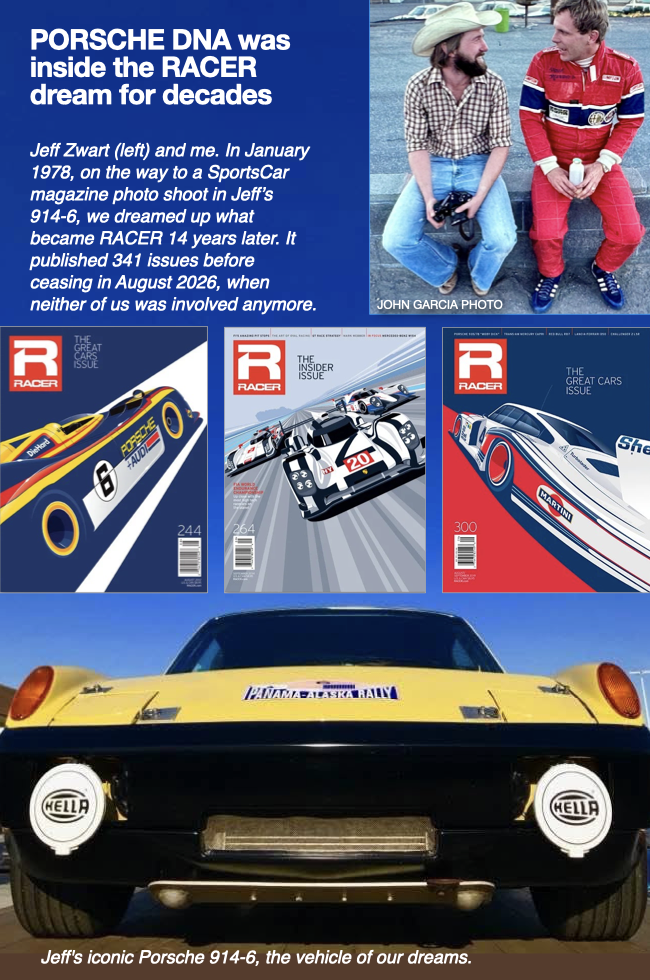
Jeff Zwart went on to become a legend. He is one of the most celebrated directors of automotive commercials and films, shaping how generations of enthusiasts see Porsche. He's a multiple Pikes Peak winner and an SCCA ProRally champion, and with Patrick Long and Howie Idelson he built Luftgekühlt and Air|Water into gatherings Porsche people travel the world to attend. The Petersen Automotive Museum is honoring his career right now with "Jeff Zwart: Life at ZwartSpeed," on view through June 2027. Z's been a great friend, creative collaborator and inspiration since the moment we met while he was still attending college at Art Center.
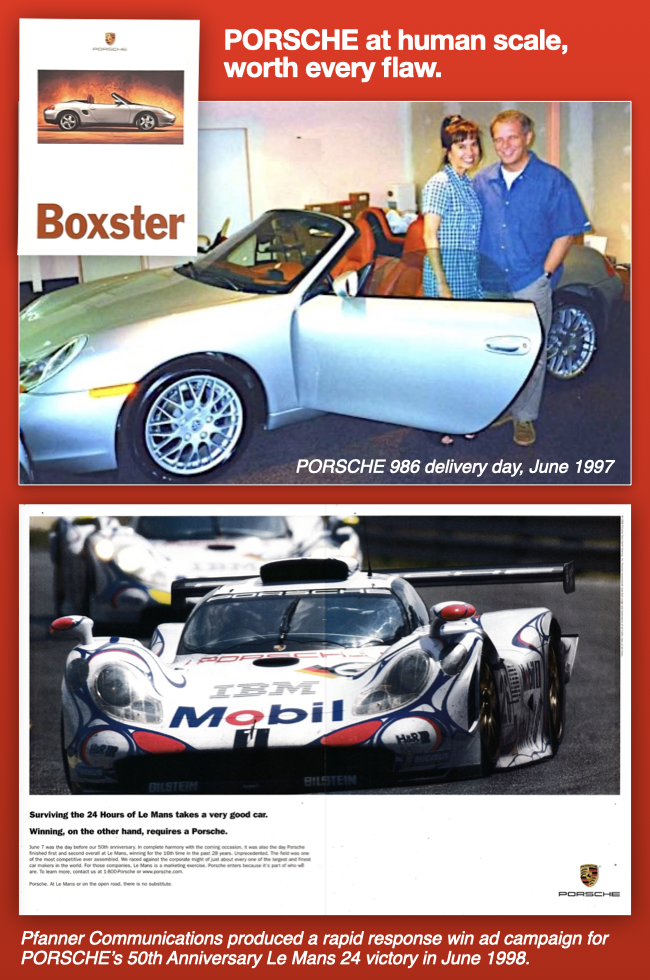
Donna and me taking delivery of our 986 Boxster in June 1997. Jeff Zwart told me to get my order in early, and I did, in early 1996. The styling captured me completely, and it was great having one before almost anyone else. It was also flawed. The convertible top would stick upright, trim pieces fell off, the interior plastic felt insubstantial, and the engine was hard to get to when the small mechanical problems came. It was just off a little. That same month we drove it to the gala opening of California Speedway, where we were the agency for Penske Motorsports. Roger Penske greeted us at the valet himself, complimented Donna on her dress and was clearly taken with the Boxster. Roger raced Porsches himself before his team ran Mark Donohue's mighty Can-Am 917s, and his name is synonymous with the marque. He was a wonderful client. I believe everything in life is connected. When our twin girls arrived, the Boxster had to go, and I felt sadness and relief in equal measure.
In June 1998, Joel Ewanick, who ran marketing for Porsche in North America, called two days before Le Mans. Porsche was between agencies and needed a full campaign ready in case it won. Donna was running our Pfanner Communications creative studio in Corona Del Mar, CA.. Porsche won in its 50th anniversary year, and we turned the ads and posters around that weekend. It was one of the high points of my career, and it showed me how small and human the company still was. Porsche went on to build far better Boxsters, and better and better cars. When Donna and I first got together, I promised her a 911 one day. That's a promise I intend to keep.
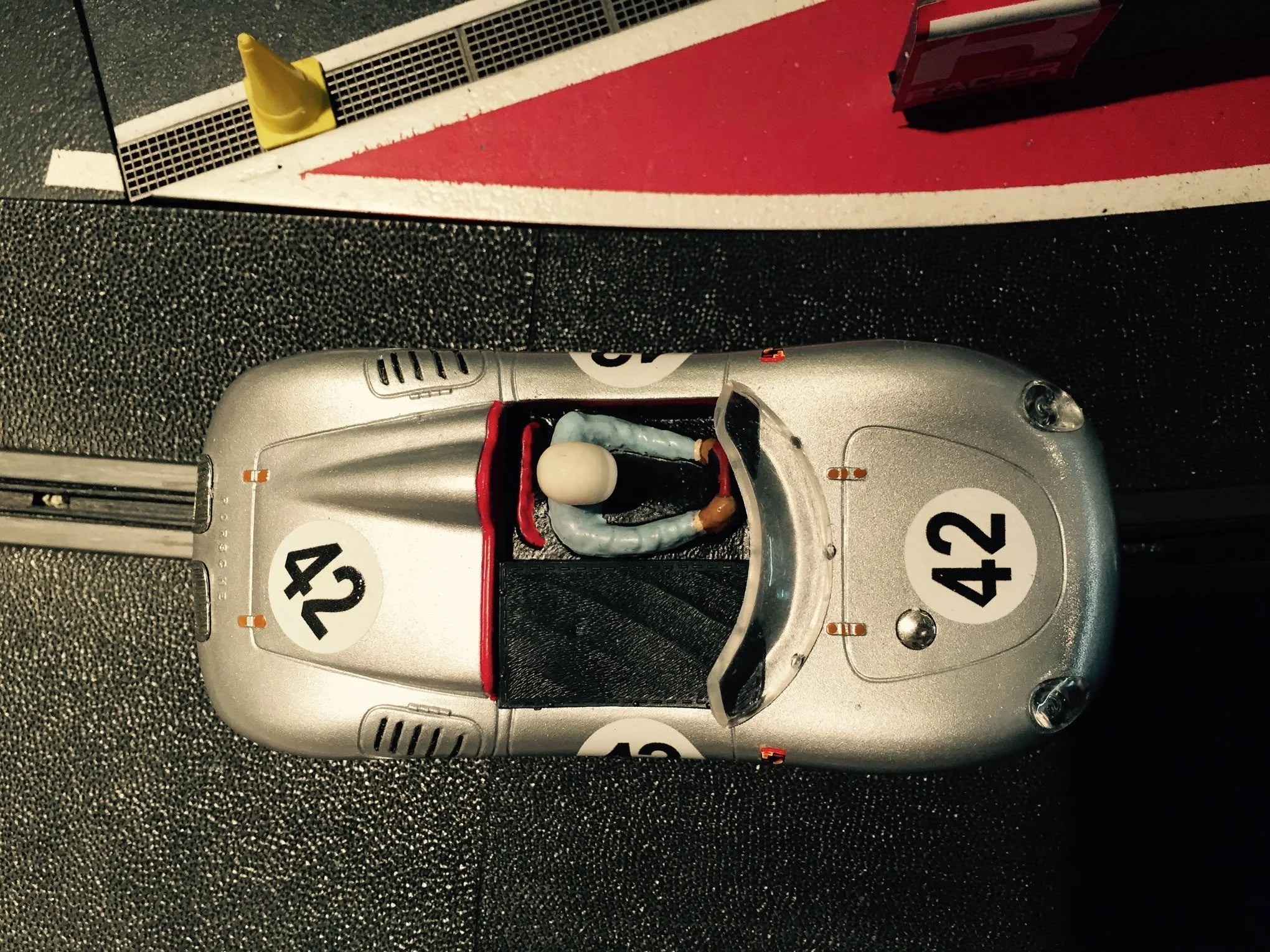
Life works with commitment. Just in case you are wondering, Yes, I still have my first Porsche. My 1/32 Scale Strombecker RS 60/61, the same model Roger Penske raced is still quicker than the driver.
The Creative Drive, with Jeff Zwart. In March 2025, Jeff and I were guests of Taro Koki on The Creative Drive, his podcast about creativity in the automotive world. Jeff, my friend and co-conspirator, tells how we met and started RACER, and you'll hear how deep the passion for Porsche and motorsport runs in both of us. Thanks to Taro for having us on. Taro, Jeff and I are no longer involved with RACER.
Pfanner Advantage works with clients to turn change into advantage at the intersection of mobility, motorsport, media, technology, and marketing. Learn more or start a conversation: contact us today.
The Advantage Journal arrives every week. What matters in sport, mobility, media, and technology — curated and contextualized by Bill Sparks, Bill Long, and Paul Pfanner. No hedging. No filler. Subscribe — It’s Free

