Who, or What, is the Media Now?
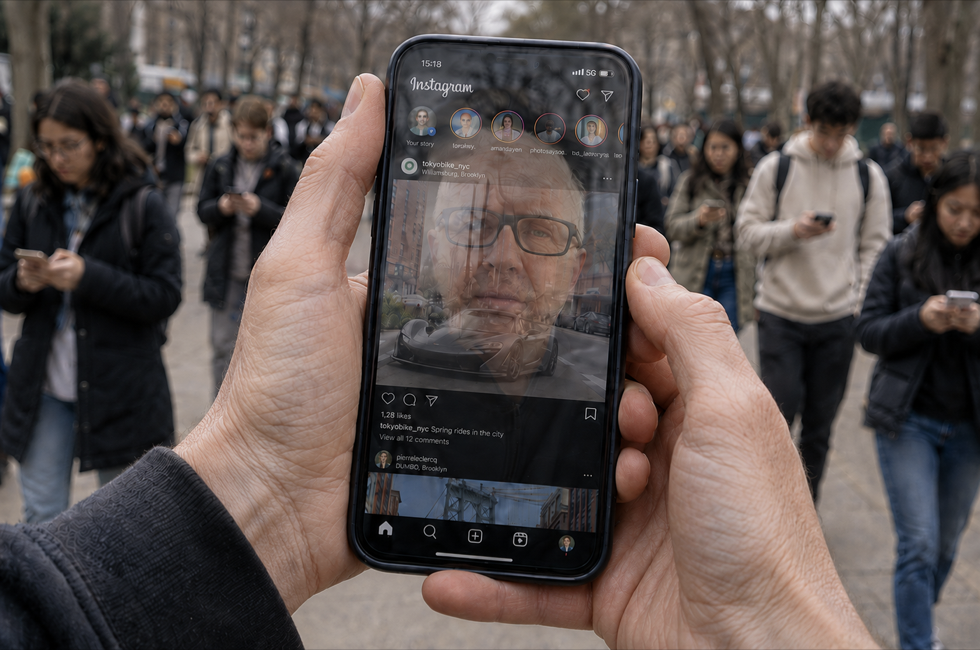
The author, at home in a world that didn't exist when he started, among people who have known no other.
Paul Pfanner has spent his working life in media and marketing, most of it around motorsport and mobility. Here he asks what the word "media" even means in 2026, and where the answer turns up isn't where he went looking.
I have worked in media since the word meant something you could point at. A magazine was a magazine. A broadcaster broadcast. Editors and producers decided what belonged, and the audience took what it was handed. Then websites and digital video and social platforms and the creators on them made those definitions less and less useful, and we kept using the same word anyway.
Lately I've started wondering whether it still describes anything at all. What the hell is media in 2026?
The years before it watched back
Thirty years ago, most media didn't watch us use it. A magazine publisher knew the names on the subscriber list. A bookseller knew a book had left the store. Neither one knew where you paused, what you skipped, or whether some paragraph in the middle changed your mind. A bookstore or a newsstand was a search engine made of shelves and covers and somebody's taste. You could browse without leaving a trail behind you. And once the book or the magazine or the letter was yours, so was the reading of it.
Now those distinctions have fallen apart. A journalist, a creator, a company, a customer, a fan, any one of them can reach an audience directly. But the platform decides which voice travels, and the algorithm decides who runs into it. An AI system can swallow the original work, boil it down, and hand somebody an answer without that person ever knowing who did the work in the first place.
Everybody's an authority now
Everyone's encouraged to be an authority too. Open LinkedIn or Substack or nearly any of them, and every experience has turned into a lesson, every stray observation into an insight. Some of it is first rate. A lot of it is borrowed certainty, repeated over and over in the hope that authority eventually rubs off on the repetition. What you end up with is a Tower of Babel, and the voices in it aren't sorted by who knows something. They're sorted by whatever holds attention the longest.
The machinery doesn't just deliver
Media in 2026 isn't a kind of company anymore. It's the machinery that decides what reaches us, how it gets framed, and what we're nudged to do about it. And that machinery doesn't just hand things to us. It watches us take them.
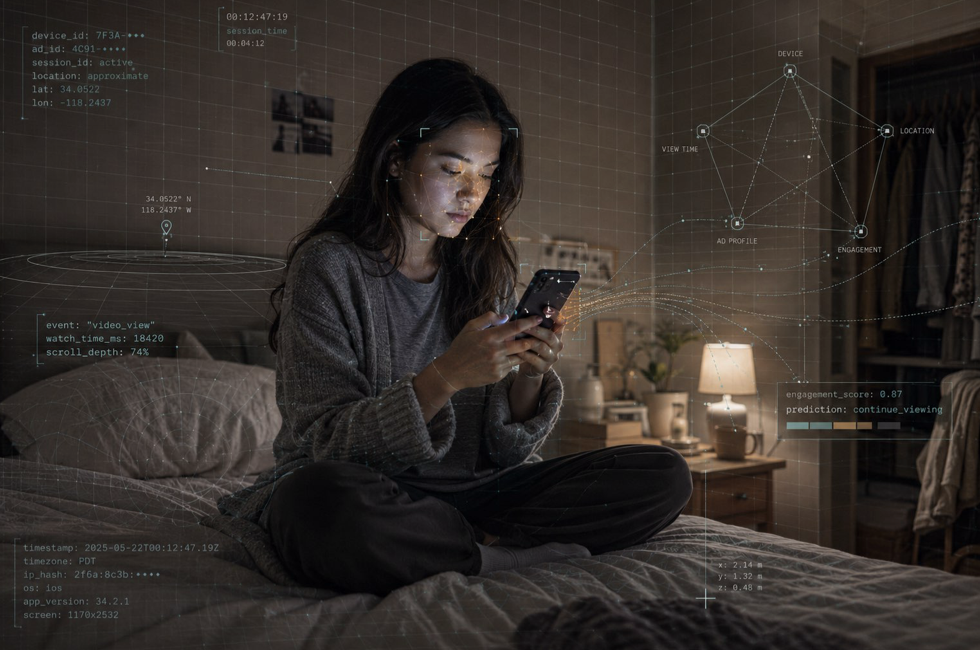
Every time you pick it up, something picks you up too. Who's reading whom?
The Federal Trade Commission has laid it out. Major platforms collect information on the people who use them and on plenty of people who never signed up at all, buy more from data brokers, run tracking pixels, and pour all of it into their algorithms, their analytics, their AI. A separate FTC study found that your location, your browsing, what you buy, the way your mouse moves, even the thing you left sitting in your cart, can be used to set the price you see and the offer you get.
The ad platforms describe what happens next in their own words. Google says its automated bidding sifts through billions of combinations of signals to find the ones that best predict a sale. A big peer-reviewed field experiment at Meta measured how much that off-platform data is worth, the record of what you do and buy on other sites and apps, fed back in to reach the people most likely to buy.
I call it predictive gambling. It sounds harsh, but that's the bet underneath the whole business. What are the odds that this person, shown this message, right now, does something about it? Advertisers put their money on the answer.
What's underneath the pull
For a long time I've called this a pull economy, because more and more we're the ones deciding what to search for, who to follow, what to watch, what to summon up. And that's true, as far as it goes. It just describes the top layer. Underneath it there's a surveillance economy running the other direction. We pull the information toward us. The system pulls the data right back out of us while we do it.
What paper can't do to you
This is where paper starts to look different. Print doesn't escape commerce. Somebody can log the purchase or the subscription, and nothing is trustworthy just because it showed up on a page. What stays private is the reading itself. A book can't clock where you slowed down. It can't rearrange itself to keep you hooked, and it can't take your reaction and use it to work you a little better next time. They can track that you bought it. They can't watch you read it.
A generation that never knew the quiet
People born into this century grew up with the scroll already there. The platforms have been around for most of their waking lives. They can't be nostalgic for a quiet they never had. But they can still find out what it's worth once they feel what's missing.
And there are signs they already feel the weight of it. In a 2025 Pew survey, 45 percent of American teenagers said they spend too much time on social media, up from 27 percent in 2023, and 44 percent said they had cut back. That's not everybody heading for the exits. Most of them hadn't cut back at all. But being worn out by something isn't the same as quitting it. It's the start of wanting a break from it.
They haven't turned their backs on paper, either. Another Pew survey found that 66 percent of Americans between 18 and 29 had read at least part of a printed book in the past year, next to 41 percent who'd read one on a screen. That doesn't mean newspapers and magazines are about to come roaring back. It does mean paper isn't some foreign object to a generation raised on screens.
Ten years 0ut
By 2036, a lot of what we call media may not look like media at all. Personal AI will build the information and the entertainment and the advice around each of us, one person at a time. It'll learn our histories, our circumstances, whatever it is we're trying to get done. The story and the search result and the ad and the purchase will keep melting together inside something built to guess what we want before we ask for it.
Next to that always-on system, I think there's still going to be room for the kind of media you choose to walk into and can walk back out of whenever you feel like it. Books, magazines, letters, a live performance, a real conversation across a table. They give you the one thing personalization can't. An experience that ends, and then leaves you alone.
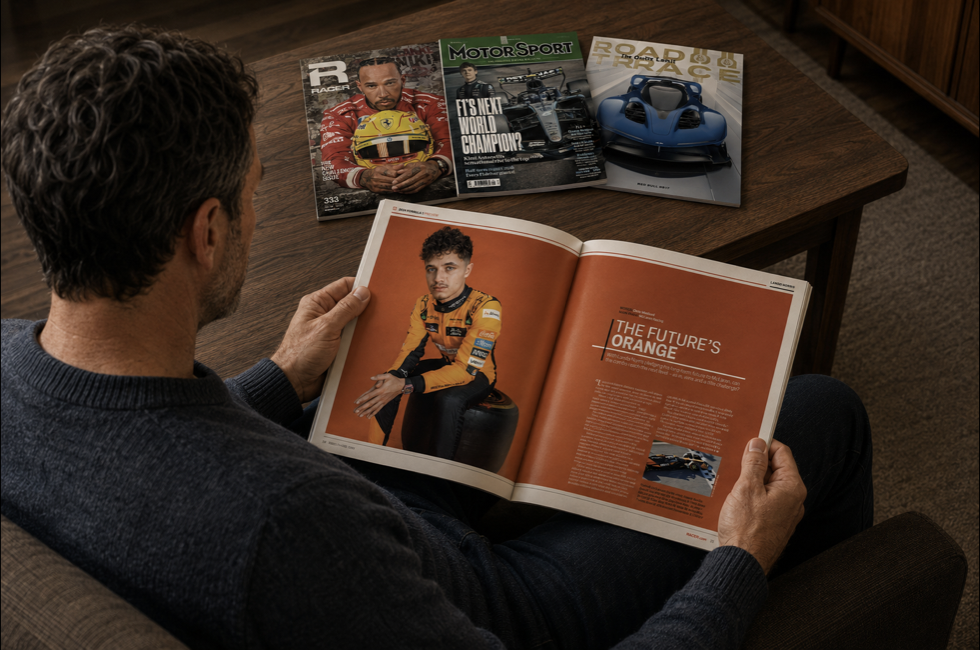
A reader alone with a magazine, watched by no one. We used to take that for granted.
What gets scarce
The opening here isn't to rebuild the old media business the way it used to be. It's to notice what turns rare when information is endless, when something is always predicting you, when everybody's claiming to be an authority. What turns valuable again is judgment that comes from knowing something firsthand. That, and the plain dignity of being left alone for a while.
My hunch is that one of the real openings ahead is going to look almost old-fashioned. You make something good enough that a person picks it up on purpose, and then you leave them alone with it. That last part is the part hardly anybody does anymore.
Pfanner Advantage works with clients to turn change into advantage at the intersection of mobility, motorsport, media, technology, and marketing. Learn more or start a conversation: contact us today.
Paul Pfanner’s recent Shift Happens Insights:
The Advantage Journal arrives every week. What matters in sport, mobility, media, and technology — curated and contextualized by Bill Sparks, Bill Long, and Paul Pfanner. No hedging. No filler. Subscribe — It’s Free

