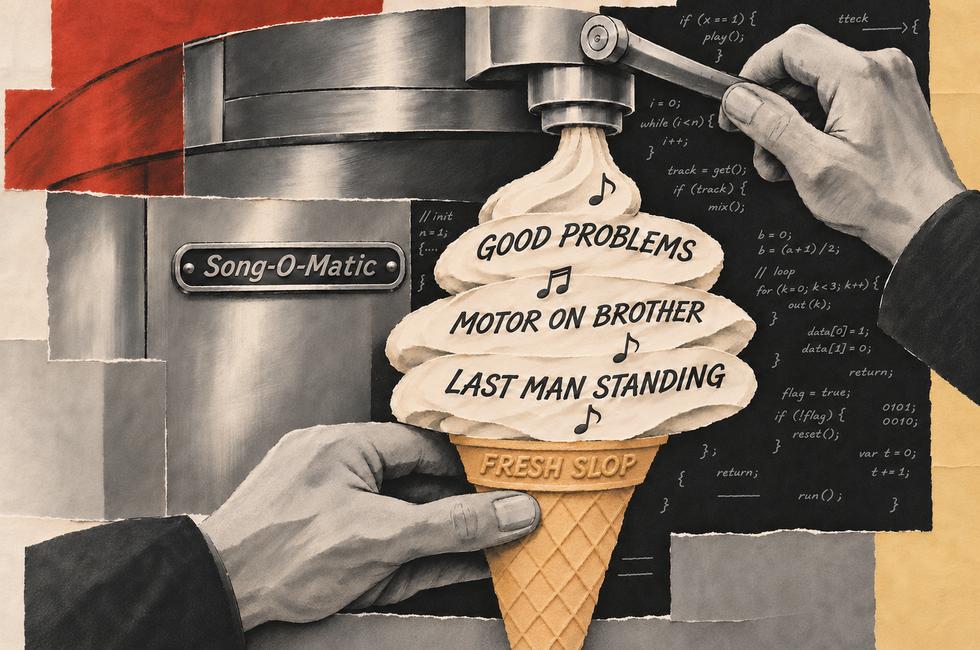
Pull the lever and a song comes out. Getting one worth keeping still takes a real person with a real life.
Paul Pfanner Paul Pfanner swore off making music with machines. Then he made nine more songs in a day and a half, each about something real he’s lived through, and stripped them back to one guitar and one voice to find out what was there. Here’s what he learned, where he thinks singer-songwriter Nick Cave is right, and what he’s hoping to hand to real musicians next.
I said I was done
When my first, and final Suno album, “Last Man Standing,” came out in September, I made a song called “AI Slop” my last word on making music with machines. I meant it.
Then a quiet weekend opened up, and by the end of it I had nine new songs.
The fact that I came back is the story. These tools are built to pull you in. Every take is close enough to tempt you into one more try. They aren’t aiming for great. They’re aiming for good enough to keep you going.
There’s another reason I came back. I’m curious, and I have to find things out for myself. I listen to people who know what they’re talking about, especially people who make real music. When they say something, it means something to me. But I wanted to know what it felt like from the inside. I’m not a Formula One world champion, but I raced Formula Ford, the same cars a lot of the champions of my era started in, to find out if I had a special ability. The fact that I’m writing this tells you how that turned out
The demo
My life changed profoundly at the end of last year when I left the media company I founded. I’ve made things all my life. I started out as an illustrator and graphic designer, and I’ve spent decades since as an editor and a writer, with some filmmaking along the way. When I think about a song, I think about the story, and I see the pictures and the video that go with it. Music is the hole in my game. I don’t have the gift of making it, and of all the parts of a song, that may be the one that matters most. What I know is words.
So I treat these songs as demos. I dictated the foundation of every song, and on most of the new ones I used Claude as a writing partner to shape the choruses and bridges. Something in them may be right. A lot of it isn’t, yet.
The soft-serve machine
Making AI music is like walking up to the soft-serve machine at a fast-food restaurant. You pull the lever and the cone fills. Some get more, some get less, and it’s all the same flavor.
These systems give you what’s most likely, and that pulls everything toward the middle. A lot of my work was fighting sameness: pulling a song back from a gospel choir I never asked for, stopping my voice from turning operatic in every chorus. Sometimes I couldn’t stop it at all.
So I ran a test. Every one of these songs is about something real in my own life experience. If you know me, you’ll recognize all of it. I wanted to see how much of the real could make it through.
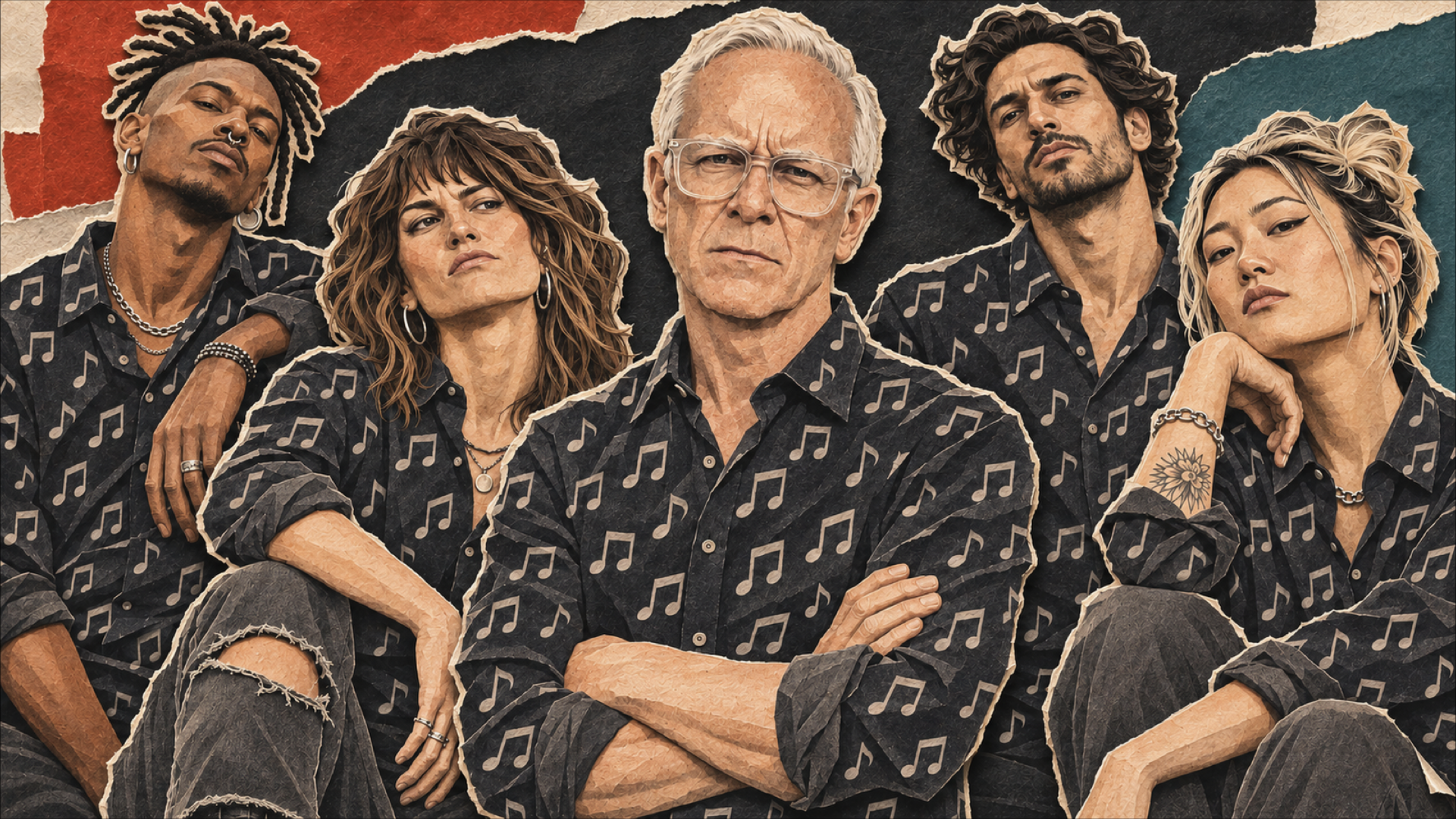
Off the same rack. I prompted hard, through hundreds of tries. There’s still a ghost in the machine, and its name is sameness
Then I did the one thing you should never do. I clicked on the songs Suno suggests are like mine. They are like mine. It felt like showing up somewhere in a shirt I was proud of and finding four other people wearing it, all off the same rack at T.J. Maxx.
And the voice isn’t mine. It’s a synthetic version of me, and I’ve never pretended otherwise. Words that came out of a real life deserve a real voice and real musicians.
What it costs
Nobody publishes exact figures, so I worked from outside estimates. One version of one of my songs costs about as much power as two to four hours of watching television. Across the 27 songs I’ve made, I pressed the button 434 times and got 868 versions back. On the higher estimates, that’s something like a week of electricity for an average American home.
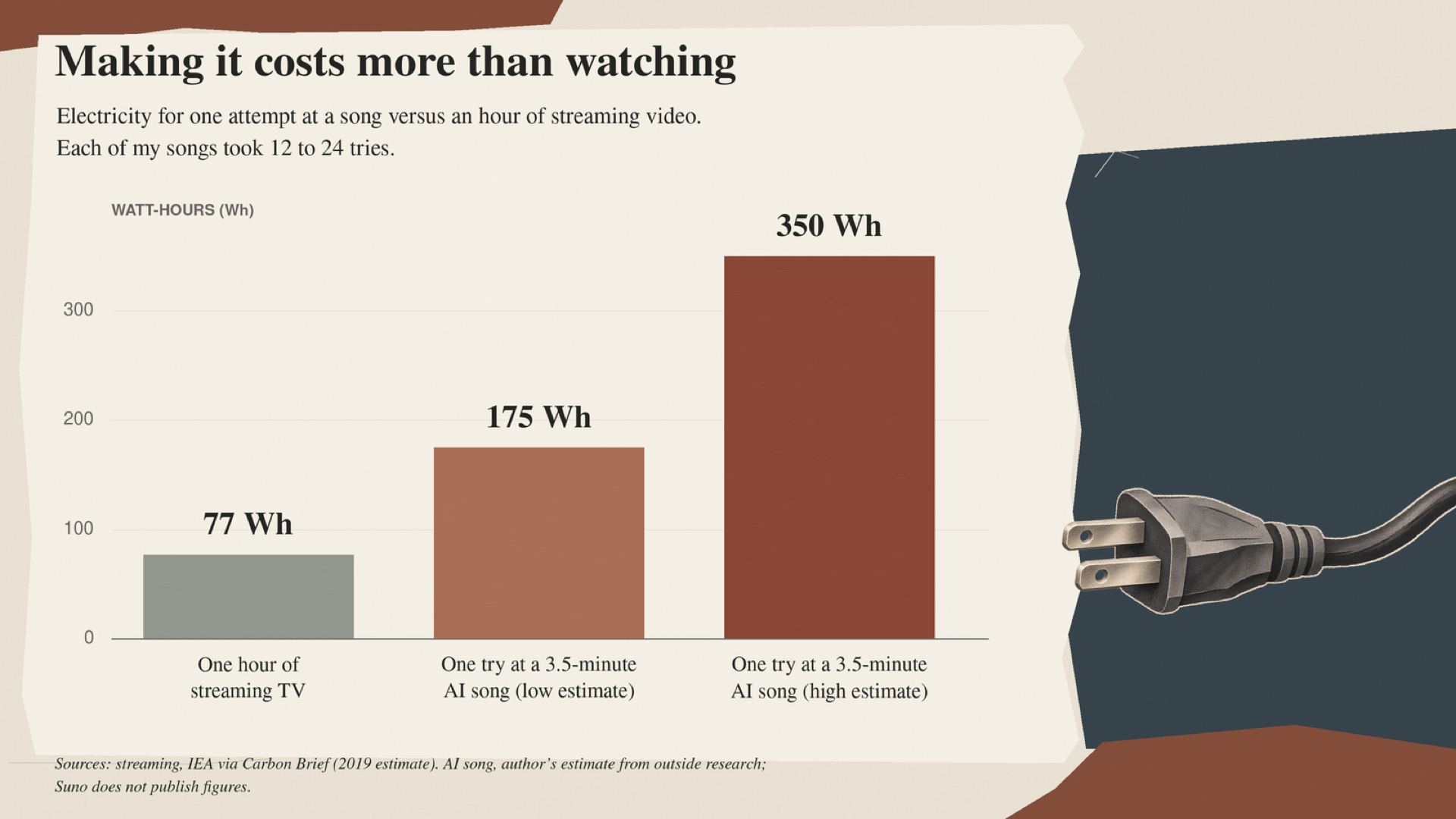
Making it costs more than watching. One version of a song uses about as much electricity as two to four hours of streaming TV, by my estimate, since Suno doesn’t publish its figures. I made 868 of them.
I’m one person. Deezer says AI-generated music now accounts for more than half of all tracks uploaded to its platform each day.
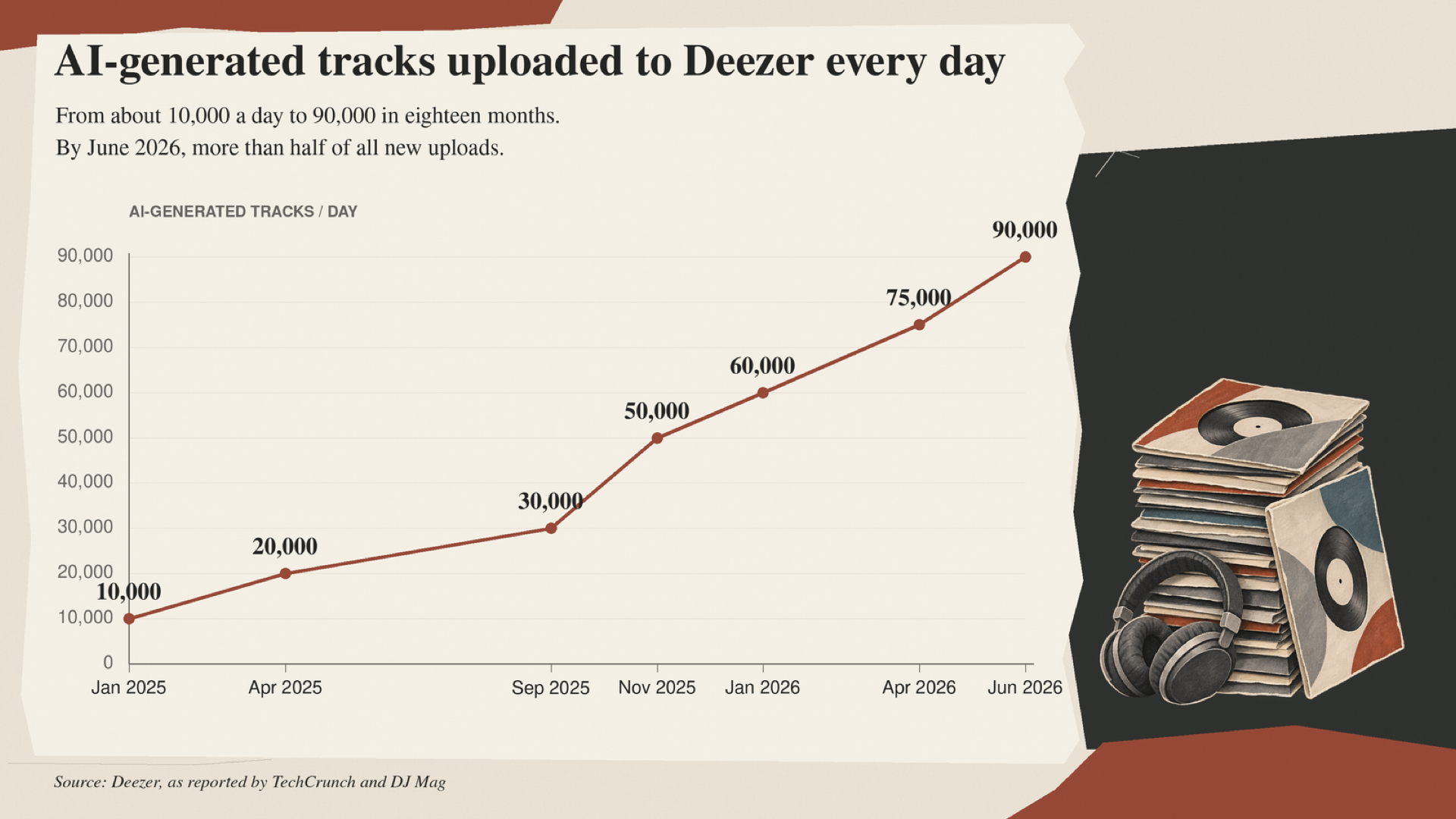
The flood grew ninefold in eighteen months. Deezer was receiving about 10,000 AI tracks a day in January 2025, when it launched its AI-music detection tool. By June 2026, that peaked at a monthly average of 90,000 a day.
The bigger cost lands on the people who make music for a living. A study commissioned by the global confederation of songwriters’ societies projects AI music putting 24 percent of music creators’ revenues at risk by 2028. Session musicians in places like Nashville are already seeing less demand. That’s real work done by real people, going away.
The fight has moved into the courts. Universal and Sony are still suing Suno, a Munich court ruled in July that it infringed German copyrights, and Eminem’s publisher sued in November. I’d be dishonest not to tell you I’ve been using a tool whose foundation is being tested in court. Source: tech-insiderForbes
I keep up with all of it by following two people. Rick Beato is a musician and producer who explains why great songs work better than anyone I know. Krystle Delgado is an entertainment lawyer who covers the AI music fight closely, and she’s leading a class action against Suno for independent artists, so she has a side in it. Watching them is my escape. Source: musicbusinessworldwide
Who’s listening
My own family doesn’t want to listen. When I play the songs on our walks, my dog Sienna turns her head away whenever I take my headphones off. People still mostly want to hear people. I don’t think I’m the target market, so I’m not counting on living off my AI music royalties.
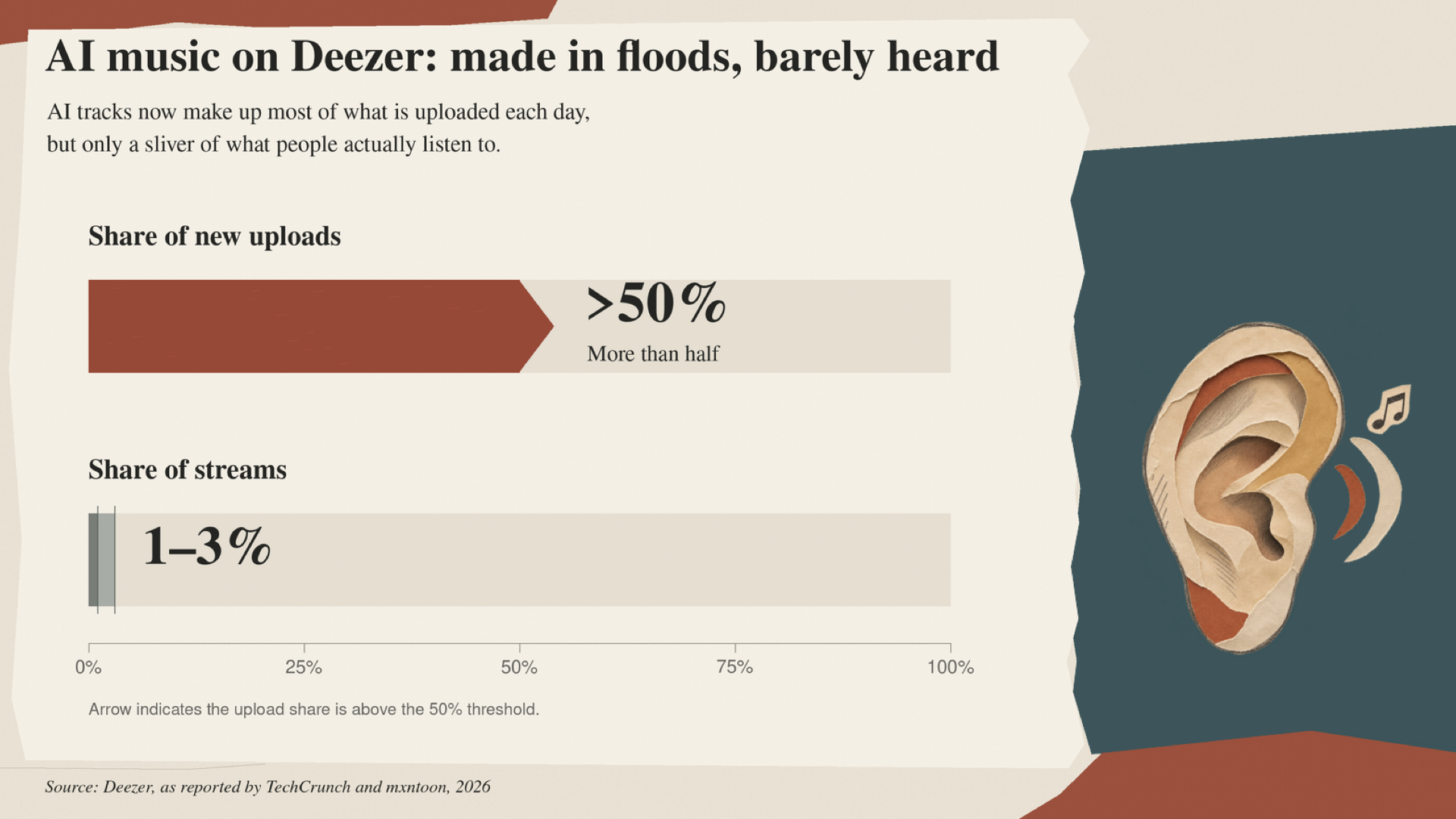
Made in floods, barely heard. AI-generated tracks now make up more than half of what’s uploaded to Deezer each day, yet AI music reportedly accounts for only about three percent of listening time. People are making it far faster than anyone wants to hear
The real thing
When I was young, I was taken with David Bowie’s lyrics, and I loved Bernie Taupin’s writing. The Rolling Stones felt more real to me than anyone. They weren’t trying to be nice. They were trying to make you feel something.
Coming from the world I lived in, this is the difference between racing a slot car and driving a real one. In the real car, your ass is on the line. Nobody bombs making AI music. A musician on a stage can fail in front of you, and that’s part of why it means something when it works.
Taupin never sang and never wrote the music. He wrote words and handed them to Elton John, who turned them into songs. I don’t need a better machine. I need my Elton.
The case against me
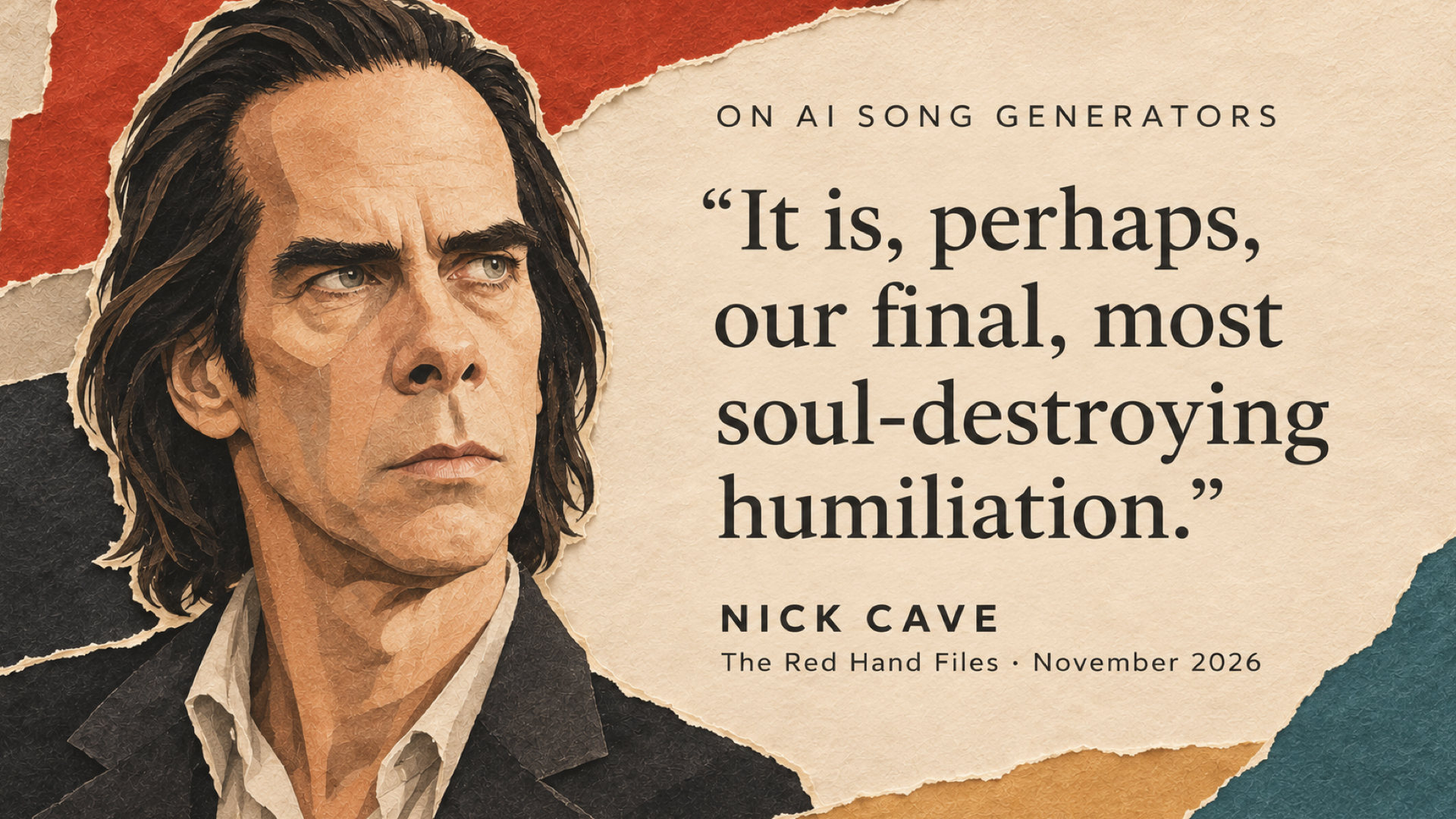
By Nick Cave’s measure, I’m part of the problem. He may be right.
In November, Nick Cave wrote about song generators on his blog, The Red Hand Files. If you don’t know him, Cave is an Australian singer-songwriter who has led Nick Cave and the Bad Seeds for more than 40 years. You may know his song “Red Right Hand” as the theme from Peaky Blinders.
Original work, from a real artist. Nick Cave and the Bad Seeds, “Red Right Hand.” This is the bar, and I respect it..
.He called song generators a musician’s “final, most soul-destroying humiliation.” He has always believed the art can’t be separated from the artist, and he says these platforms finally make it possible to take the artist out of the picture altogether.
He’s describing what I’ve been doing. If you agree with Cave, and part of me does, I’m part of the problem.
So here’s where I stand. I agree with him about the artist. Every song came out of my own life, and spin after spin, the machine tried to sand the person off. When I stripped the songs back, the part that survived was the part that came from me
Even Cave draws his line around how the tool gets used. He wrote that his mind changed to some extent after filmmaker Andrew Dominik used AI to animate old still images for the 40th anniversary video of “Tupelo.” That’s close to the line I’m drawing. I use the machine to sketch. The finished song needs a person.
Cave’s post put words to a question I keep coming back to every time I use one of these tools. Why am I here, and who is this for? Is it helping me make something, or am I handing over my data and my access so someone else gets rich?
The canary in the data mine
This week a software update knocked out email for millions of people and stopped flights across the country. Some people thought their email going dark meant they’d been fired. We’re in uncharted territory, and nobody knows where it leads.
It isn’t only music. Writing, art, design and film are all feeling it at the same moment. Music may be the canary in the data mine. The trouble is, the machines have learned to sing too. A canary that never stops singing can’t warn anyone of anything.
The money matters less than the power. Whoever builds these systems gets a big say in the shape of what comes next. Some of the people building them have said out loud there’s a chance, maybe one in ten, that it ends badly for all of us. They say it the way you’d mention a chance of rain. If it ever gets to a coin toss, I’d like to know why we’re still flipping.
I don’t say that out of fear. Working with these tools feels like having a team, and I’ve made things with them I couldn’t have made any other way. I’m also aware of how much I don’t know. People are starting to turn back toward what’s real. Whether we get there fast enough, and how much else depends on the answer, are questions I’ll leave with you.
The question of who this is for became a song called Sea of Machines, and a video to go with it. Yes, a song about the machines, made with machines. Isn’t it ironic?
My last word on the machines. A song about why I’m here and who this is really for. Made with AI, on purpose.
The line I keep coming back to is in the last chorus: “They can see every move I make, but not what it means.”
It’s also the last time you’ll see the AI version of me singing with a cloned voice. I’m proud of the song, and if you watch it, be grateful that you don’t have to endure the real me “singing.”
Stripping it back
Then I did something I should have done from the start. I took the production off. One guitar and one voice, the way a songwriter’s work tape sounds.
It showed me how much I’d settled for. I knew so little at first that I took music beds because they were familiar. Stripped down, songs I wrote from gratitude stopped sounding mournful.
Last Bus to Nowhere came back as a bar-band blues number, then a country tune, then something out of a revenge movie, before it finally sounded like what I meant. Every time I settled for what the machine offered, it bothered me until I started over.
I sorted the results into five groups of four. Three of them, the love songs, the racing songs and the most personal ones, don’t belong in this discussion. The two below do.
What happens next
For most of my life I’ve worked with editors. They cut what I loved, found the point I buried and handed back something better than I could have made alone. A machine never gave me that, and it never once told me no.
I want the next song I put out into the world to be made with real musicians. These work tapes are for them. I’ll let a musician pick one, change my words, cut what doesn’t work, and build the music from the lyric up. Then we write the music.
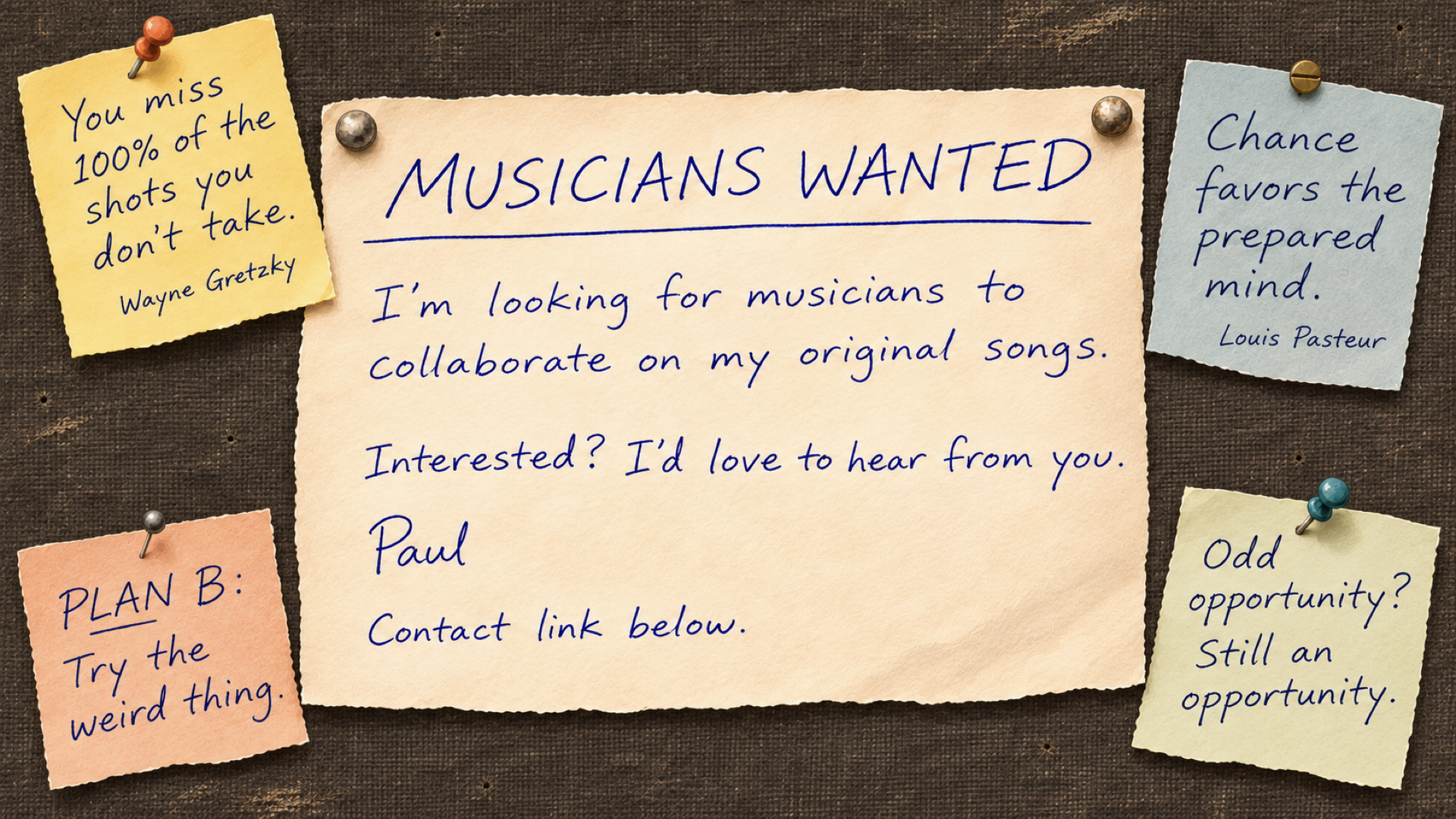
Collaborators wanted. If you make music and want to help bring one of these songs to life, you can reach me here.
The work tapes
Eight songs, stripped to guitar and voice. The voice and guitar are AI placeholders. The lyric is the point.
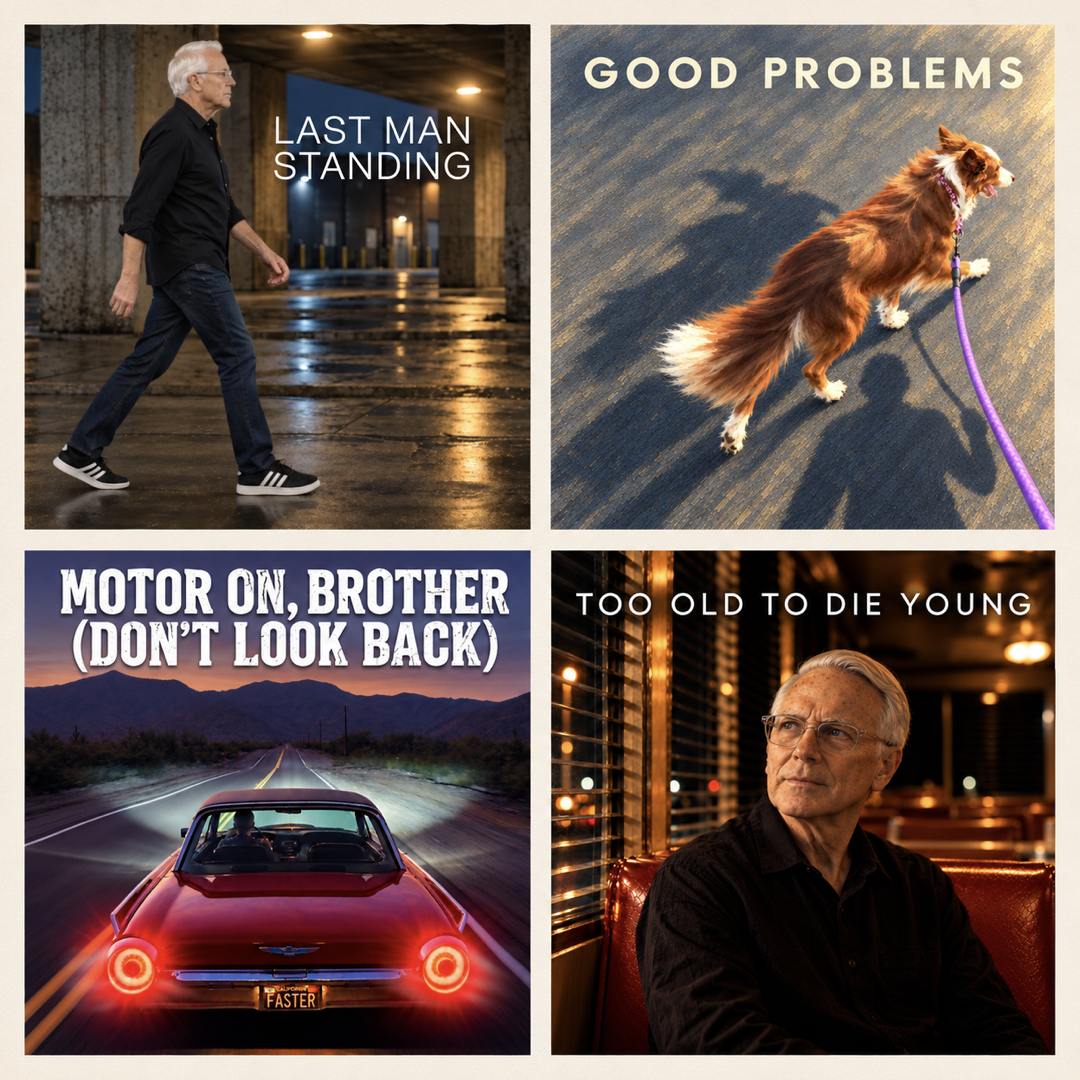
Set 1: Living
Songs about getting older and the people who got me here. All of them are about someone in particular.
Last Man Standing. The title song from my first, and last Suno album, and the one people have responded to the most. It’s about being the one still here, and what you owe the people who aren’t.
Motor On Brother (Don’t Look Back). A song about keeping going and not looking back. It is an idea I’ve had for a decade.
Too Old to Die Young. About the years I have left, and refusing to waste them waiting.
Good Problems. Written in the year my world got quiet. It’s about the problems you only get when you’re alive.
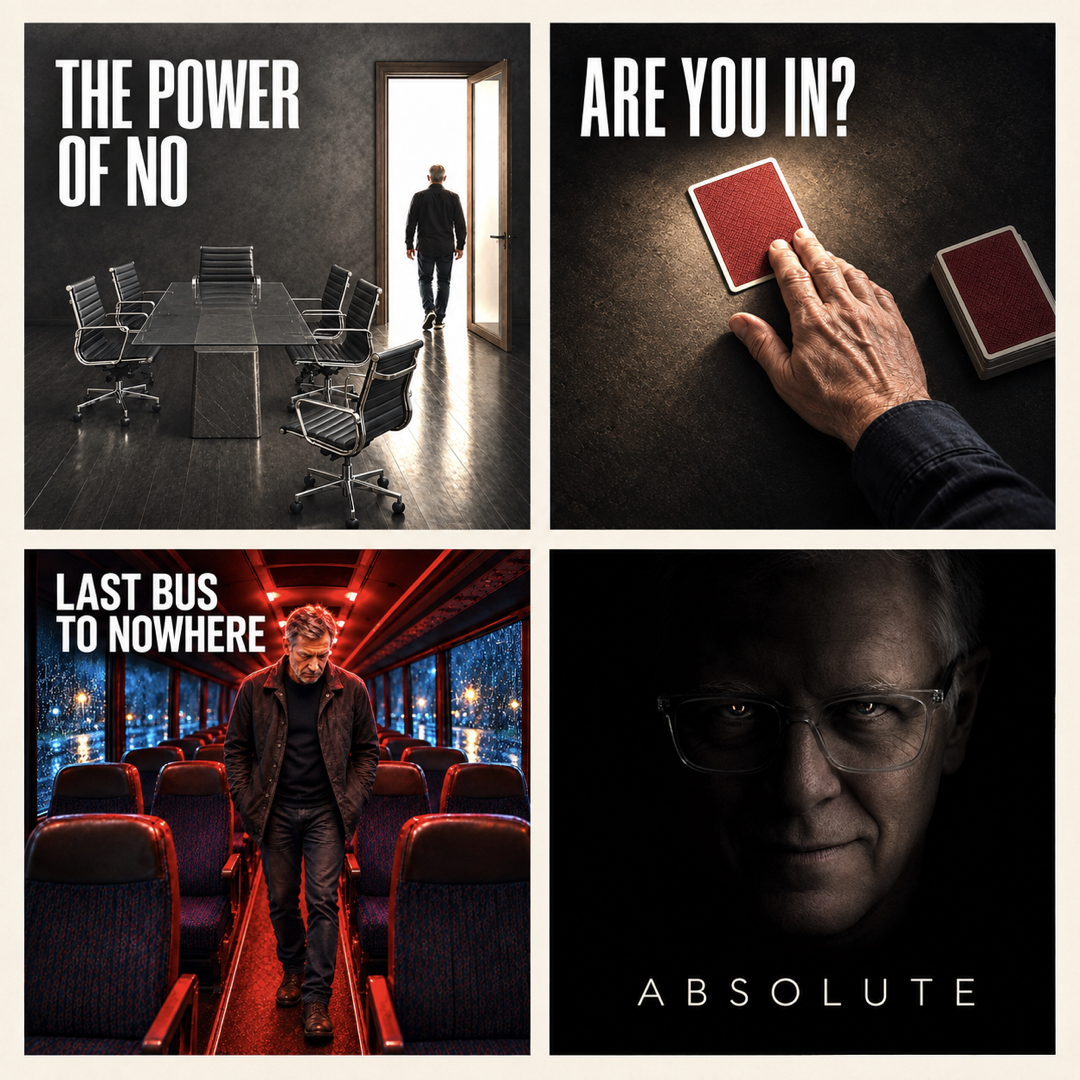
Set 2: Nothing Personal
Songs about how people behave at work and in business. I’ve seen these patterns all my working life. None of the songs is about anyone in particular.
Are You In? For anyone in love with an idea who keeps waiting for the right moment to start.
Absolute. About ambition and what it takes from you if you let it. I’ve seen it in other people, and I’ve seen it in my own eyes.
The Power of No. Some people only want to hear yes. This is about the one word that takes their power away.
Last Bus to Nowhere. Karma doesn’t chase people who take advantage of others. Consequence keeps its own schedule.
Lyrics © 2026 Paul Pfanner. All rights reserved. Written by Paul Pfanner with the assistance of Claude AI. Copyright registration in progress.
Pfanner Advantage works with clients to turn change into advantage at the intersection of mobility, motorsport, media, technology, and marketing. Learn more or start a conversation: contact us today.
Paul Pfanner’s recent Shift Happens Insights:
Other Than That, I Enjoyed the Film
The Advantage Journal arrives every week. What matters in sport, mobility, media, and technology — curated and contextualized by Bill Sparks, Bill Long, and Paul Pfanner. No hedging. No filler. Subscribe — It’s Free

