
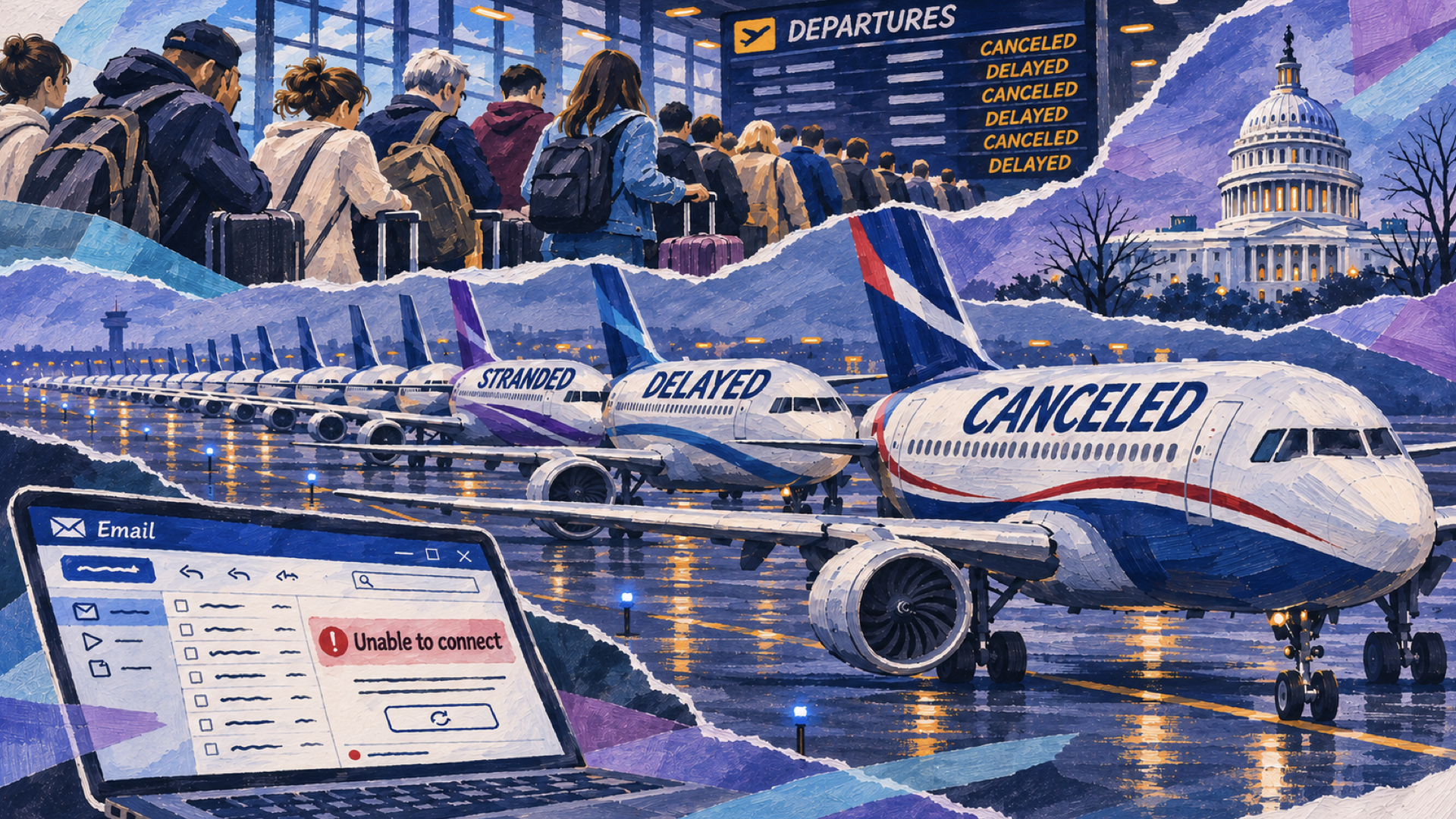
Two failures in two days. Microsoft's email broke for users around the world on November 12, and a day later the FAA halted departures across the United States.
Paul Pfanner on a week when Microsoft's email failed for users around the world, the FAA halted departures across the United States, and the cofounder of the AI-chip giant Nvidia stepped down as CEO. Officials have reported no evidence of an attack behind either outage, and he thinks that deserves more attention than the outages themselves.
In the 1951 movie, a visitor named Klaatu needs the attention of a planet that won't listen to him. So he turns off the power. At noon in Washington, all over the world, for thirty minutes. Cars quit in the street and elevators hang between floors. He spares the hospitals and the planes already in the air. The demonstration gets their attention.
I was very young when I first saw it, and it scared me deeply. I had no idea about aliens. It stuck with me, and it also made me want to make movies.
This week we ran our own version, and nobody from another planet had to make the trip.
Thursday and Friday
On Thursday, November 12, Microsoft 365 began to fail. Email and the features tied to it broke for users of Outlook, Teams and Copilot, and trouble reports came in from more than 70 countries and territories, according to Downdetector. It ran into the following day. The Supreme Court of Victoria in Australia lost its email, kept electronic filing open and said hearings would go ahead. An ambulance service in England lost its email too, and kept answering emergency calls and dispatching ambulances. Somewhere in there the jokes began about whether a dead inbox was a good enough reason to go home, and I suspect a lot of people were hoping the answer was yes.
Then came Friday the 13th, because of course it was. At 3:54 in the afternoon Eastern time the FAA imposed a nationwide ground stop, and it stayed in place until 8:15 that night. Thousands of flights were canceled on Friday and thousands more on Saturday, with further travel disruption continuing into Monday. It has been reported as the longest nationwide ground stop since September 11, 2001.
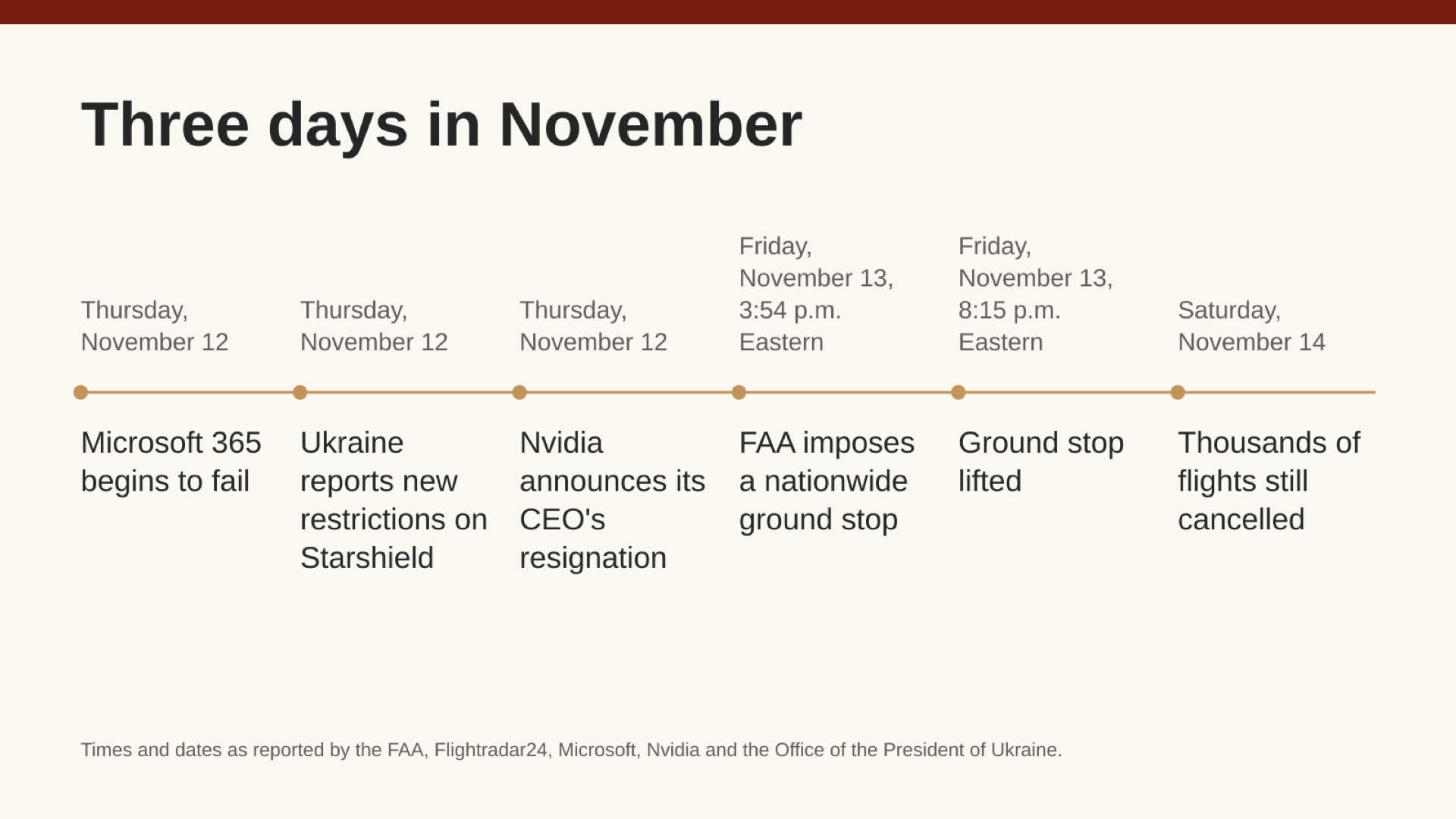
Both stories arrived with the same reassurance. Microsoft said its failure was a technical issue with no connection to a cyberattack or to AI. Its preliminary review now points to a software defect introduced in July, triggered when traffic shifted while some server capacity was already unavailable. The Transportation Secretary, Sean Duffy, explained the grounding on Friday night this way: "Our switches, our routers actually got overloaded with data." Over the weekend he filled in more. He said the trouble followed router work at FAA sites in Arkansas and Texas that flooded the network. As of Sunday morning he said they still do not have the root cause, and that there is no sign of a hack. The Homeland Security Secretary, Markwayne Mullin, had told reporters on Friday, "It's just a telecommunication outage as of right now."
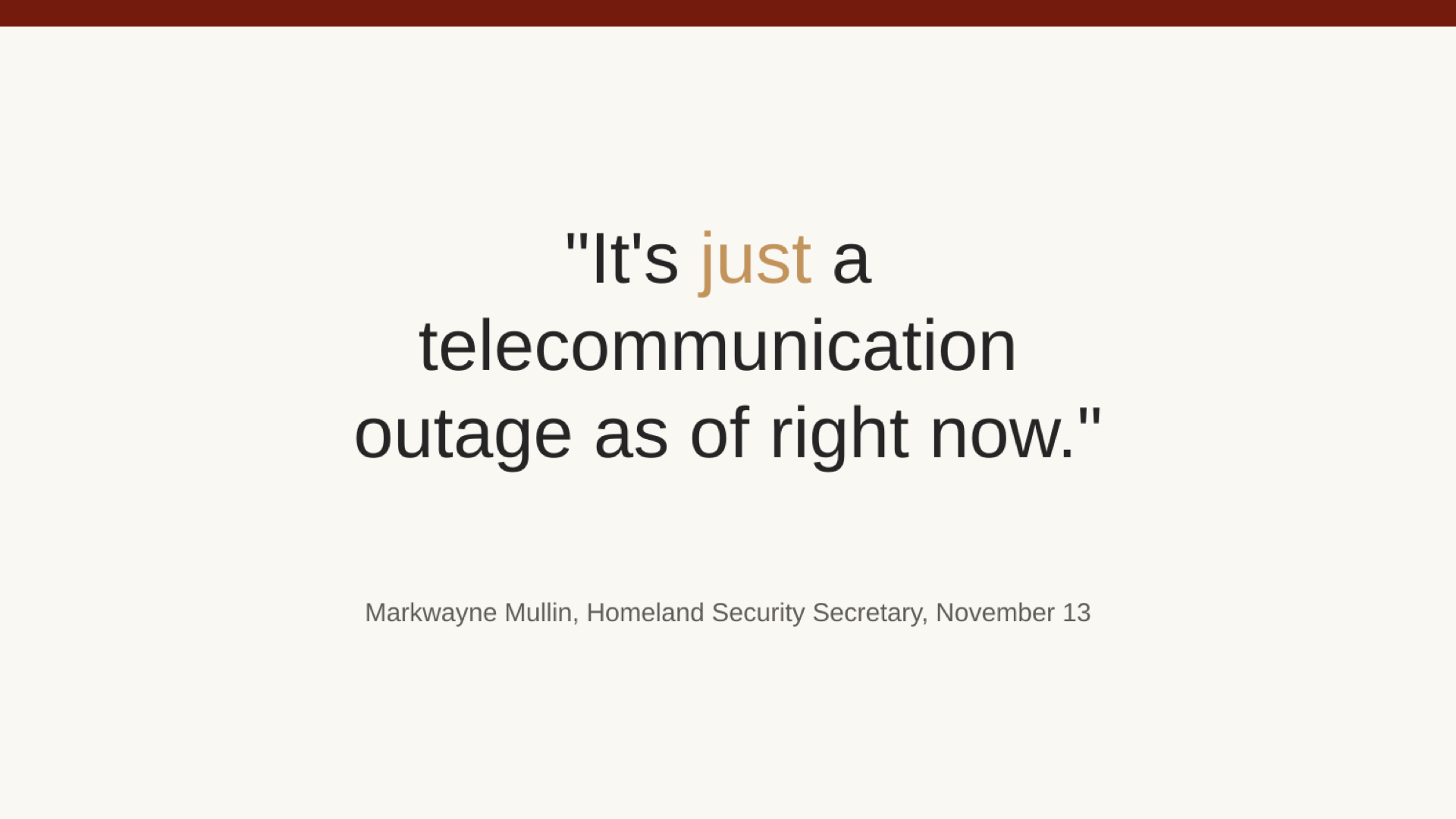
I have no reason to doubt them. The investigations are still early and the explanations may change. But it's the word just that I can't get past. If these early accounts hold, a software defect at one company and router work on the FAA's communications network disrupted work around the world and U.S. air travel inside of two days. I find that more troubling than a villain would be.
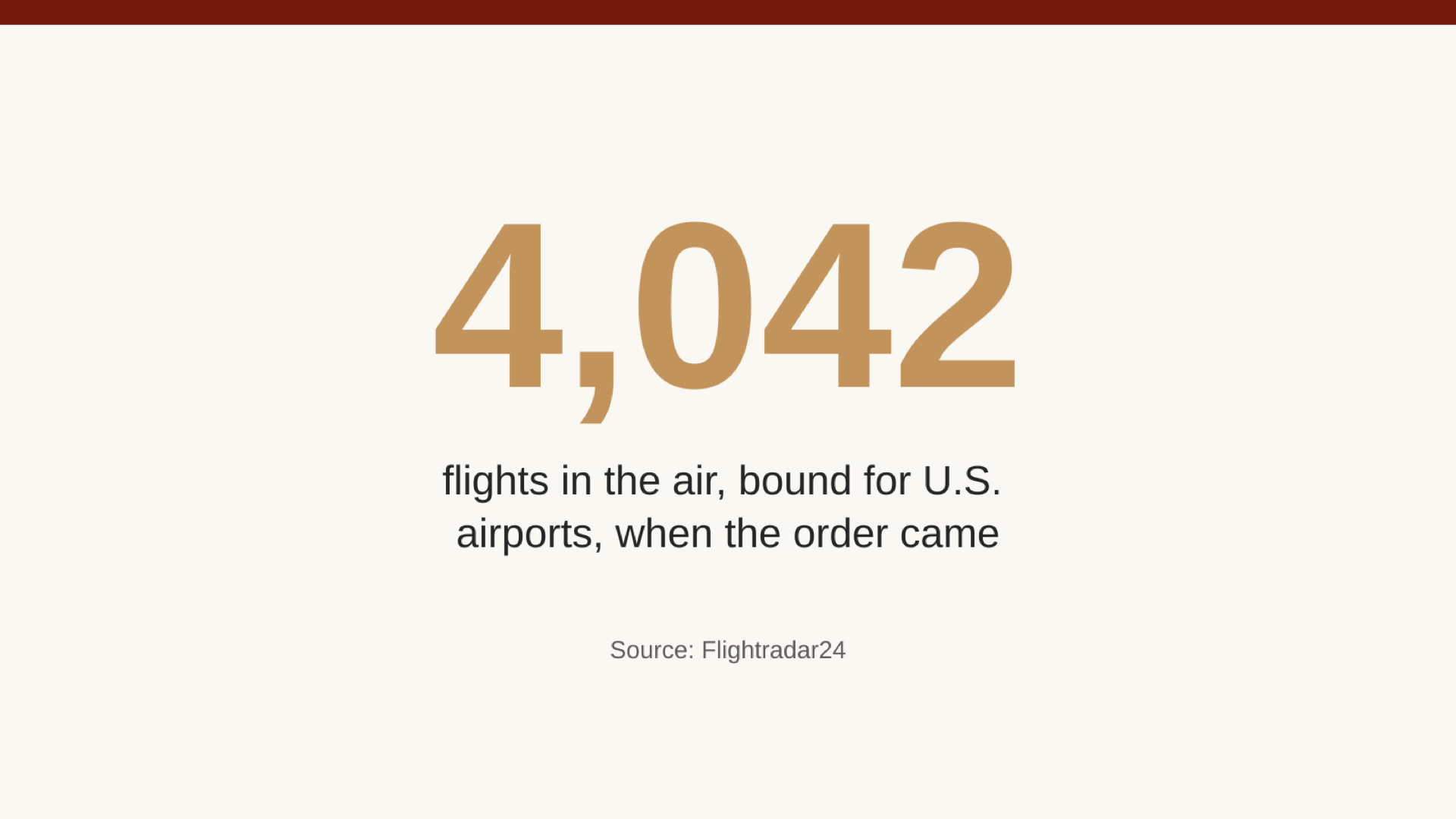
Flightradar24 counted 4,042 flights in the air headed for American airports when the order came. Officials said all flights were accounted for. In the movie the visitor spared the planes. On Friday, people did that work.
Who holds the switch
The movie asks who has the power to turn things off. In 1951 the answer came from space. My question this week is who has it now, and how much of it sits with private companies. The stories that follow are different kinds of events with different causes, and nobody has shown they are connected. What they share is that each one made me ask.
The same week gave us Nvidia. Jensen Huang cofounded the company, and it was valued at more than four trillion dollars at the close on the day his departure was announced. He resigned as CEO days after telling employees in writing that he had been unfaithful to his wife. The New York Times had reported, citing people briefed on the intelligence, that American officials suspected a woman close to him of working for China's Ministry of State Security. She is Alice Huang, no relation, a former executive of a Singapore company called Megaspeed, which says she left in August 2025. That suspicion is disputed. The Justice Department says it has reached no conclusions on whether she was a spy, and China's foreign ministry calls the allegation unsubstantiated. On November 8 Nvidia's board said it had no reason to believe national security or company secrets had been compromised. I'm not going to try him in a column, or her.
The chips are another matter, because that argument is happening on the record. Two senators, citing New York Times reporting, wrote that Megaspeed has bought more than $4.8 billion worth of Nvidia's chips since June 2024. Investigations are open in Washington and in Singapore, where the inquiry concerns possible false declarations involving server purchases. Neither has publicly announced a finding of unlawful diversion. Megaspeed says it has complied with the rules and has outside lawyers conducting an internal investigation. On Friday the Treasury Secretary, Scott Bessent, went on CNBC and said, "I think there is a lot of leakage in the system." Then he asked the question I would want answered if I sat on Nvidia's board, which is whether the company knew its client. Three House committee chairmen wrote that they need to know "the full extent to which our national security has been put at risk."
What stays with me is that one man's private life became a national security briefing. In my view, when that much of a nation's future rides on one company, and one executive has that much influence, a personal failing can become a strategic exposure. That would be true of anyone sitting in that chair. To the company's credit, the board named an interim CEO the day it announced his departure.
Then there is Starlink, and its military version, Starshield. They are two different services and the difference matters. According to Ukraine and to U.S. senators, both were restricted in Ukraine between October 13 and October 24. Elon Musk said a loophole in commercial Starlink had been closed and accused Ukraine's military of violating the terms of service, which Ukraine disputes. He said Starshield is a different system controlled by the U.S. government. On November 12, the same day the email went out, President Zelensky said Ukraine had again detected restrictions on Starshield. SpaceX told Axios on Thursday, "This is false. There has been no change." On Sunday Zelensky said the restrictions were still in place and were costing Ukraine drone interceptions. He has also said SpaceX described the problem as technical, an explanation he disputes.
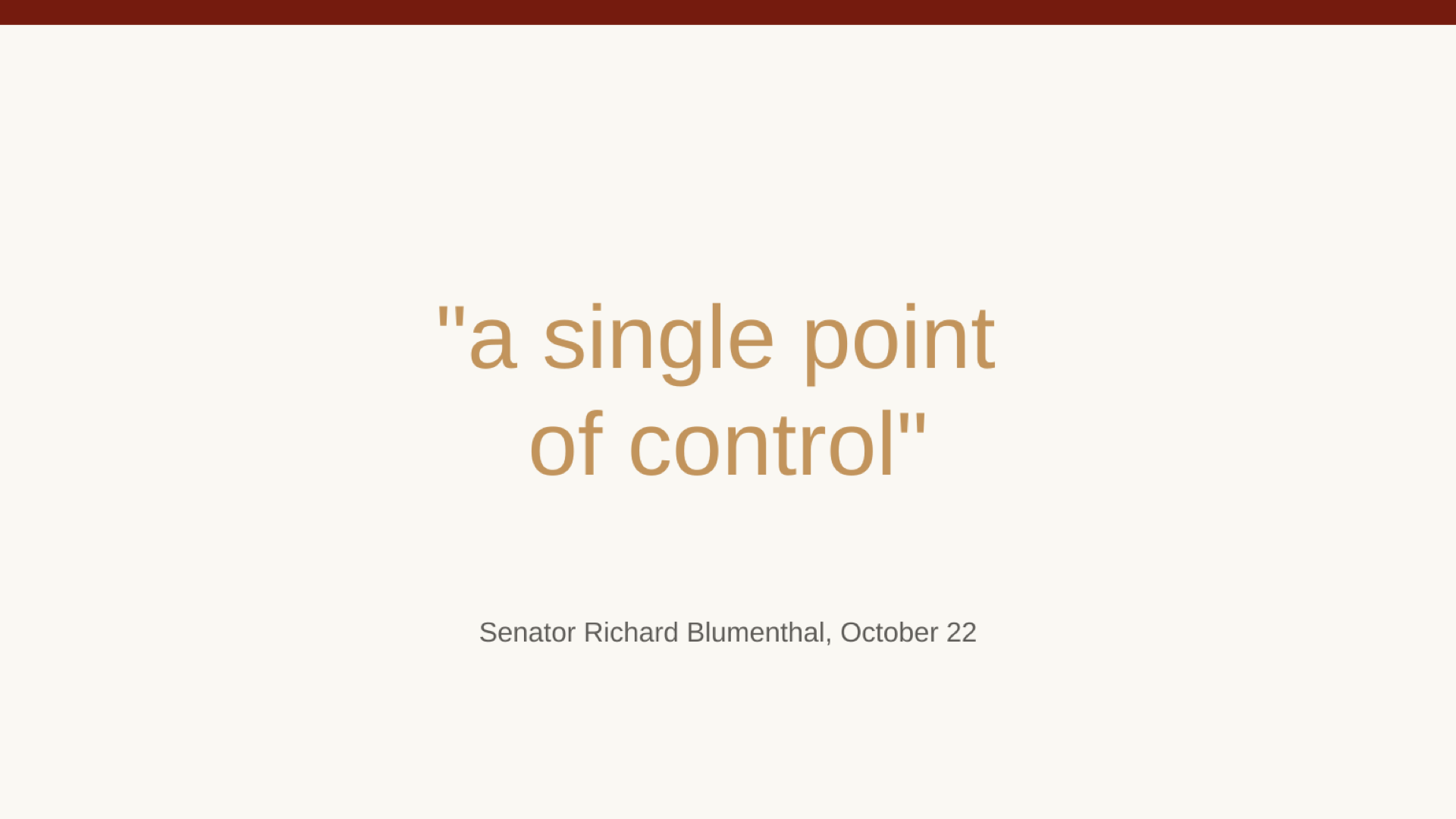
Nobody has sorted that out. The Pentagon's inspector general declined a request from nine senators of both parties to investigate. Two senators have told Musk to preserve his records. Senator Richard Blumenthal, opening his own inquiry, warned about what "a single point of control" can do to the forces that depend on it. Gregory Meeks and Adam Smith, the senior Democrats on two House committees, said the restrictions "strengthen Putin's hand at the negotiating table." That is their assertion. Other members of Congress have asked in writing whether anyone at SpaceX discussed the restrictions with Russia, and a question is all that is. Responsibility for the disputed Starshield restrictions remains unresolved.
I've written about Musk recently and said I would come back to him only when something real was at stake. I can't settle whose account is right. By Musk's own account, a country at war was running battlefield communications on commercial Starlink, under a company's terms of service. Whether anyone ordered the disputed limits on Starshield, and on whose authority, is what Congress is asking.
Allegiance to country has been a foundational part of who you can trust with a nation's defenses. What is in question now, as I see it, is how that works when the defenses run on global companies. I don't say it as a charge against anyone named here. The way I see it, a company answers first to its shareholders and its customers, in every country where it does business. The trouble starts when a nation builds its defense and its daily life on top of one without being clear about what the company owes the public in return. We handed over the keys. Starshield was meant to be the government's spare set, and whether it works that way is now an open question.
The off switch
I should say why I'm writing this. People are beginning to question everything, and AI is the undercurrent. They're worried that the machine is in control or will be soon. They're worried about losing their jobs, their livelihood, their ability to support their family. Some are worried about a machine that controls enough vital functions to kill us, through bioterrorism caused by a machine, or a financial collapse caused by a machine, or a war triggered by a machine. None of that happened this week. Microsoft said AI had nothing to do with its outage, and the Transportation Secretary ruled out the FAA's new AI traffic-planning tool as a cause of the ground stop. What happened this week was human. Our vulnerability was exposed, and continues to be exposed, through human frailty, human mistakes, and more importantly, judgment. That is why the very real question being asked is who has the off switch on these machines. And is that off switch a forever thing? That's the darkest question of all. Is there a moment where we're working for the machine, and not the other way around? So much of this now sits with a few very large companies and the people who run them. So the question ultimately is, can we trust the judgment of the broligarchy?
PERSPECTIVE
In the original story: the robot was the master
The movie “The Day The Earth Stood Still” came from a short story, and the story had a different ending.
"Farewell to the Master," by Harry Bates, ran in Astounding magazine in October 1940. In it the visitor is shot dead almost as soon as he steps out of the ship. The robot, called Gnut in the story and Gort in the film, stays behind. A photographer who has been watching it assumes the robot is the dead man's servant, and at the end he asks it to tell its master the killing was an accident. The robot corrects him. The robot is the master.
The screenwriter, Edmund North, turned that around for the film. He kept the visitor alive, made him the center of the picture and made the robot his guard. Hollywood's censors then pushed on a different point. They objected to a machine bringing a dead man back to life, on the grounds that only God can do that, and a line was added to say the revival was temporary.
So the twist never reached the screen. Listen to the speech at the end, though. Klaatu explains that his people built a race of robots to keep the peace and gave them absolute power over their makers in matters of aggression, a power that cannot be taken back. In 1951 that was the hopeful ending, backed by a threat of annihilation.
One more thing…
I wrote a song about all this. It's called "Pull the Plug," and the events of this week are what set it off. It's a plain guitar and vocal demo, and the voice on it is a neutral AI one. I also wrote it with the help of Claude, which is an AI, and made the video with ChatGPT and Hedra in under 24 hours. So yes, I used machines to help me make a song about pulling the plug on the machines. I did notice. I can't think of a better use for AI than warning people about the dangers of unregulated AI. I think millions of people around the world share that concern, and so do some of the people who helped create the technology and are now warning us themselves. It follows.
"Pull the Plug," created in the style of a 1950s science fiction film. A lot of what was on screen in the 20th century is on the news now. This isn't an indictment of AI. It's an indictment of AI without guardrails.
What I'd do with the warning
That movie scared me as a kid and then it made me want to make something. I feel about the same way this week. I use AI tools every day and they have made me more capable than I have ever been. I also share the worry, and I don't see a contradiction in that. I have always believed change is opportunity and this week did nothing to shake that.
I want to be fair about what the week showed, because a lot went right. The ambulances were still dispatched. The court kept electronic filing open. Officials said the aircraft already in the air landed safely. Essential services continued and the aviation safety procedures worked. What none of that protected was the ordinary working day, or the confidence that somebody answerable to the public has a hand on the switch.
This next part is my judgment from a long time in business, and I can't footnote it. For most of my working life I've watched managers get rewarded for taking the slack out. One vendor, one platform, fewer people on staff who know how the thing works underneath. Each decision looks smart on a spreadsheet, and I think together they built a world where one software defect can knock out a court's email on the other side of the planet.
I think resilience is about to become a bigger business. Somebody is going to make a good living selling the second supplier and the practiced drill for the day the system is down. Governments are going to have to decide what they ask of private companies that the public can no longer live without. And every organization would do well to find out who on the payroll still knows how to do the job by hand.
That last one matters most to me. What got those airplanes down on Friday was people who knew their procedures, working with the radio and radar that stayed up. In my experience a lot of that kind of knowledge is walking out the door at companies convinced the software has it covered. I'm working on something that goes straight at that problem, and I'll have more to say about it soon.
Klaatu gave us thirty minutes and, by the end of the picture, a speech. We got two days and a few press conferences. My inbox is full again this morning, and I'm less relieved about that than I expected to be.
Update: Monday, November 16
From Fox News on Monday afternoon: the bank outages, and what a cybersecurity expert makes of them. No link to last week's failures has been established.
This story keeps moving, so here is where things stand a day after I published.
This morning customers of several large U.S. banks had trouble with online banking, and I was one of them. I couldn't get into my own accounts at two banks. Chase says its problem is a technical bug and not a cyber issue, and that customers still have access to their accounts and funds. Wells Fargo posted a notice that its online banking was temporarily unavailable. The Federal Reserve lists its payment systems as operating normally. Nobody has shown any connection between this and last week's failures, and I'm not suggesting one. I mention it because it happened on the Monday after I wrote about how much we depend on these systems.
Microsoft's preliminary review, dated November 15, traces its outage to a software defect introduced in July. I've updated the column to reflect that.
The government also acted. The Commerce Department announced new restrictions on remote access to advanced chips through overseas data centers. I asked who holds the switch, and it's fair to note that Washington reached for it.
On Starshield, Ukraine's senior diplomat in Washington said Monday that the restrictions were in their seventh day. The Pentagon has said there is no change to its policy of supporting Ukraine, including satellite communications. Responsibility remains unresolved.
PBS Firing Line 11/13/2026. "We are making alien beings." That is Geoffrey Hinton, who won the Nobel Prize in Physics for the research that made modern AI possible. He helped build it, and this is what he says about it now. Watch what he tells PBS.
Update: Tuesday, November 17
The failures kept coming. On Tuesday Apple had trouble with the App Store, Apple Music, AppleCare and iCloud sign-in, and said an internal update was the cause. It said many systems had recovered and it was working on the rest. The National Security Agency said some of its internal systems were disrupted during scheduled maintenance, and that its mission-critical capabilities stayed fully operational. Chase says its systems are back to normal after Monday's trouble.
As with Monday, nobody has shown a link between any of this and last week.
There was news on the column's other threads too. Nvidia has set up a board committee to oversee national security and export controls, and House committees say Jensen Huang will sit for a transcribed interview on December 1. Asked about the restrictions on Starshield in Ukraine, NATO's Secretary General said the parties involved were working to restore normal service. He didn't say who was responsible, and nobody has reported service restored.
Just for fun: Saturday Night Live's Weekend Update took its own run at the week on November 14. I'm not the only one who noticed.
Pfanner Advantage works with clients to turn change into advantage at the intersection of mobility, motorsport, media, technology, and marketing. Learn more or start a conversation: contact us today.
Paul Pfanner’s recent Shift Happens Insights:
Other Than That, I Enjoyed the Film
The Advantage Journal arrives every week. What matters in sport, mobility, media, and technology — curated and contextualized by Bill Sparks, Bill Long, and Paul Pfanner. No hedging. No filler. Subscribe — It’s Free

