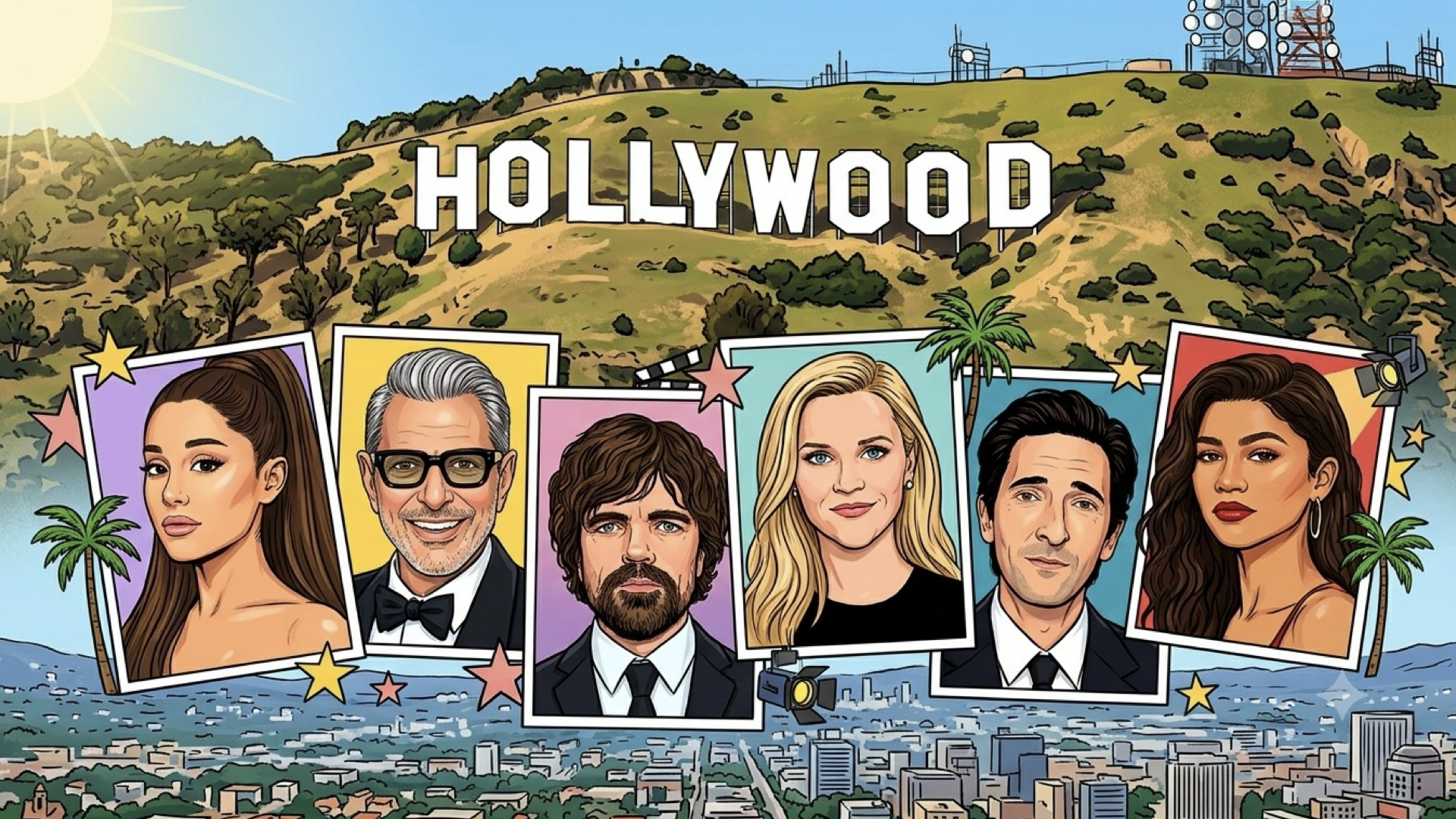
CAA won’t say which of its clients have been digitally replicated, but its roster is filled with A-list performers.
To fight the misuse of its clients' likenesses and voices, CAA built a facility to make authorized copies of them. Bill Sparks reads it as a defensive play — establish digital ownership now, enforce it later.
In the summer of 2023, Creative Artists Agency's clients walked picket lines. One of their central fears was artificial intelligence, and specifically the prospect of a studio scanning a performer once and reusing that likeness forever. Two years later, the most powerful talent agency in the business runs a facility built to do almost exactly that kind of scan. The difference is who holds the keys. That difference is the whole strategy.
The facility is called the CAA Vault, and it does not look like a place where deals get made. ABC News, granted rare access and reporting in November 2025 (Nathan Rousseau Smith, "Rare look at how Hollywood is already harnessing AI," ABC News), found cameras, lights, and screens fastened together into two giant orbs, plus a dedicated facial cloning rig. A client steps in and, over roughly three hours, the system captures a full 3D and 4D record of their movement, emotional range, and vocal inflection. What comes out is a digital double: an authorized, high-fidelity copy of a person that can be de-aged, dropped into a video game, made to speak languages the actor never learned, or trained into a chatbot that answers fans in the star's own voice.
The bank metaphor
Ask CAA what it is selling and the answer is not technology. It is ownership. "Think of it like a bank," the agency's Head of Strategic Development, Alexandra Shannon, told ABC News. "If somebody now owns their digital likeness assets, anyone who chooses to do anything other than work with that individual, now there's a stronger case to show that they're infringing on their rights."
Read that quote twice, because it inverts how most people assume this technology works. The common fear is that a scan is the first step toward replacement. CAA is betting the opposite. If a performer creates and owns the definitive, authenticated version of their digital self, then every unauthorized clone floating around the internet becomes, by contrast, a provable knockoff. The vault is not primarily a tool for making money from a likeness. It is a tool for establishing that the likeness has an owner at all.
Shannon has been blunt about why the agency thinks this cannot wait. "Over the last couple of years or so, there has been a vast misuse of our clients' names, images, likenesses and voices without consent, without credit, without proper compensation," she said when CAA announced its partnership with the AI firm Veritone in May 2024 (Todd Spangler, "The CAA Vault, Which Stores AI Clones of Talent, Taps Veritone as Tech Partner," Variety, 2024). "It's very clear that the law is not currently set up to be able to protect them." Her conclusion follows directly. If the law will take years to catch up, talent should build the evidence of ownership now, so that "there is now a legitimate way for companies to work with one of our clients."
That is the armor. Own yourself first, and let everyone else become an infringer.
The precedent the vault is answering
It helps to see what the alternative has looked like, because until recently the replica almost always got built by someone other than the actor. When Lucasfilm opened "Indiana Jones and the Dial of Destiny" (2023) with a long flashback featuring a young Indiana Jones, the de-aging was the work of Industrial Light & Magic and more than a hundred artists, assembled from decades of archival footage using a tool the studio calls FaceSwap. Harrison Ford accepted the result, telling reporters at Cannes, "That's what I looked like 35 years ago" (Anthony D'Alessandro, "Harrison Ford Talks Seeing De-Aged Self," Deadline, 2023). But the younger Ford on screen was the studio's asset to build and deploy, not his.
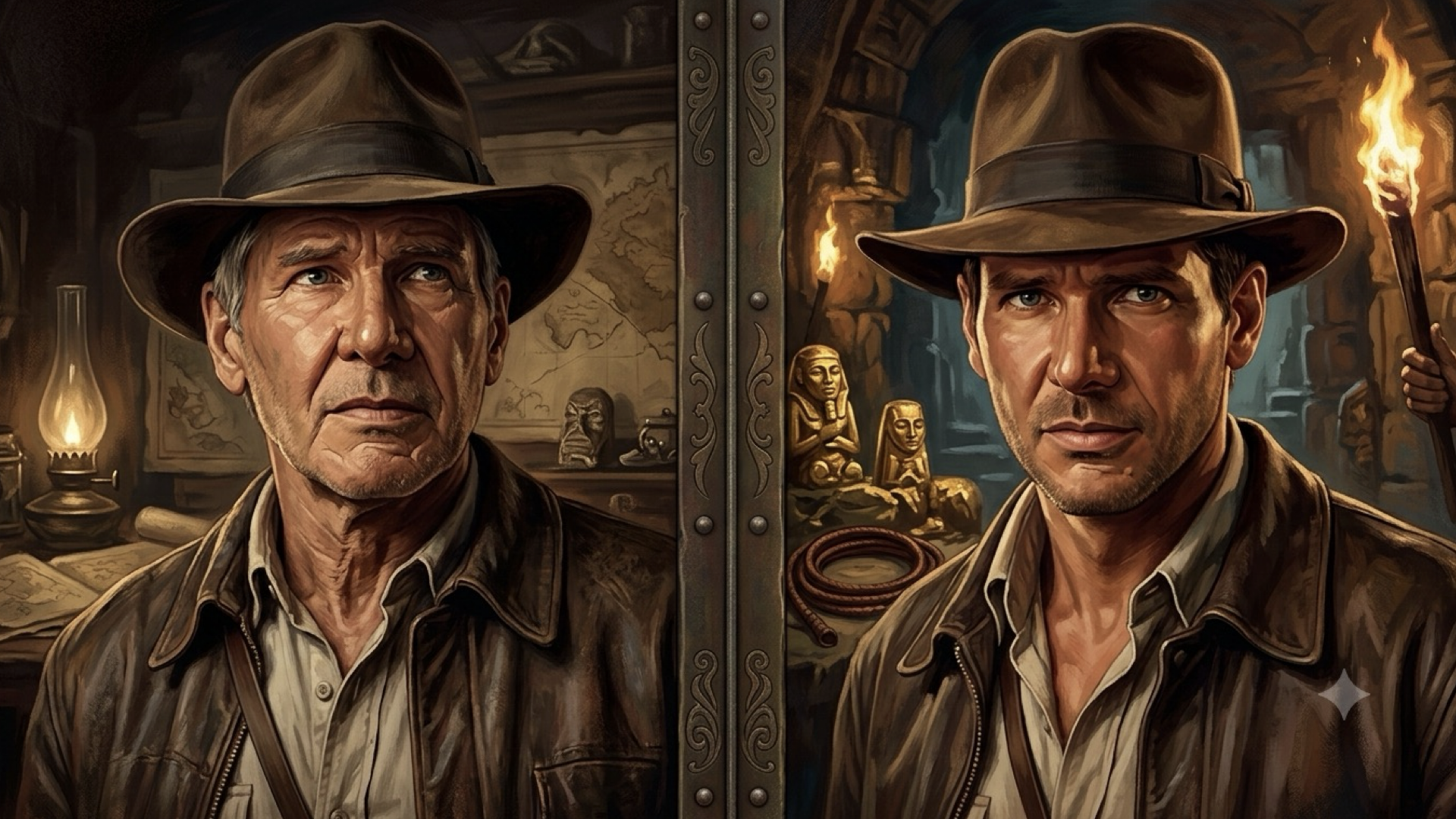
Harrison Ford was digitally de-aged from 80 to 35 for Indiana Jones and the Dial of Destiny.
Sometimes the handover is deliberate and clean. James Earl Jones signed over the rights to his Darth Vader voice to Lucasfilm in 2022, letting the Ukrainian firm Respeecher generate new lines from archived recordings, an arrangement that continued after his death in September 2024 (Tim Lammers, "James Earl Jones Signed Over Rights For AI To Recreate Darth Vader's Voice," Forbes, 2024). That is consent, documented in advance, and it is close to the model CAA wants to make routine.
And sometimes it goes sideways. In 2022 Bruce Willis was widely reported as the first star to license a "digital twin" to the deepfake firm Deepcake for a Russian telecom ad. His representative promptly disputed the framing, and Deepcake conceded that the underlying likeness rights were Willis's to begin with (Variety, 2022). Nobody could quite agree on what he had actually signed. That confusion is the precise problem the CAA Vault is built to eliminate.
The business case, and why it is not a discount
The armor has an obvious commercial upside, and CAA is not pretending otherwise. A stored, licensable double lets a busy athlete shoot a commercial without showing up, lets a musician address a global audience in a dozen languages, and lets a studio de-age a lead without months of visual effects work. The vault turns a career's most valuable asset, the face and voice, into something that can be inventoried and rented.
The important part is what CAA insists the technology does not do to price. "The value is in that person, in that individual," Shannon said. "It doesn't change the value of what that individual brings." This is the agency's answer to the studios' not-so-secret hope that synthetic performance will be cheaper performance. For an A-list client, the pitch works. Scarcity still sets the rate, and a Veritone-secured vault only reinforces it.
Whether that logic holds for anyone outside the A-list is the question the whole industry is circling.
The fault line the union is watching
SAG-AFTRA does not oppose digital doubles in principle. It opposes the economics that tend to travel with them. National Executive Director Duncan Crabtree-Ireland put the union's red line about as plainly as it can be put: "We don't want it to be cheaper to use a synthetic performer. We want it to be the same." His reasoning is that if the price is equal, human performers win, because they bring something an algorithm cannot. Keep the price equal and the market sorts itself out. Let it fall and the incentive structure quietly rewrites every casting decision.
The worry is sharpest for the people with the least leverage. Background and day players have warned that a single paid scan can become a lifetime of unpaid reuse, and reporting during and after the strike documented productions scanning extras in bulk with little clarity about where the data lived or how long it would be kept. CAA's model is designed for the top of the pyramid, where the talent has the power to demand ownership. It says little about the bit actor who gets scanned on a Tuesday and becomes a star three years later, only to find a studio holds a version of a younger self.
The law is arriving, slowly
CAA built the vault on the assumption that legislation would lag, and so far that assumption has held, though the gap is narrowing. The NO FAKES Act, which would create a federal right over one's voice and likeness and hold both creators and platforms liable for unauthorized digital replicas, was reintroduced in May 2026 and advanced through a Senate Judiciary Committee vote on June 18 (Variety, 2026). More than 16,000 performers signed a SAG-AFTRA letter pushing Congress to pass it, and the bill drew an unusual coalition of backers spanning the union, Disney, the Motion Picture Association, Google and YouTube, OpenAI, and the major record labels.
That coalition is worth pausing on. When the studios, the platforms, the AI labs, and the union that struck against all of them line up behind the same bill, it signals that everyone now wants a rulebook. A federal right of publicity would also, conveniently, make CAA's vault more valuable, because a documented, consent-based license becomes the clean path to using a likeness legally. The agency positioned itself for exactly the world that appears to be forming.

AI "actress" Tilly Norwood has been floated as an actual screen performer. SAG-AFTRA argues that acting can only be a human act.
Why anyone should stay skeptical
The reassuring version of this story is that talent finally has a way to control its own image. The uneasy version is never far behind. The AI "actress" Tilly Norwood drew immediate backlash in late 2025 when she was floated as a genuine screen performer, and SAG-AFTRA's response was to reject the framing outright, arguing that acting is a human act. And the ugliest use case is already common. Female stars including Scarlett Johansson and Gal Gadot have had their faces stitched into pornographic deepfakes, a reminder that likeness theft is not a future risk but a present one, and one that falls disproportionately on women.
So the armor is real, but it fits some people far better than others. For a marquee client, the CAA Vault is a genuinely smart defensive play, ownership established early and enforced later. For the working actor whose leverage is thin, the same infrastructure could just as easily become the mechanism of their replacement, depending entirely on the contracts written around it. CAA has built the safe. The fight now is over who gets to keep a key, and what happens to everyone who is handed a scanner instead.
Sources
- Nathan Rousseau Smith, "Rare look at how Hollywood is already harnessing AI," ABC News, November 2025. LINK
- Todd Spangler, "The CAA Vault, Which Stores AI Clones of Talent, Taps Veritone as Tech Partner," Variety, May 2024. LINK
- "Veritone Announces Strategic Partnership with Creative Artists Agency for the Launch of TheCAAVault," Veritone, May 2024. LINK
- "More Than 16,000 Sign SAG-AFTRA Letter Demanding Congress Pass NO FAKES Act," Variety, 2026. LINK
- "Blackburn, Coons, Salazar, Dean, Colleagues Introduce Revised Version of NO FAKES Act," Office of Sen. Marsha Blackburn, May 2026. LINK
- "AI-generated actress Tilly Norwood sparks Hollywood backlash," ABC News/GMA, 2025. LINK
- Anthony D'Alessandro, "Harrison Ford Talks Seeing De-Aged Self In 'Indiana Jones & The Dial Of Destiny,'" Deadline, May 2023. LINK
- Tim Lammers, "James Earl Jones Signed Over Rights For AI To Recreate Darth Vader's Voice," Forbes, September 2024. LINK
- "Bruce Willis Sells Rights to Deepfake Studio, Digital Twin Created," Variety, September 2022. LINK
- "Striking actors and studios fight over control of performers' digital replicas," CBS News, 2023. LINK
Pfanner Advantage works with clients to turn change into advantage at the intersection of mobility, motorsport, media, technology, and marketing. Learn more or start a conversation: contact us today.
The Advantage Journal arrives every week. What matters in sport, mobility, media, and technology — curated and contextualized by Bill Sparks, Bill Long, and Paul Pfanner. No hedging. No filler. Subscribe — It’s Free